Gymnasium Apartment
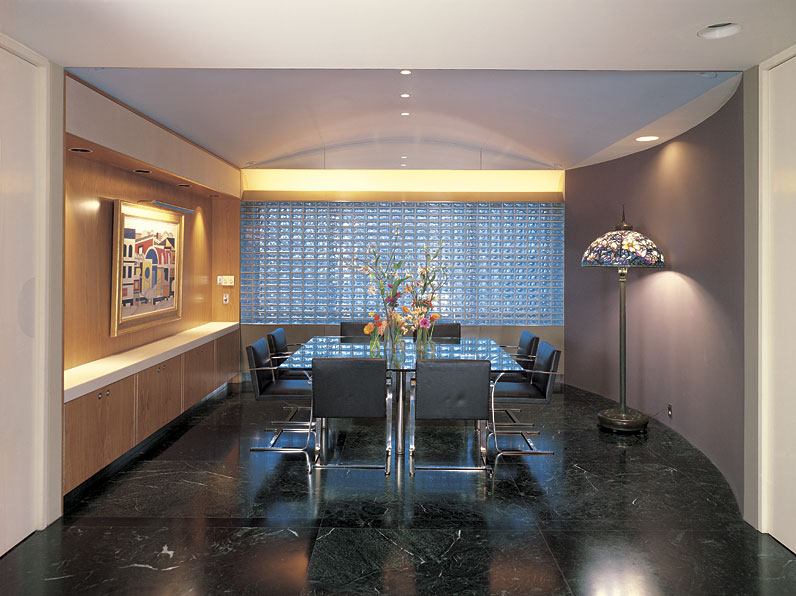
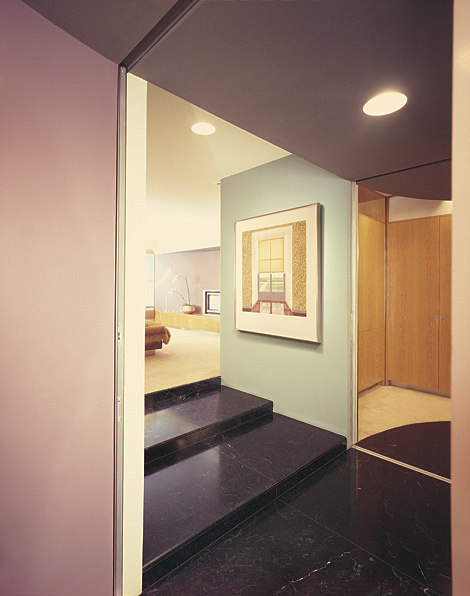
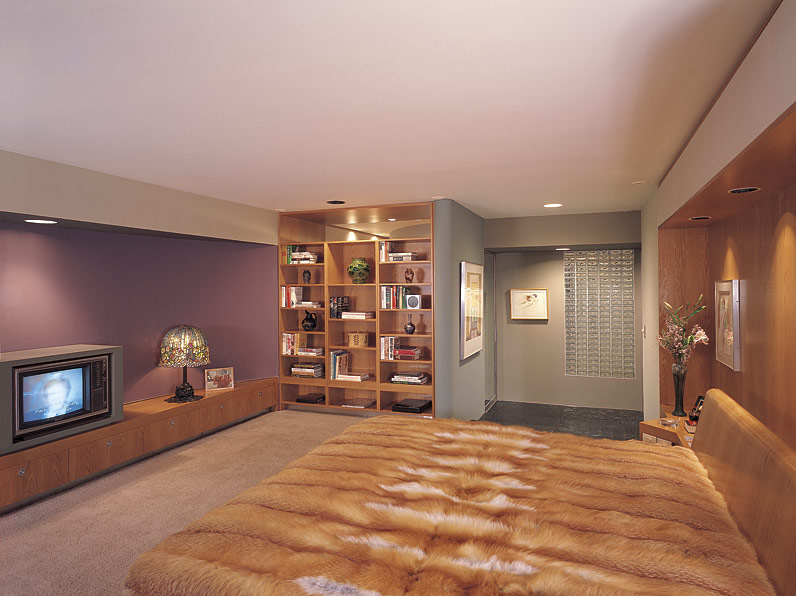
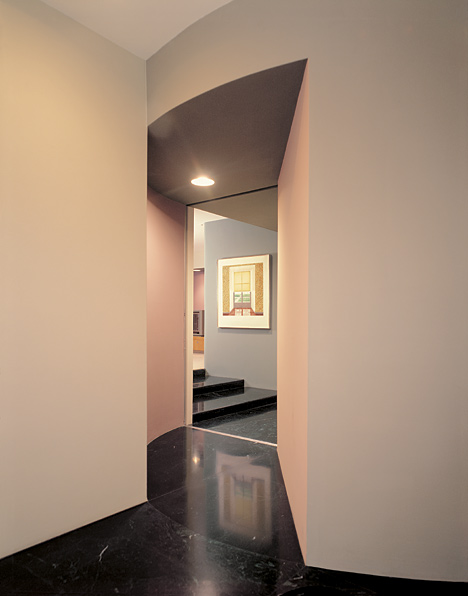
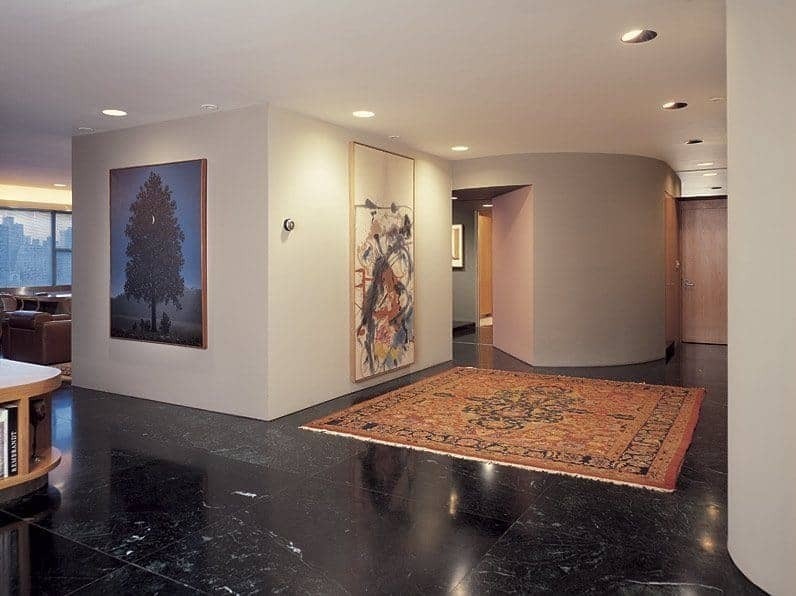
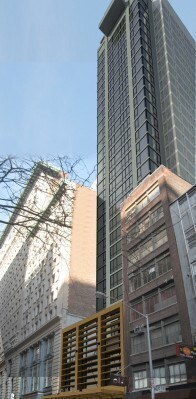
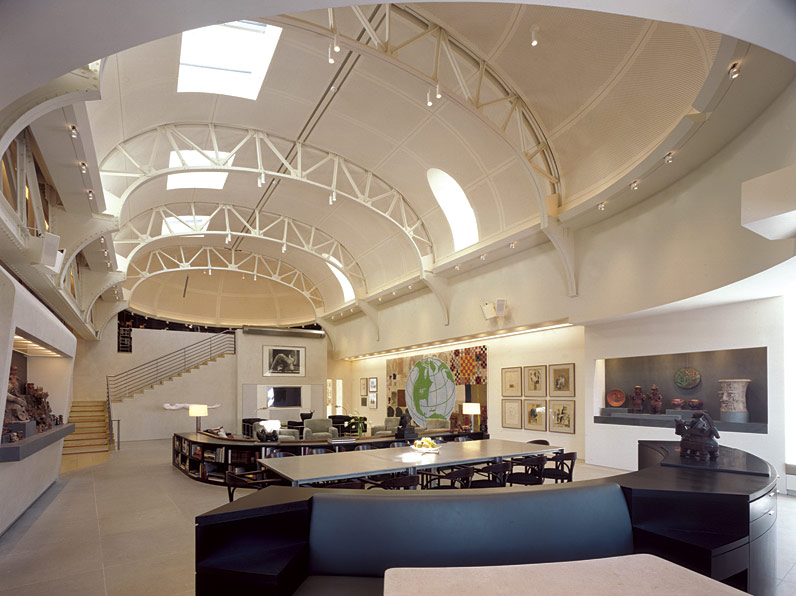
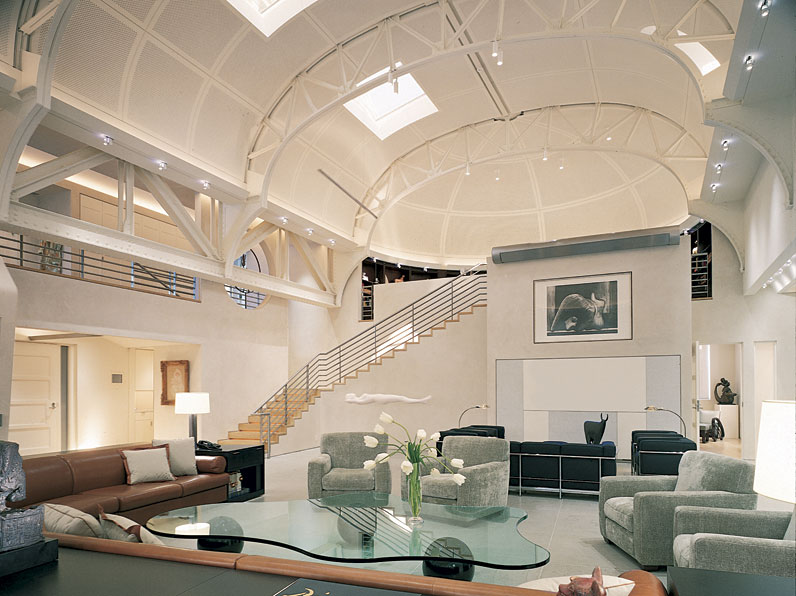
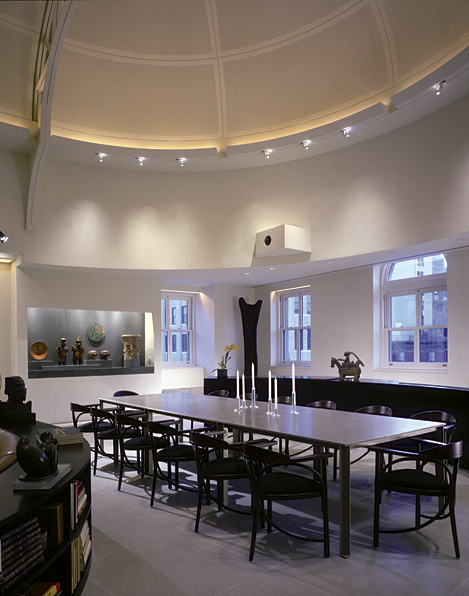
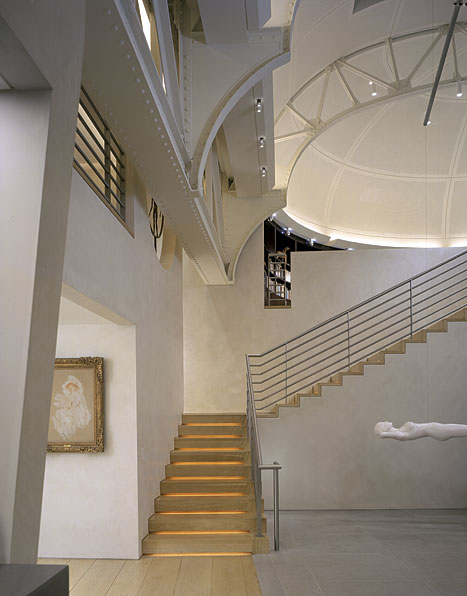
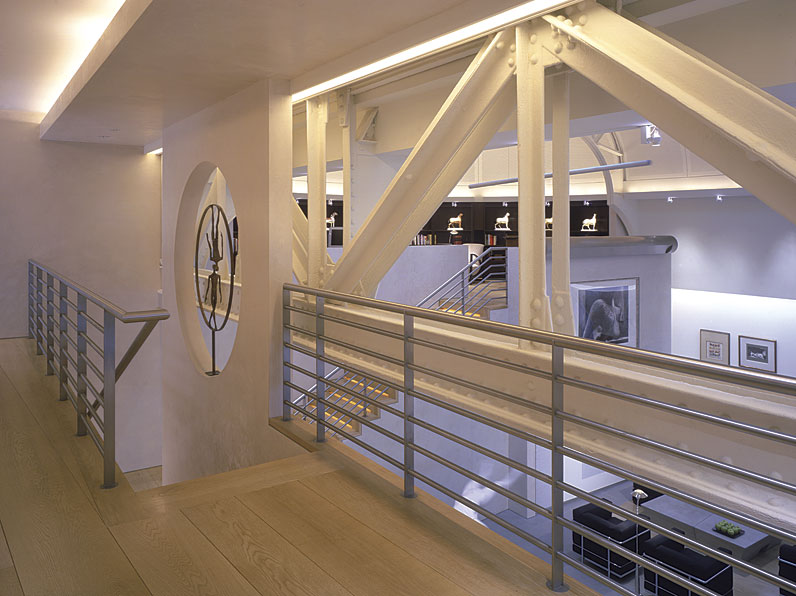
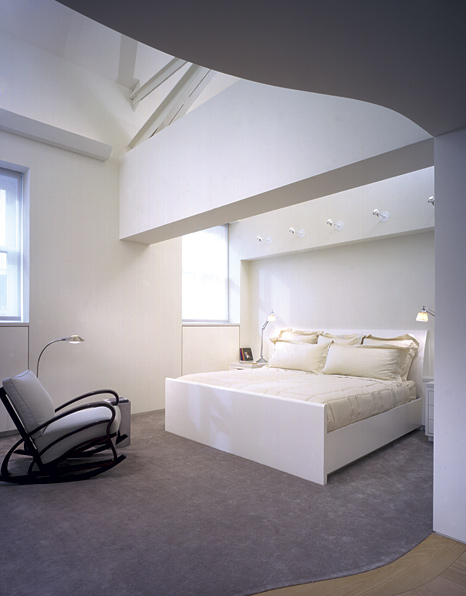
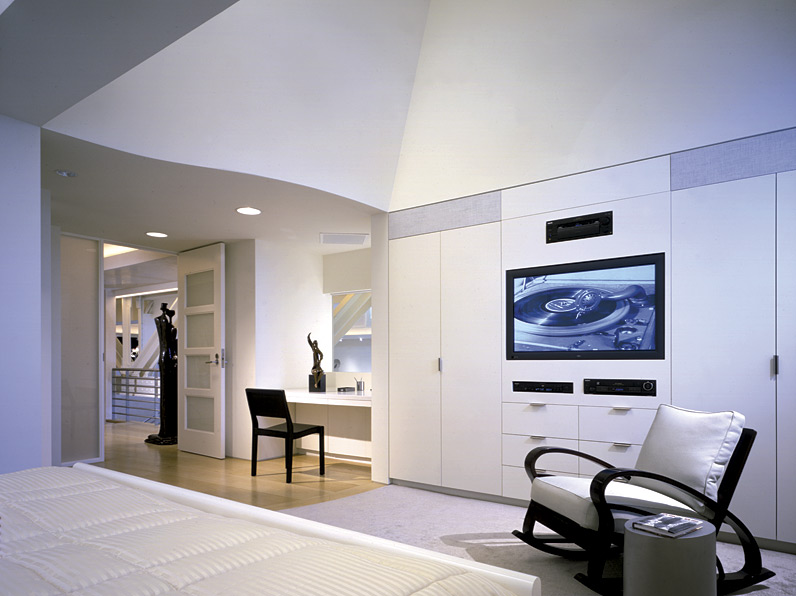
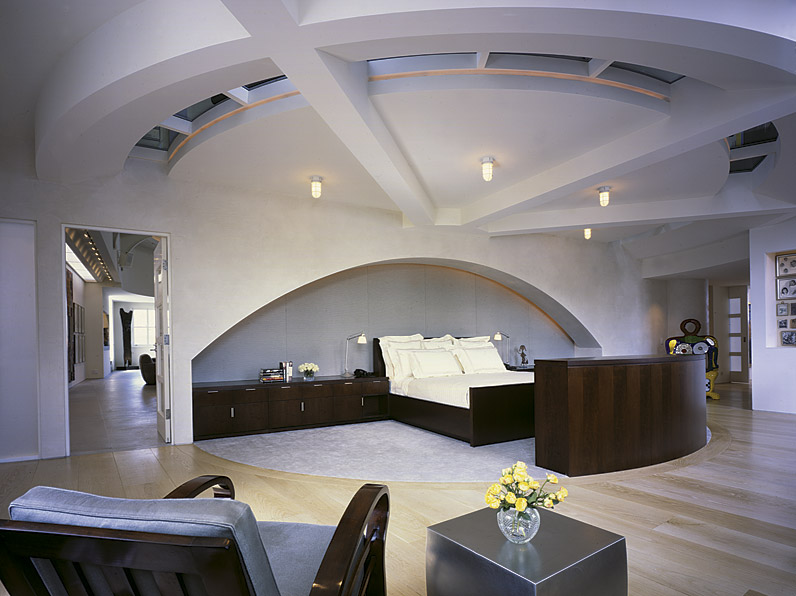
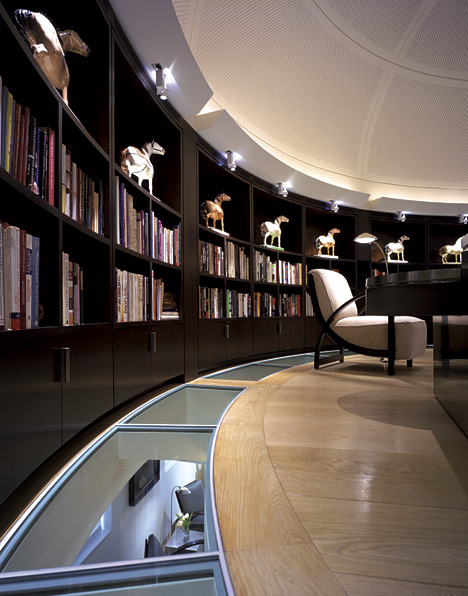
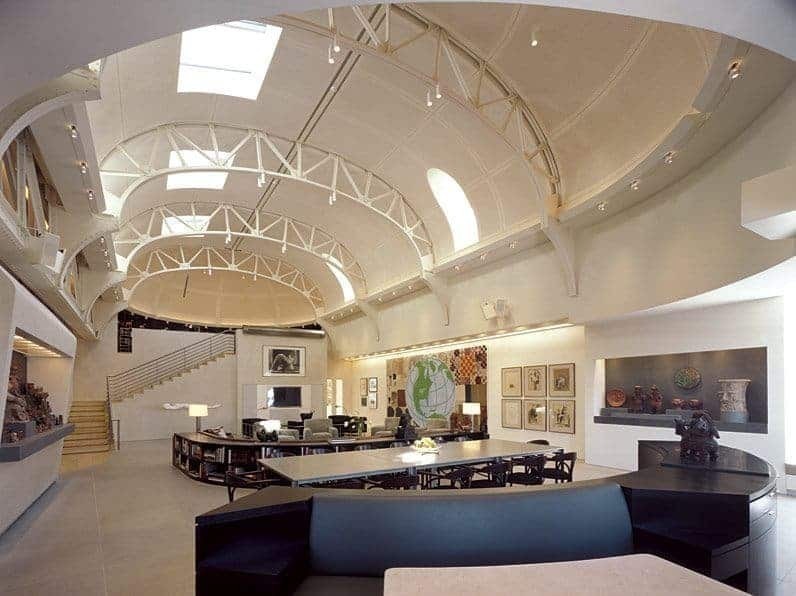
New York, NY This 6,000 square foot apartment is located in the former gymnasium of the original Beaux Arts Police Headquarters Building. The intention was to physically maintain and visually exploit the volumetric integrity and structural expression of the existing barrel vaulted space, while adding a master bedroom suite and study/library balcony, and integrating an eclectic painting and sculpture collection. Continue BackThe study/library balcony is suspended under the east end of the barrel vault and revealed from the master bedroom below, by a continuous radial skylight in the floor, articulating its separation while maintaining the volumetric extension.
The floor of the balcony defines the bedroom ceiling, floating asymmetrically within the existing orthogonal building frame, articulating its objectiveness and sectional variation.
Three large skylights were inserted into the south side of the barrel vaulted roof, providing natural light into the longitudinal internal façade of the space and revealing the classic building pediment above.
Apartment 40/41
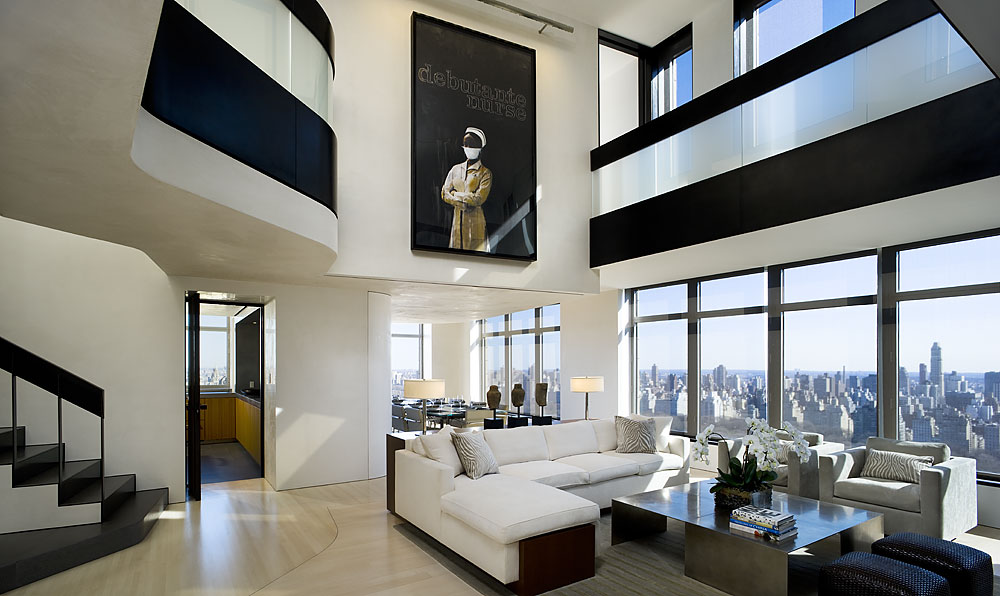
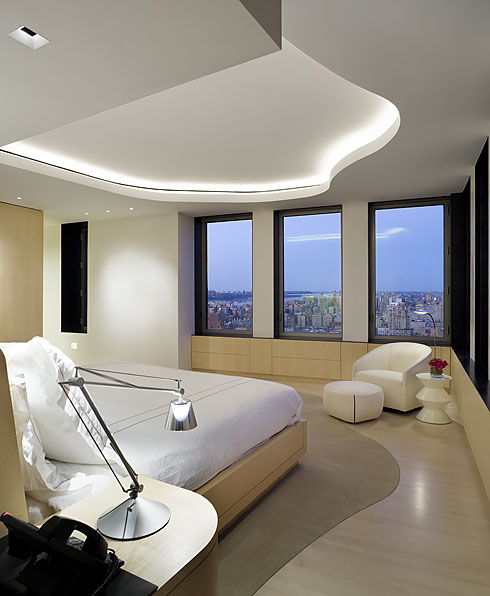
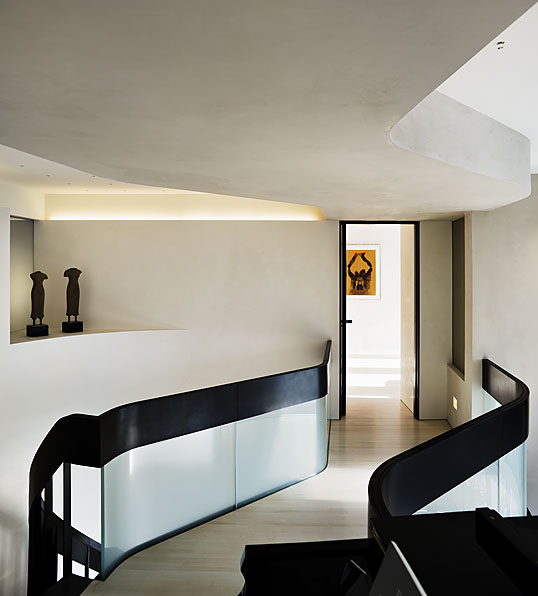
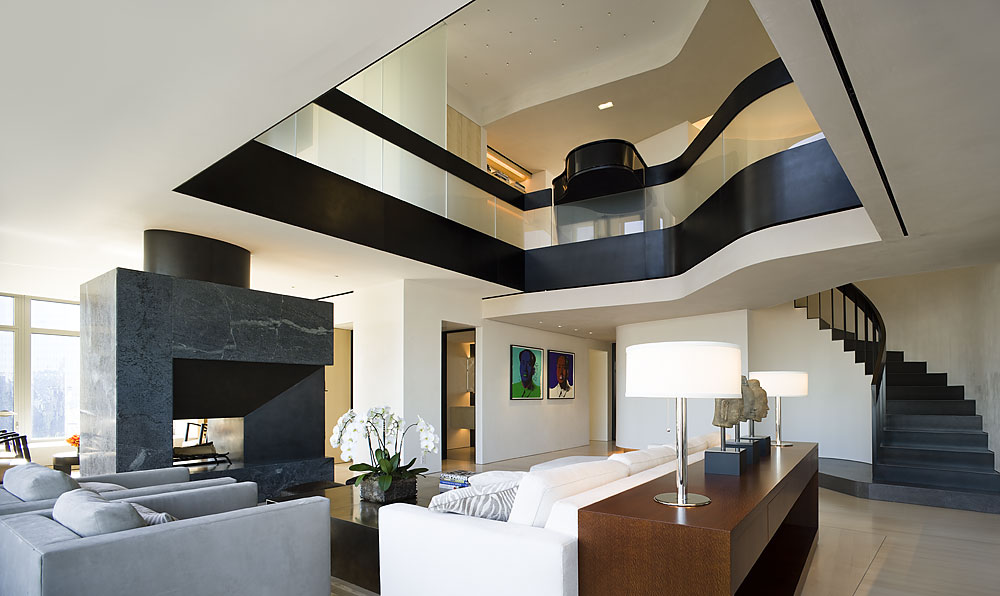
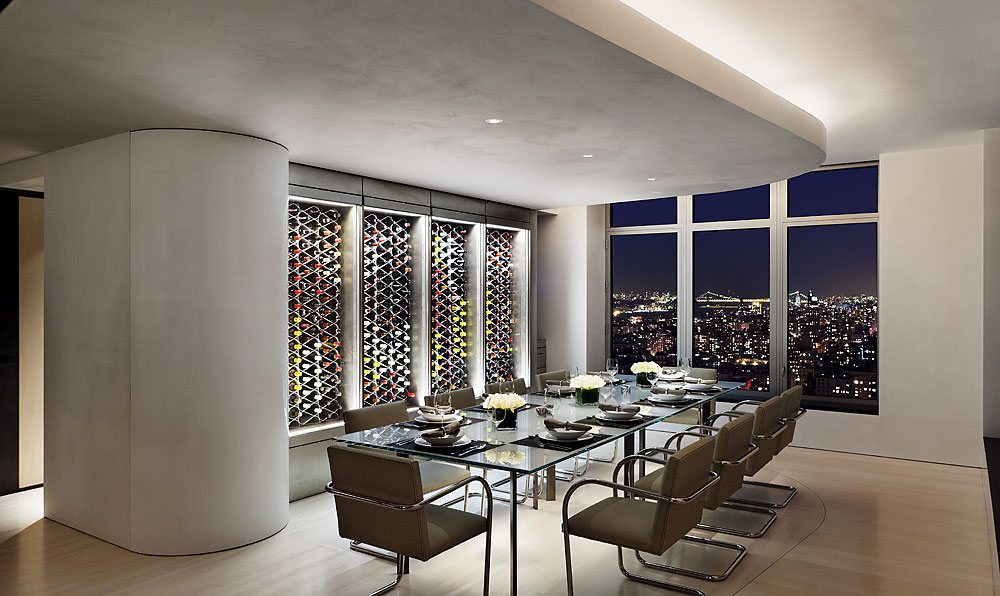
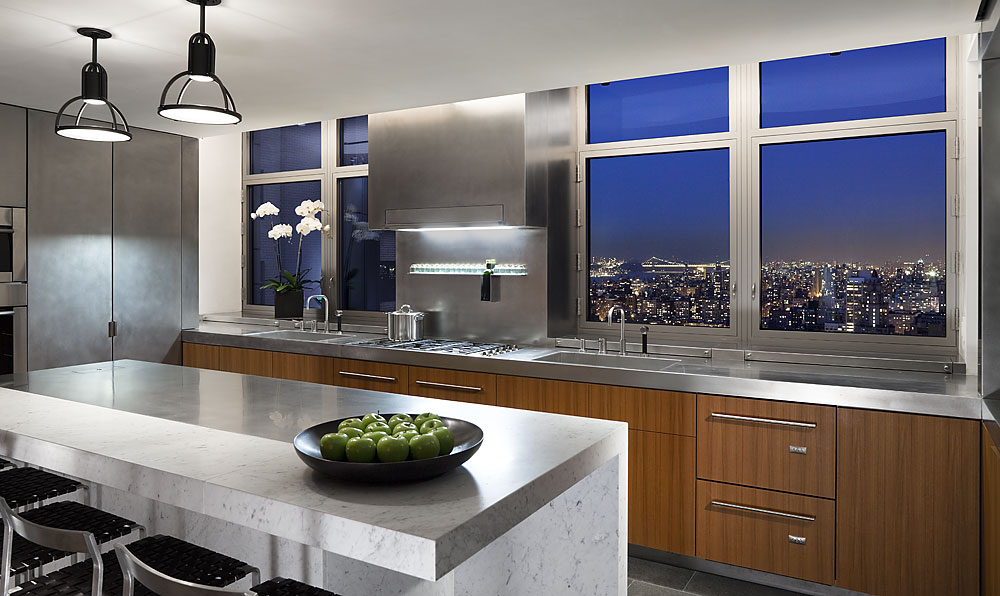
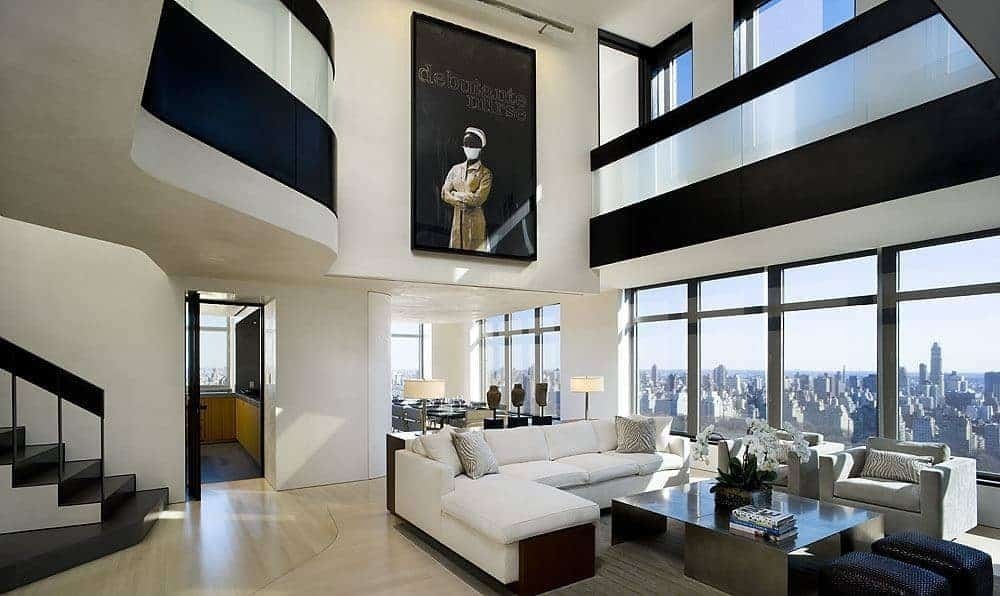
New York, NY The apartment, designed within a 5,000-square-foot penthouse duplex space on the 40th floor set back from Central Park West, affords unique panoramic views of the New York City skyline and beyond. Continue BackThe material palette establishes a consistency throughout, while maintaining the formal parti and compositionally rich sculptural intervention, simultaneously rendering the space as a serene, private oasis separate from, but visually engaged in the city.
Apartment 51/52 West
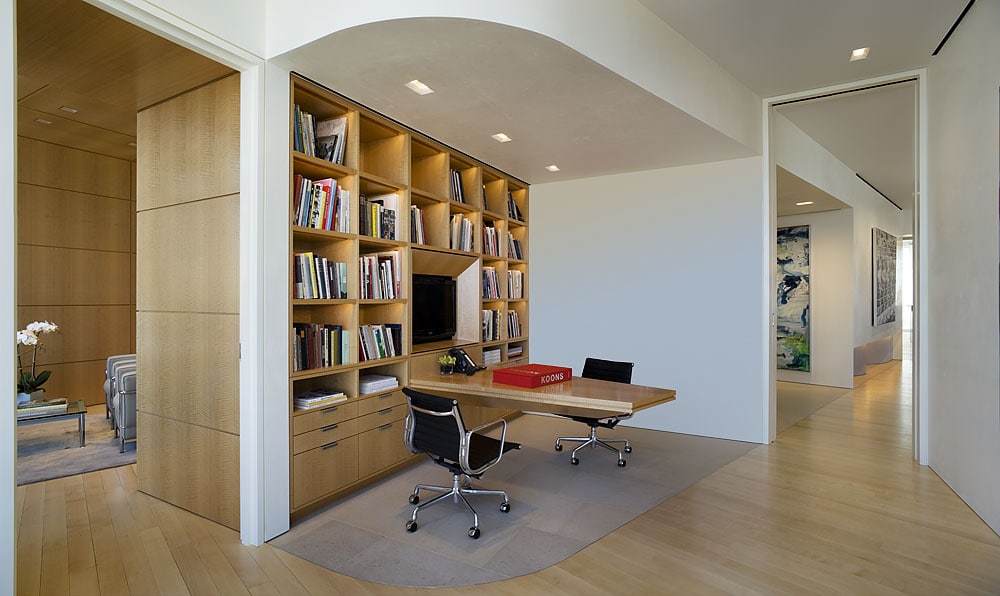
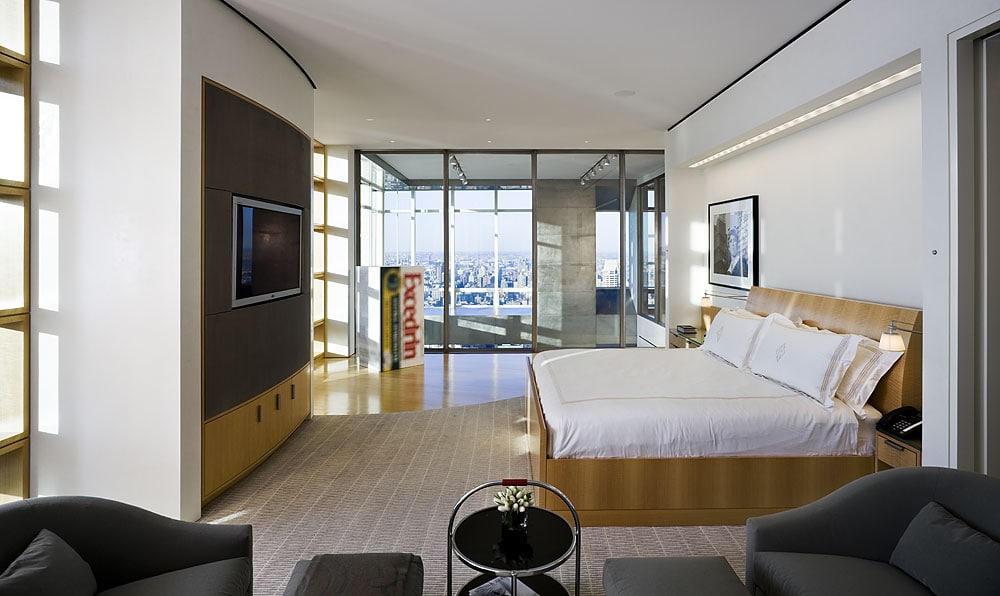
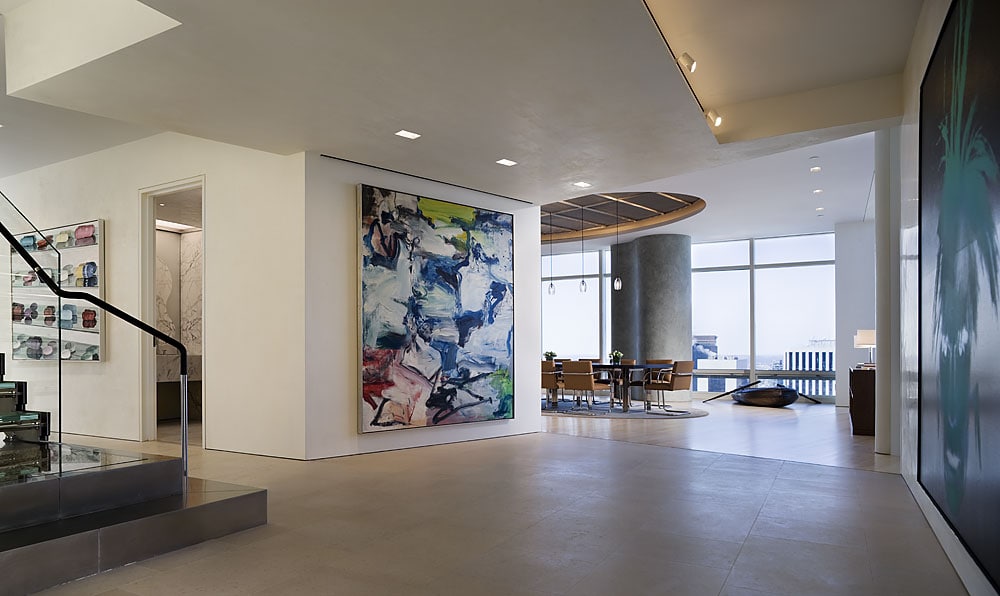
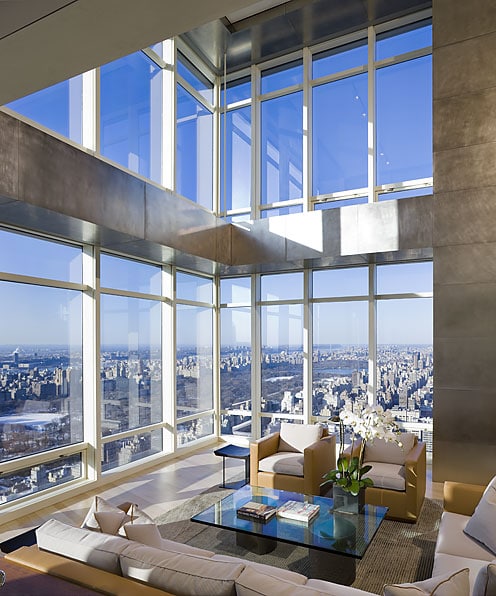
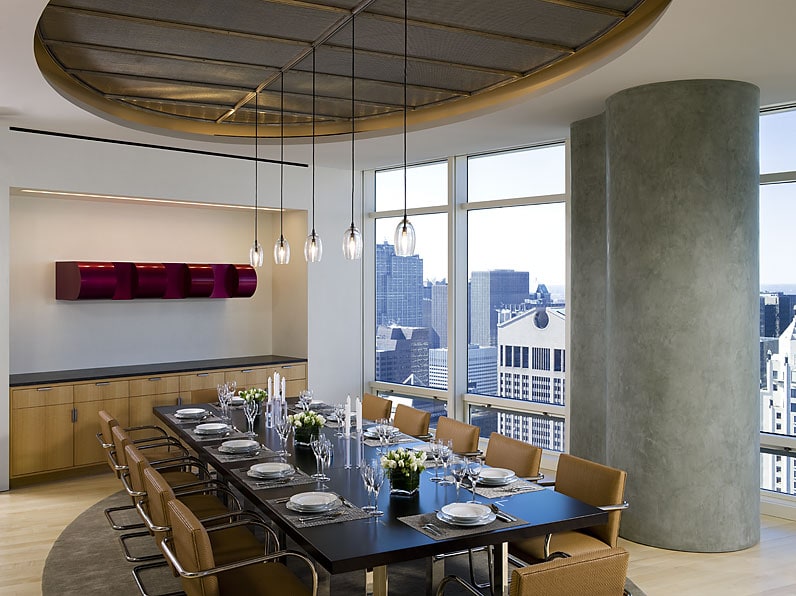
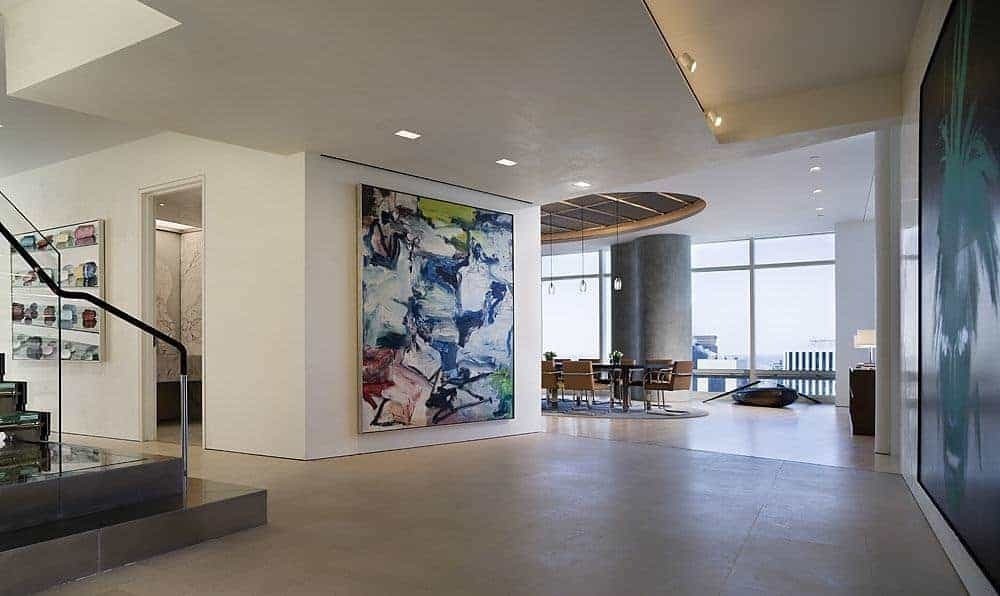
New York, NY The design of this 8400 square foot duplex apartment on the 51st and 52nd floor of the Bloomberg Building on the east side of Manhattan required major floor removal and curtain wall structural reinforcement to accomplish the spatial and programmatic requirements. Continue Back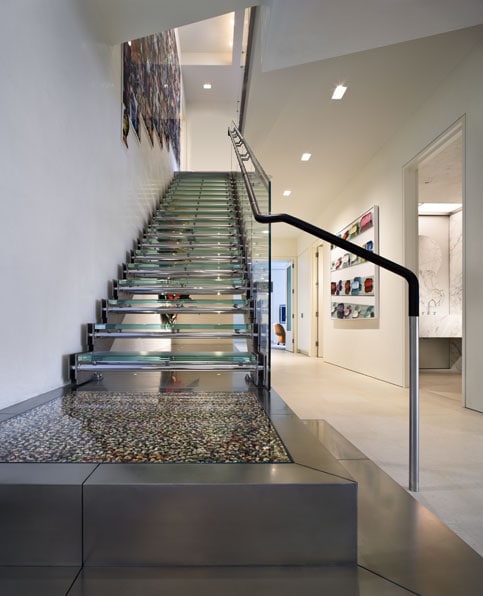
Arango Apartment
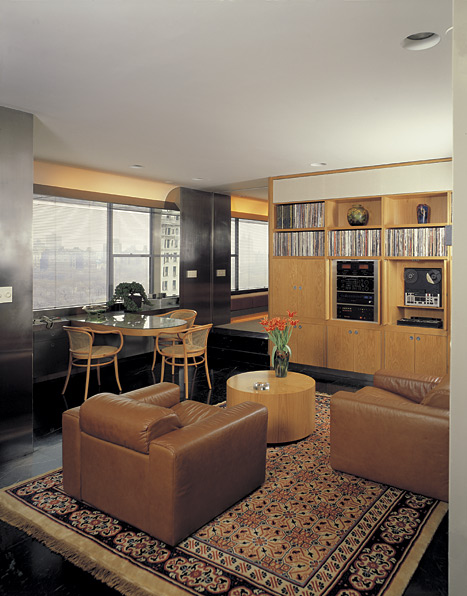
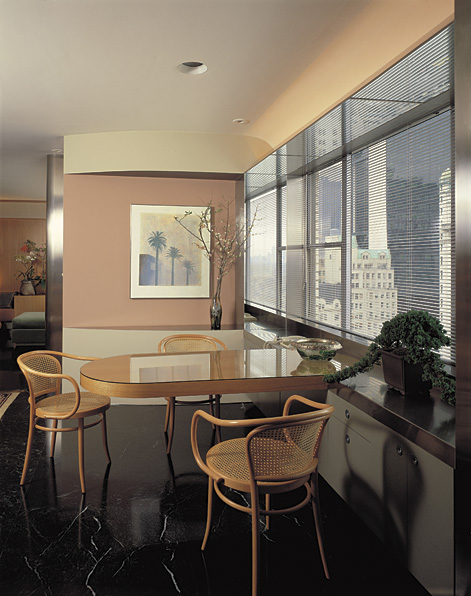
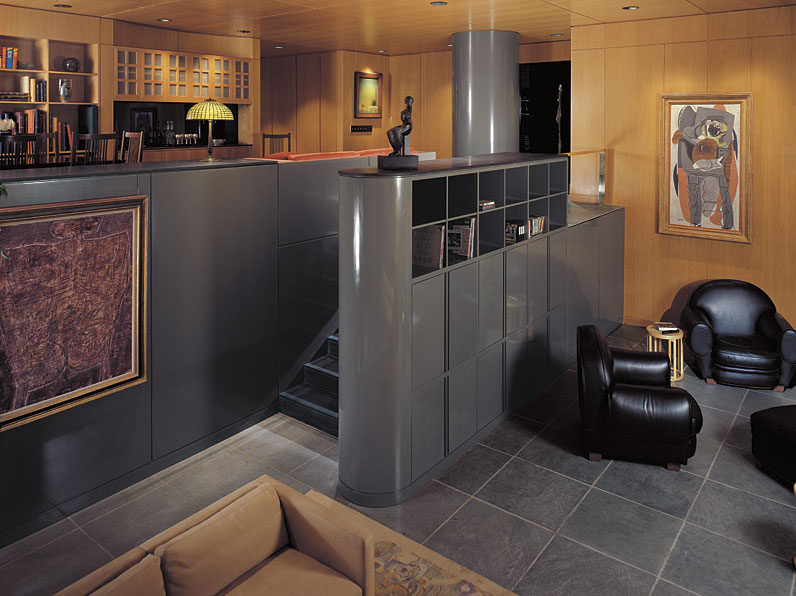
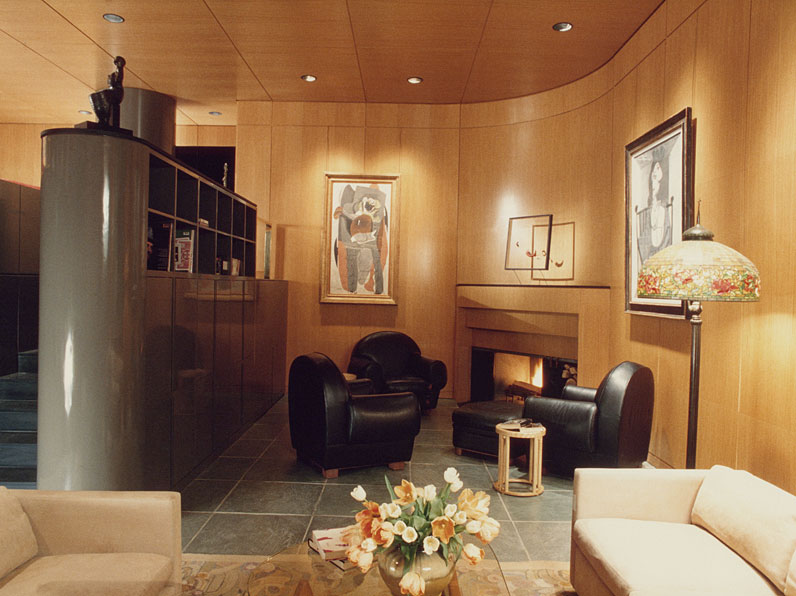
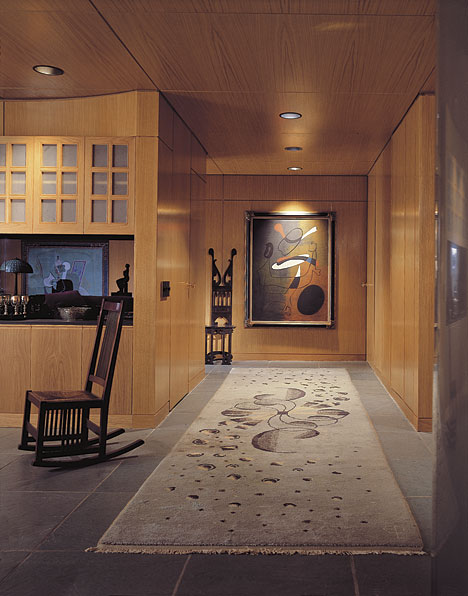
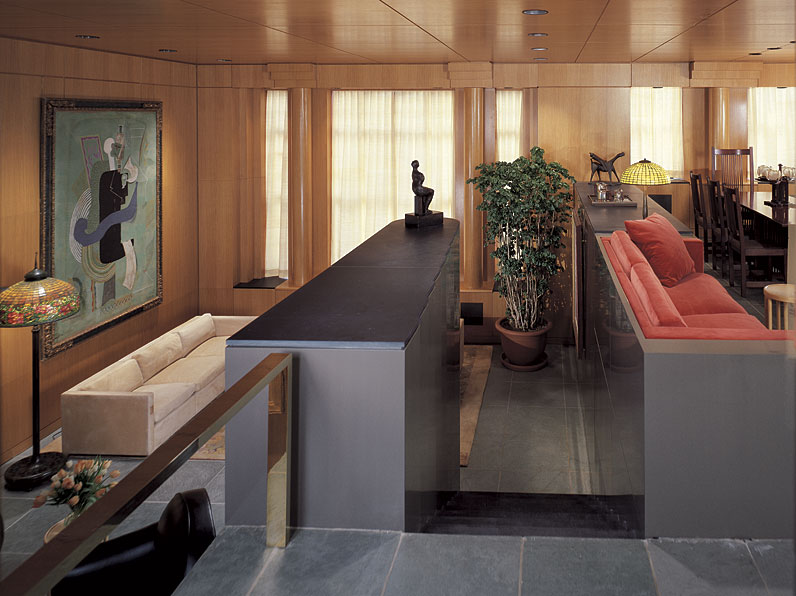
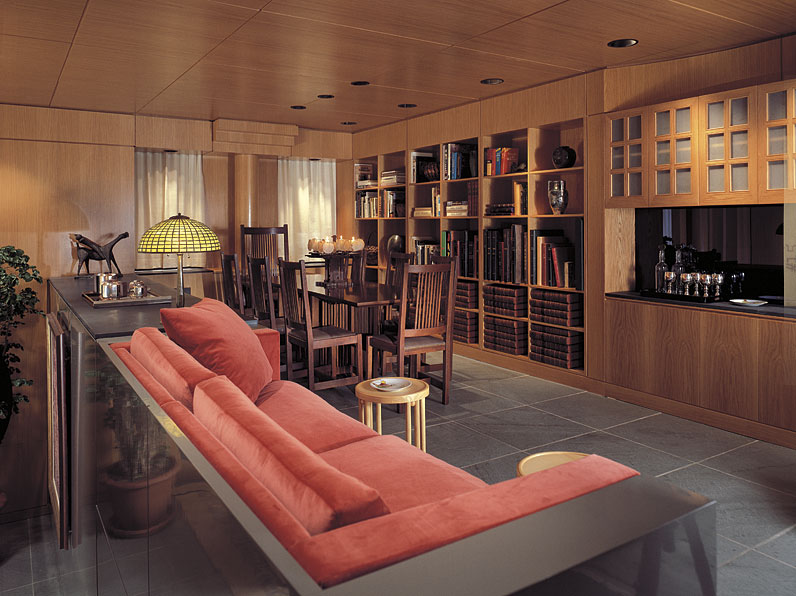
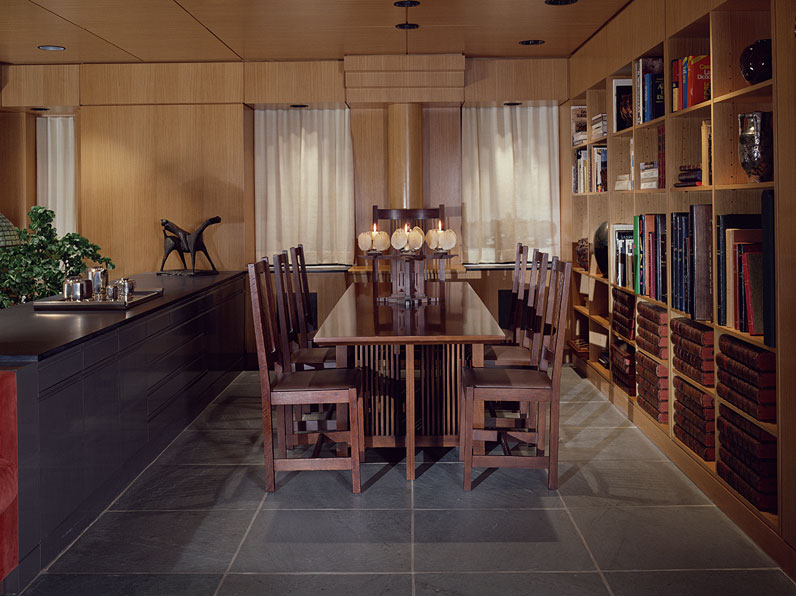
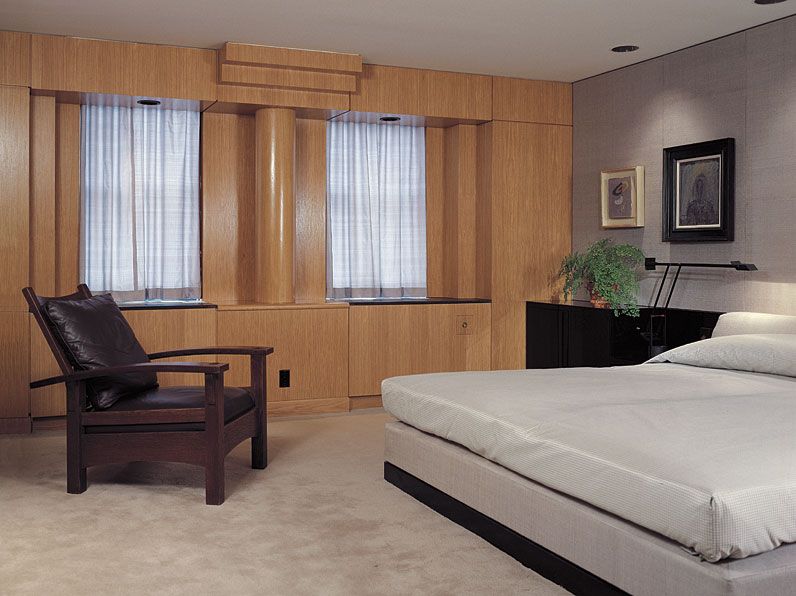
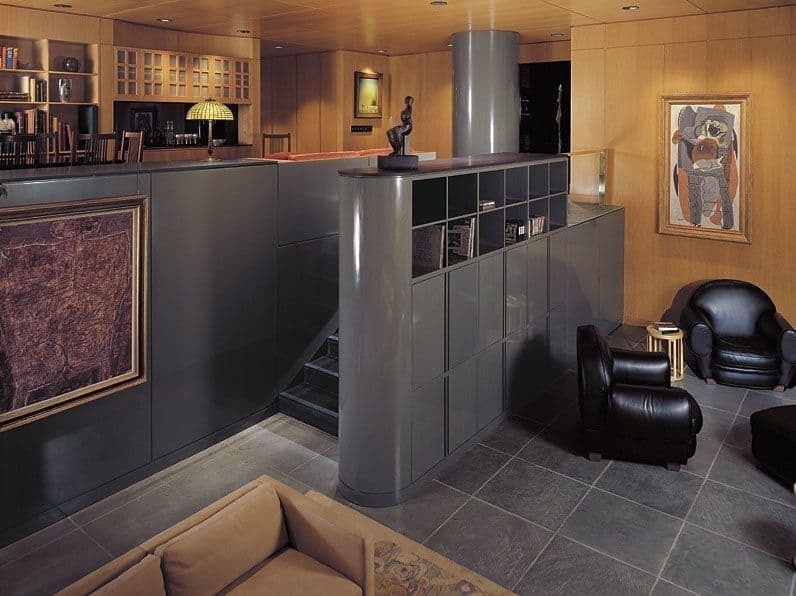
New York, NY The parti for this apartment was anchored by the opening of what became the dining/sitting space into a balcony overviewing the living room, six feet below. This transformation created a volumetrically complex, open public room where, previously, there had been a sequence of small-scale, cellular spaces. Continue BackThe perimeter wall, which reinforces perceptual unity throughout the apartment, is deeply recessed, with articulated oak columns integrating the black slate sills and the dropped heads with stepped capitals. The design reaffirms the possibility of a dialogue between abstraction and traditional architectural language.
Fifth Avenue Apartment
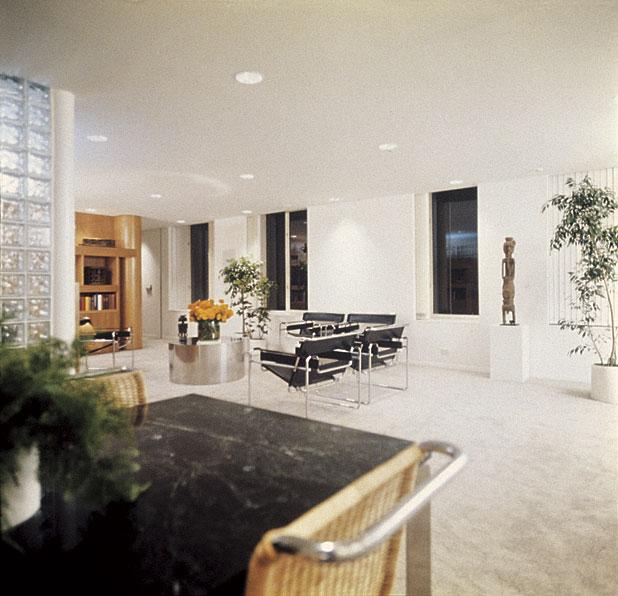
New York, NY With one window facing Fifth Avenue and the remainder of the space oriented north to buildings across the street, the apartment is divided into two defined zones, living and service, that are connected by a link that could not be enlarged. Continue Back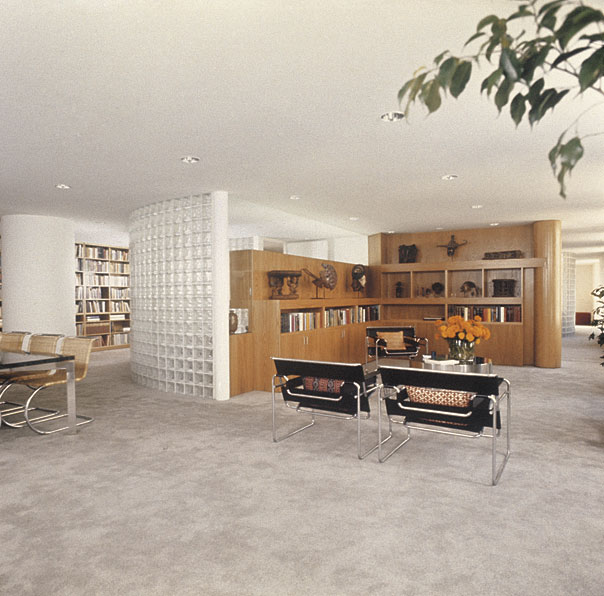
Central Park South Apartment
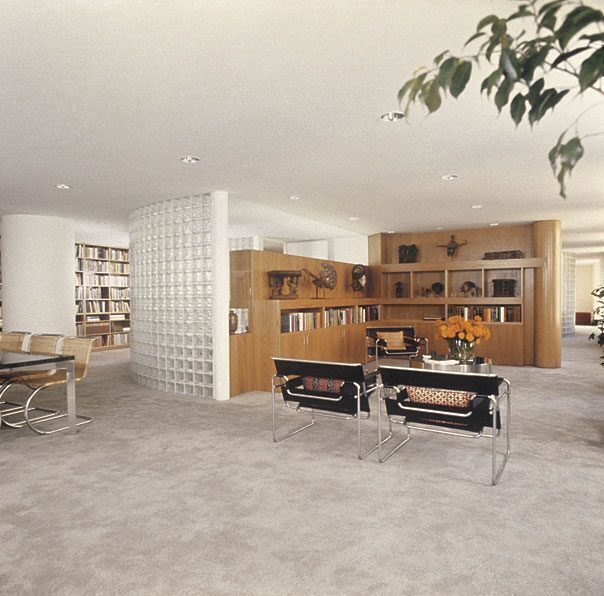
New York, NY This apartment is within an 8,000-square-foot single floor of a hotel building facing Central Park. The existing conditions included ceiling heights of under 8'4' and a random matrix of columns and plumbing lines. The owner, a collector of modern and contemporary art, specified a dense program overlaid with the integration of his art. Even the empty space is a spectacular environmental sculpture. Continue BackThe extended material palette, referencing a Cubist collage—wood, stone, integral plaster, stainless steel, and titanium—is integrated into a spatial hierarchy that is both subtle and refined. This apartment takes the enriched palette and the sculpted space and, despite all the asymmetries, results in an incredibly enriched and serene environment. The extended sectional modulation reinforces the sense of variation and disengages one from the perception of being in a low, horizontal environment.
The architecture is the coequal frame for the art, the furniture, and the view. Every form, every manipulation, and every carving is responsive to either the display of the art, the occupation of the objects, or the reference of the view.
Central Park West Apartment
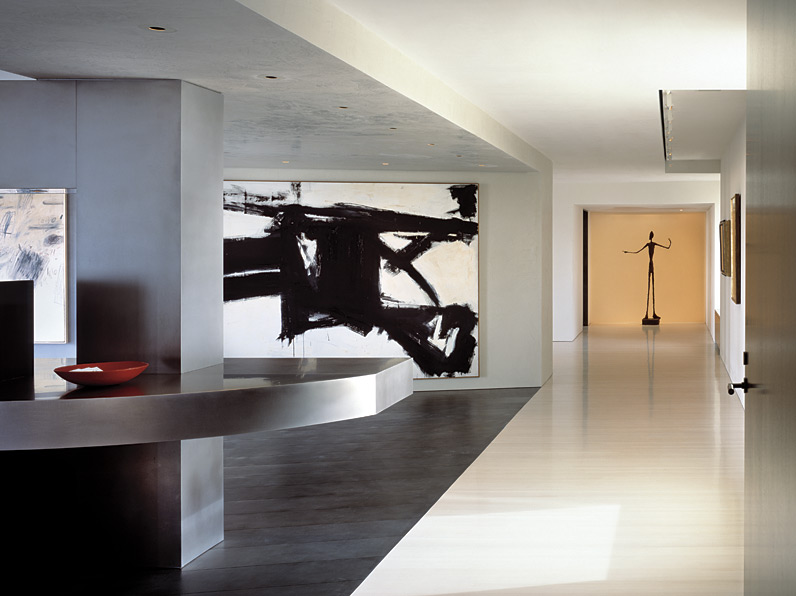
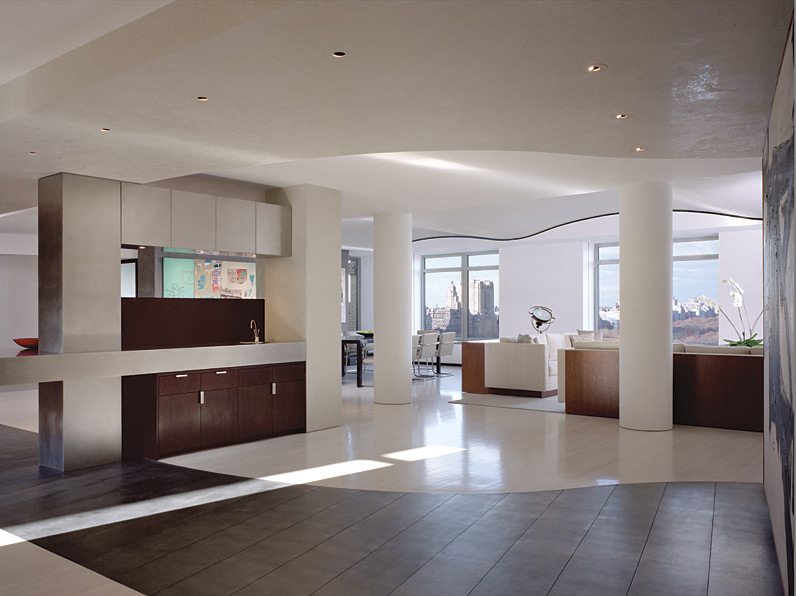
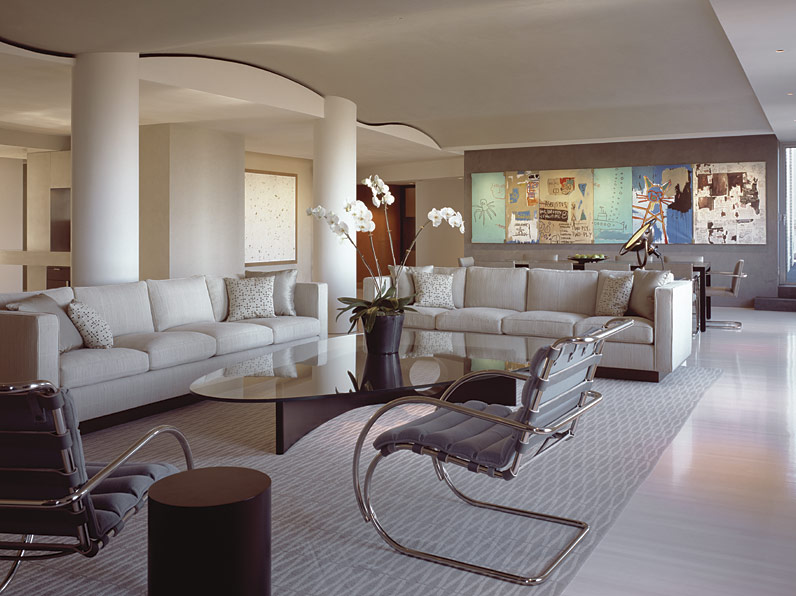
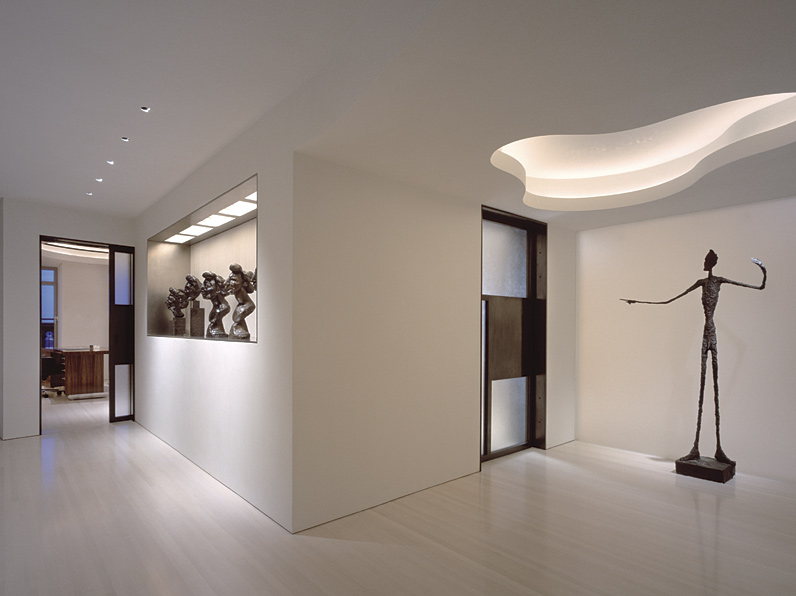
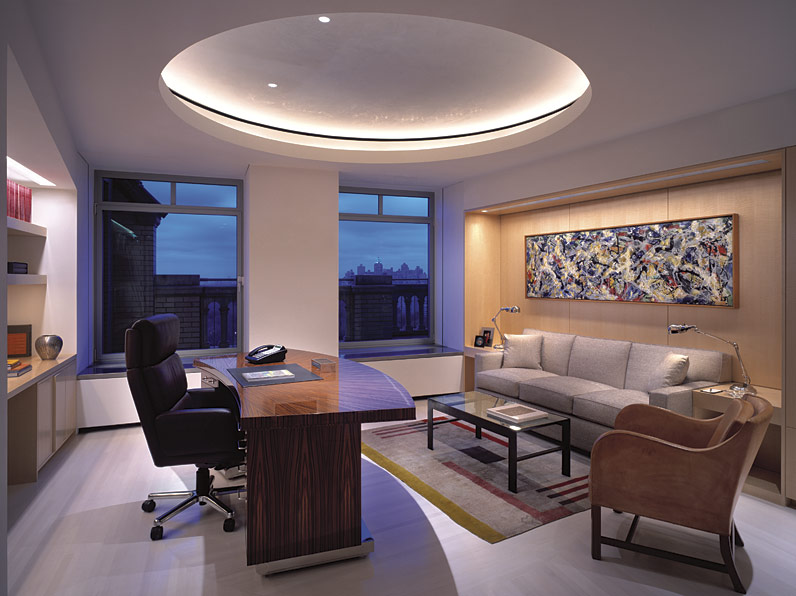
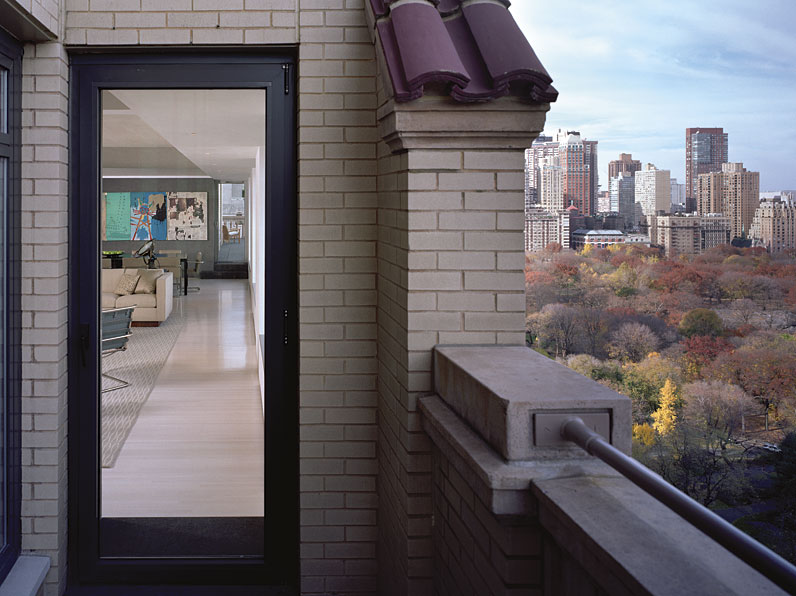
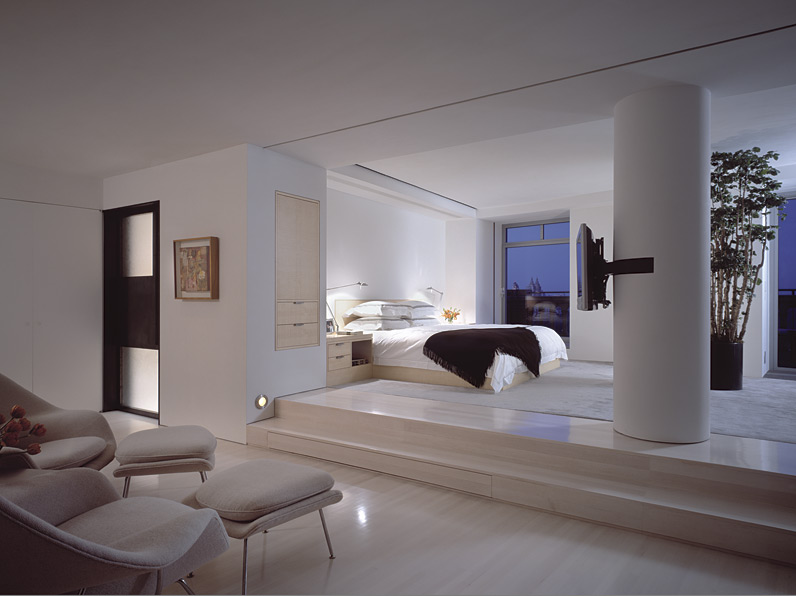
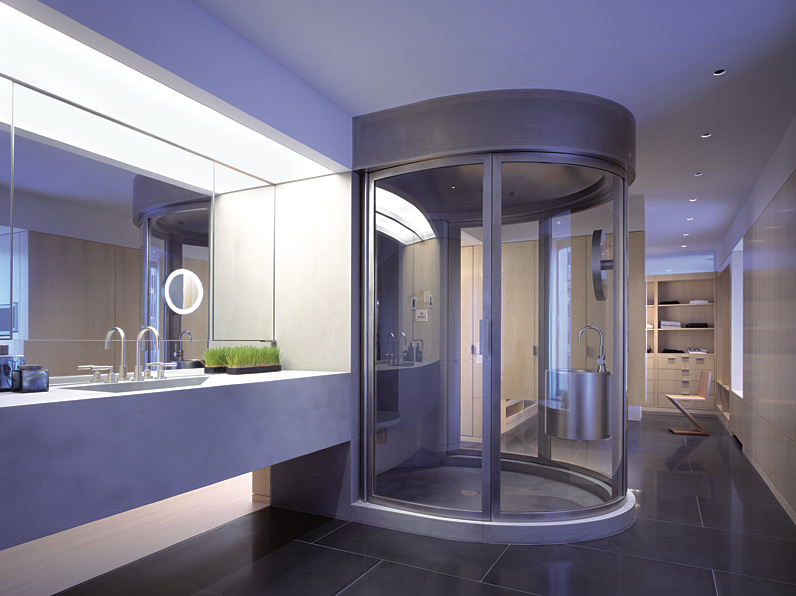
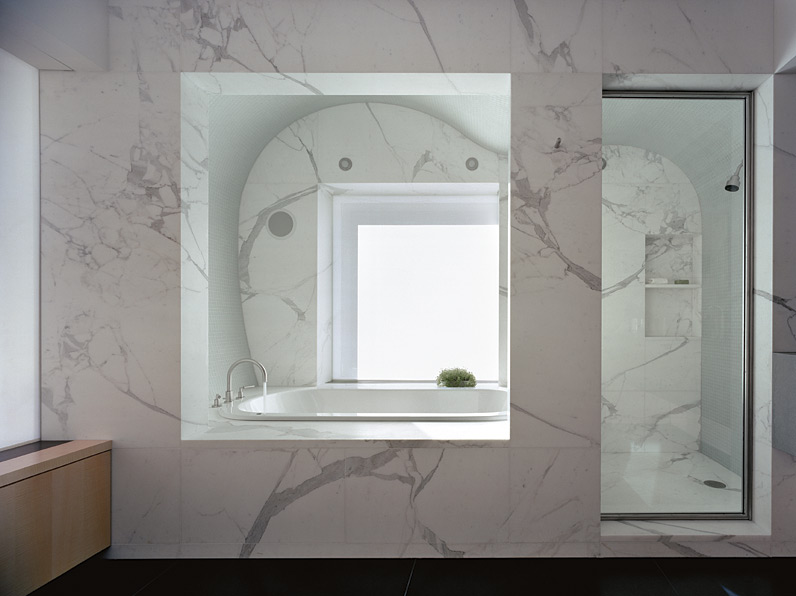
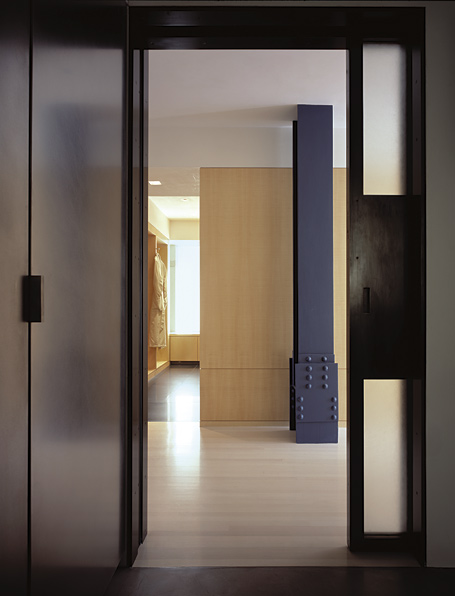
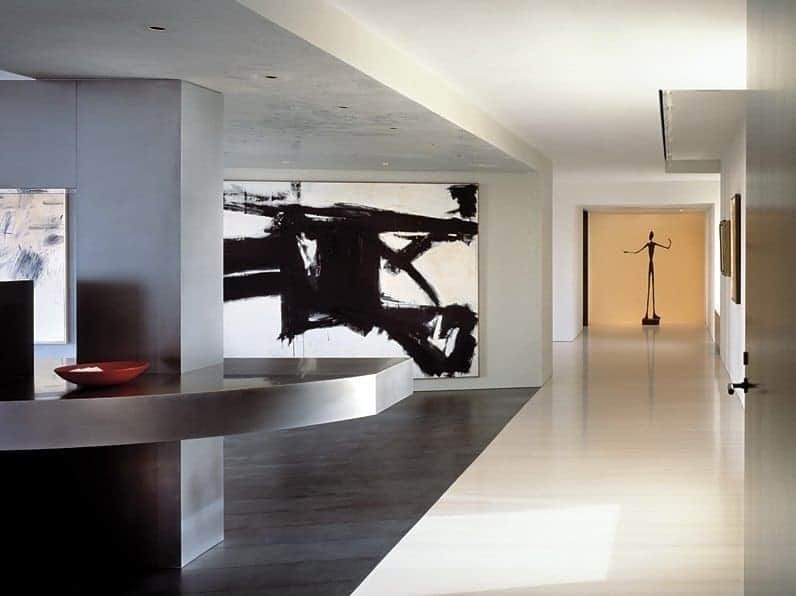
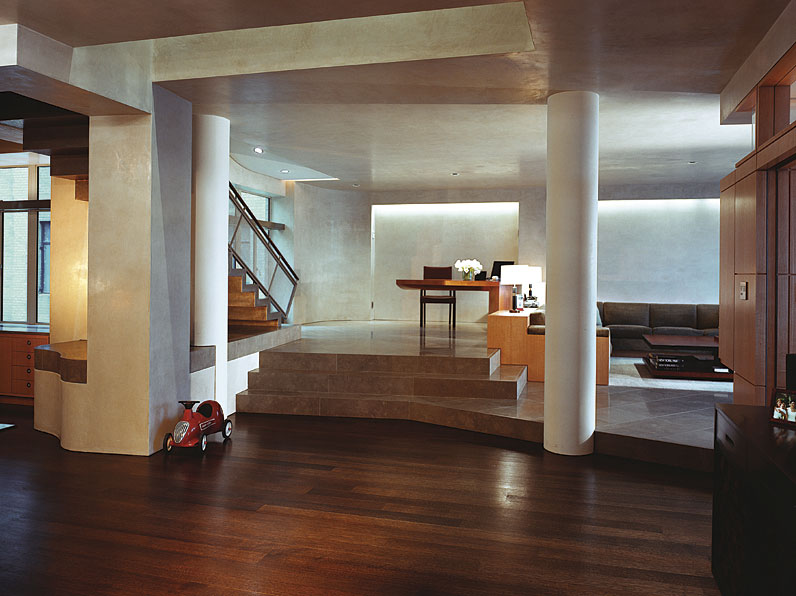
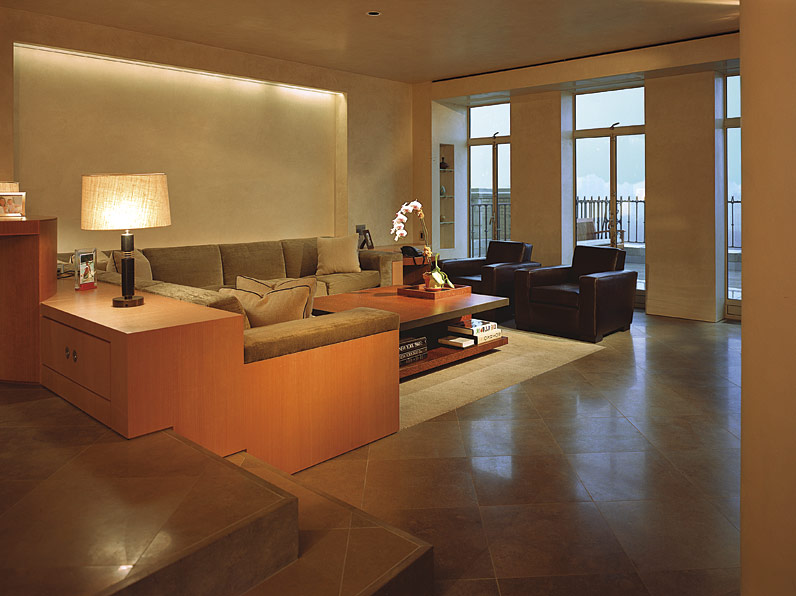
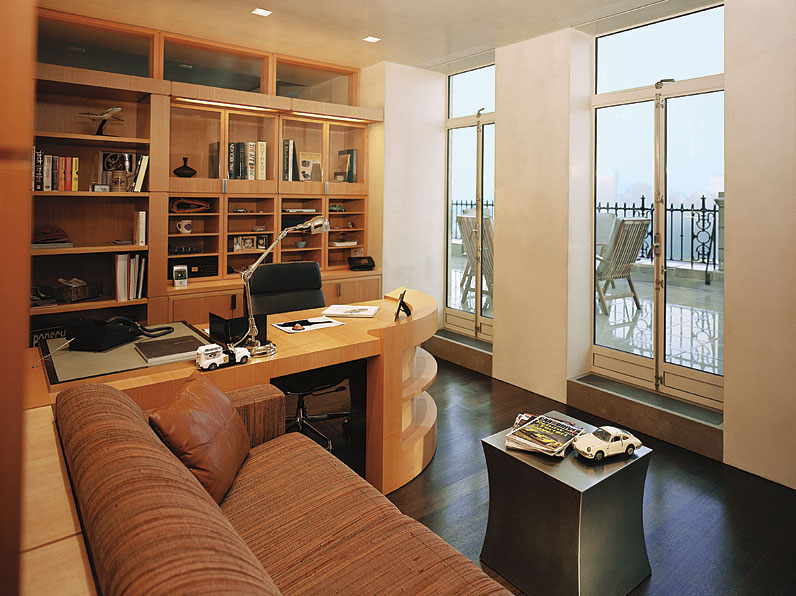
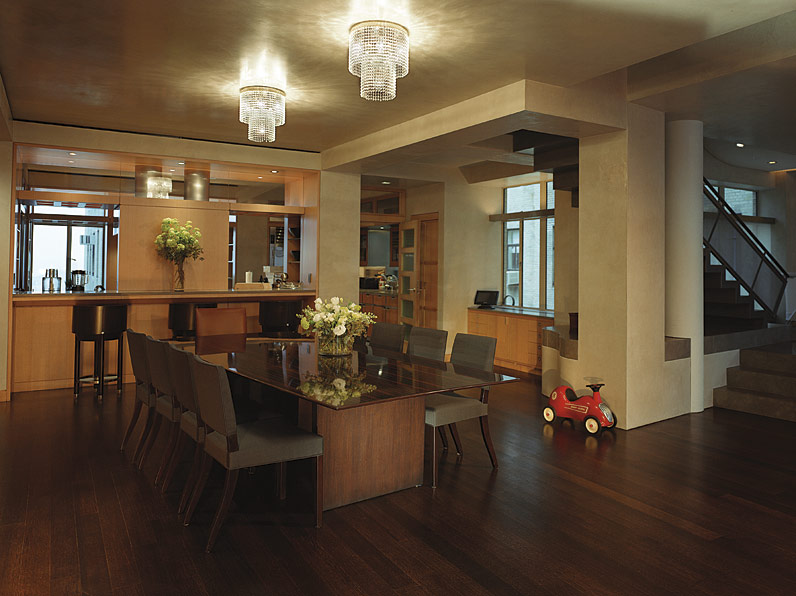
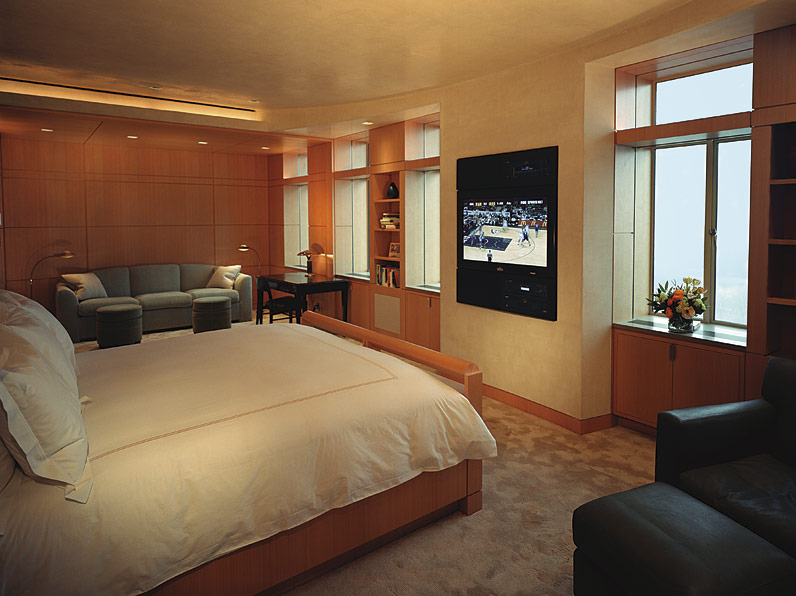
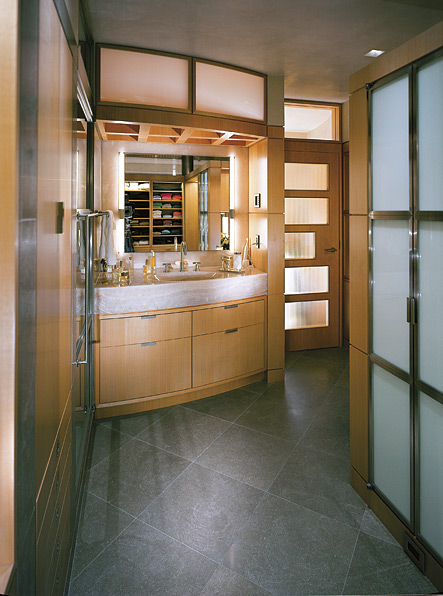
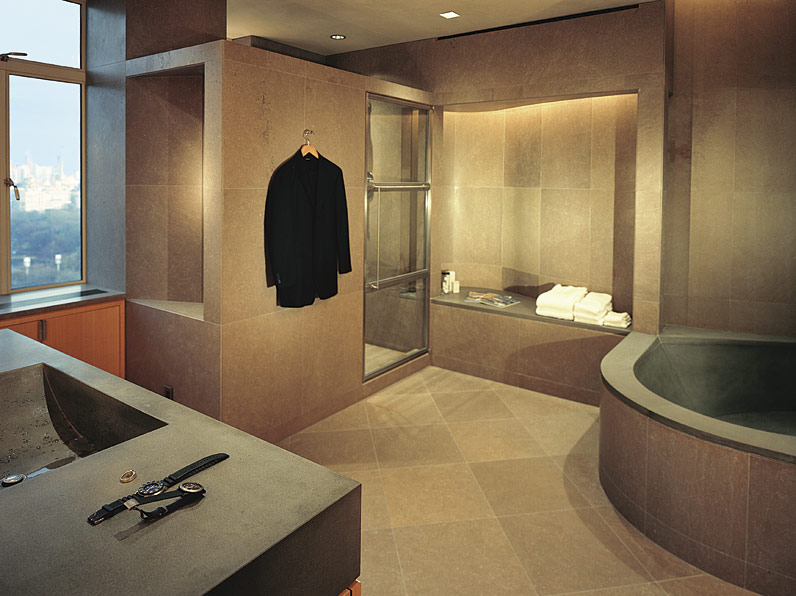
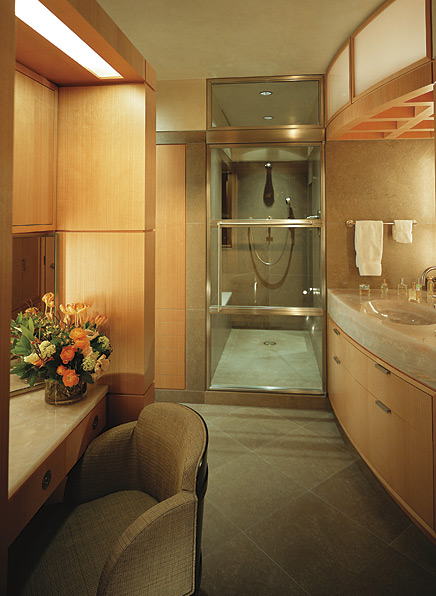
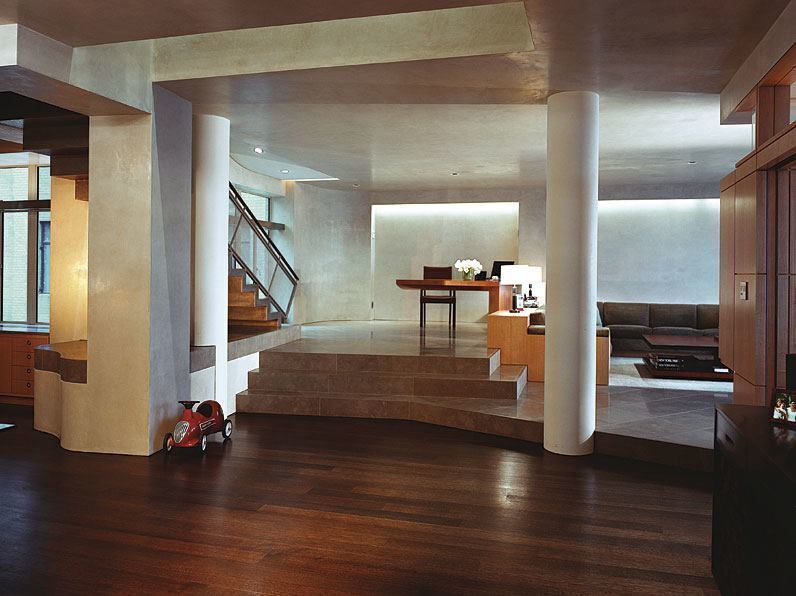
New York, NY The 3,800 square foot duplex apartment in the iconic Beresford Building on Central Park West represents a total transformation of the traditional building topology. The resultant “loft” is a sculpted, volumetrically manipulated, spatially dynamic environment. Continue BackThe material palette of stone and dark stained oak floors, stainless steel, titanium, anegre wood paneling and cabinet work, reinforce the spatial hierarchy and complexity, as well as establishing a sense of density and permanence.
The design fulfills the formal, object/frame strategy through a complex and composite layering that is both visually and psychologically resolved.
Dunaway Apartment
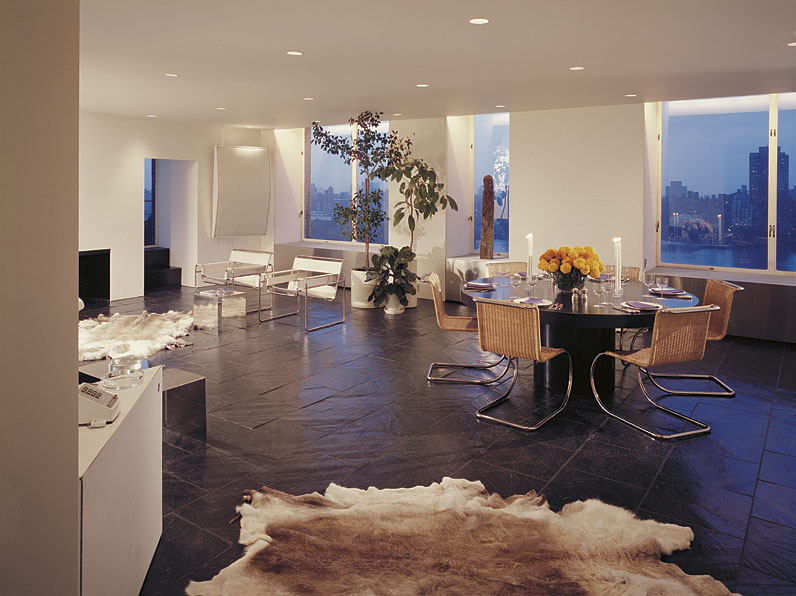
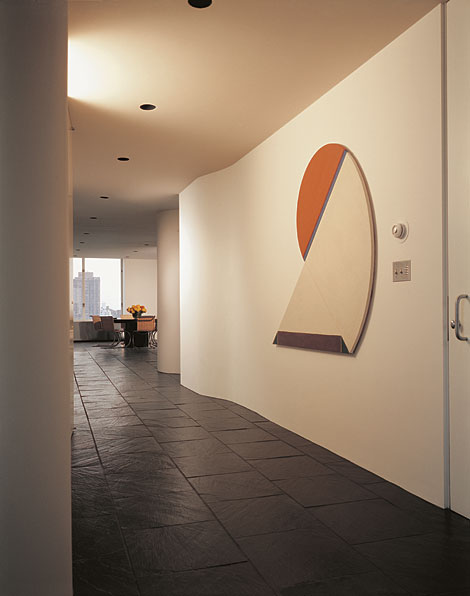
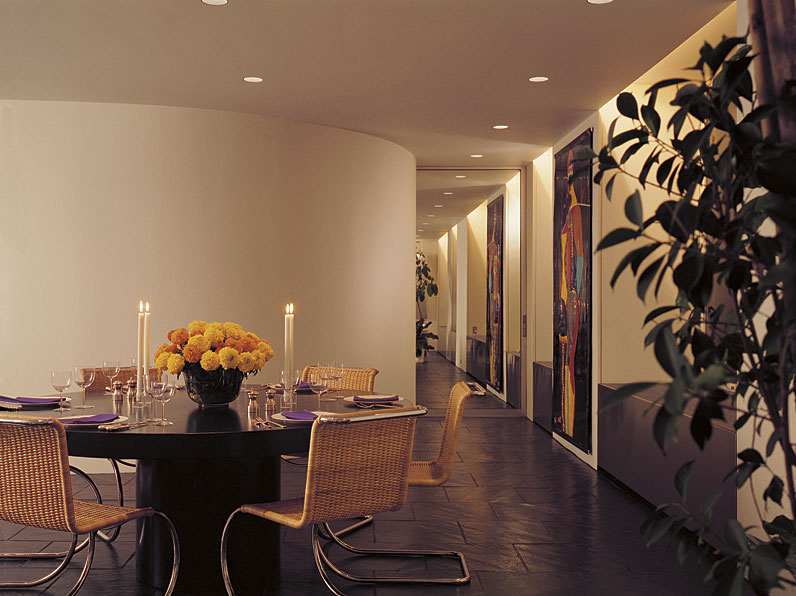
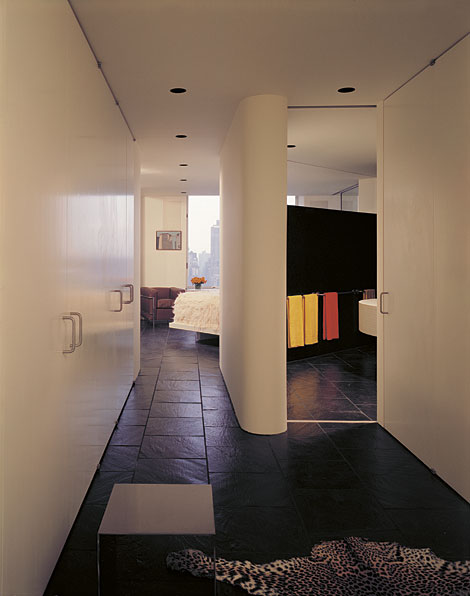
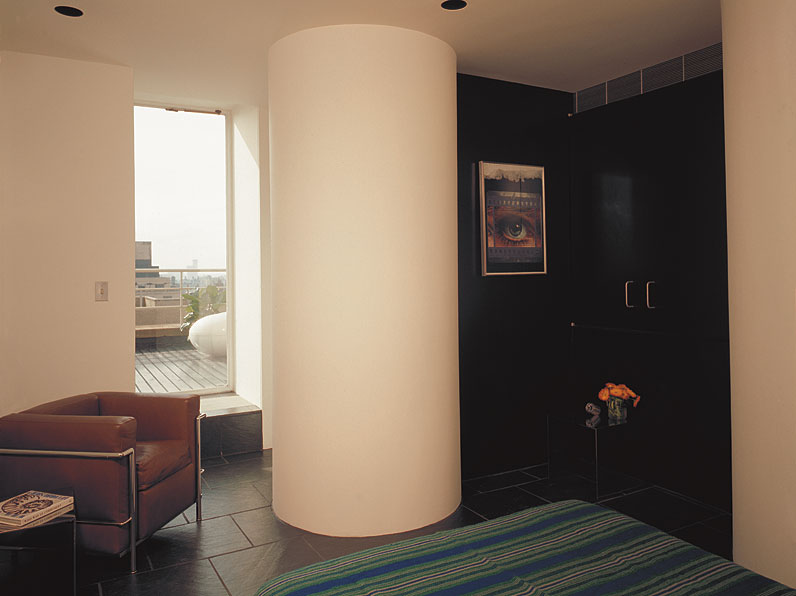
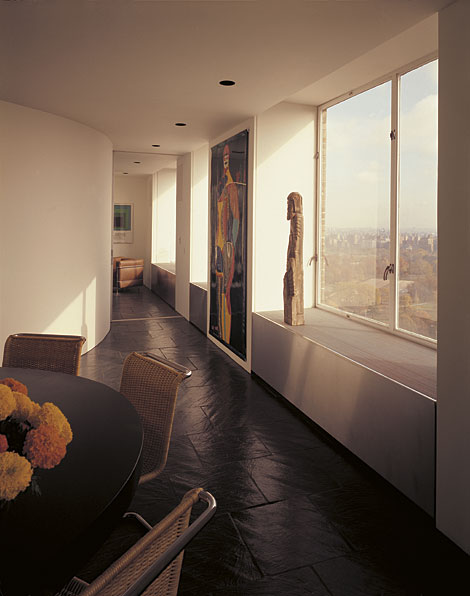
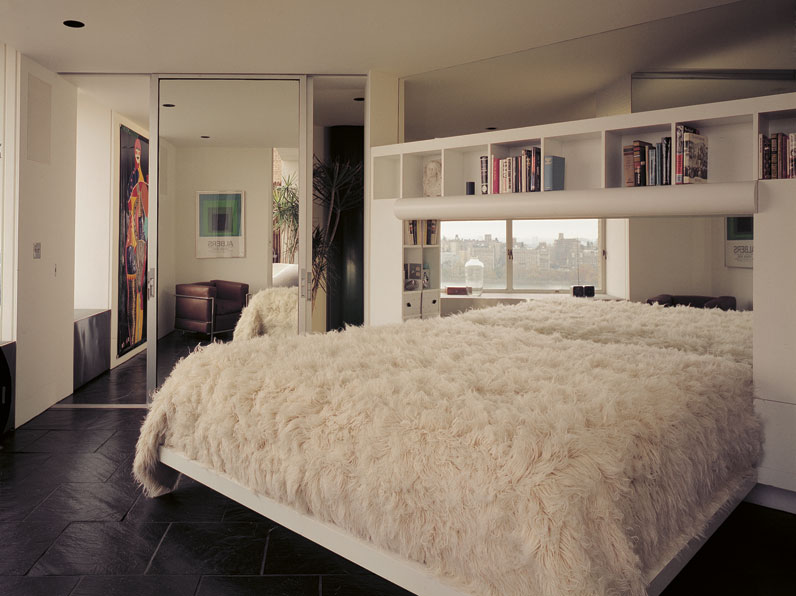
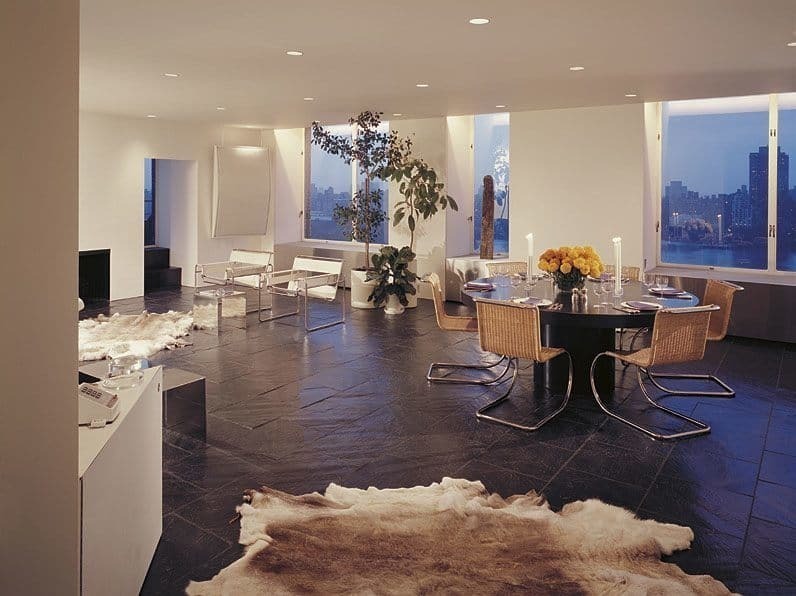
New York, NY On the twentieth floor of a 1930’s Central Park West building, this space combines two apartments, creating a horizontal volume that slices through the base of the tower, releasing two views on three sides—east to Central Park, south to the Manhattan skyline, and west to the New Jersey Palisades. These extensive views and low ceilings provoked the widening of all major window openings. Continue BackThe edited palette- the black slate floor, white walls and ceilings and back and white lacquer cabinetwork—intensifies the abstract reading of the space.
Fifth Avenue Penthouse
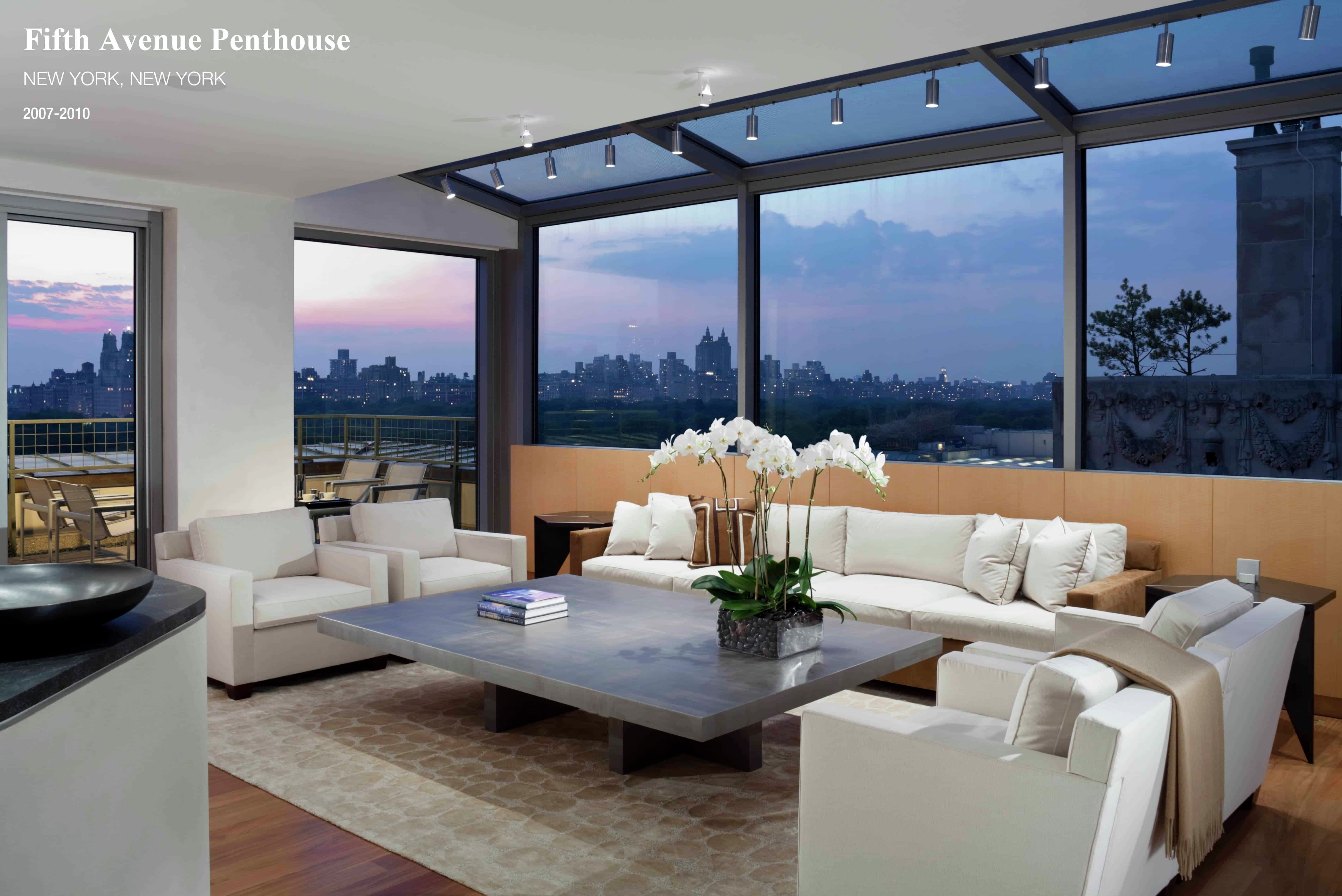
New York, NY
Geffen Apartment
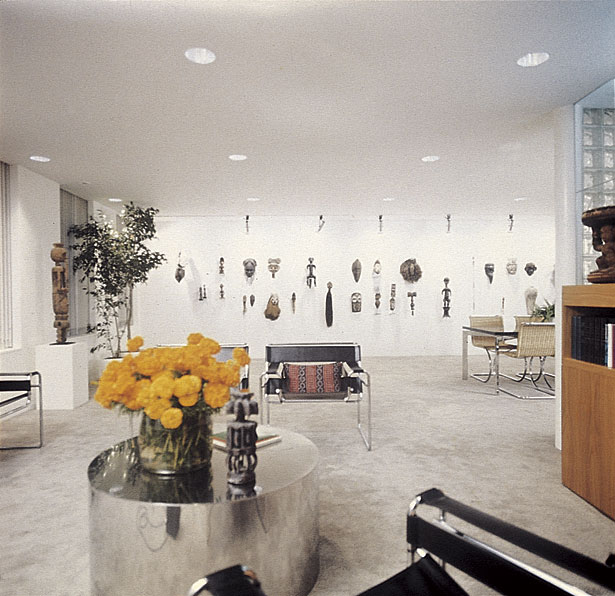
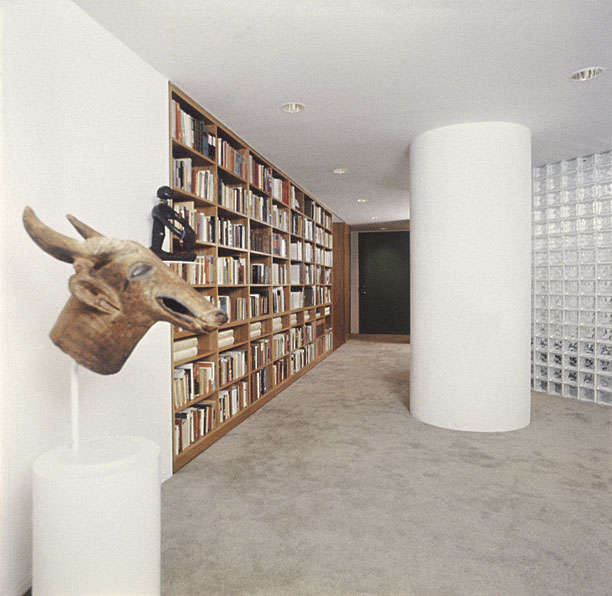
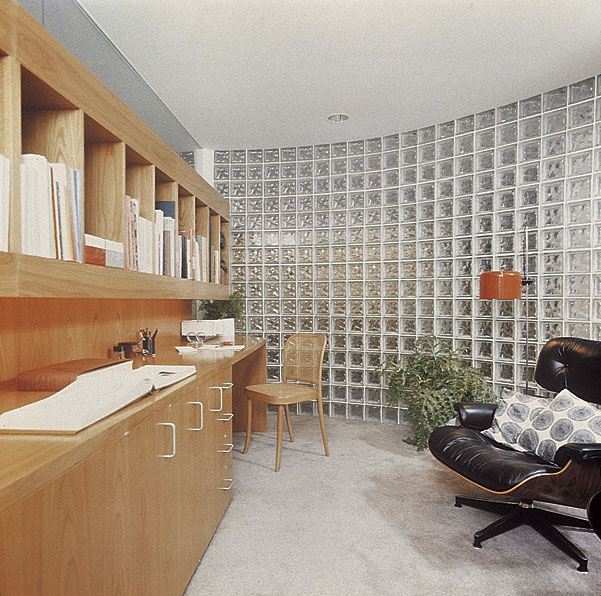
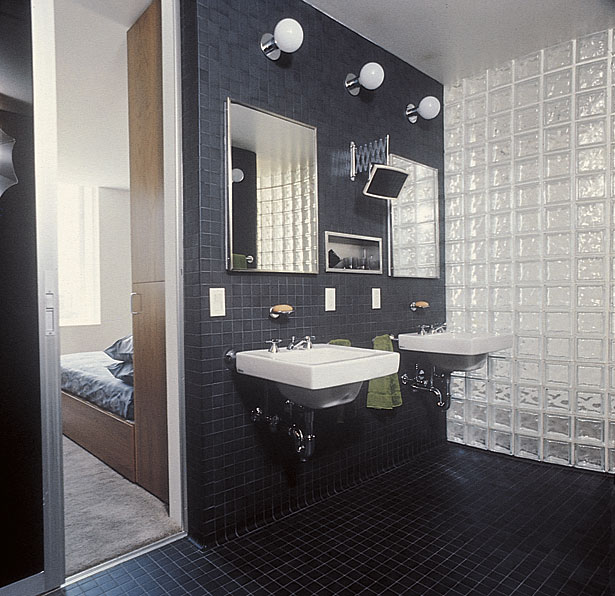
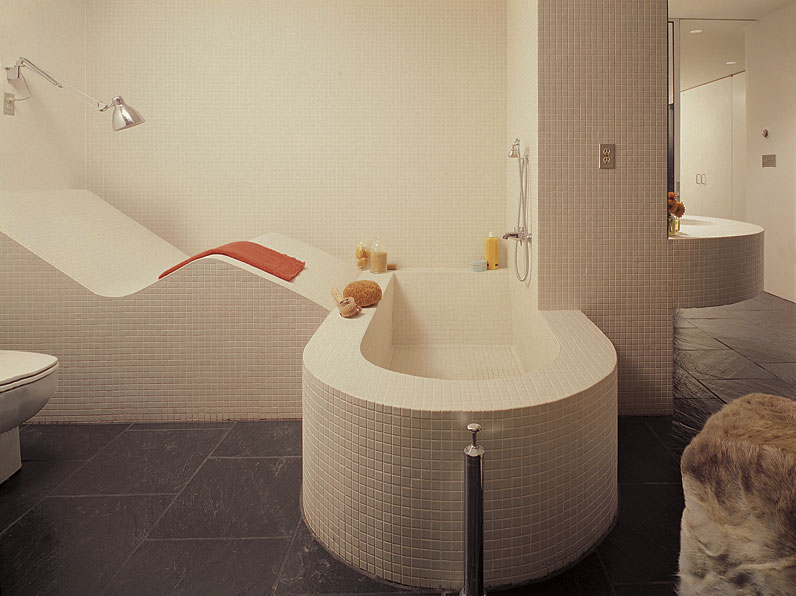
New York, NY Of all Gwathmey Siegel Kaufman designs, perhaps the play of geometry is at its tightest density in this relatively small Manhattan apartment of 1979. The vocabulary of forms here (with the exception of a rather organic tub enclosure in the master bathroom) is quite limited, without the compound curves of the Swid apartment. Continue Back