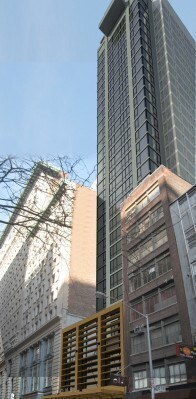
Gwathmey Apartment
New York, NY This was an opportunity, since I was the client to reject earlier precedents and investigate new ideas without third party constraints. The transformation of this typical 2,500 sf, Fifth Avenue apartment into a spatially complex pavilion marks the first time that the notions of axial rotation and object/frame are simultaneous and uniform, both in terms of the space making and object placement. Continue BackThis apartment is both a summary of discoveries made in earlier projects and a speculation on new ideas. It represents a watershed moment in this sequence of investigations.
Koppelman Apartment
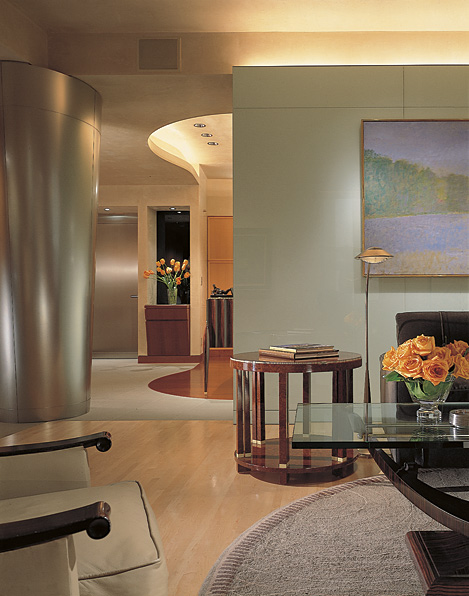
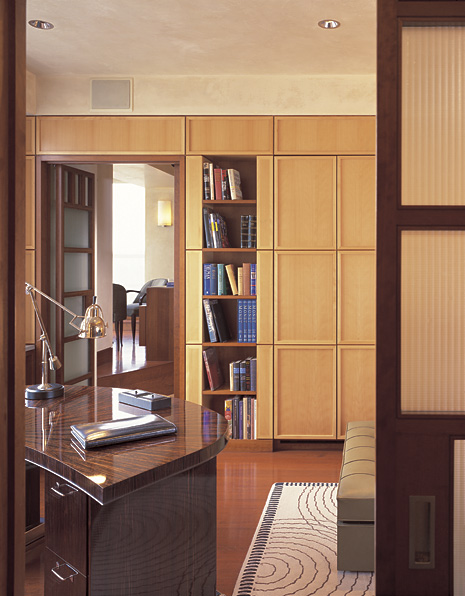
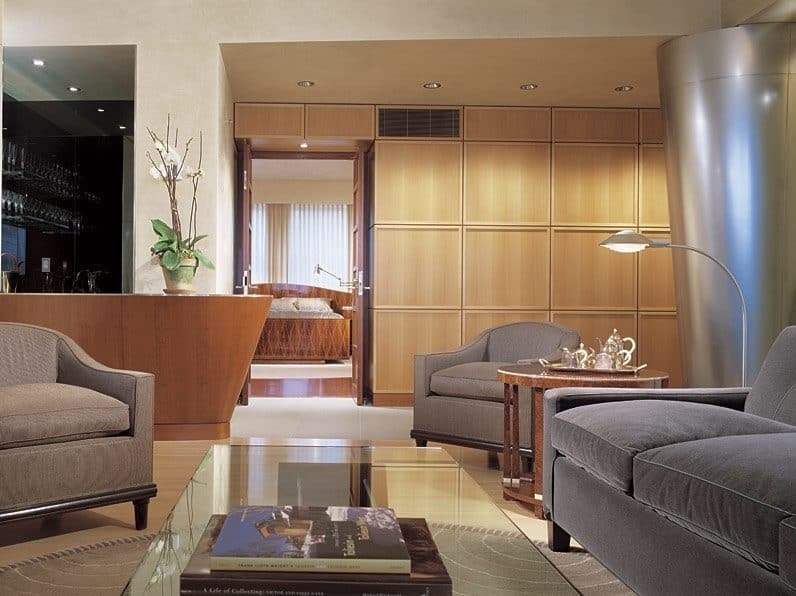
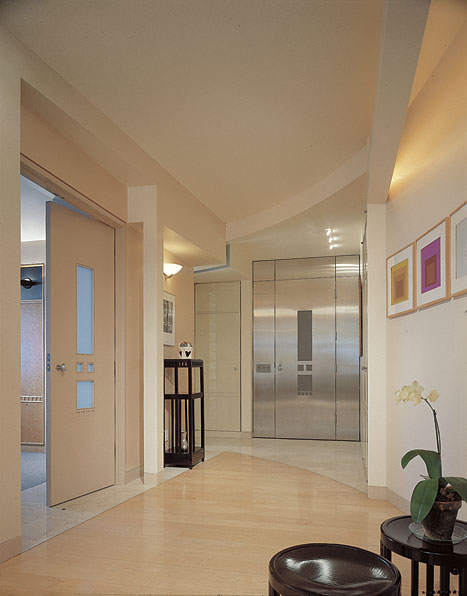
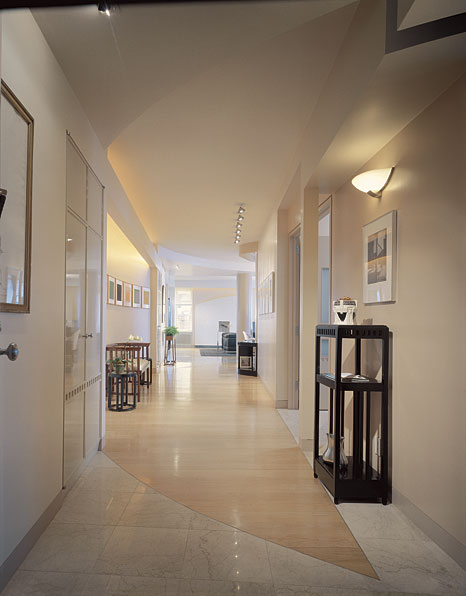
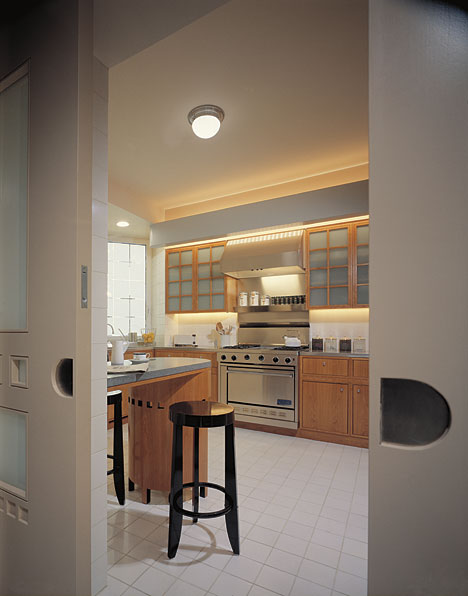
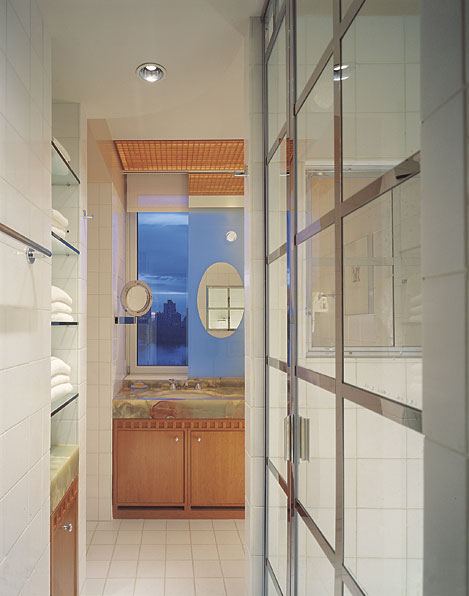
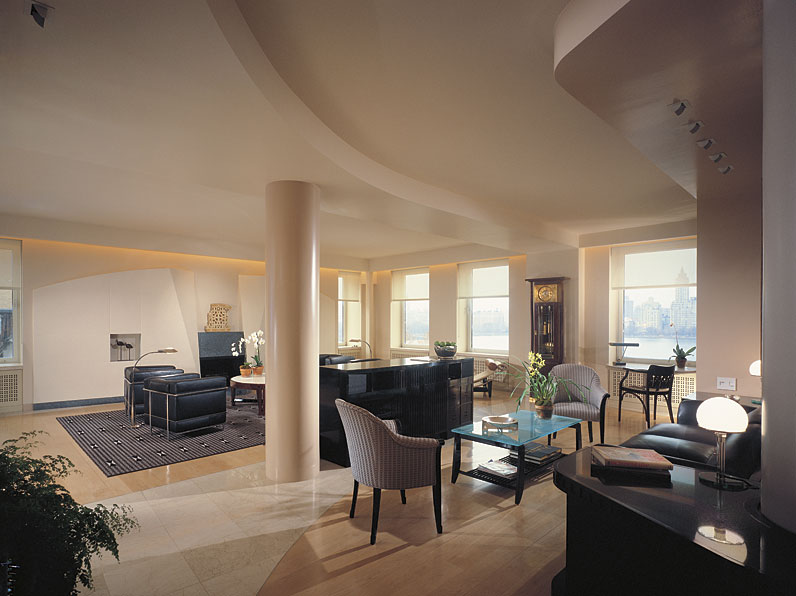
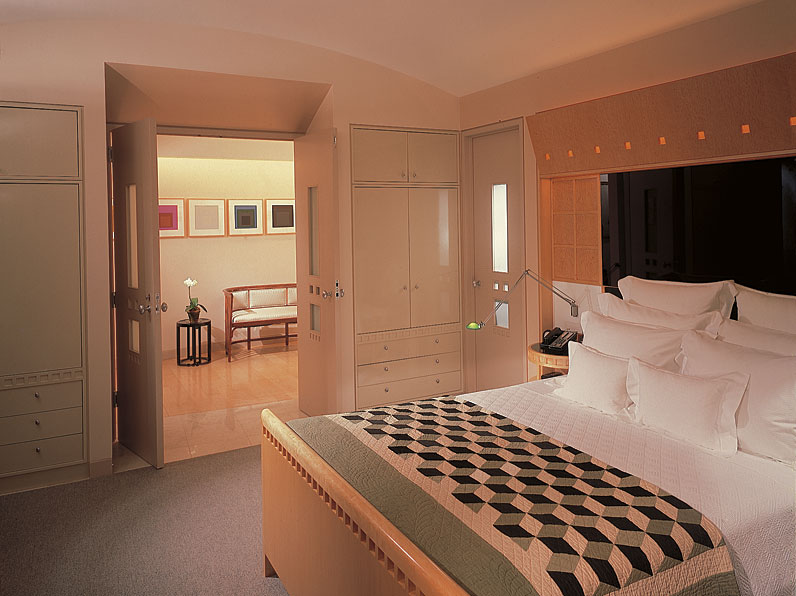
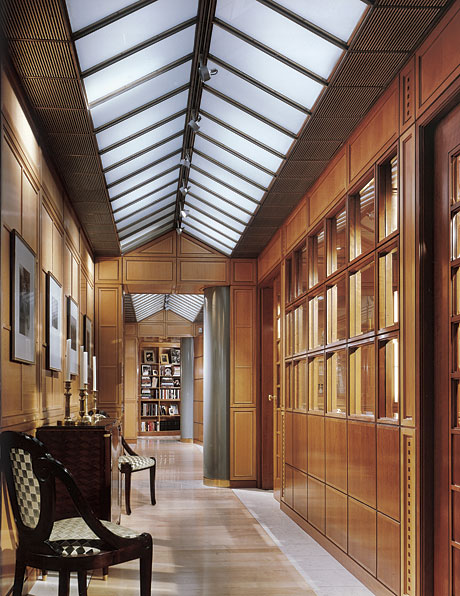
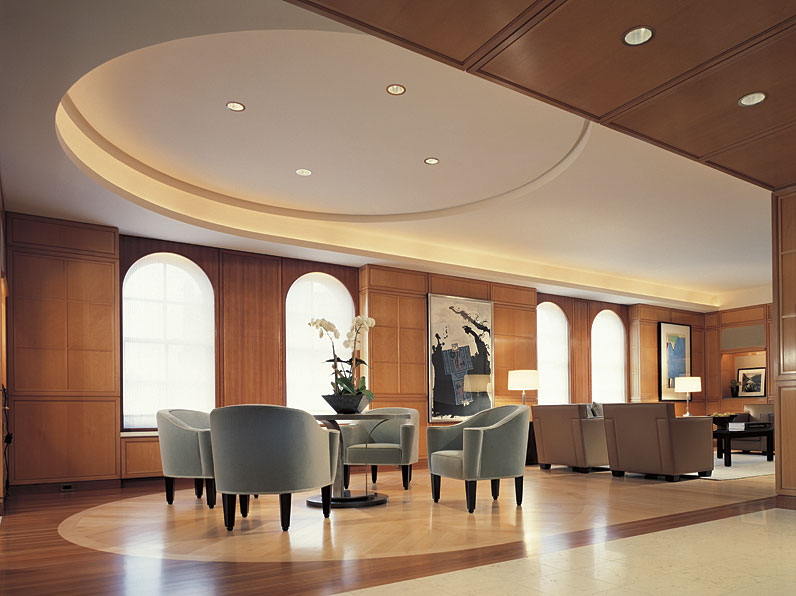
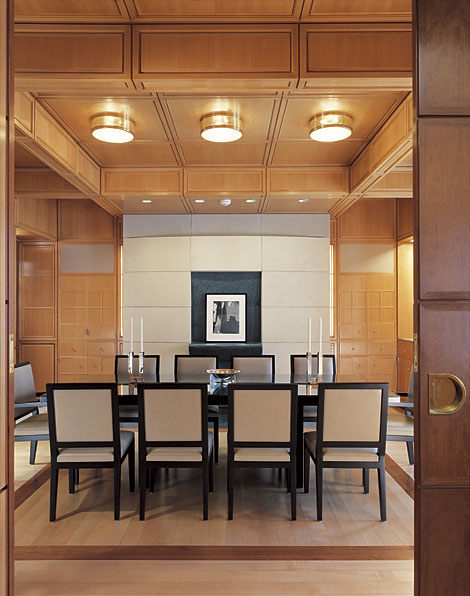
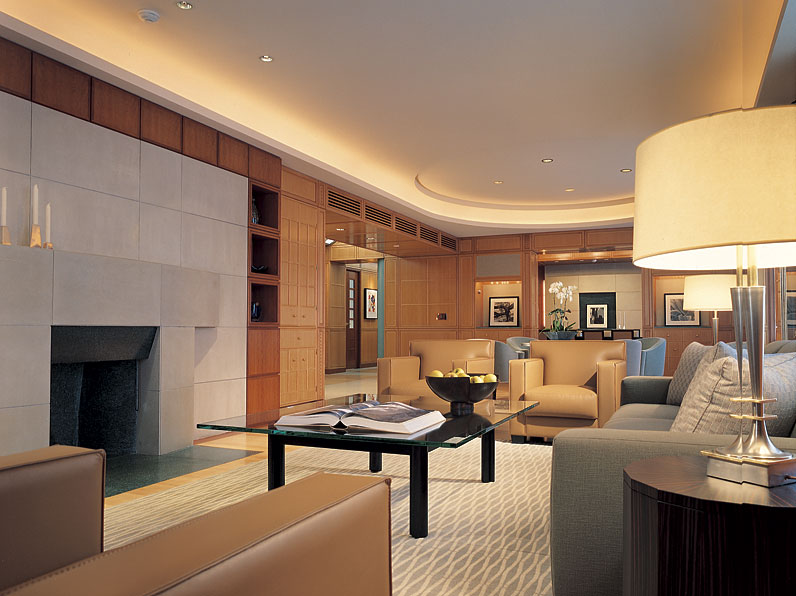
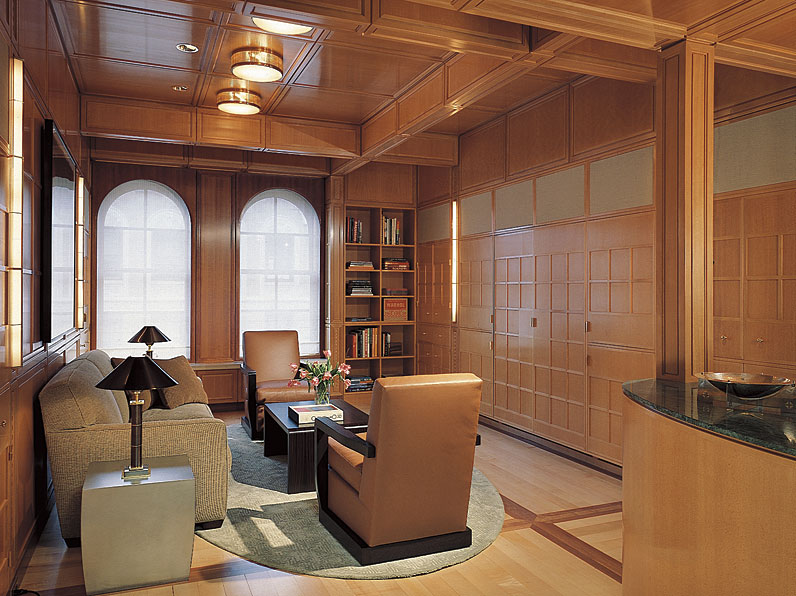
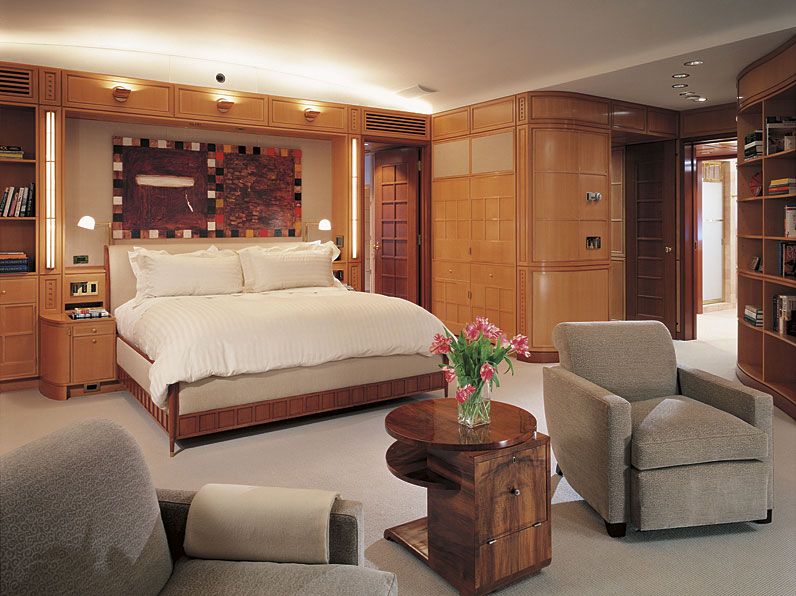
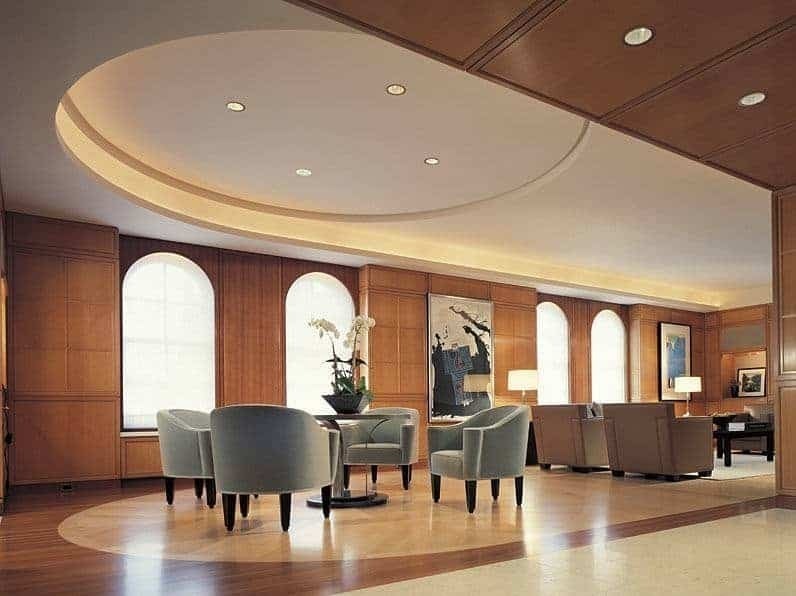
New York, NY This apartment, designed simultaneously with my apartment, represents a singular notion of container. It is the culmination of that previous sequence of apartments—where the primariness of the orthogonal grid was unequivocal. Continue BackA perceptual and literal layering of space is created by the carving from a solid to a void and defined by the articulated, inlaid, and modulated steamed beech and cherry wood paneling. The spaces are at once similar yet varied, dense yet open, articulate yet calm.
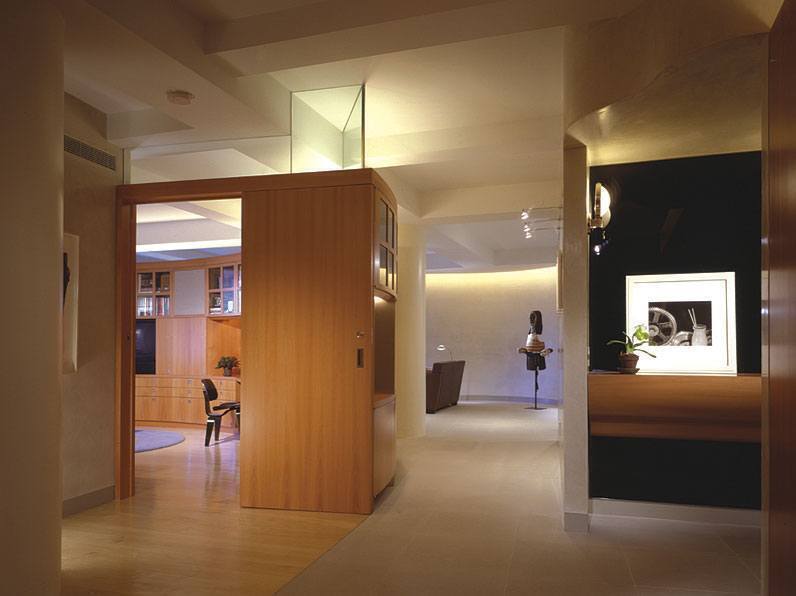
The skylit/laylight gallery is the referential, defining space, connecting and accessing, visually and literally, all the spaces in the apartment. It represents the transformation of “hall,” hierarchical and modulated over its length by the varying intersections and transitions.
This apartment was a unique design opportunity which resulted in a resolution that would otherwise never have come to without the client’s mandate. It was provocative and inventive.
Miranova Apartment
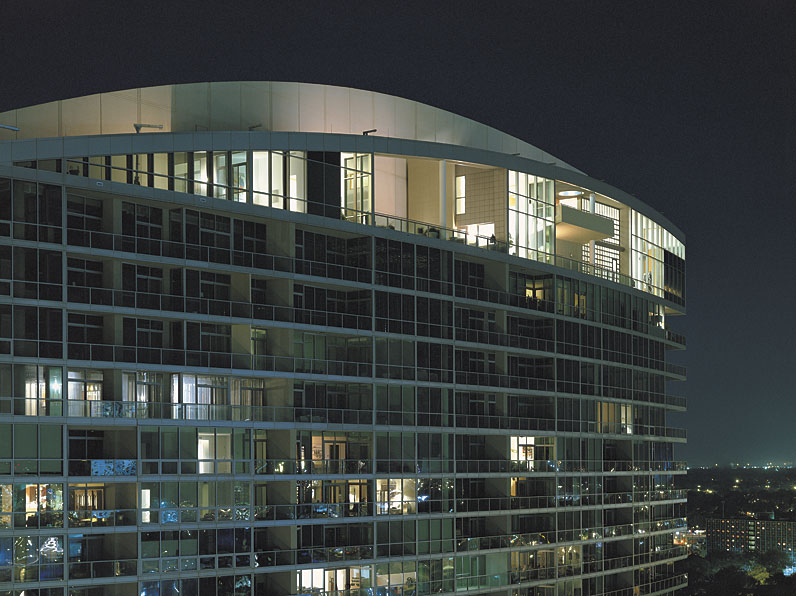
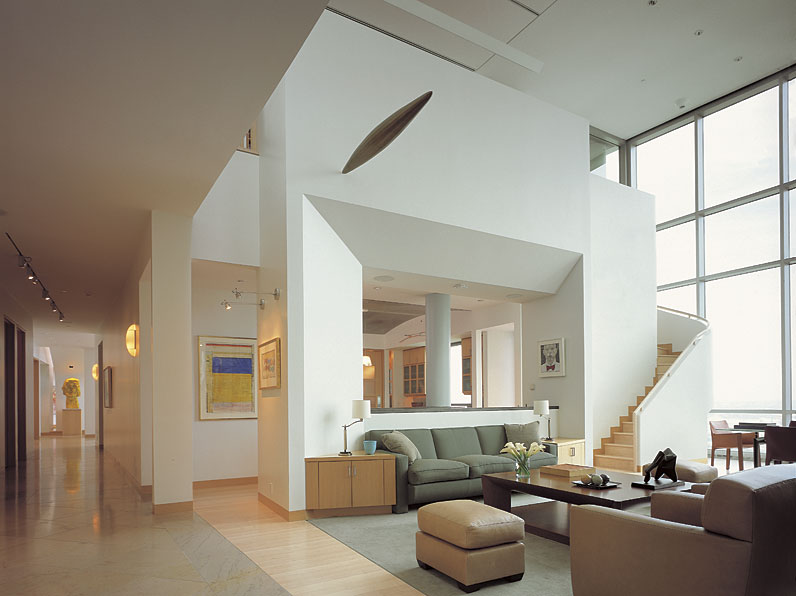
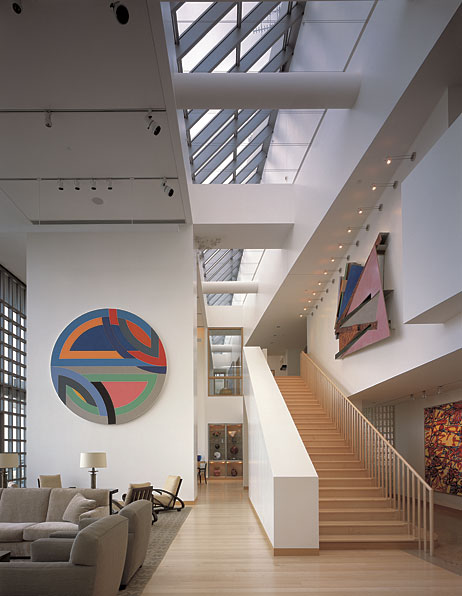
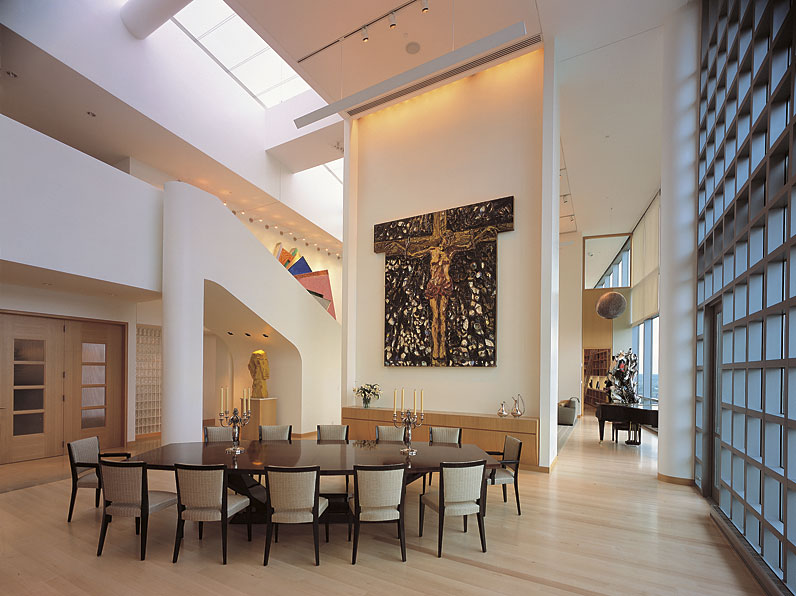
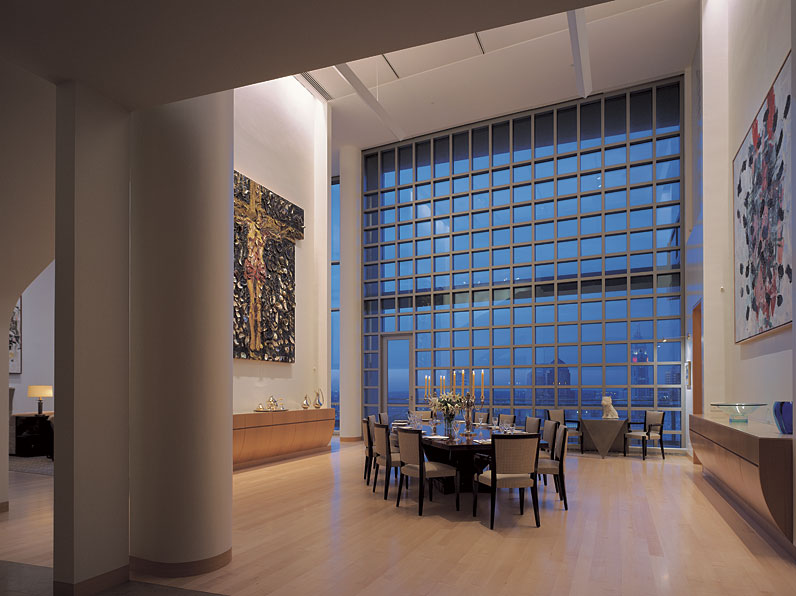
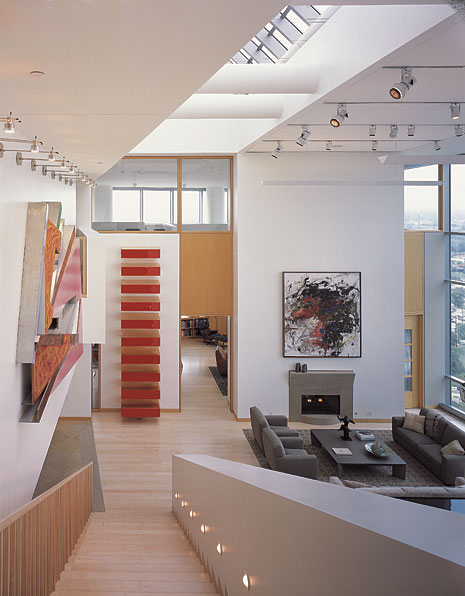
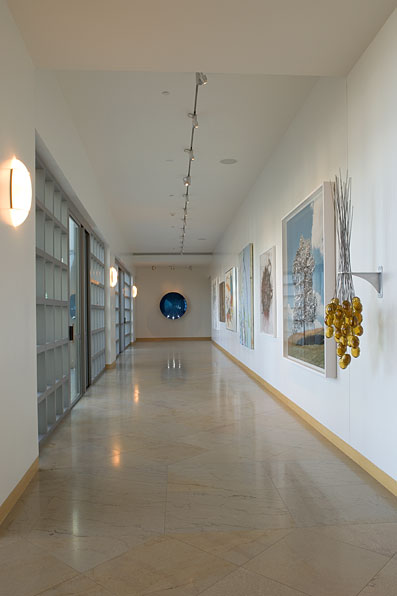
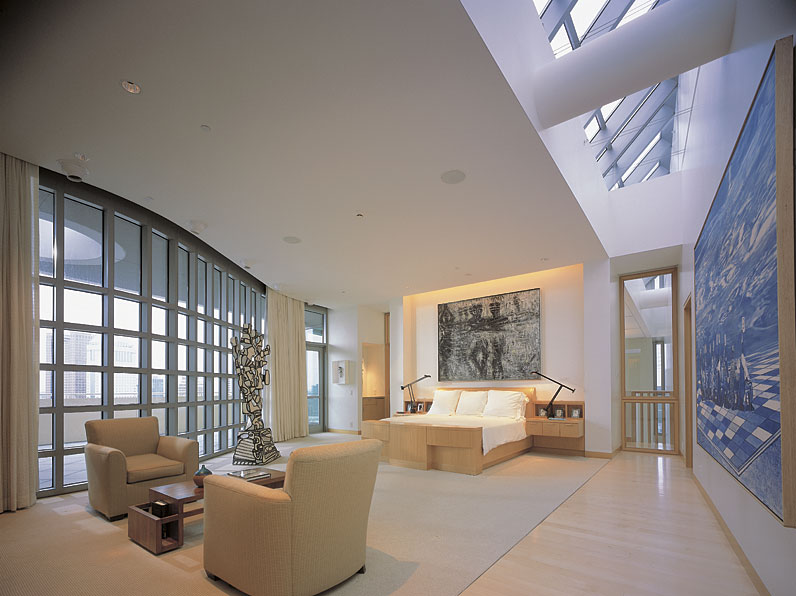
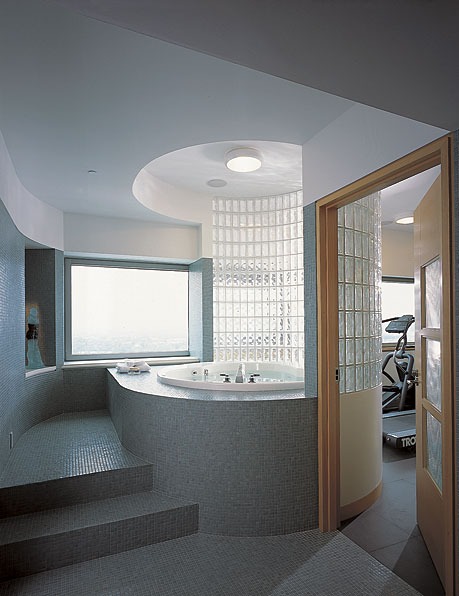
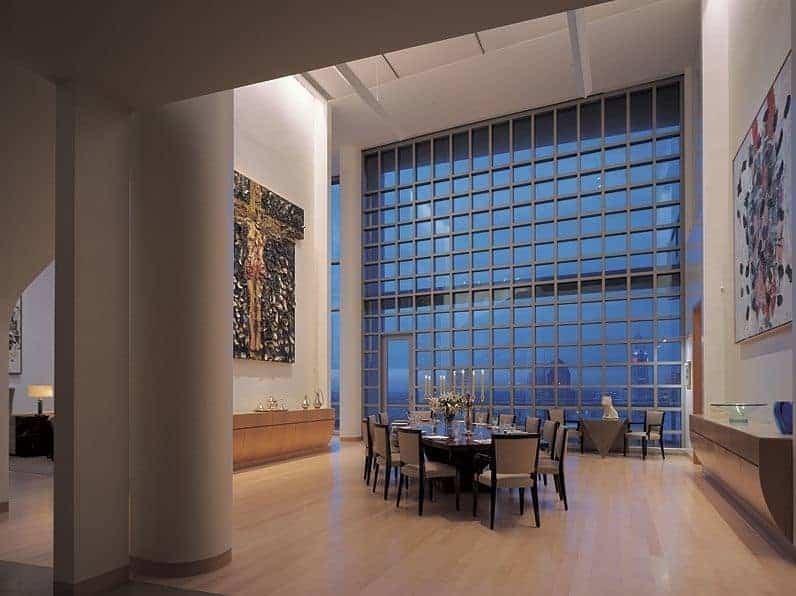
Columbus, OH This unique project is “a house on the roof” of an apartment building in downtown Columbus, OH, adjacent to the river with panoramic views and a major modern art collection. A 100-foot long wedge shaped triangular skylight releases the roof to the sky and floods the interior with natural light, balancing the two-story glass perimeter walls, and adding a dynamic, volumetric, referential, iconic form to the space. Continue BackThe second level, accessed by two stairs, one from the living and the other from the family room, accommodates the master bedroom suite, with its balcony terrace overlooking the city and river, and a guest bedroom suite, with a balcony sitting area over the library. The counterpoint between wall and glass, solid and void, establishes a dynamic and hierarchal layering of space which is simultaneously enriched and reinforced by the integration of the art collection into the architecture.
Pomerantz Apartment
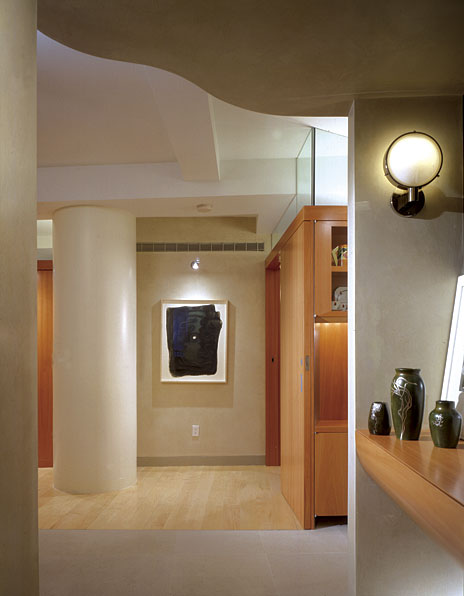
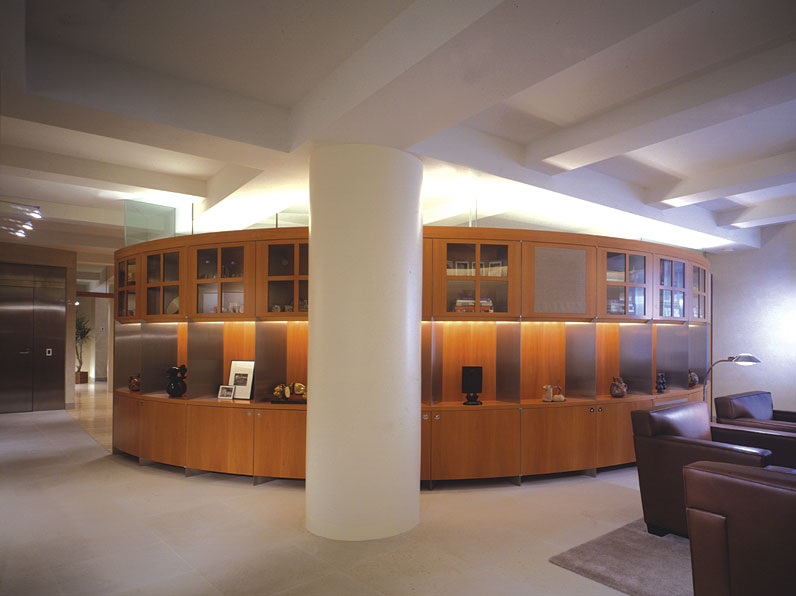
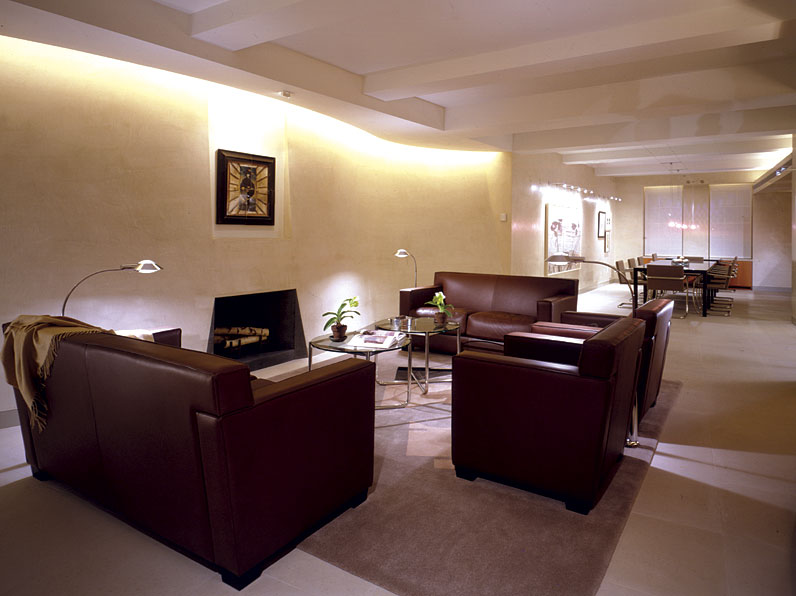
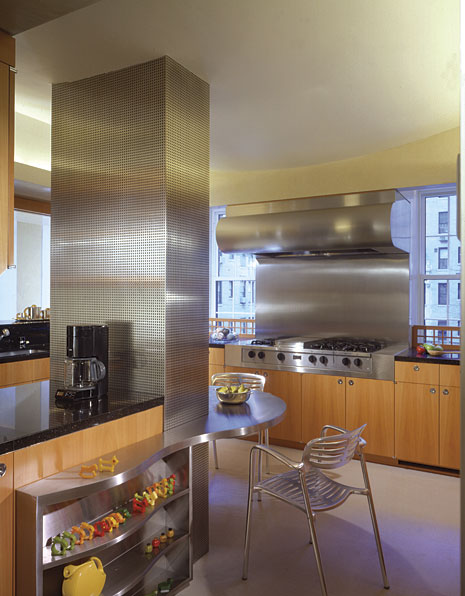
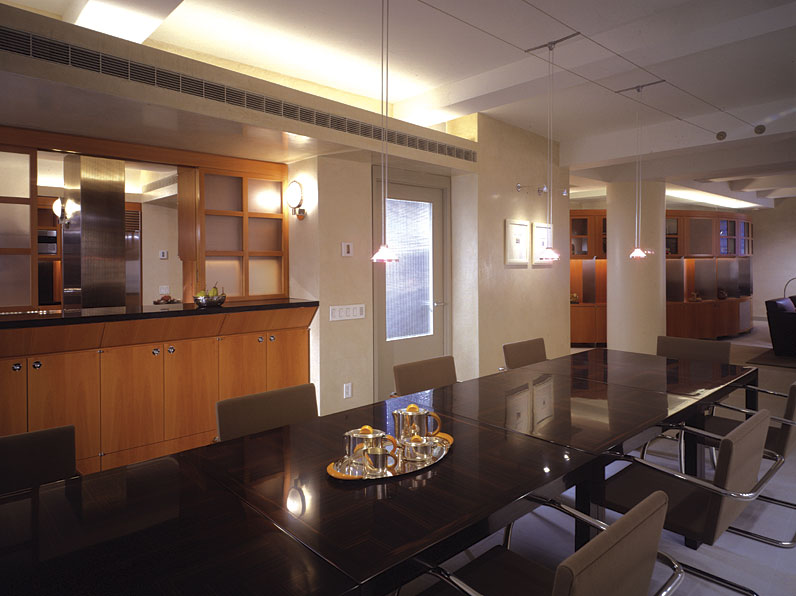
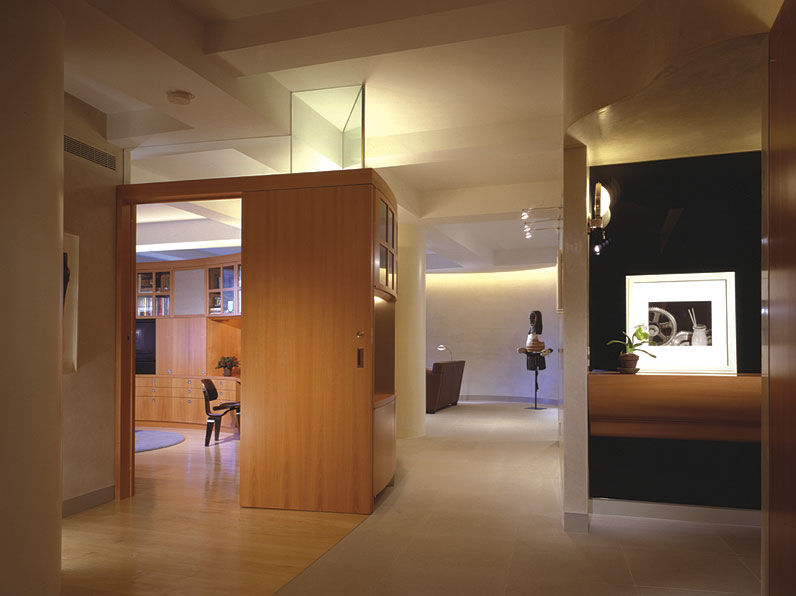
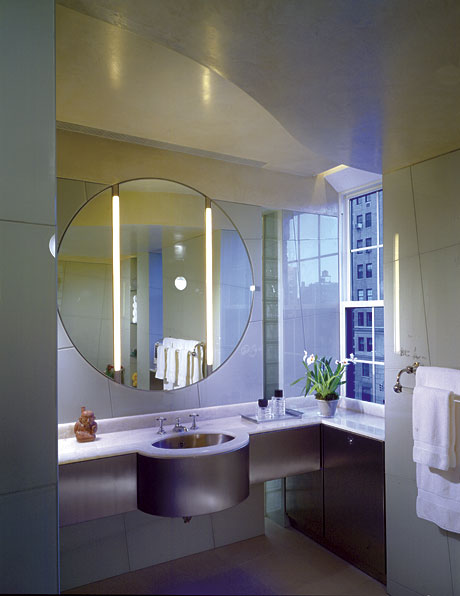
New York, NY This project represents the transformation of a traditional 2,300 square foot Manhattan apartment into a spatially complex modern loft. Assymetrical interventions create dynamic spatial tensions that counterpoint the original structure and frame. The apartment includes living, formal dining, eat-in kitchen, study, library, and a master bedroom suite with two dressing rooms, two bathrooms and a laundry. Continue BackThe limestone floor, cabinets and bathroom walls are rotated from the orthogonal plan, reinforcing the object/frame strategy. The cabinets that enclose the study and the dressing rooms are capped with glass clerestory windows and float below the ceiling, ensuring privacy while maintaining spatial continuity.
The undulating fireplace wall is “carved-away,” revealing depth, and a sense of density. The fireplace is treated as both a traditional object—a central figure in the apartment—and a modern one, a sculptural juxtaposition with a manipulated wall surface.
The materials are limestone; maple and carpeted floors; integrally colored veneer plaster and back-painted glass walls; perforated stainless steel and; pearwood cabinets with granite, limestone and onyx tops.
Spielberg Apartment
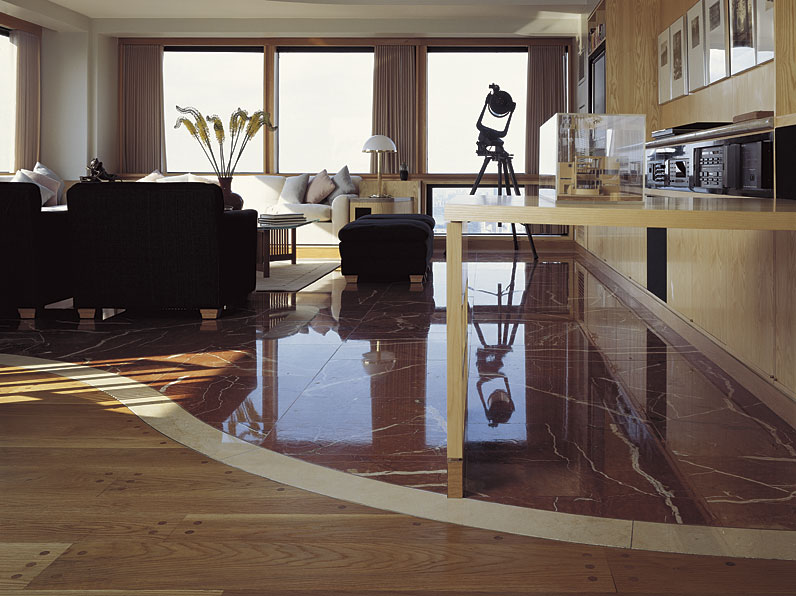
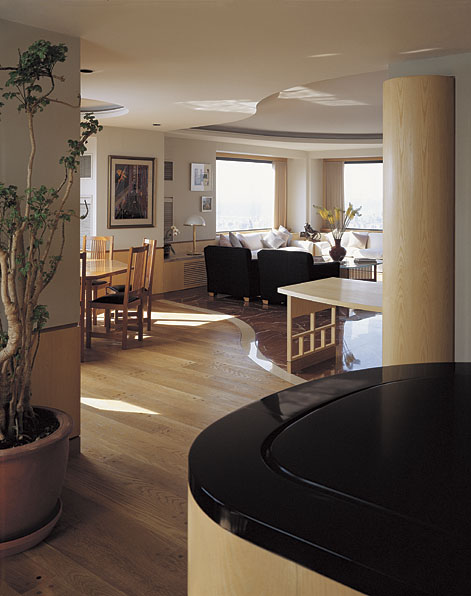
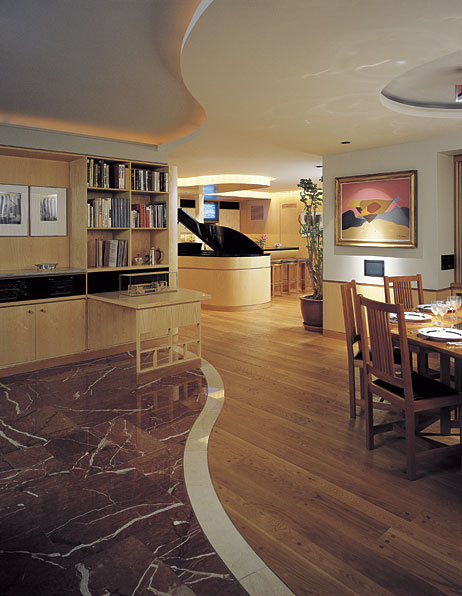
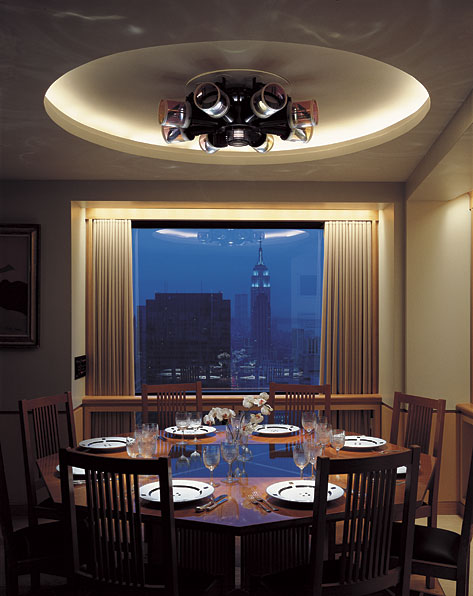
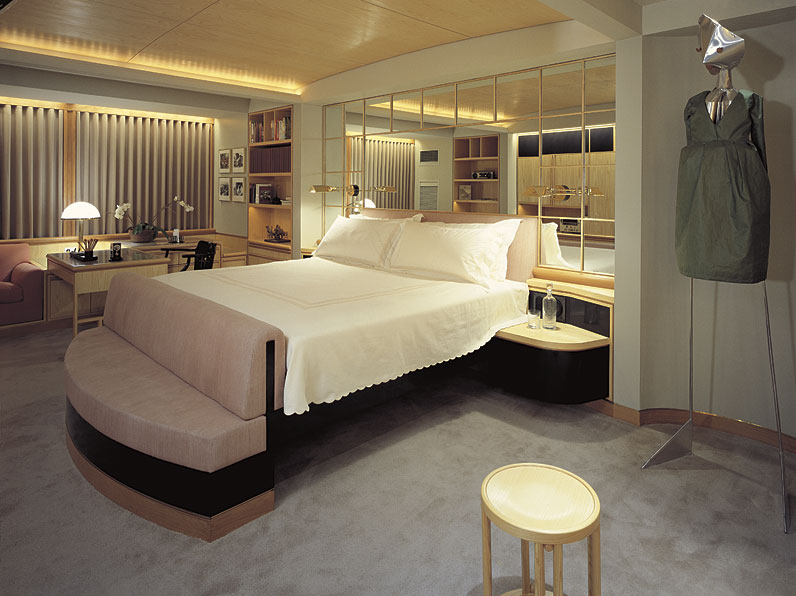
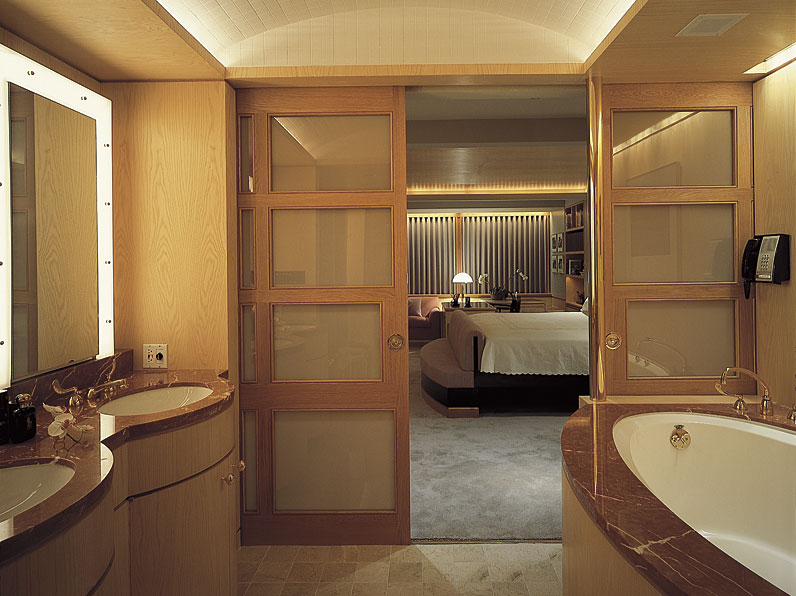
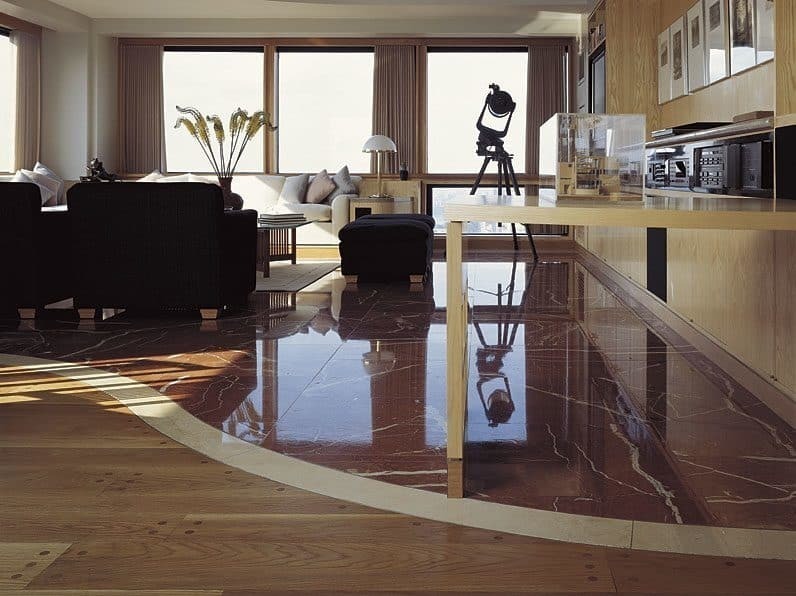
New York, NY This 2,500-square-foot apartment is located on the fifty-second floor of a prominent midtown tower with spectacular views of Central Park and the city. An autonomous pavilion was created within the existing low-ceilinged, horizontal space by establishing a new envelope detached and distinct from the existing perimeter. Continue BackThe spatial sequence is a continuous unfolding of interconnected public spaces from the entry gallery-bar/study, kitchen, and living/dining. The private domain, consisting of two bedroom suites, is located off the entry gallery to the east and distinguished by the introduction of local symmetry.
The materials in this apartment-oak and marble floors, ash paneling and cabinetwork, oak doors and trim, and plaster ceiling—are deployed in a system of layers, in both plan and section. This apartment explores the enriched palette, initiated in Geffen, as a further articulation of spatial coding.
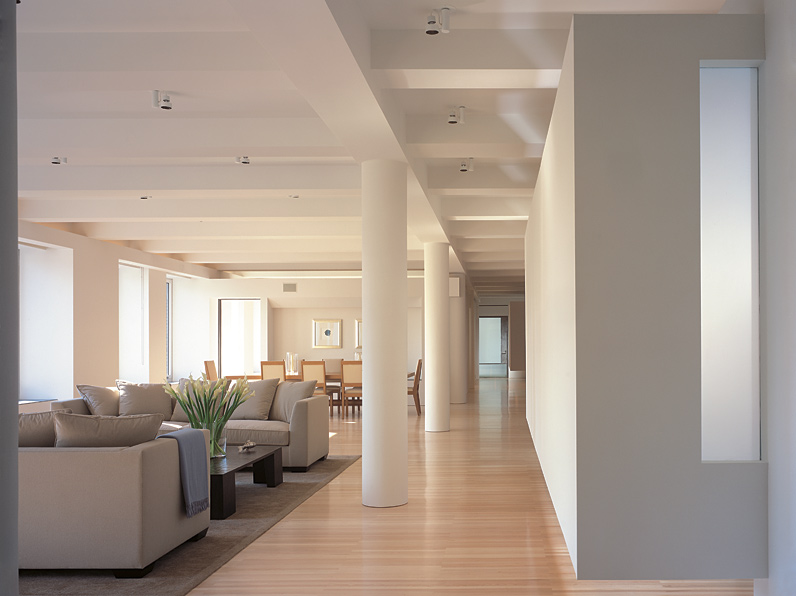
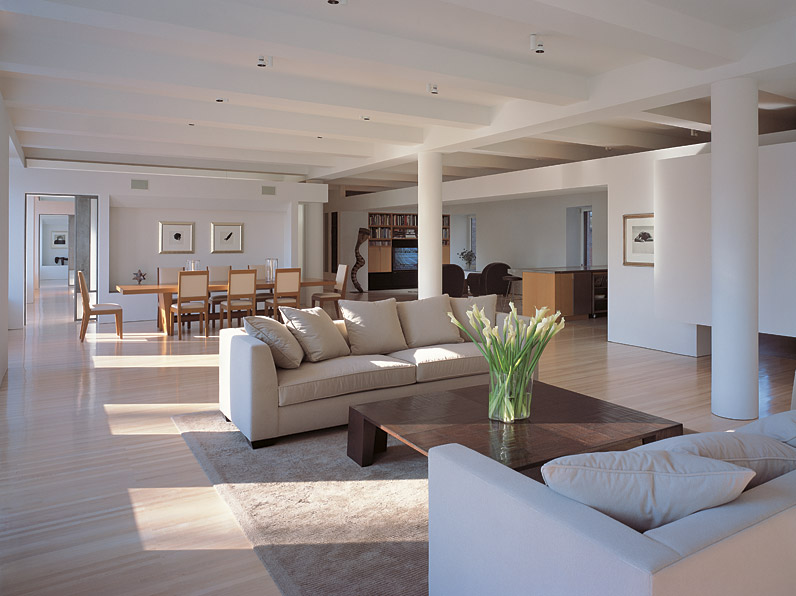
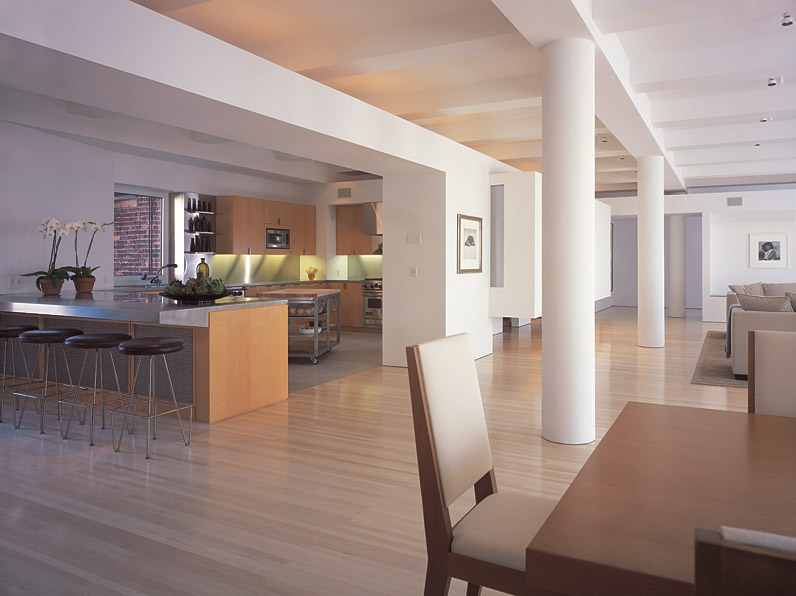
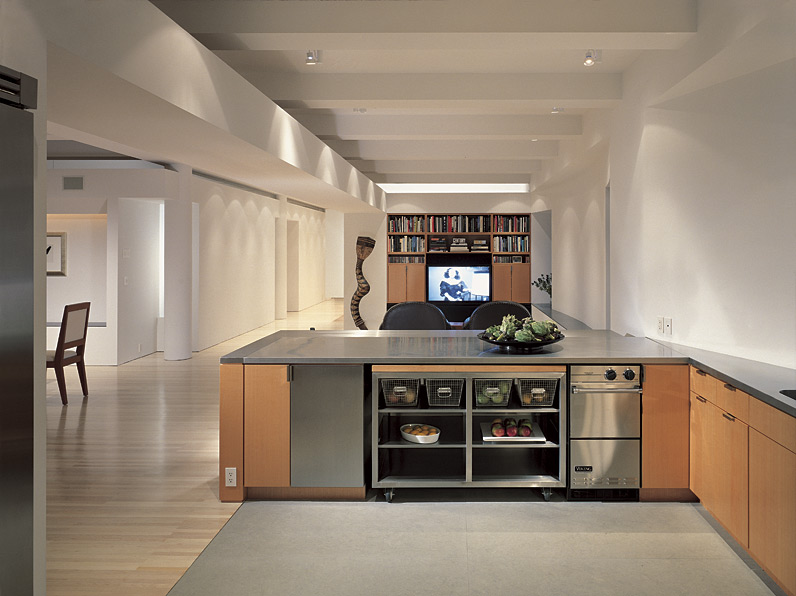
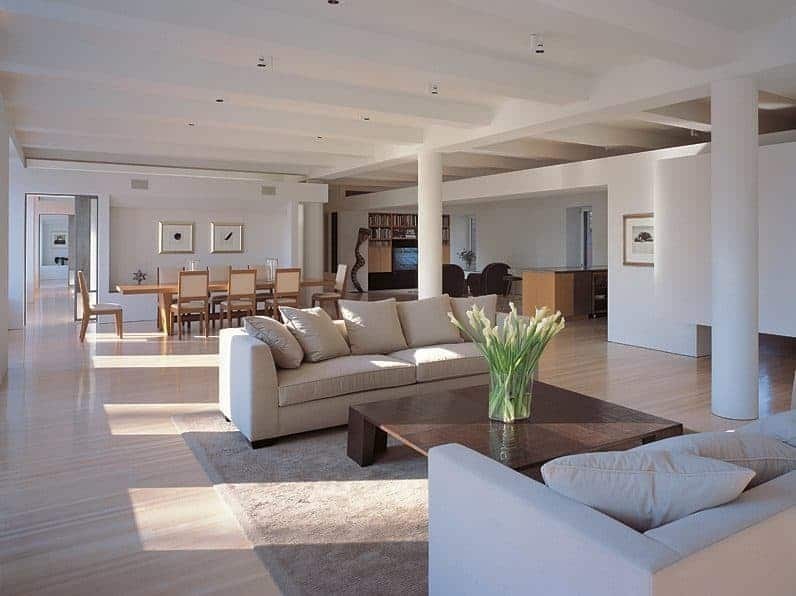
Steel Loft
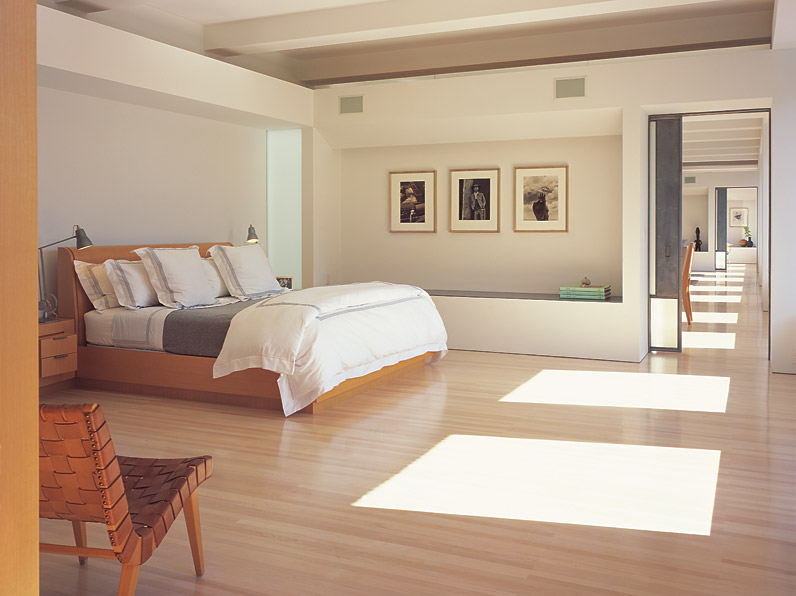
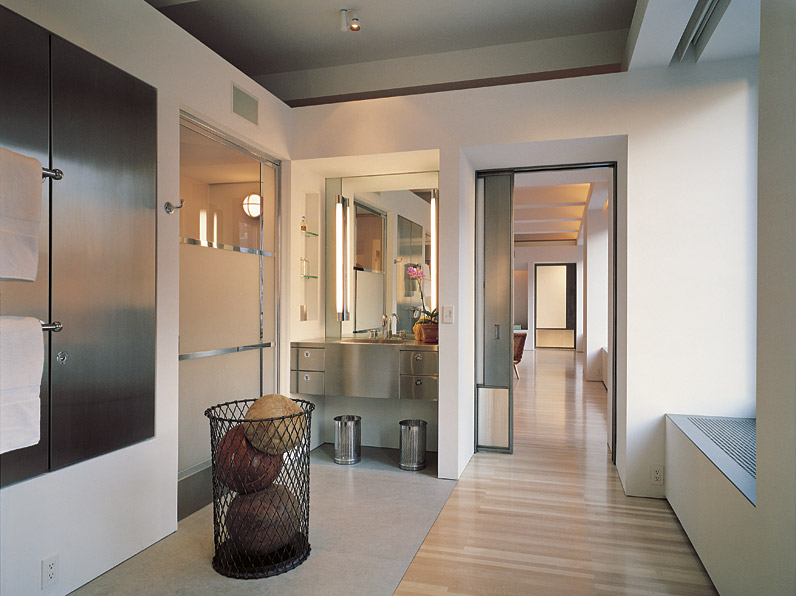
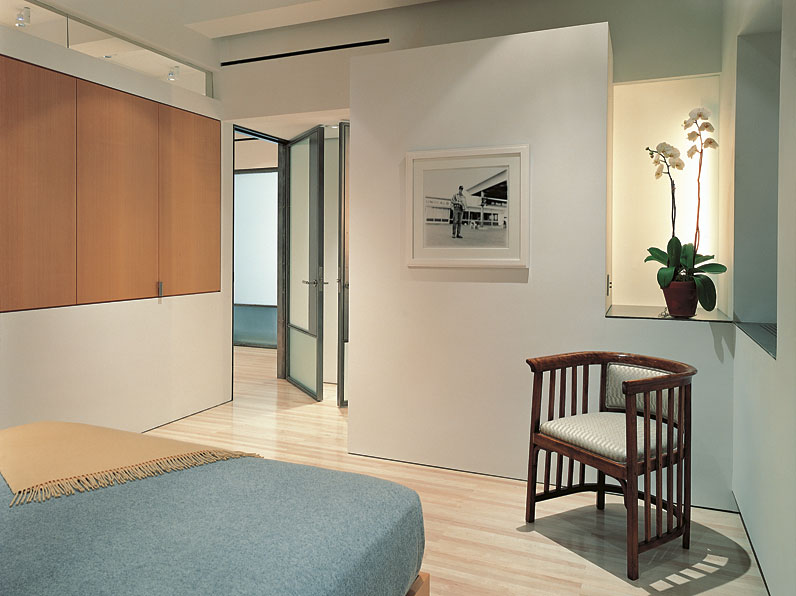
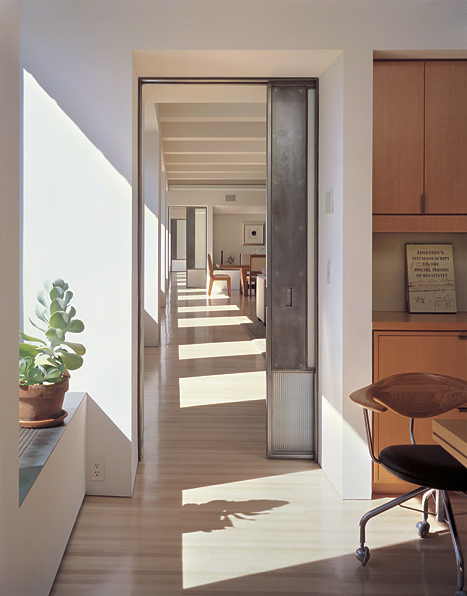
New York, NY The goal with this apartment was to perceive the "idea" of a single 4,400 square foot rectilinear volume, which is hierarchically modulated and articulated through the layering, horizontally and vertically, of the forms and space. The space, 110 feet long by 40 feet wide, has fourteen (seven pairs) of south facing windows on the seventh floor of a loft building in Chelsea. Continue BackThe ceiling height to the underside of the slab is 9’10” Existing beams form a second ceiling layer and are the primary referential horizontal graphic through the entire space. Three ceiling/wall heights below the beams establish datums for primary and secondary walls, which do not engage the ceiling, but float below exaggerating the illusion of a higher space. These varying ceiling heights afford opportunities to conceal ambient indirect lighting, as well as air-conditioning ducts and grilles, and preserve the overall spatial continuity.
The loft is a three-dimensional reinterpretation of a Mondrian; it is an architecture that is at once articulate, graphic, sublime, and calm. It is a space conceived as an “excavation,” a carving away that results in an essentialness that is inherently sculptural – light filled, dense and sequential, where nothing is added or redundant.
Swid Apartment I
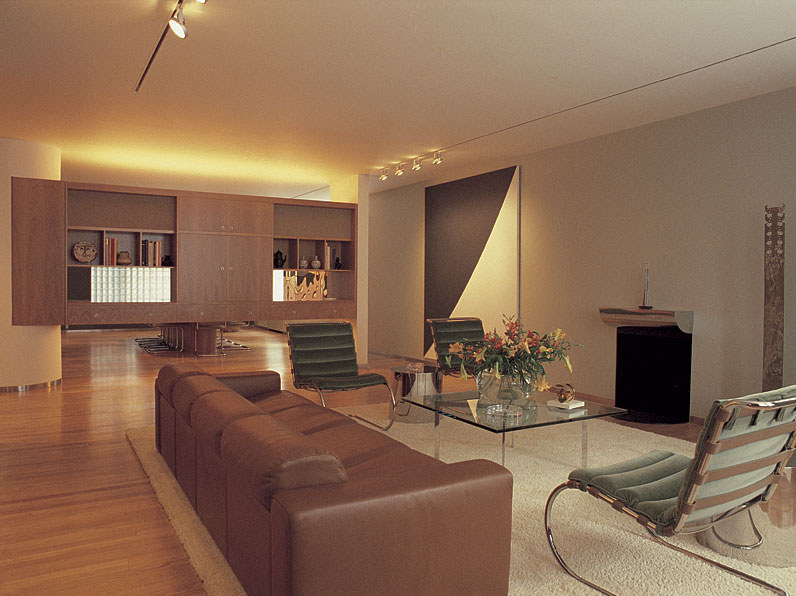
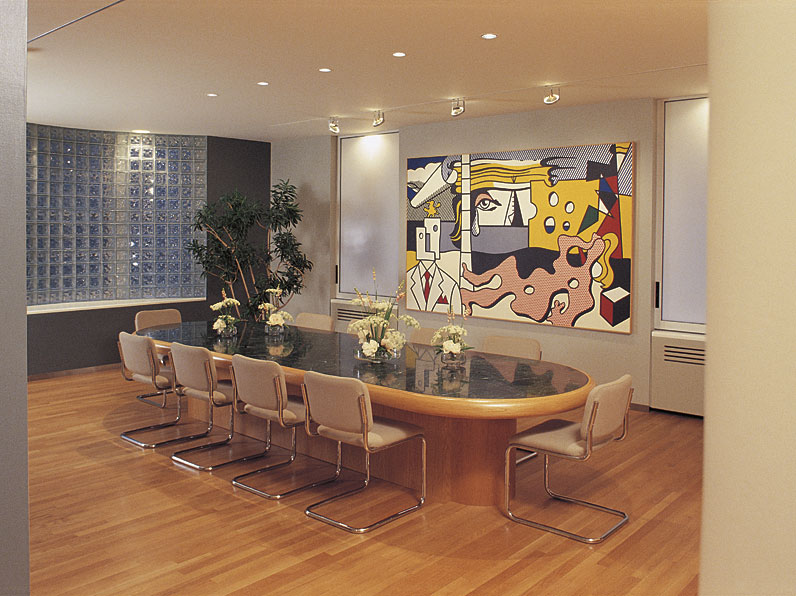
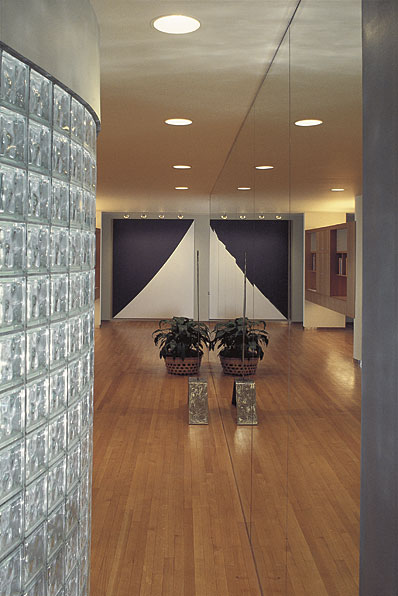
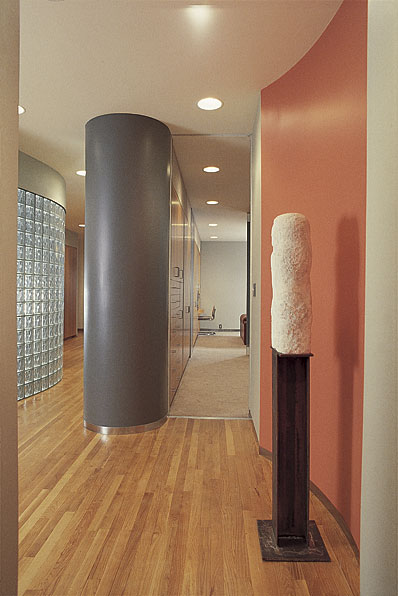
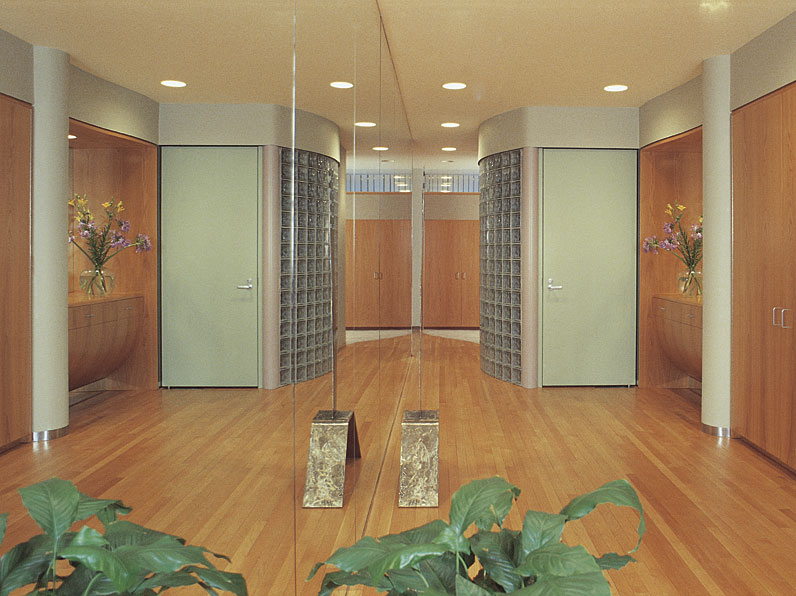
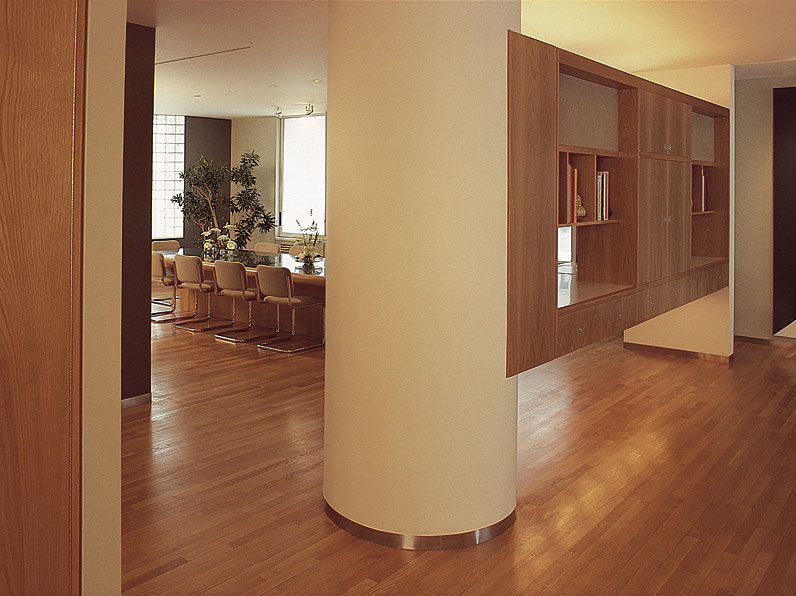
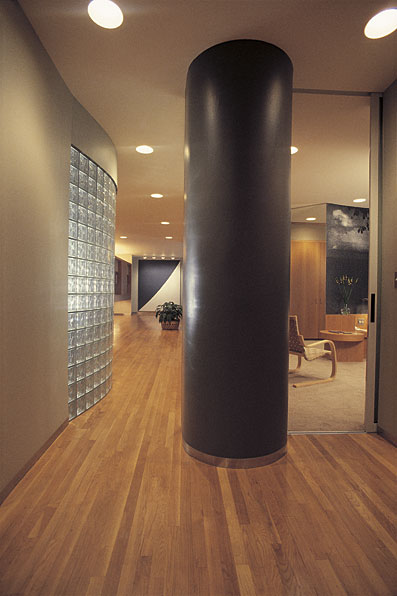
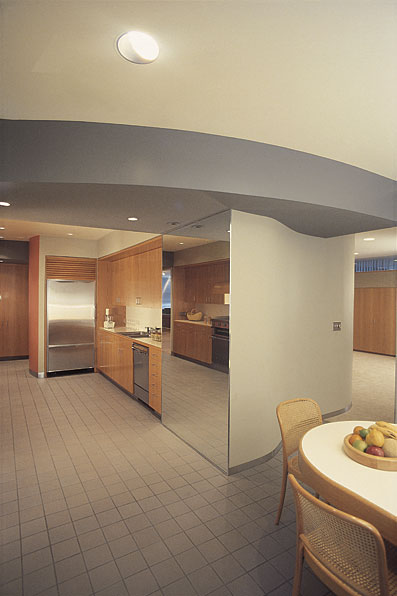
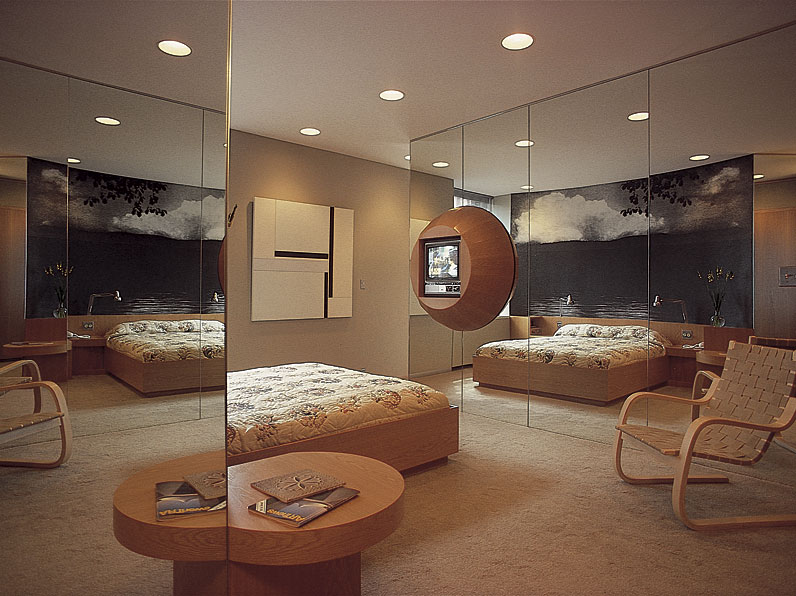
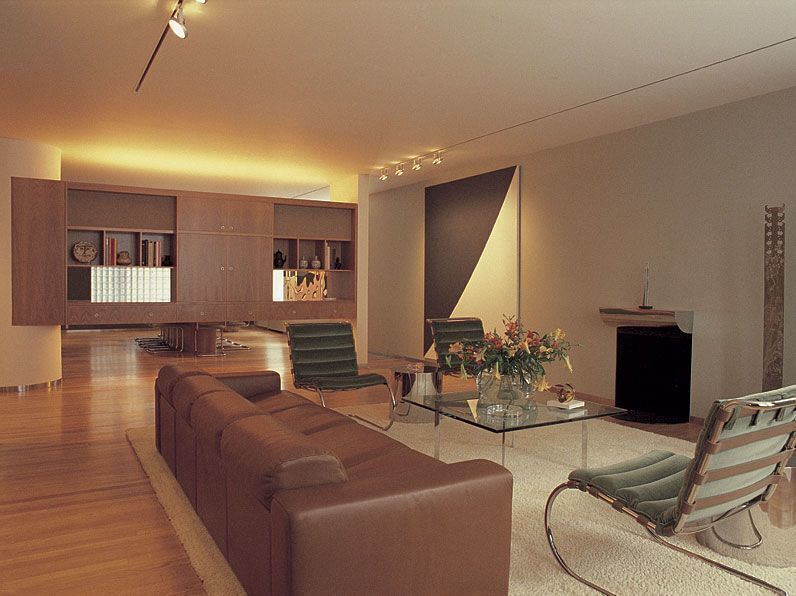
New York, NY This 3,400-square-foot apartment in a 1930's building was designed to accommodate a couple with three children. The program stipulated a large space for extensive entertaining and the display of contemporary art. Continue BackChanges in ceiling height, variations in floor materials, built-in cabinetwork, and the use of color and mirrors, add a complexity and sense of spatial transformation that was an elaboration of previous explorations.
Swid Apartment II
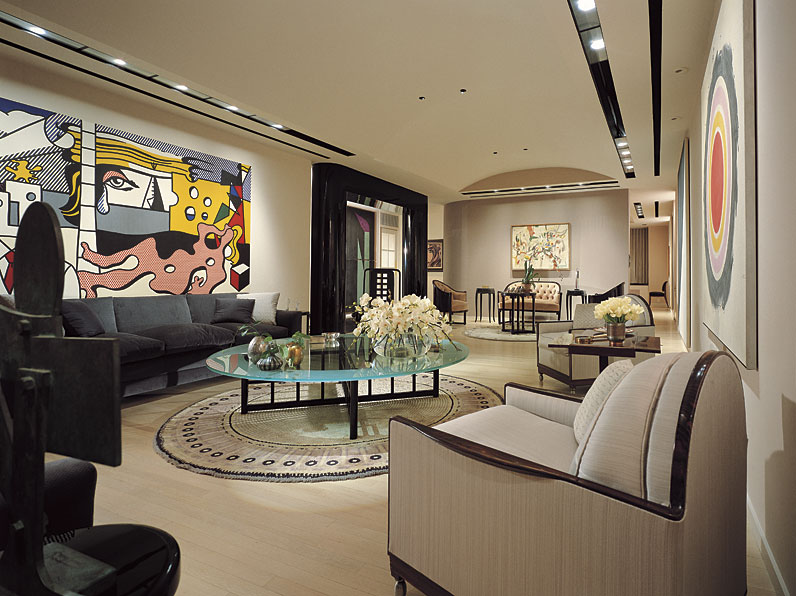
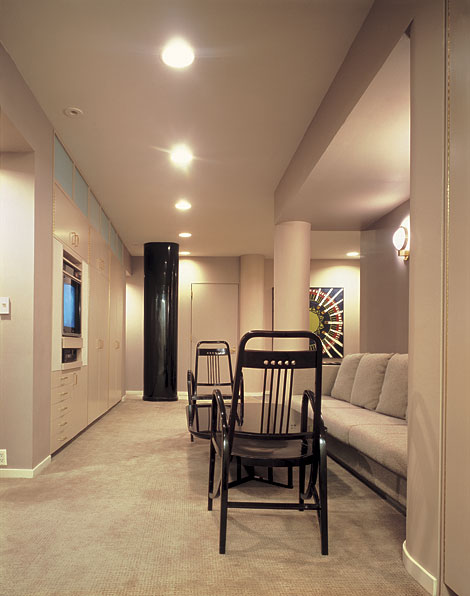
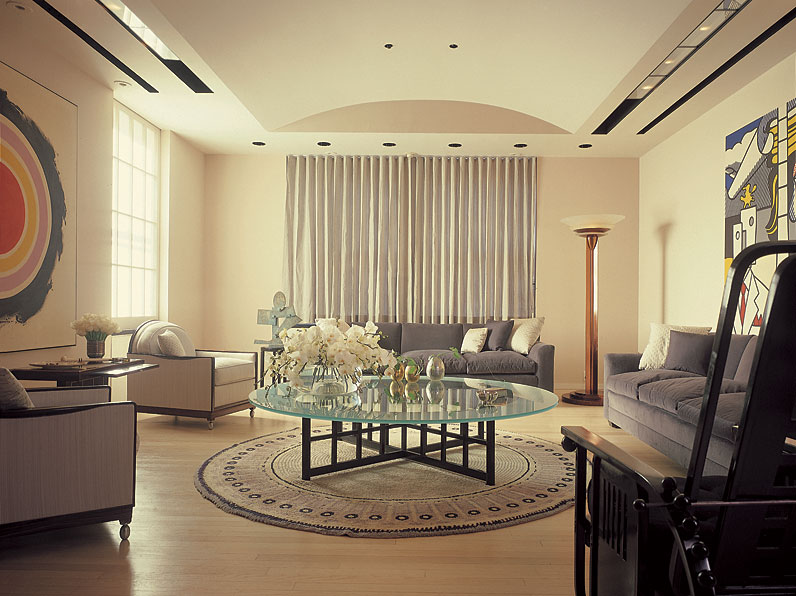
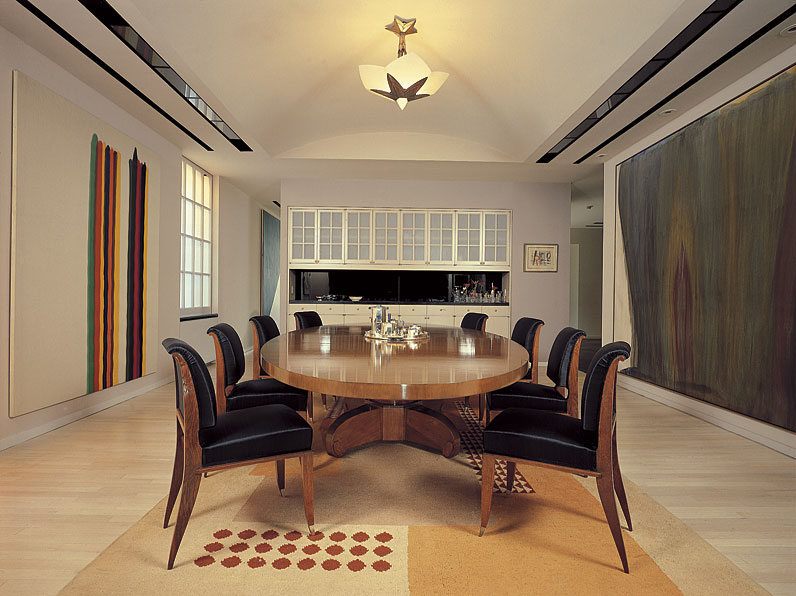
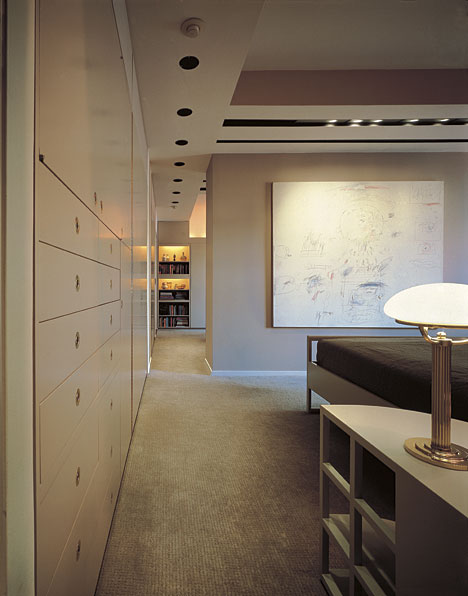
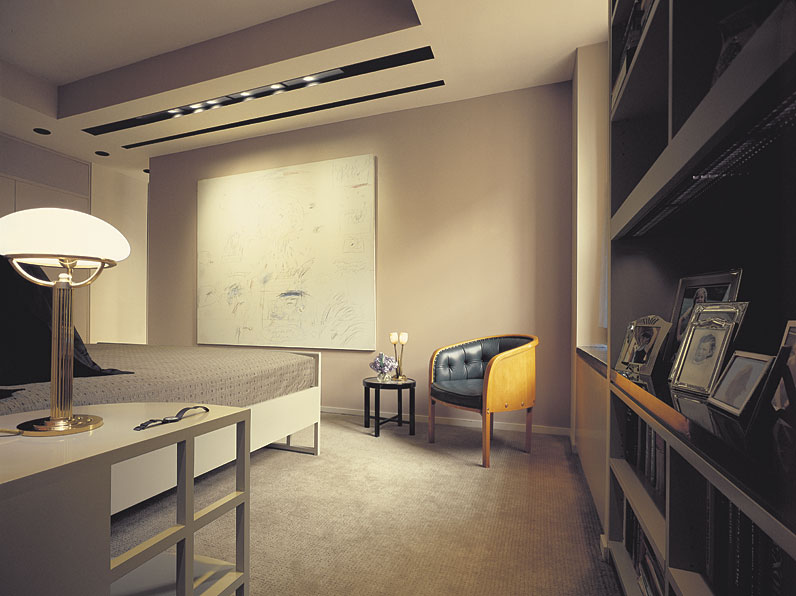
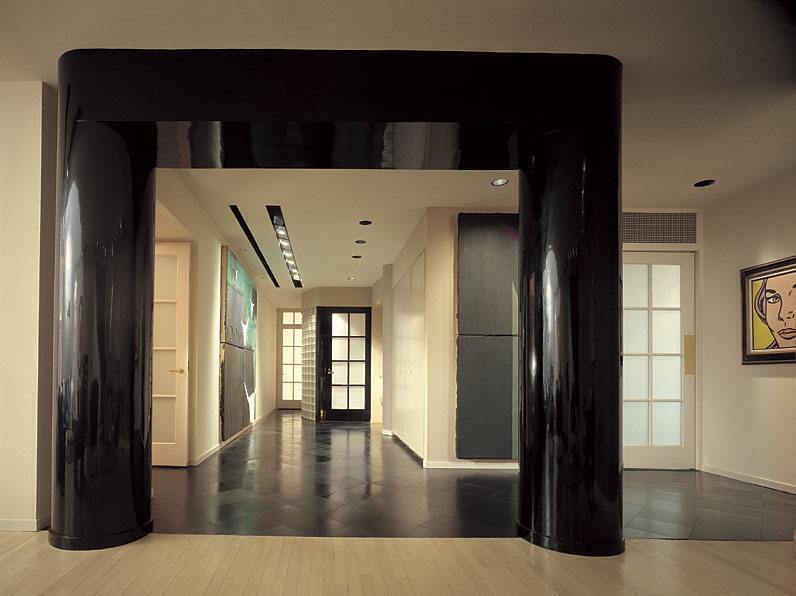
New York, NY This was our first renovation of a previously designed apartment. The thrust was to accommodate a different and very specific collection of Secessionist furniture that was overlaid on the contemporary art collection. The basic plan remained intact, but the materiality and color palette were subtly adjusted to present a perceptually refined environment. The apartment became subtler and more monochromatic. Continue Back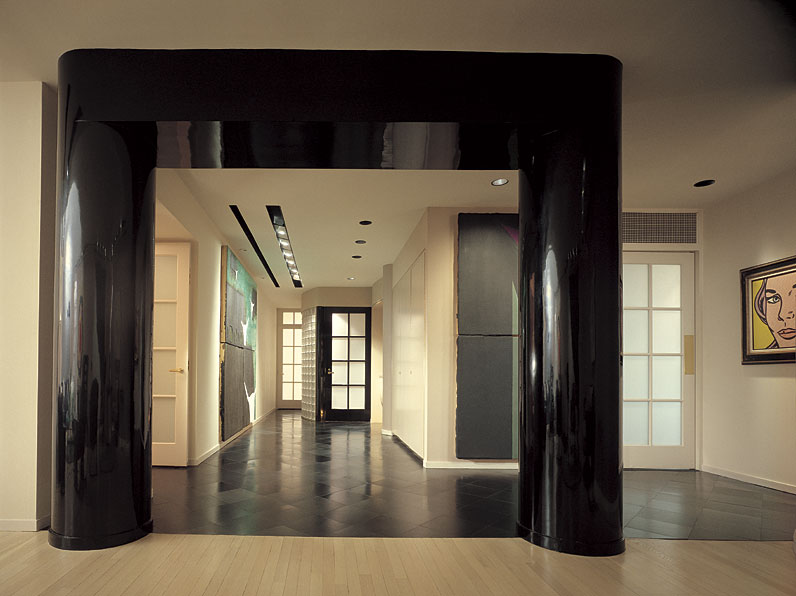
Winnick Apartment
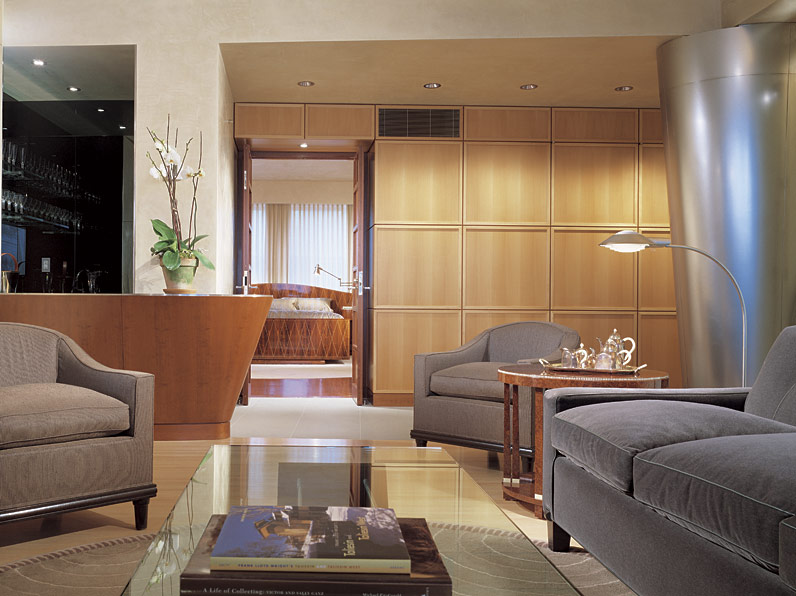
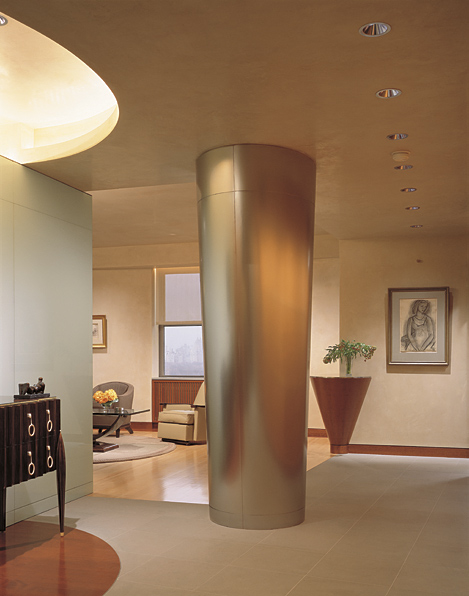
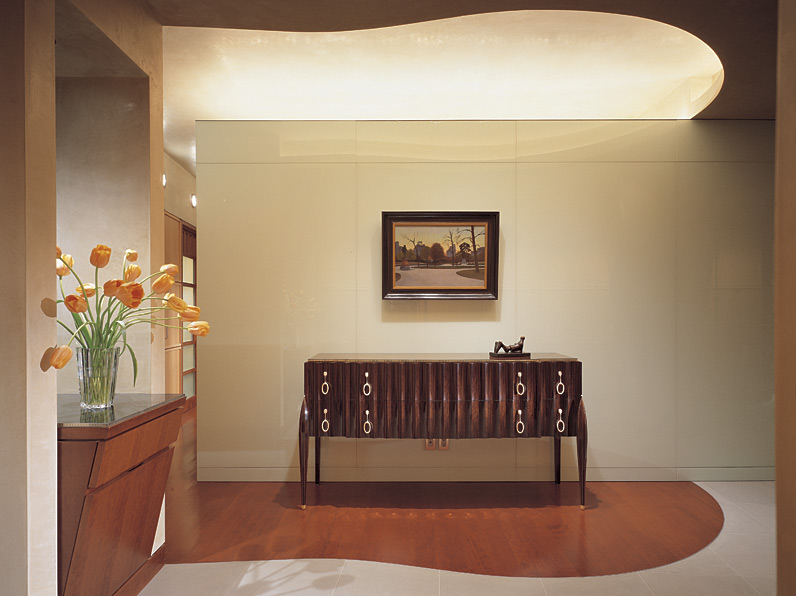
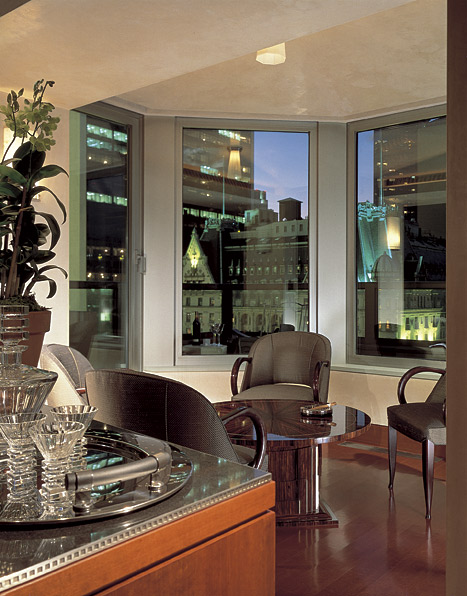
New York, NY This two thousand-square-foot apartment is located in one of New York's venerable residential hotels at the southeast tip of Central Park. The two-bedroom required a gut renovation to introduce spaces notable for their formal inventiveness and spatial serenity. While the layout remained roughly the same, the entrance hall was opened up to create a vista from the front door to a window view looking north over the park. Continue BackBrand new spaces include a kitchen and dining area in the place of the old kitchen and a small bath; and a study/guest bedroom where a second bedroom used to be. The floors are mostly cherry, except for the entrance hall, the kitchen and the baths, which are of gray Swiss sandstone. In part of the living area, the floor is a pale maple to emphasize the sense of lightness and openness to the park and skyline views.
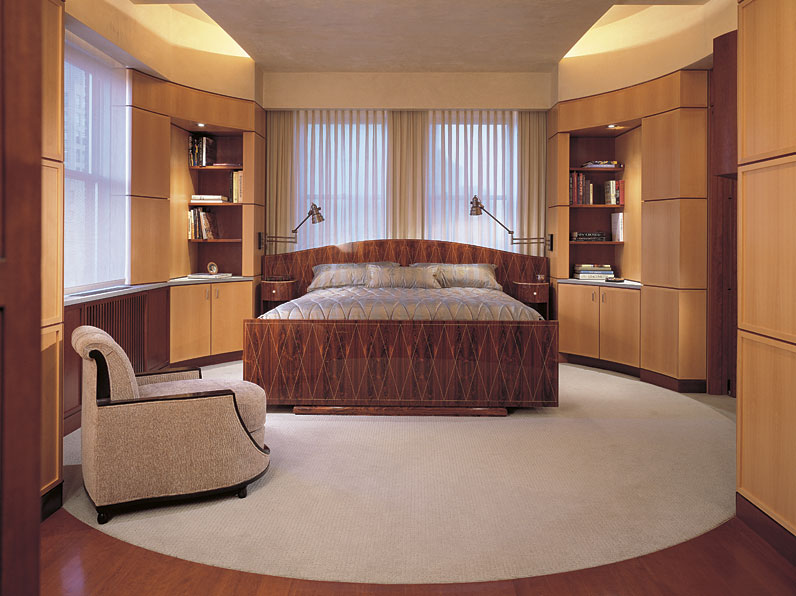
The entire apartment is designed in a classically formal style that is hospitable to a variety of early twentieth century furniture. They are upholstered in textured fabrics that give the spaces an additional layer of interest.