PepsiCo World Headquarters
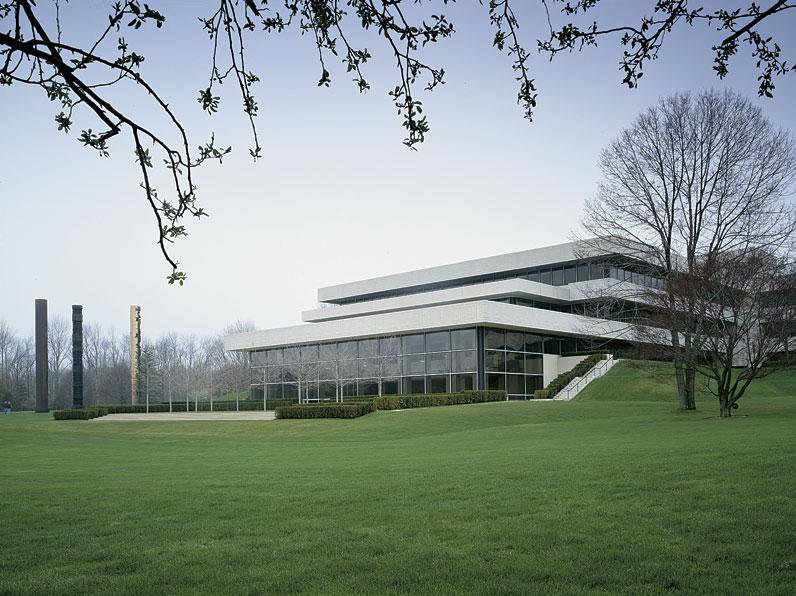
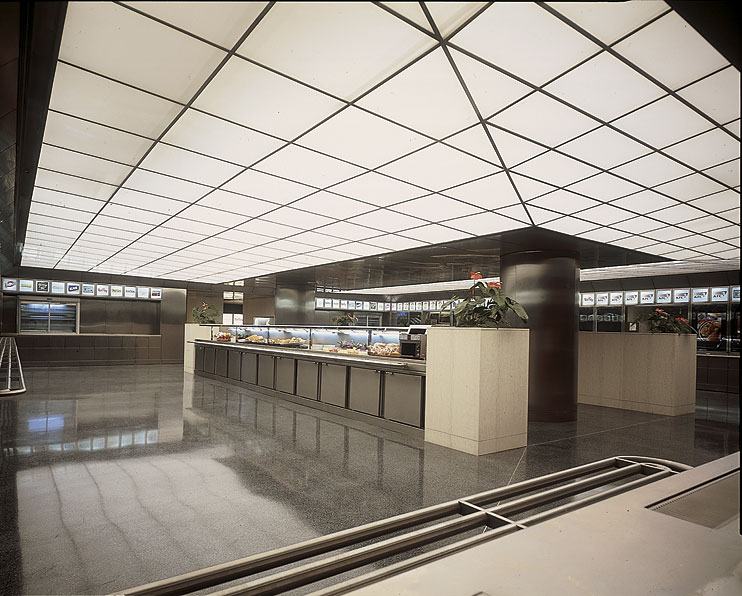
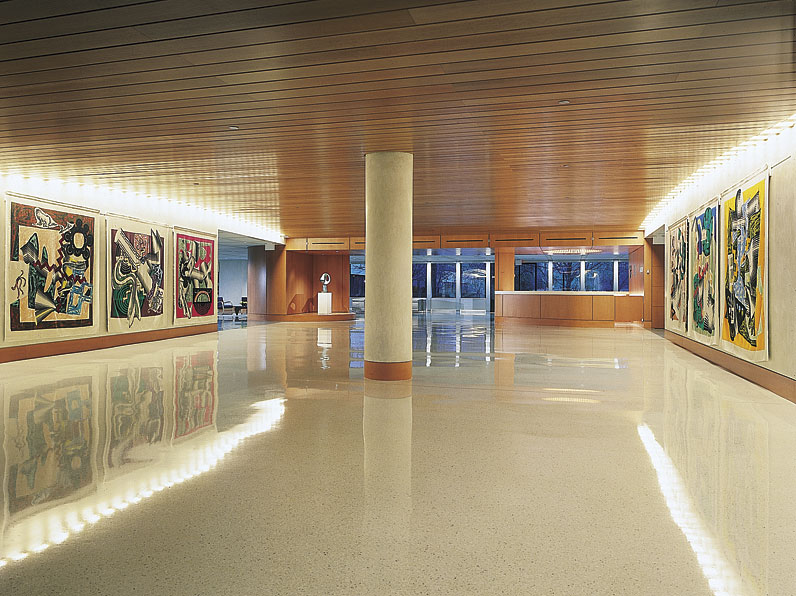
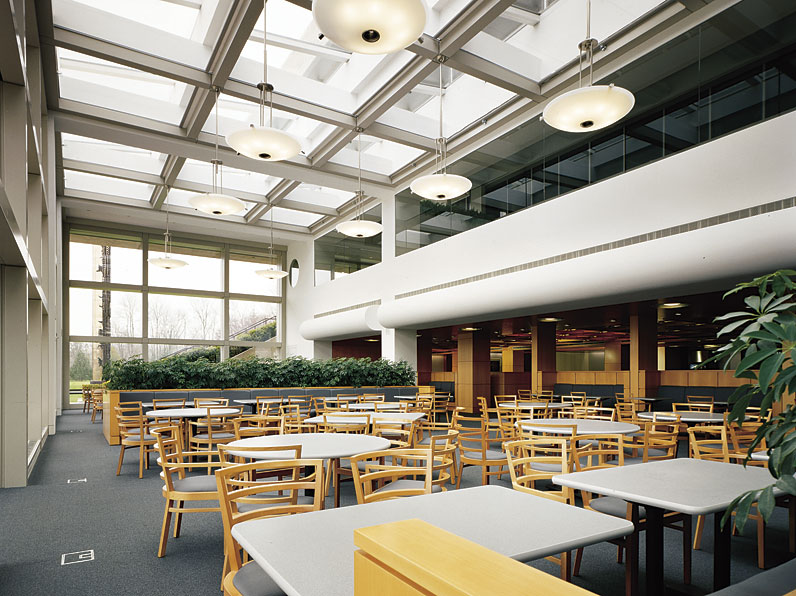
Headquarters Master Plan and Facilities Upgrade Purchase, NY The PepsiCo Headquarters was originally designed in the late 1960s by Edward Durrell Stone, and the extensive landscaped sculpture gardens were designed by Russell Page and Francois Goffinet. In 1993, Gwathmey Siegel Kaufman Architects was asked to revise the master plan and has since designed the new cafeteria, Leadership Conference Center, and a gallery and dining room addition. Continue BackThe dining room is an expansive room with seating for 400 people and areas for special functions at either end. Two doors lead outwards to the patio and garden beyond. Special ceilings offer a high degree of spatial depth and emphasize the cafeteria’s connection to the garden.
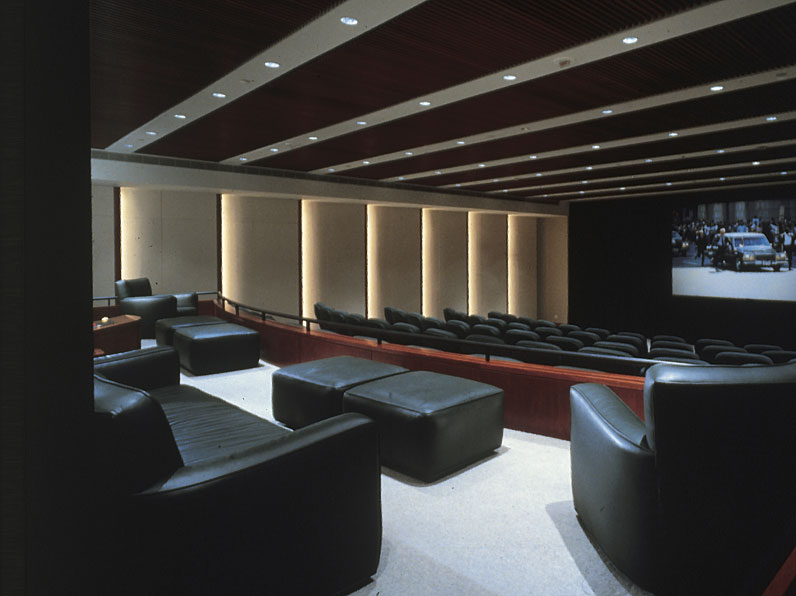
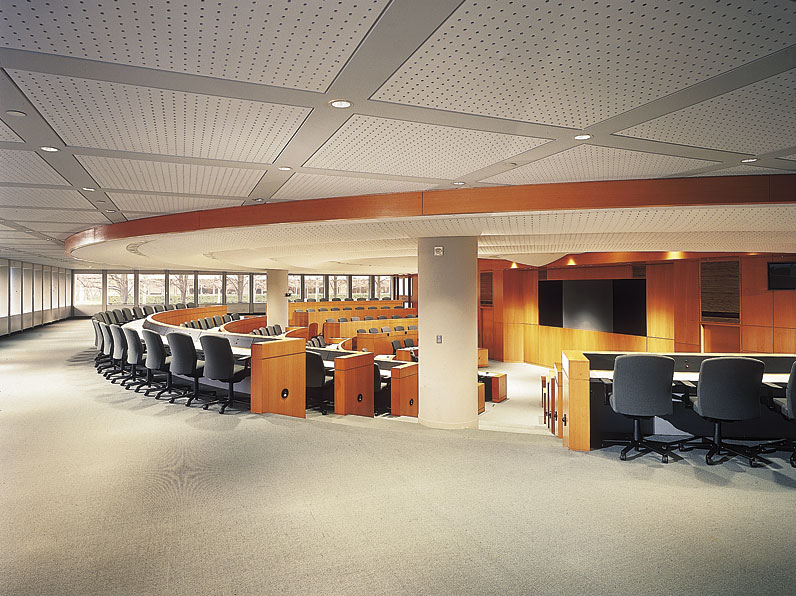
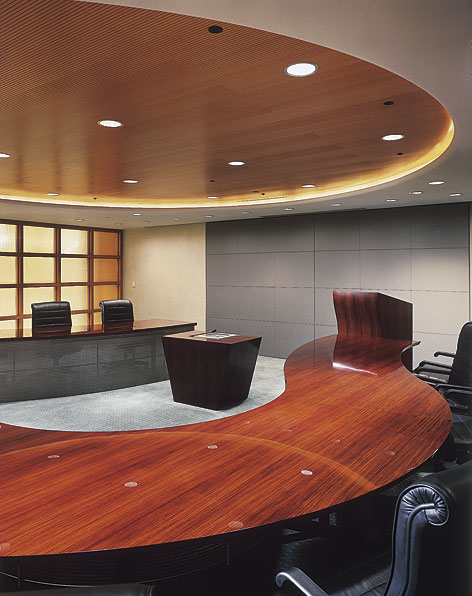
The 12,500-square-foot, 150-person Leadership Conference Center is a state-of-the-art meeting facility with rear projection screen and multimedia capabilities. All seating areas are equipped with data outlets and individual microphones. 2,000 square feet of flexible breakout space can be further subdivided into smaller, acoustically separate rooms.
The gallery and dining room addition extends the existing dining room on the lower level. The extension of this unique cantilevered building required extensive technical coordination and structural ingenuity. The addition contains a two-story, glass- enclosed gallery on the first floor and a two-story glass-enclosed and skylit dining room on the lower level. A landscaped roof terrace was created off the executive office floor for private functions.
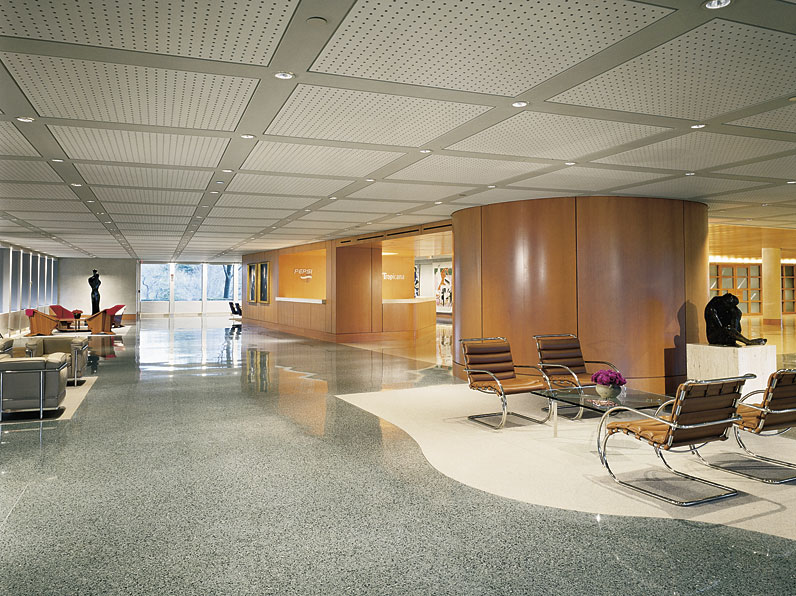
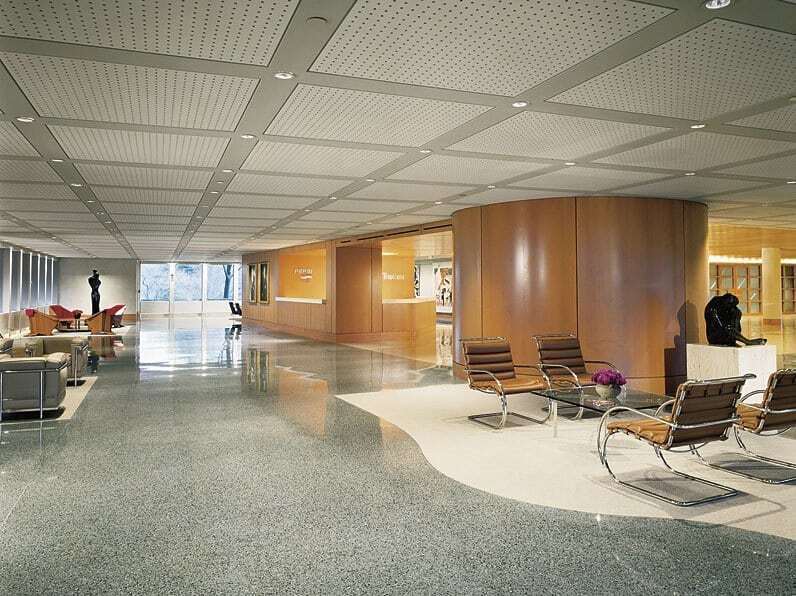
A 12,000-square-foot renovation of the reception area and corporate meeting rooms provides views to the surrounding garden and state-of-the-art, flexible meeting rooms.
Sony Entertainment
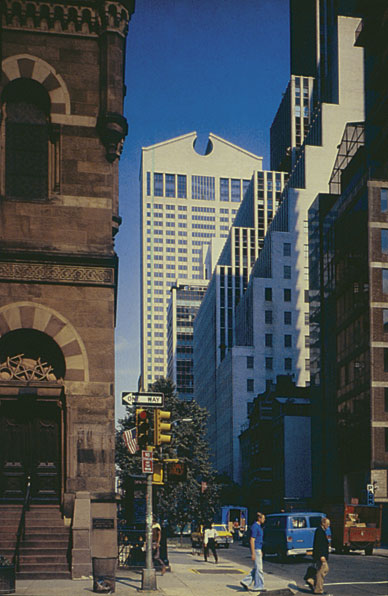
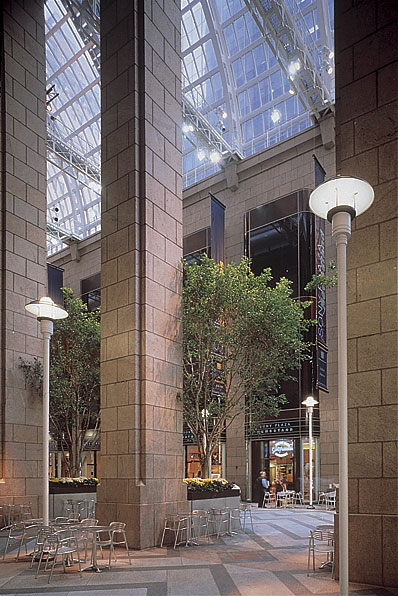
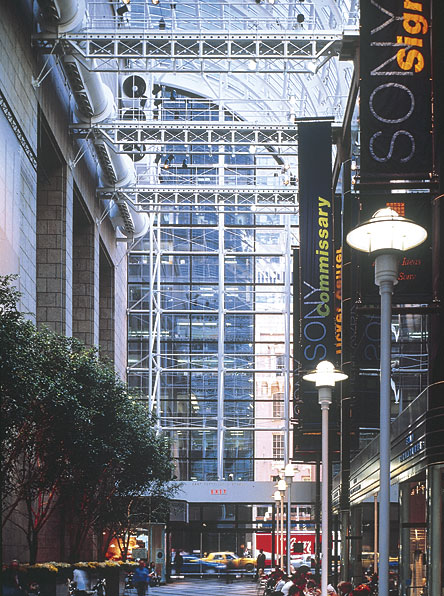
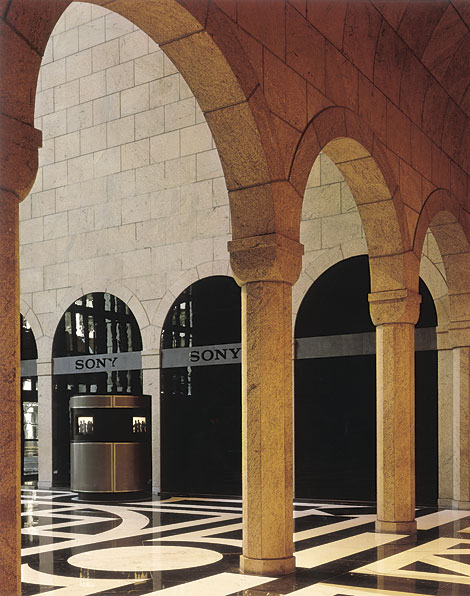
Headquarters New York, NY When Sony acquired the celebrated AT&T building in 1993, it commissioned Gwathmey Siegel Kaufman to transform the structure into the world headquarters of its music entertainment division and motion picture group. Certain modifications were inevitable: to begin with, the 1,000,000-square-foot, 35-story building, which had accommodated just 600 people when it was occupied by AT&T, would now have to house 1,600. Continue BackThe former annex building contains a series of new spaces, including a newsstand, commissary, ticket booth and the Sony Wonder Museum. Organized around theatrical motifs, the museum is an interactive, state-of-the-art attraction featuring electronic display signs and graphics meant to enhance visitors’ understanding of communication through technology.
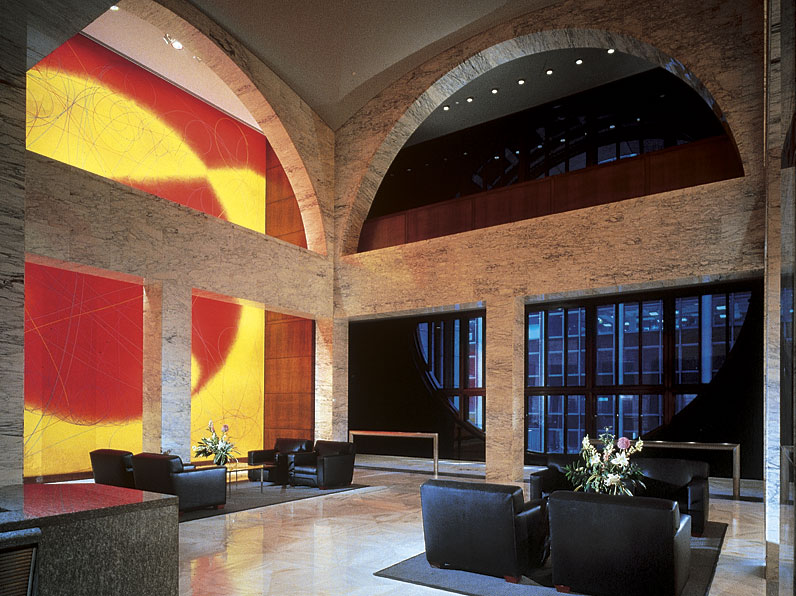
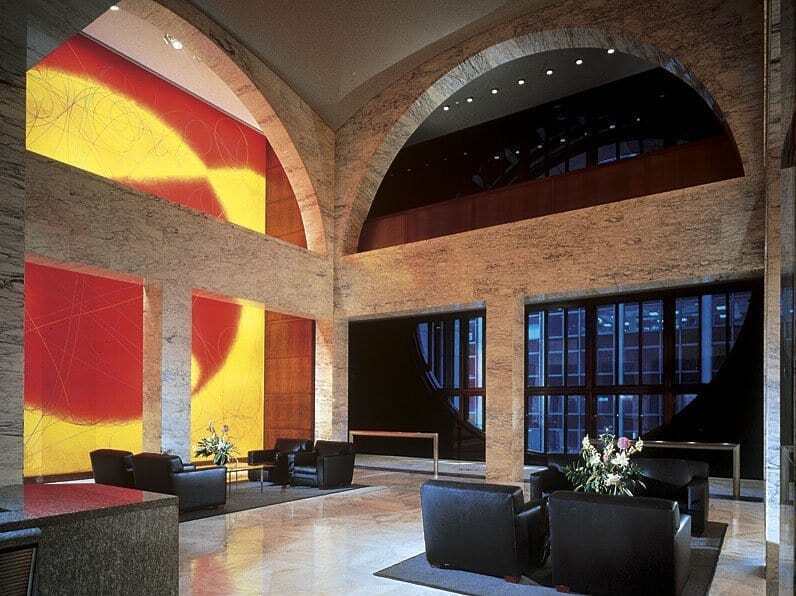
In the ground-floor lobby, sheets of dramatic black glass have been inserted into arched recesses to offset the original granite walls and Lutyens-patterned inlaid marble floor. Black glass paired with anegre veneer recurs at significant points throughout the 35 floors. Color-coded elevator lobbies clearly express each Sony division—yet materials, colors and interior detailing provide a cohesive visual impression. The original perforated metal pan ceiling detail installed by Philip Johnson and the basic core organization were retained. What is new is a rigorous architectural approach to layering the space, both vertically and in plan, as well as in the custom-designed workstations and reception desks.
Interiors Magazine, September 1993