American Museum of the Moving Image
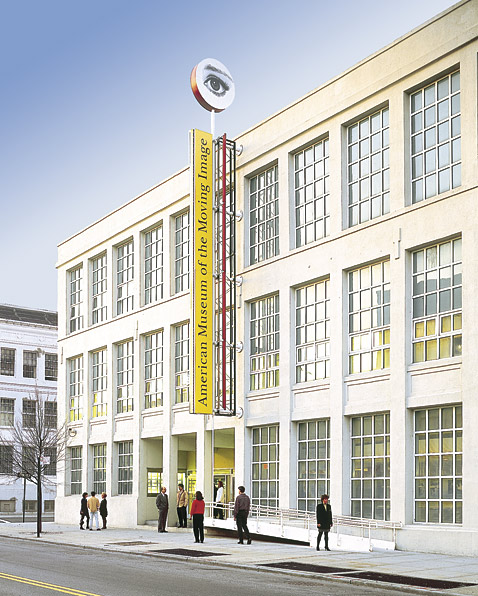
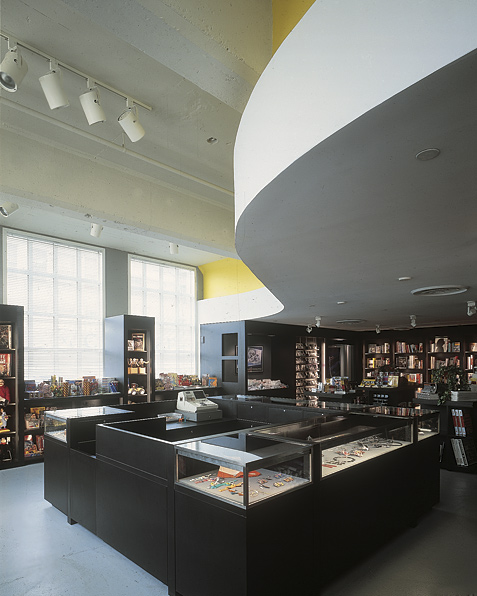
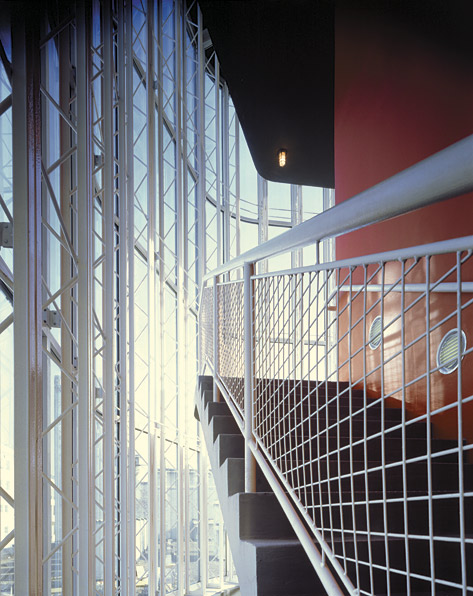
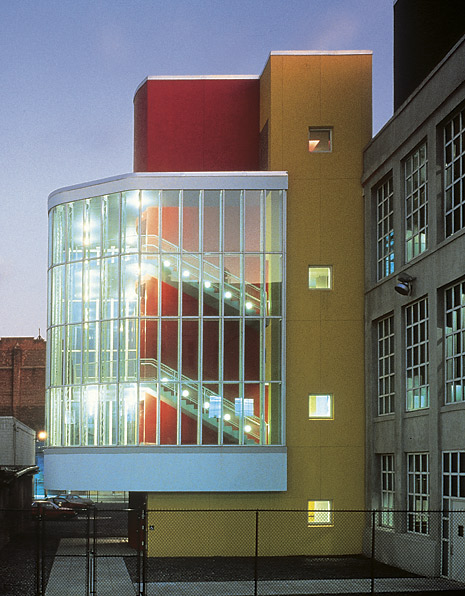
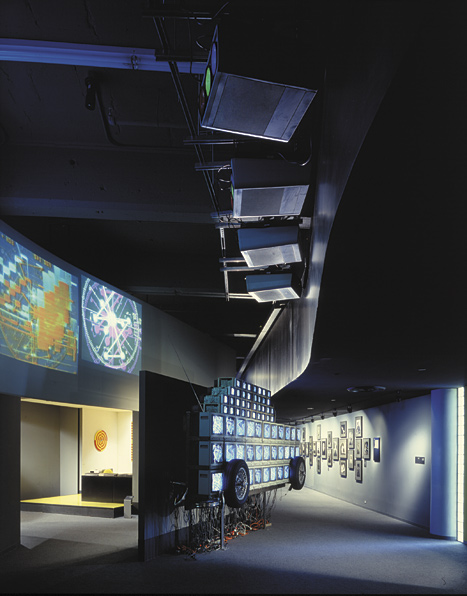
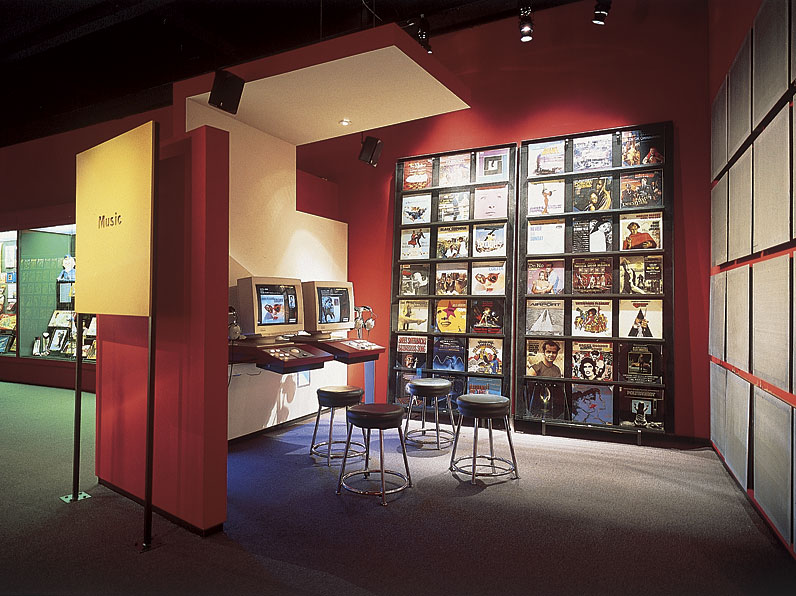
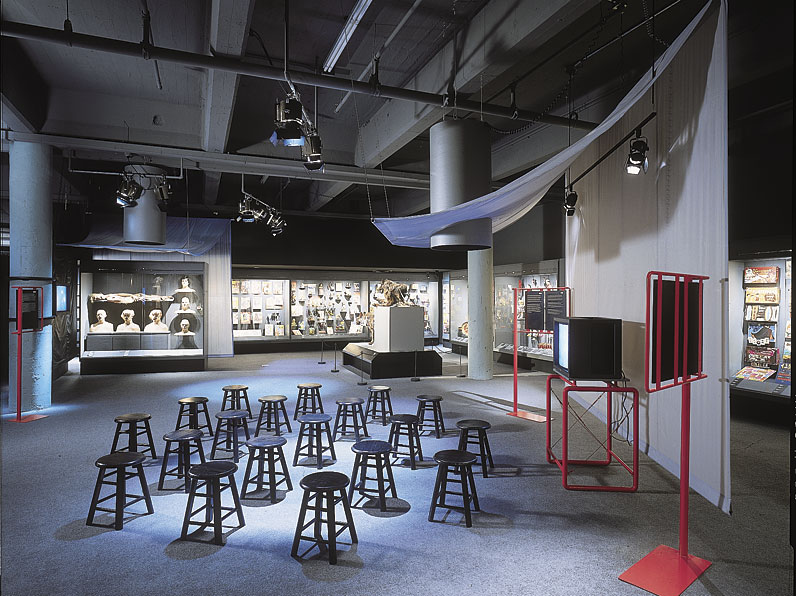
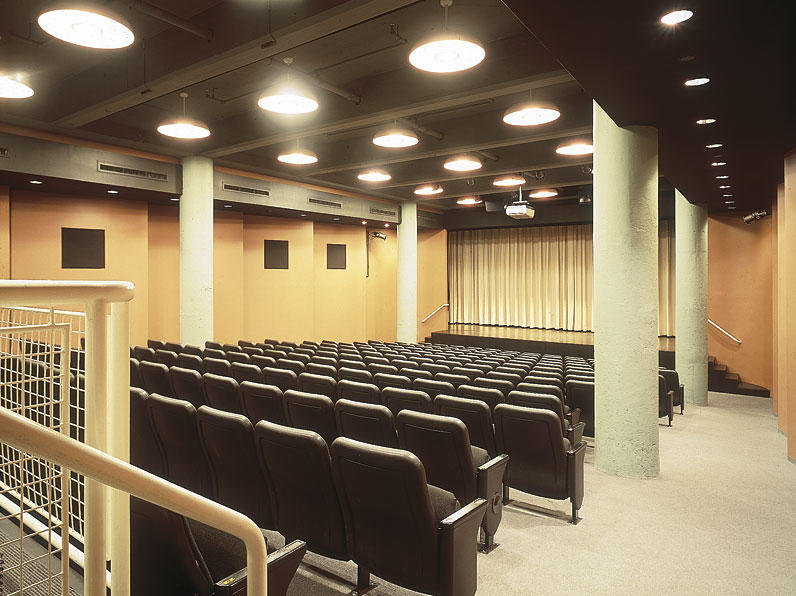
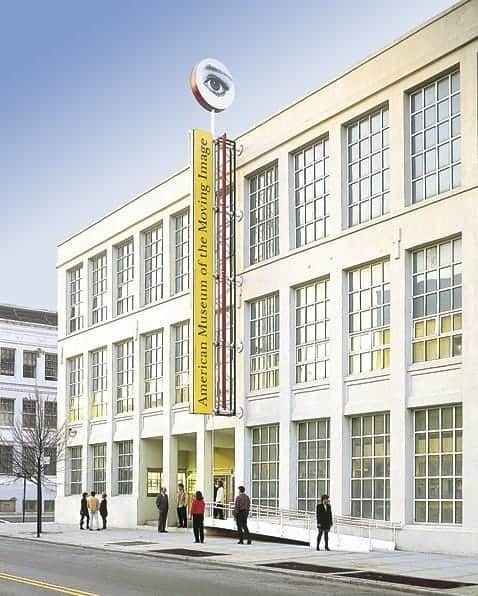
Astoria, NY Housed in a landmark three-story loft building adjacent to the Astoria Motion Pictures studio complex, the American Museum of the Moving Image is both an archive-repository and a learning center for movie and video history, where exhibits are designed to encourage hands-on exploration. Program flexibility requirements and a limited budget determined the primary aesthetic and construction phasing. Continue BackThe architects placed a new monumental stair and elevator tower on-axis with the main entrance to the building, so that it extends from the original courtyard façade as a counterpoint to its gridded solid-void frame.
The stair acts as the iconic object of the design and the orientation element for the entire complex. The landings provide visitors with an alternative exhibition experience, giving them the opportunity to reorient themselves before reentering through the façade of the original building, creating a sense of anticipation and reengagement. In the final phase, the courtyard will be developed as an outdoor movie theater and exhibition space to hold larger-scale installations.
Rochelle Slovin, Director
Citicorp Center
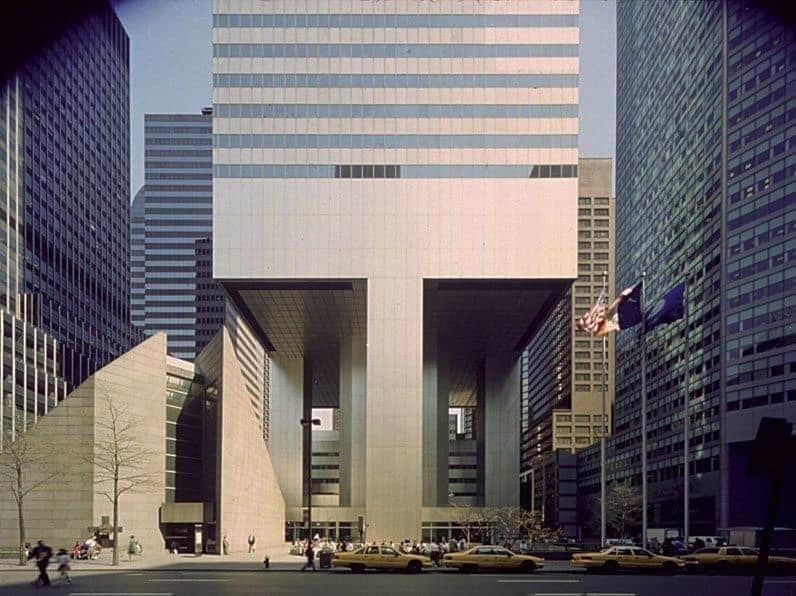
Tower, Public Plaza and Atrium New York, NY The master plan for the landmark Citicorp Center in midtown Manhattan brings a new focus to the building’s image and revitalizes its public and retail spaces. The original entranceways to the Center were confusing, indicating the need for an unambiguous main entrance and improved site planning relationships. The outdoor plaza, for example, was formerly a sunken, unnavigable area composed primarily of steps. Continue BackCITICORP CENTER TOWER, PUBLIC PLAZA AND ATRIUM
New York, NY
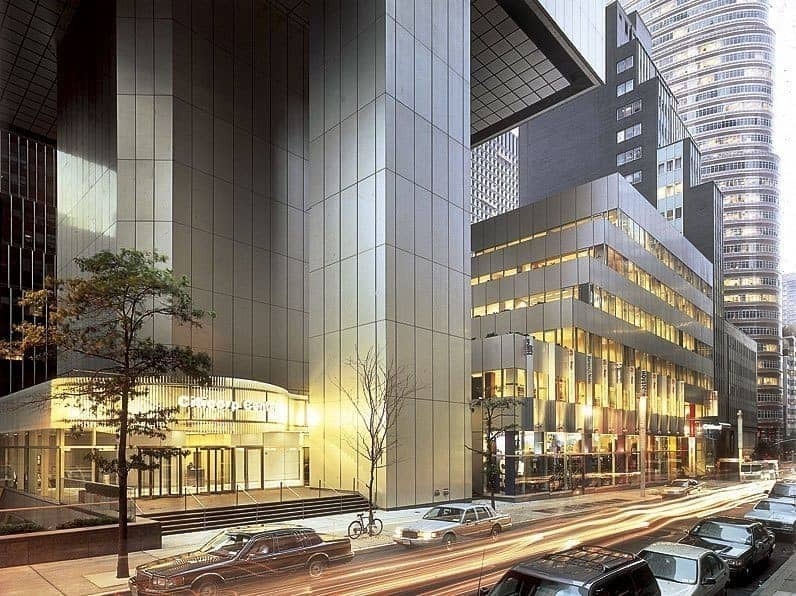
The master plan for the landmark Citicorp Center in midtown Manhattan brings a new focus to the building’s image and revitalizes its public and retail spaces. The original entranceways to the Center were confusing, indicating the need for an unambiguous main entrance and improved site planning relationships. The outdoor plaza, for example, was formerly a sunken, unnavigable area composed primarily of steps.
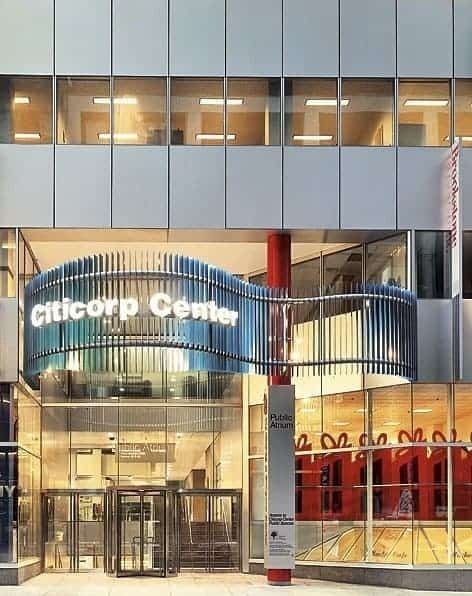
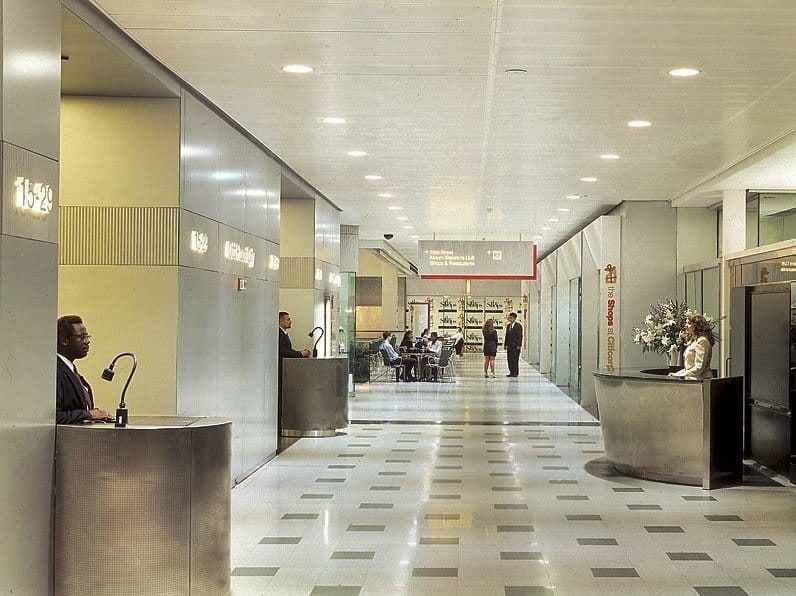
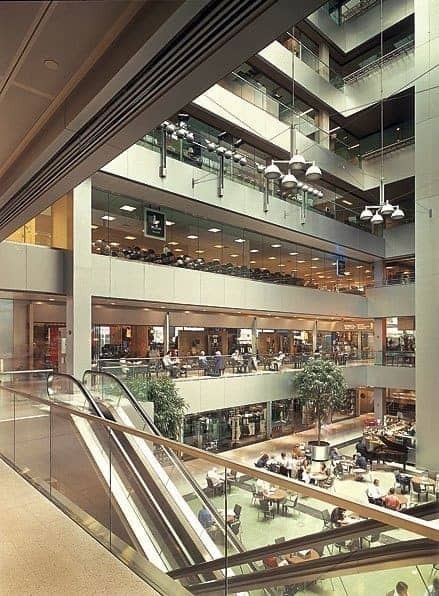
By modifying it and allowing a substantial portion of it to exist at sidewalk level, the architects create a new “front door” to the Center from the Lexington Avenue and East 53rd Street corner. The design solution also enlarges the lobby space by deploying a circular form borrowed from the original geometry of the building. This allows the new plaza to be integrated with the existing lobby space and provides additional room for an open stair and a light well to the lower level, as well as clarified vertical circulation between lobbies.
A signage program was developed to articulate and emphasize the entrances and retail areas. Since the Citicorp Center is a modernist landmark of midtown Manhattan, great care was taken to assure that the revitalization
Crocker Art Museum
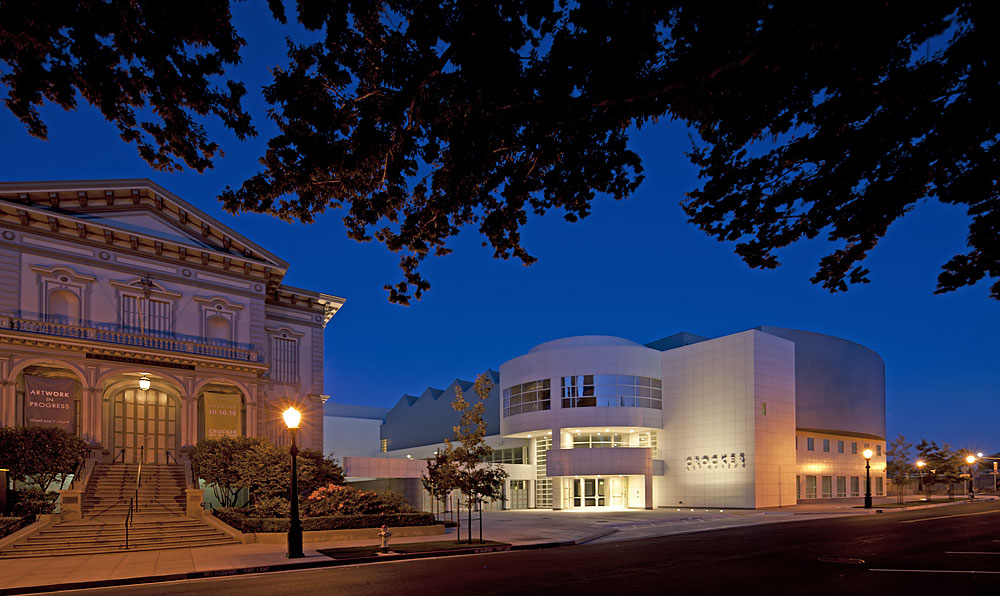
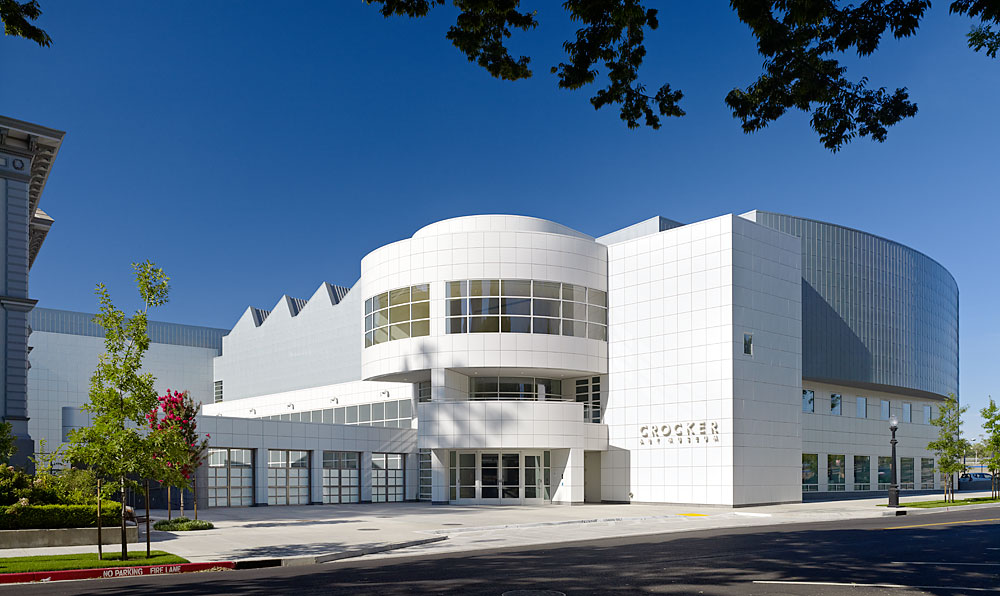
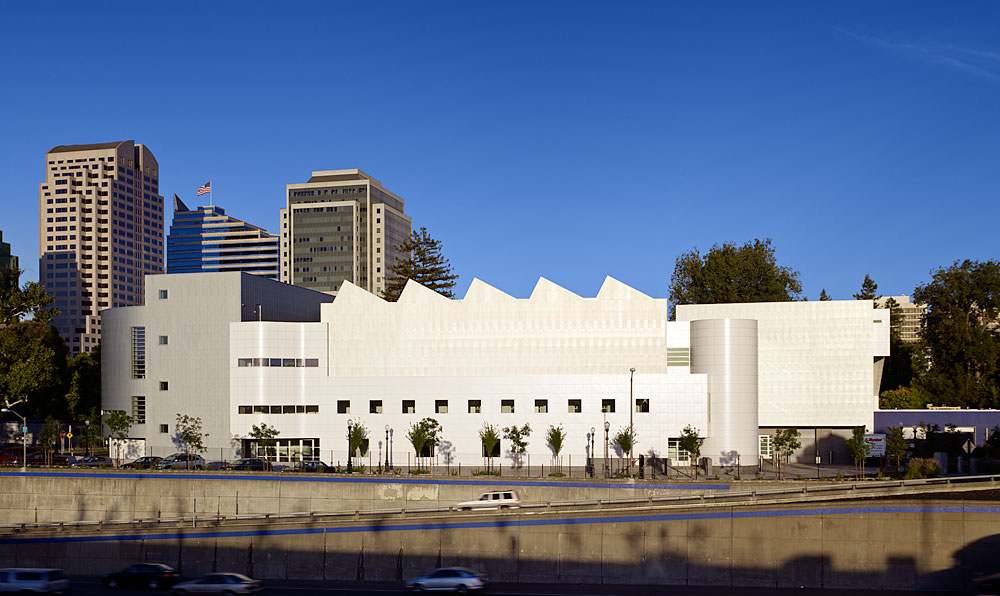
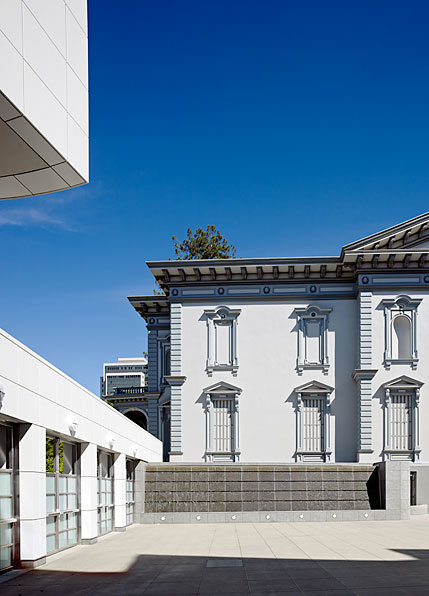
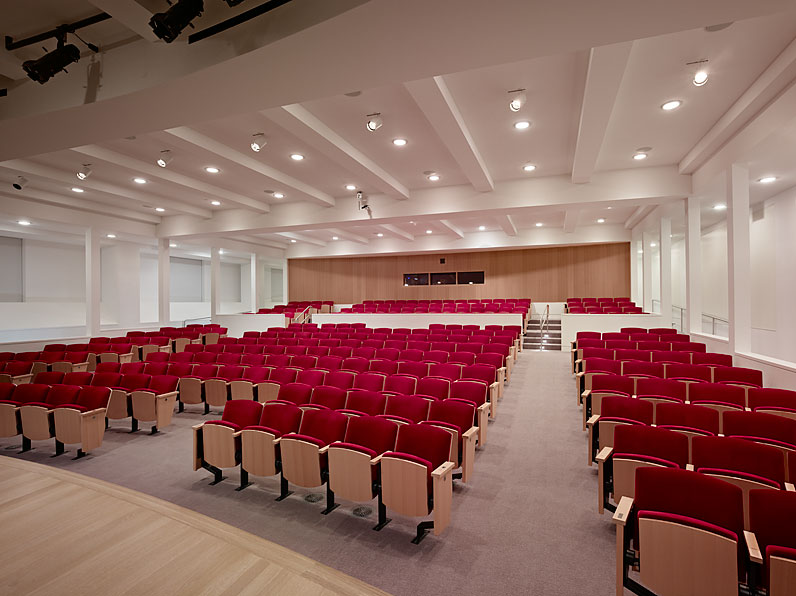
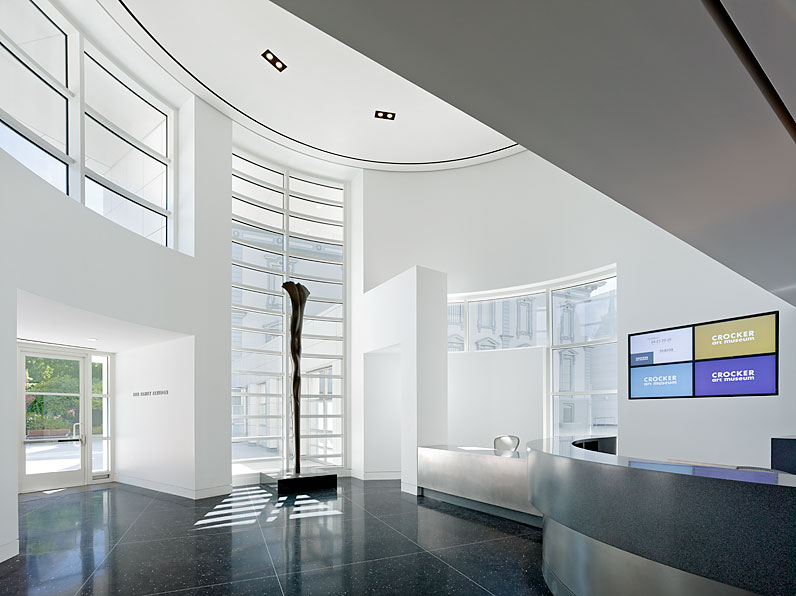
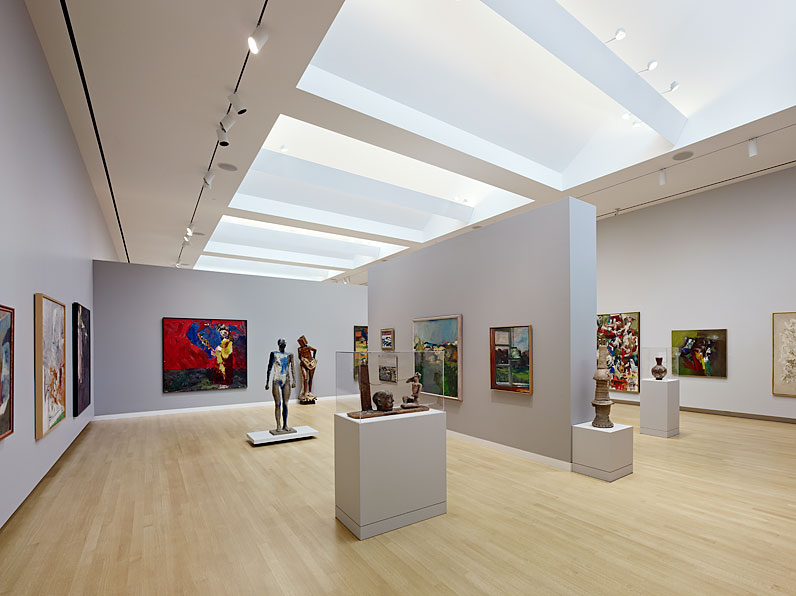
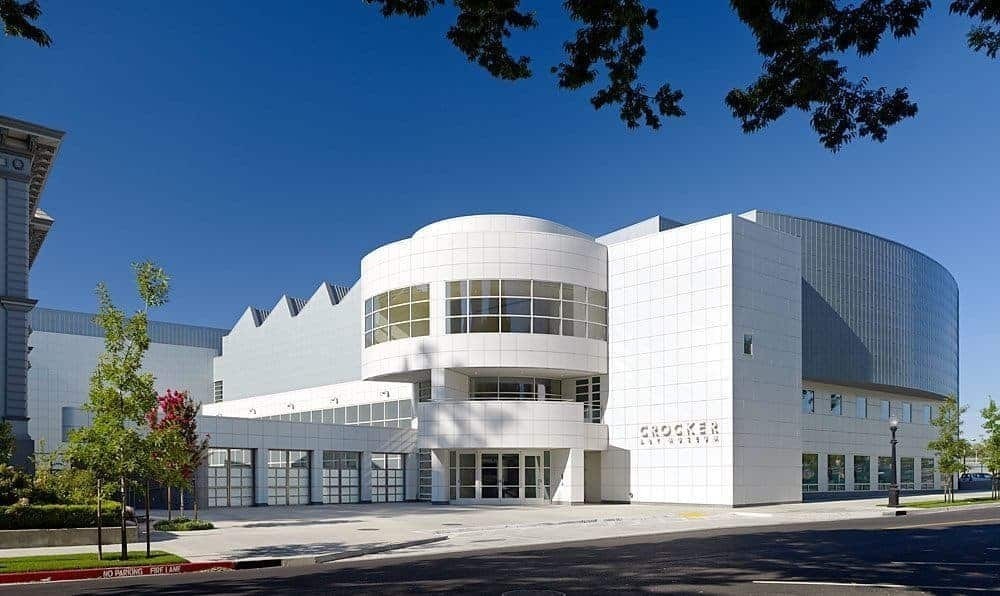
Addition and Renovation Sacramento, CA The existing Crocker Art Museum is a 45,000 square-foot complex made up of the historic Crocker Art Gallery, family mansion and various later additions. Their current facilities are outgrown and inadequate. The goal was to elevate the museum to the level of a world-class facility through the re-programming, restoring and upgrading of existing facilities, and expanding the museum by 100,000 additional square feet. Continue BackThe new addition is rotated on a due north/south axis, disengaging it from the existing orthogonal street grid and Crocker complex, which reinforces the contrapuntal siting and massing.
The ground floor contains a new entry off O Street, which simultaneously accesses the museum store, lobby, reception desk, double height multi-use gallery/reception space which opens to the new courtyard, café, public meeting rooms, auditorium, loading dock and service support spaces. Also accessible from the ground floor is a new connection/circulation space to the Herold Wing, which interconnects service and public access between the new addition and the existing buildings. The connection, which occurs on all three floors, re-facades the Herold Wing from the new courtyard, forming a consistent architectural image for the space.
The second floor is occupied by the administrative staff offices, art storage spaces with potential public viewing and access, service spaces and the second floor connection to the Herold Wing. This connection also facilitates service to the Crocker Art Gallery Ballroom for events and catered functions.
The third floor is occupied by the new suite of temporary and changing exhibition galleries that afford maximum flexibility and installation variation. The new galleries are directly connected to the existing Art Gallery building, allowing for a continuous circulation sequence from the new to the existing, both vertically and horizontally, thus totally integrating the entire complex.
Associate Architect: HMR Architects, Inc.
Dunaway Apartment
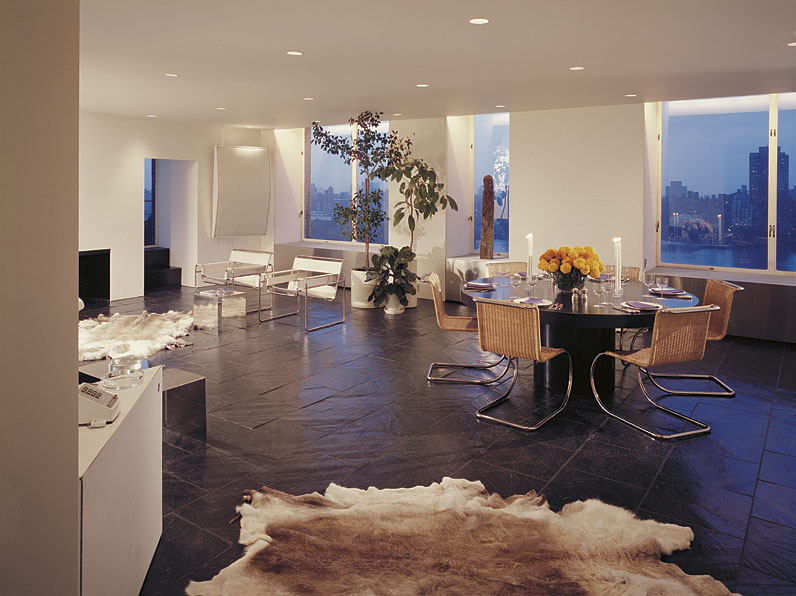
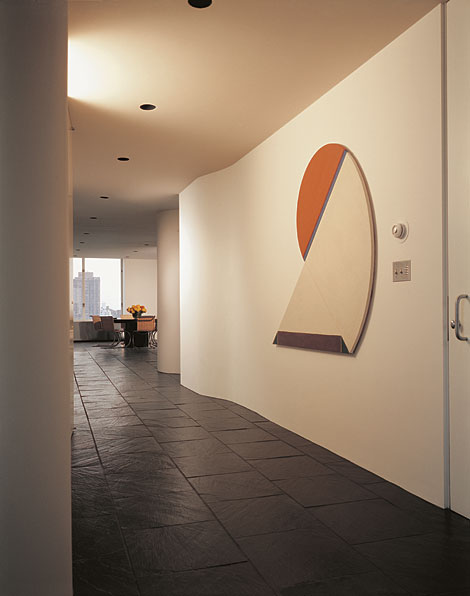
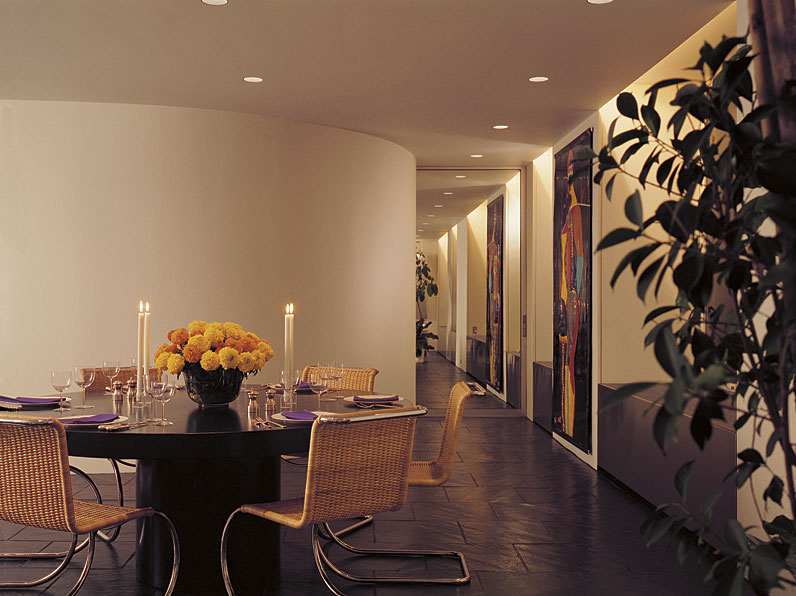
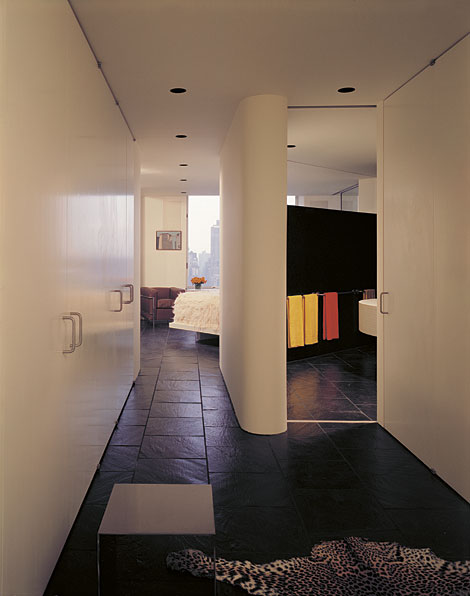
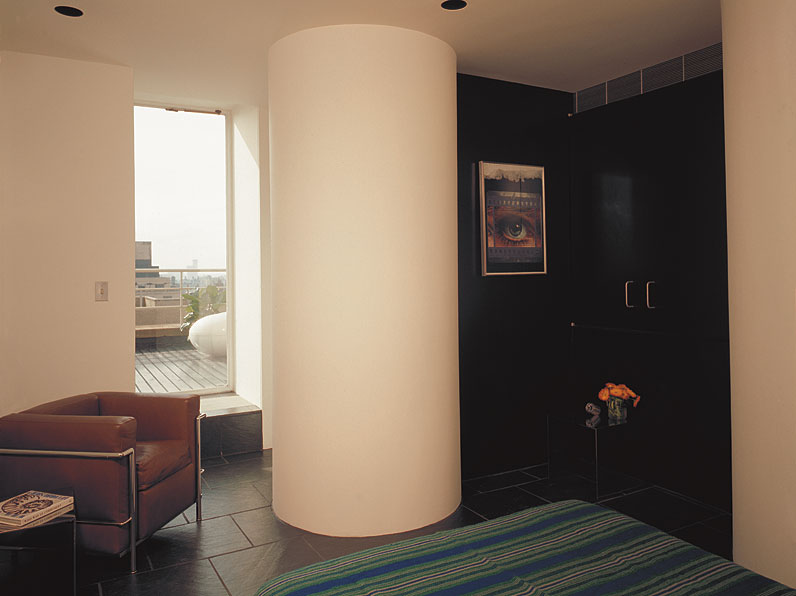
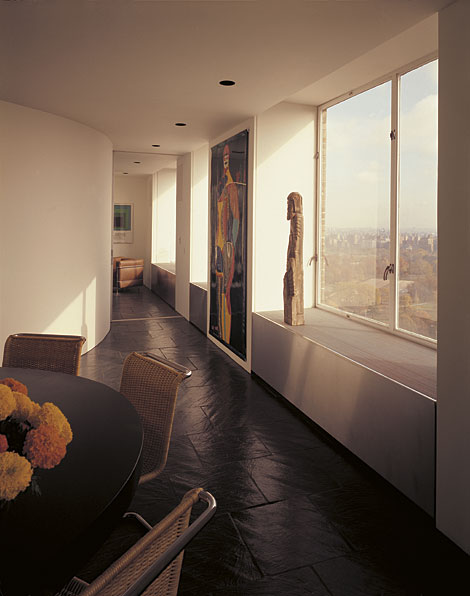
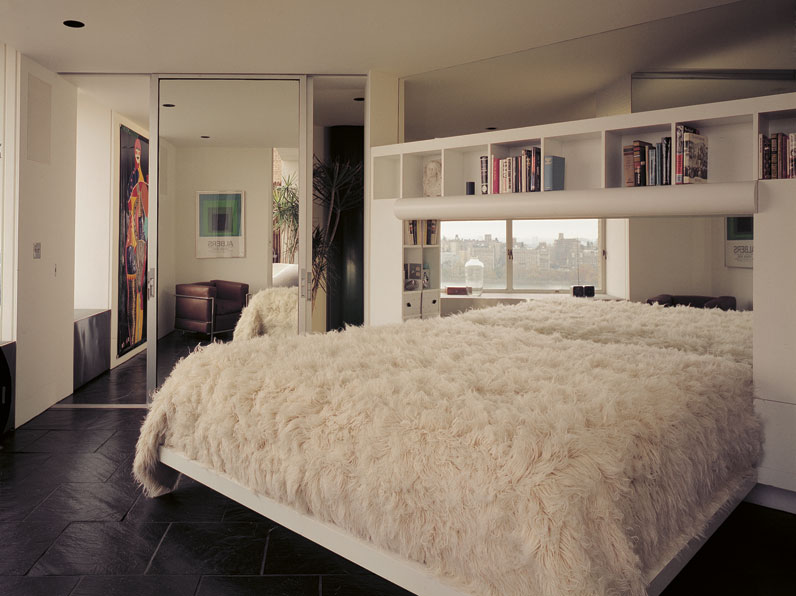
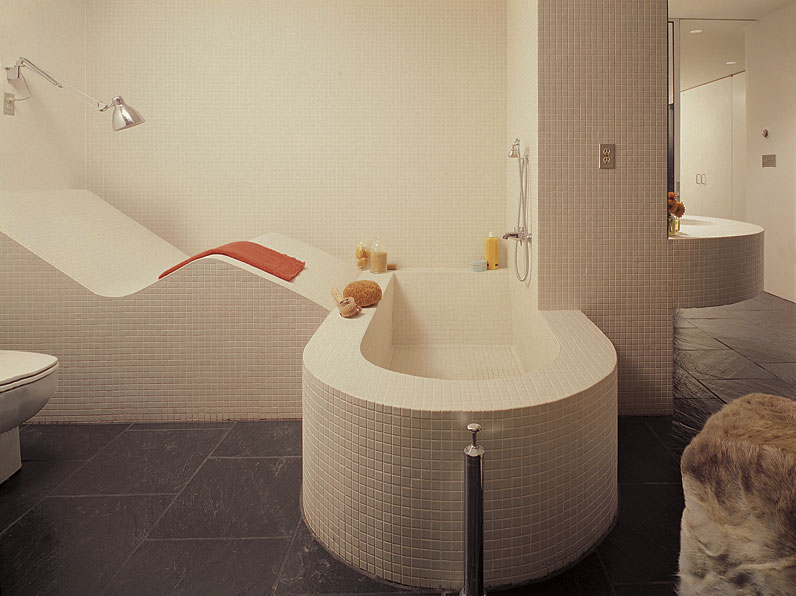
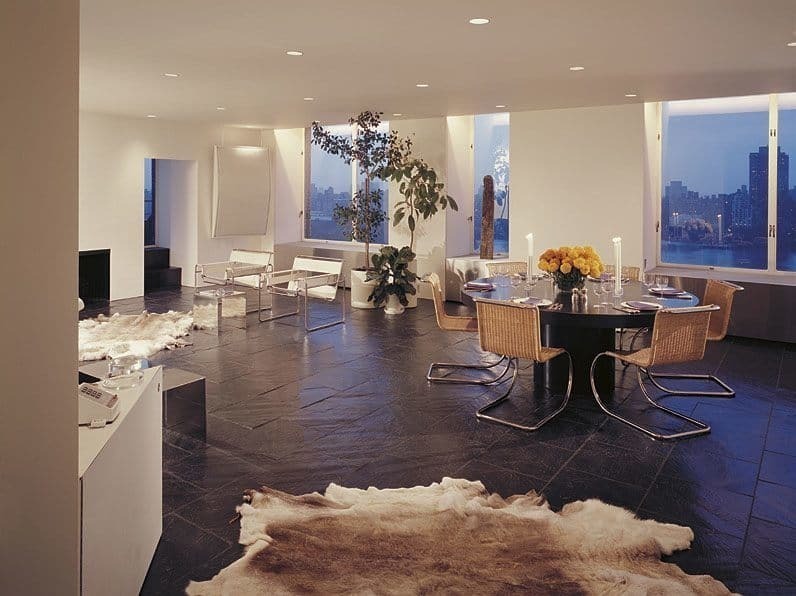
New York, NY On the twentieth floor of a 1930’s Central Park West building, this space combines two apartments, creating a horizontal volume that slices through the base of the tower, releasing two views on three sides—east to Central Park, south to the Manhattan skyline, and west to the New Jersey Palisades. These extensive views and low ceilings provoked the widening of all major window openings. Continue BackThe edited palette- the black slate floor, white walls and ceilings and back and white lacquer cabinetwork—intensifies the abstract reading of the space.
Gymnasium Apartment
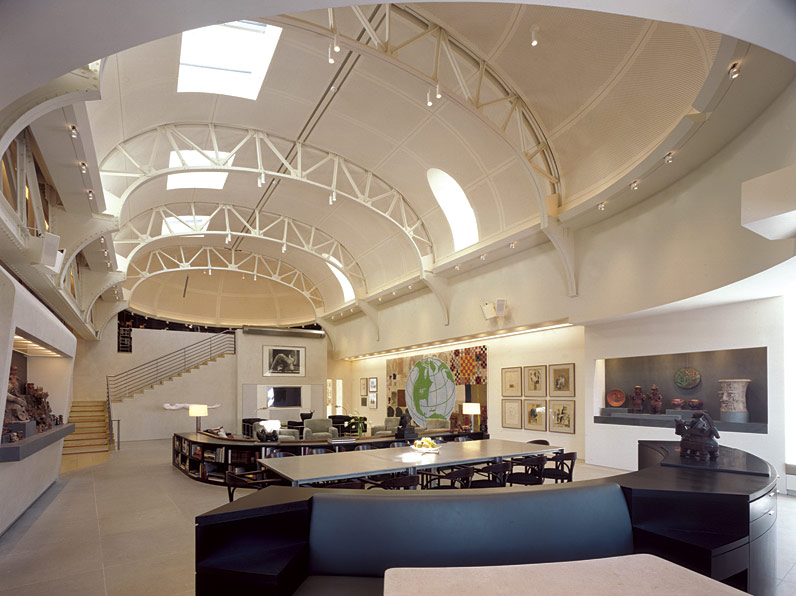
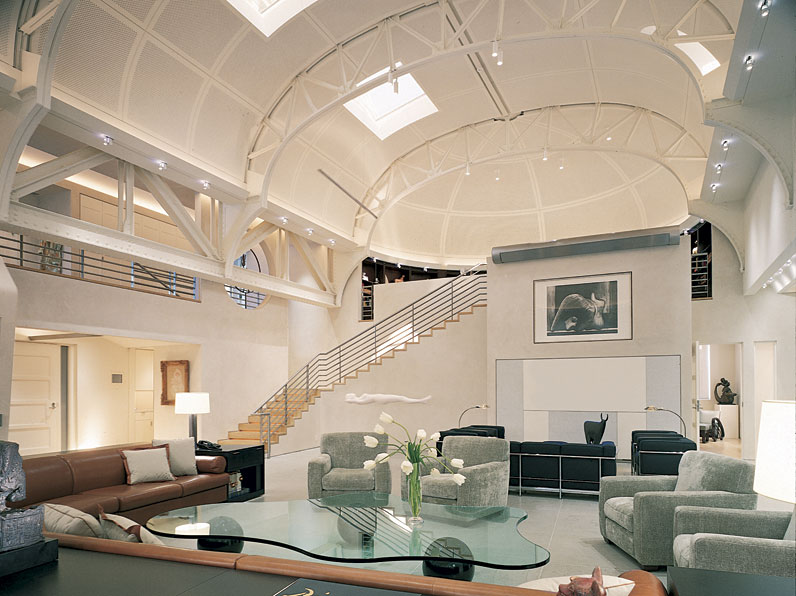
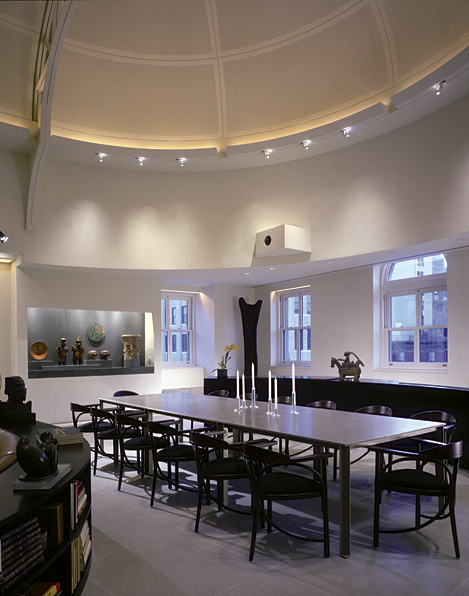
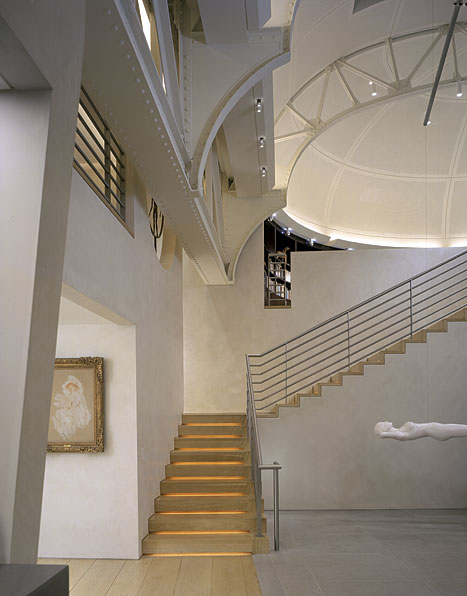
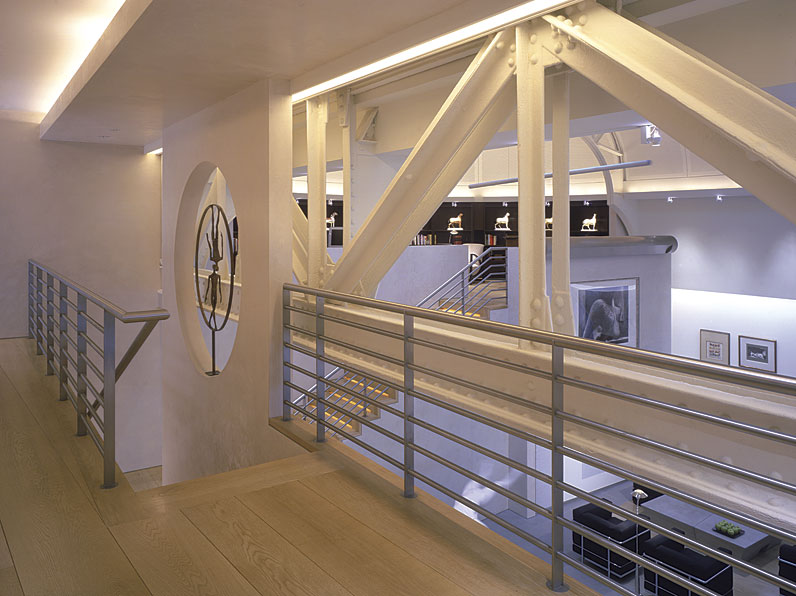
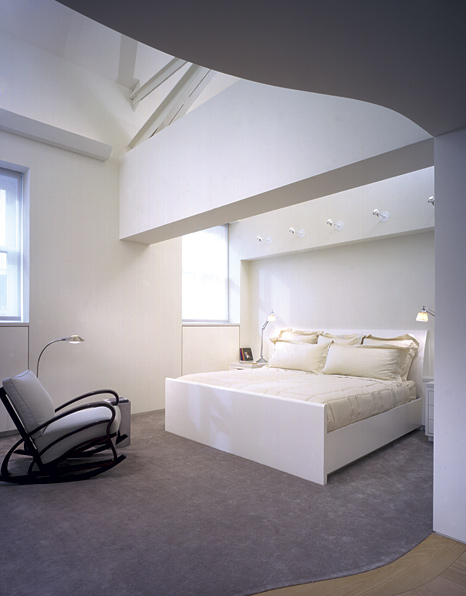
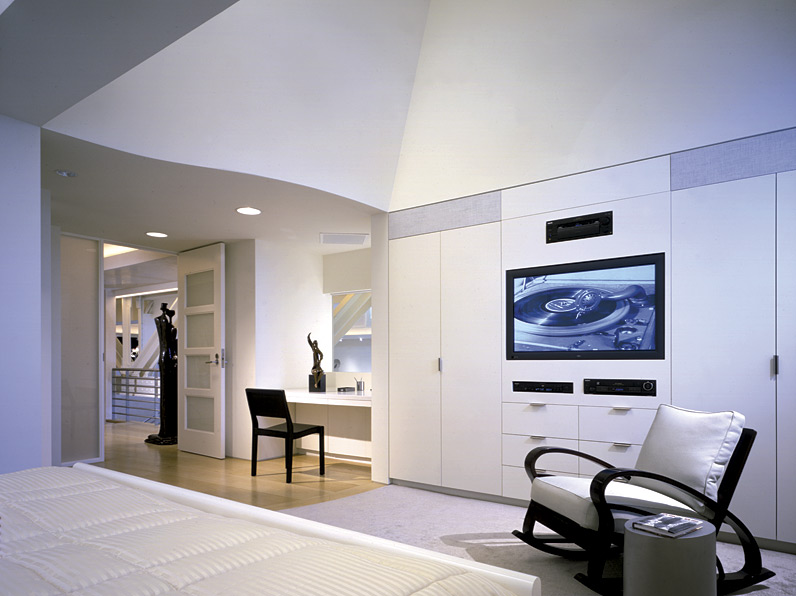
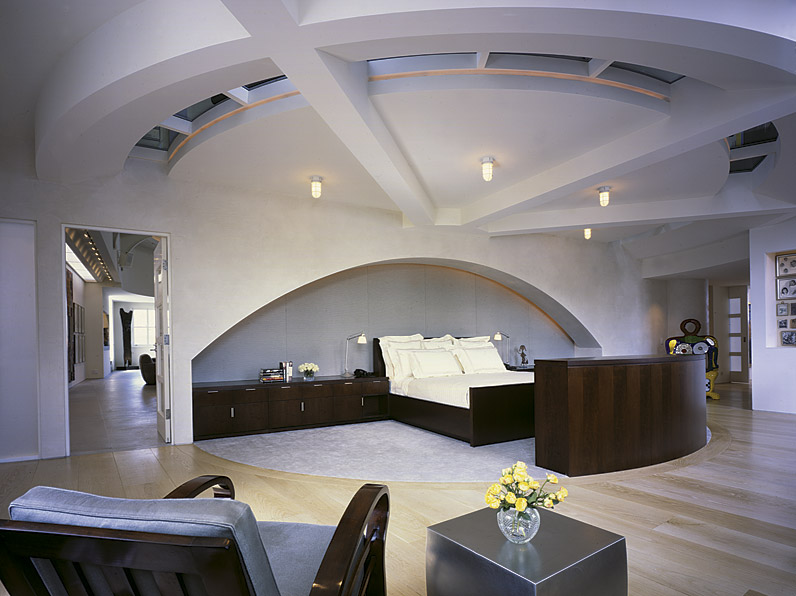
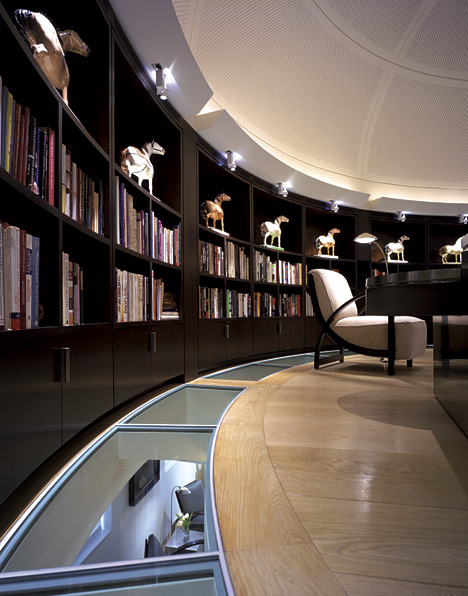
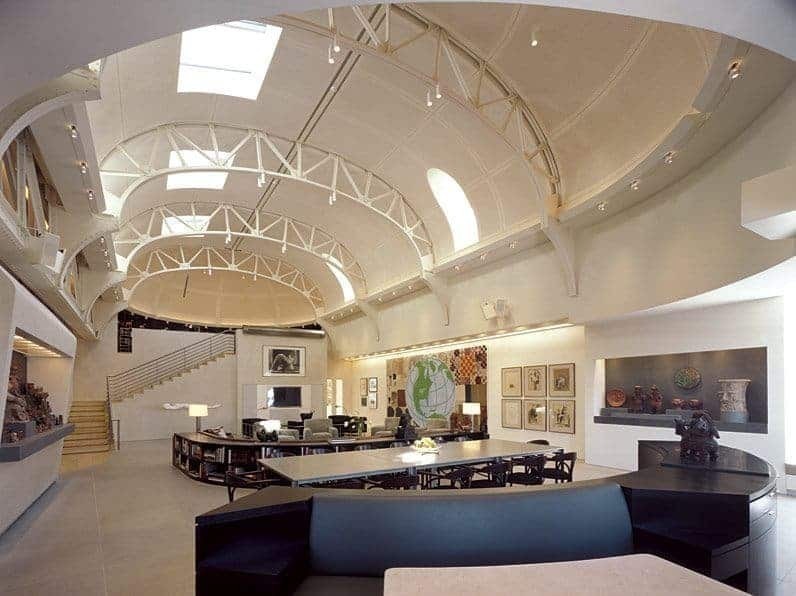
New York, NY This 6,000 square foot apartment is located in the former gymnasium of the original Beaux Arts Police Headquarters Building. The intention was to physically maintain and visually exploit the volumetric integrity and structural expression of the existing barrel vaulted space, while adding a master bedroom suite and study/library balcony, and integrating an eclectic painting and sculpture collection. Continue BackThe study/library balcony is suspended under the east end of the barrel vault and revealed from the master bedroom below, by a continuous radial skylight in the floor, articulating its separation while maintaining the volumetric extension.
The floor of the balcony defines the bedroom ceiling, floating asymmetrically within the existing orthogonal building frame, articulating its objectiveness and sectional variation.
Three large skylights were inserted into the south side of the barrel vaulted roof, providing natural light into the longitudinal internal façade of the space and revealing the classic building pediment above.
International Center of Photography
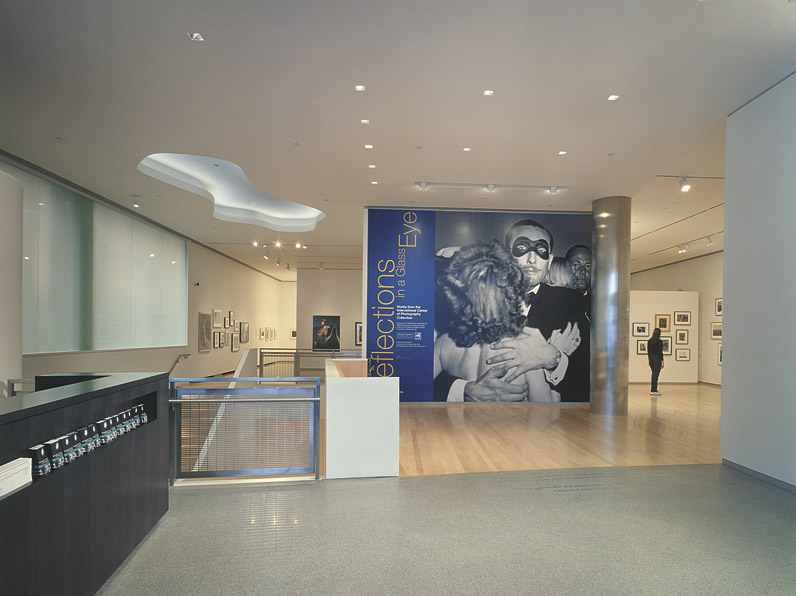
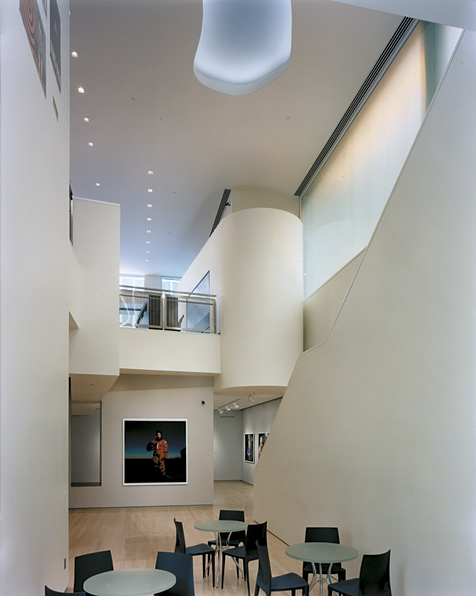
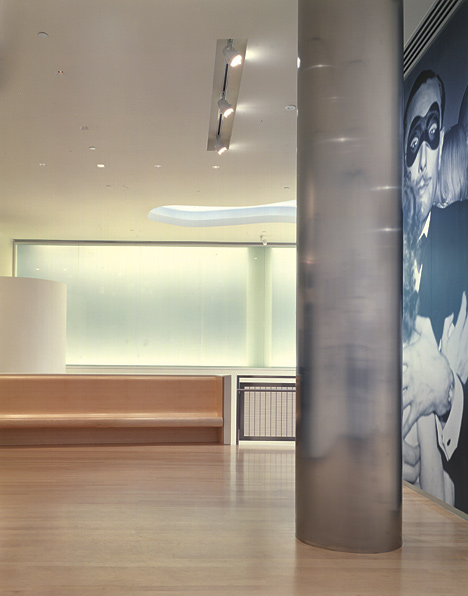
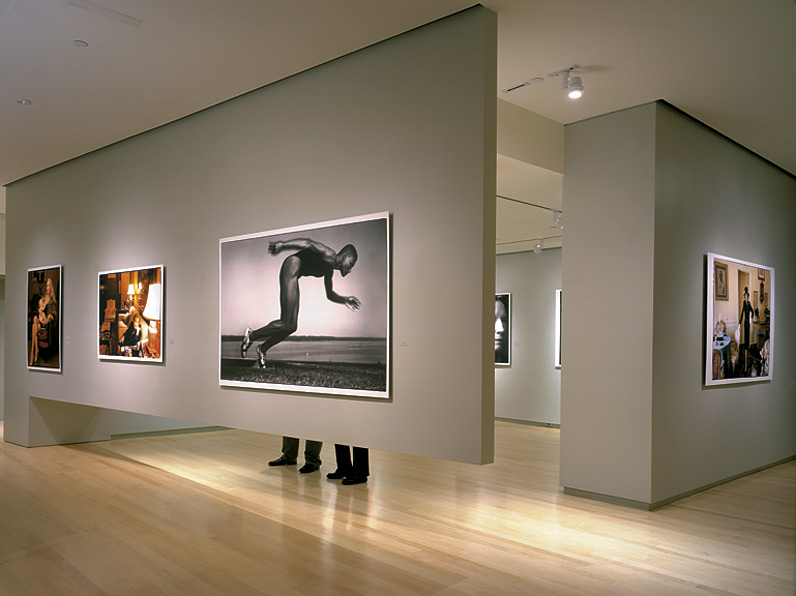
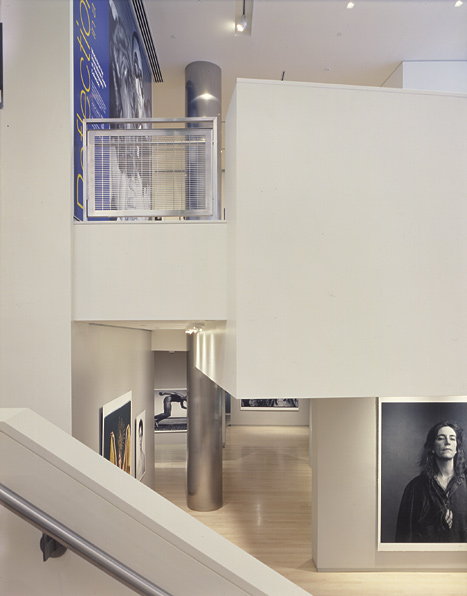
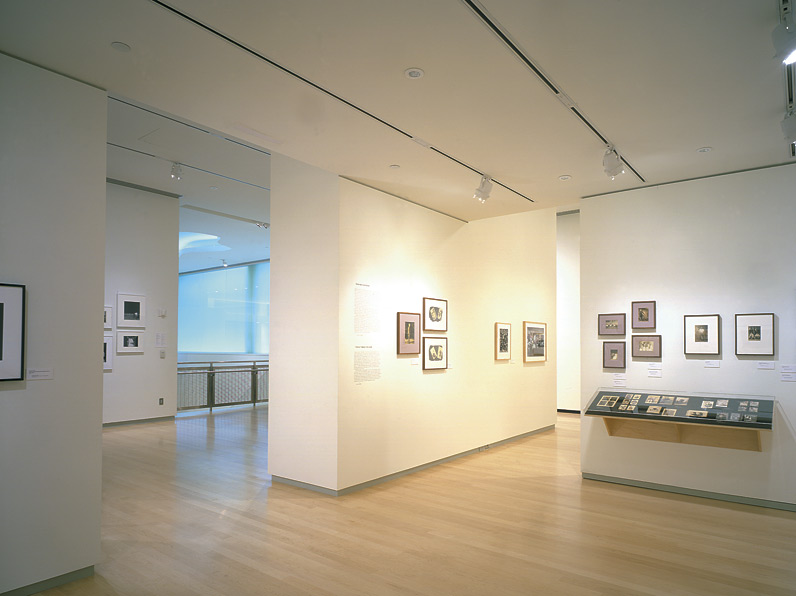
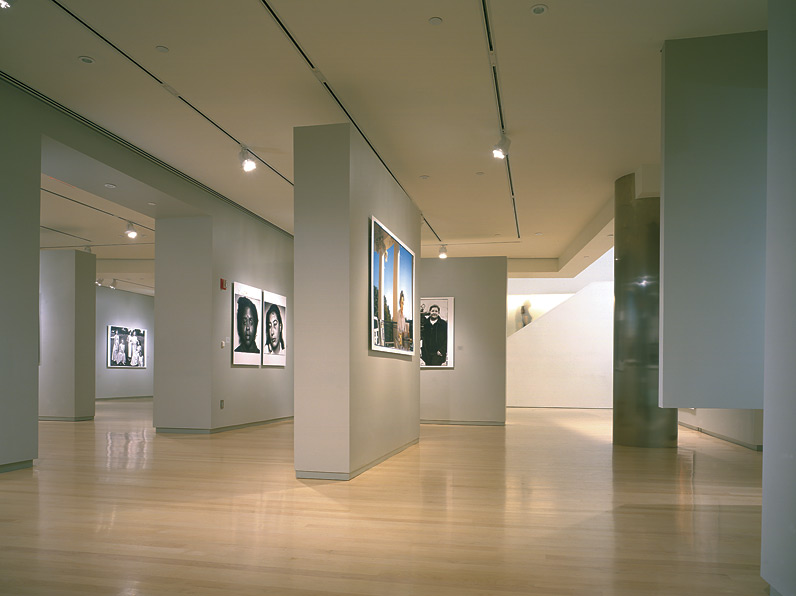
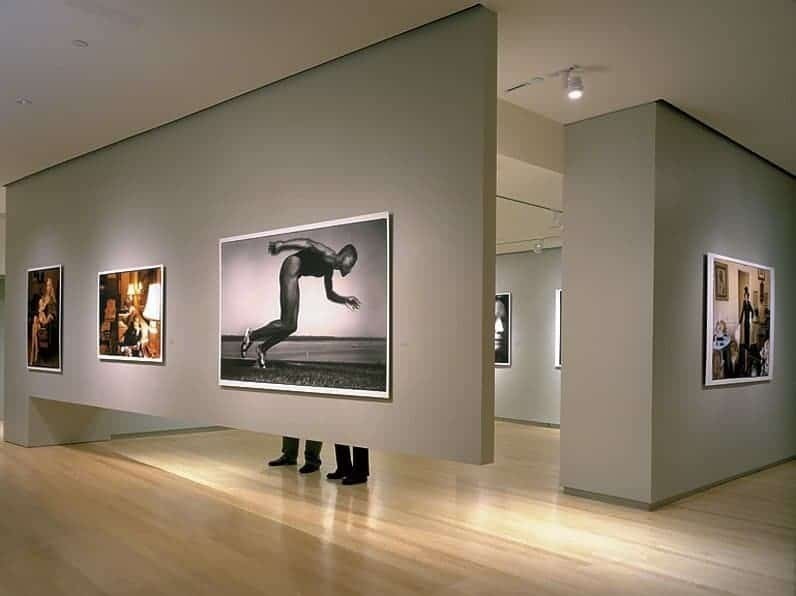
New York, NY To create the new space for the International Center of Photography, Gwathmey Siegel Kaufman renovated the ground and lower levels, a 24,000 square foot space, in an existing office building. The ground floor contains the entry lobby, reception area, museum store and initial galleries. The lower level, accessed through a double height stair volume, contains galleries, cafe and support space. Continue Back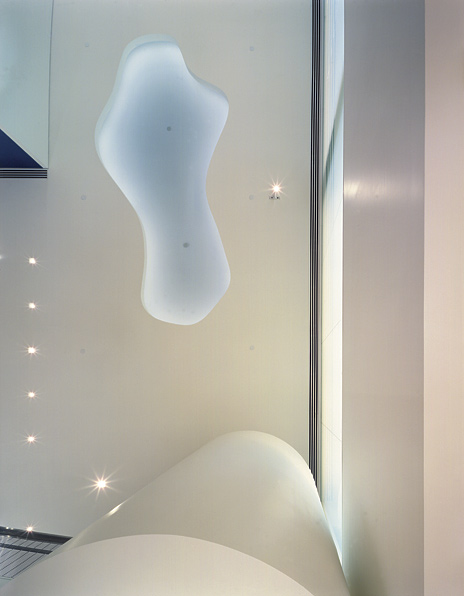
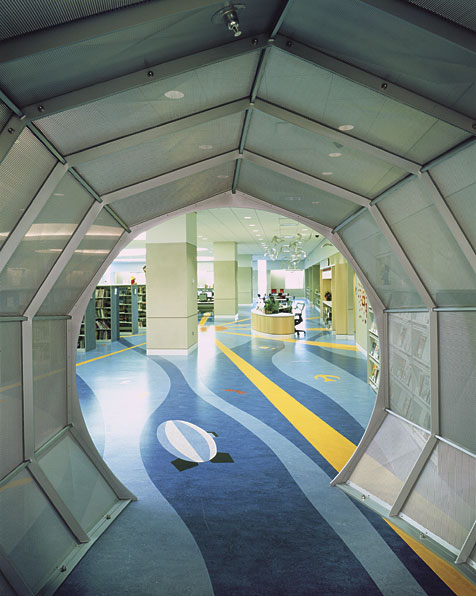
Akron-Summit County Public Library
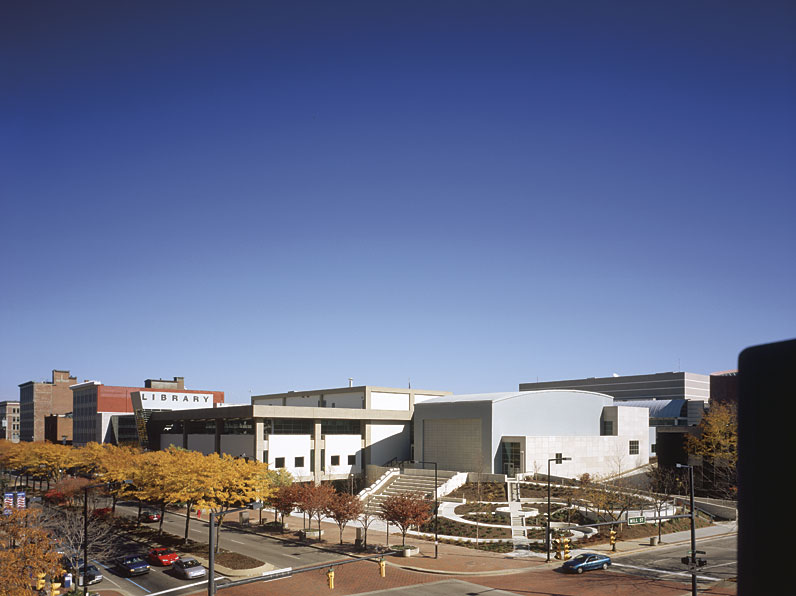
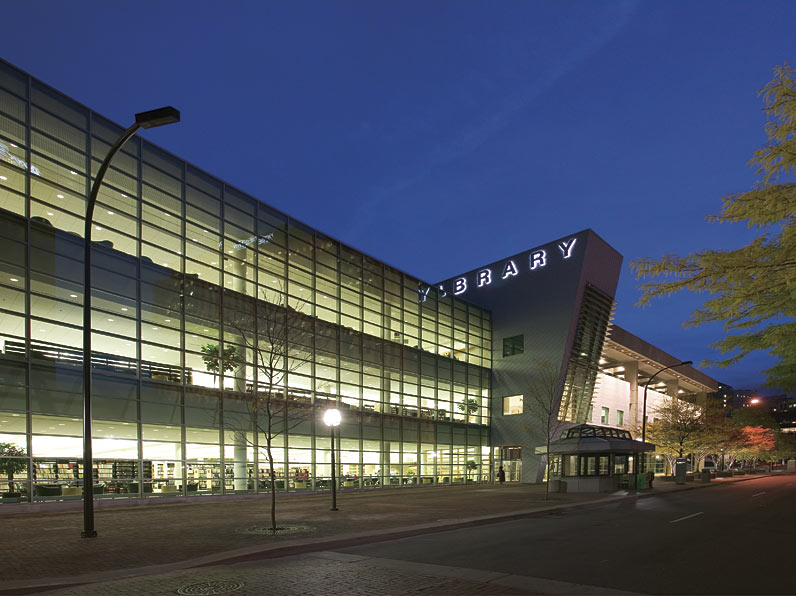
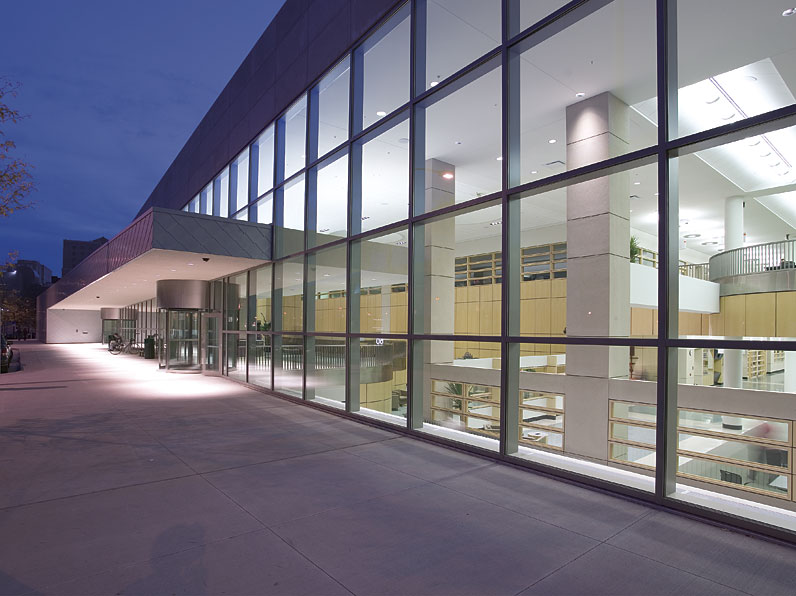
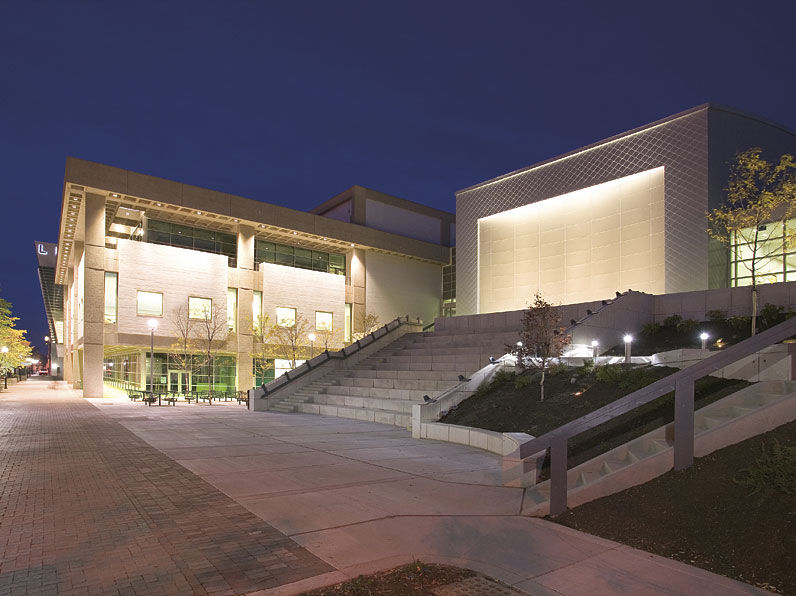
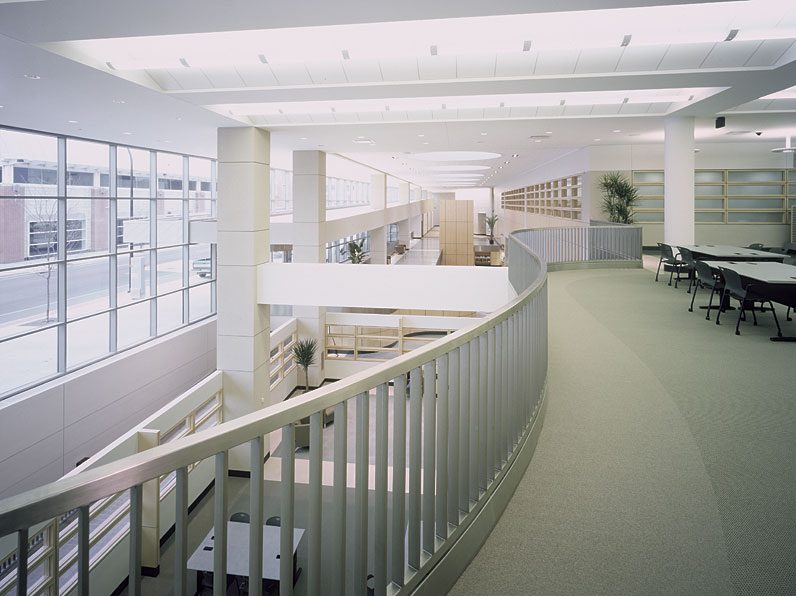
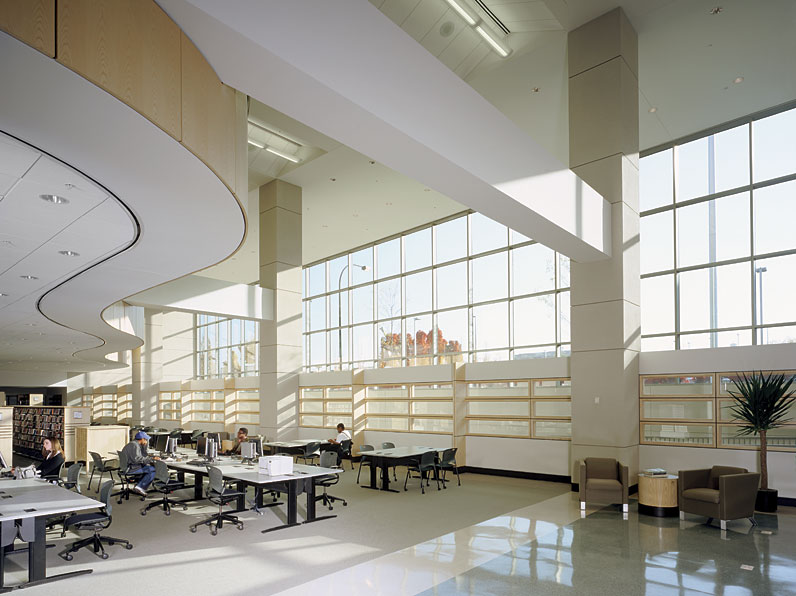
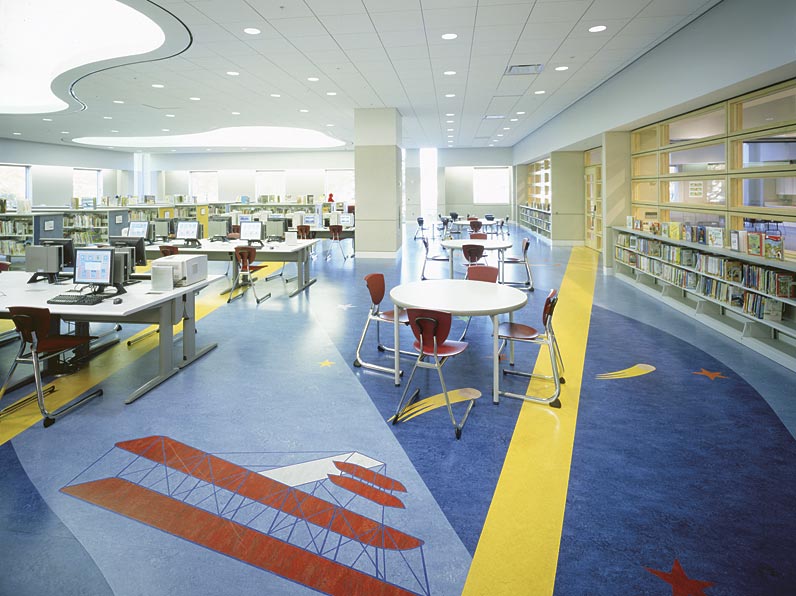
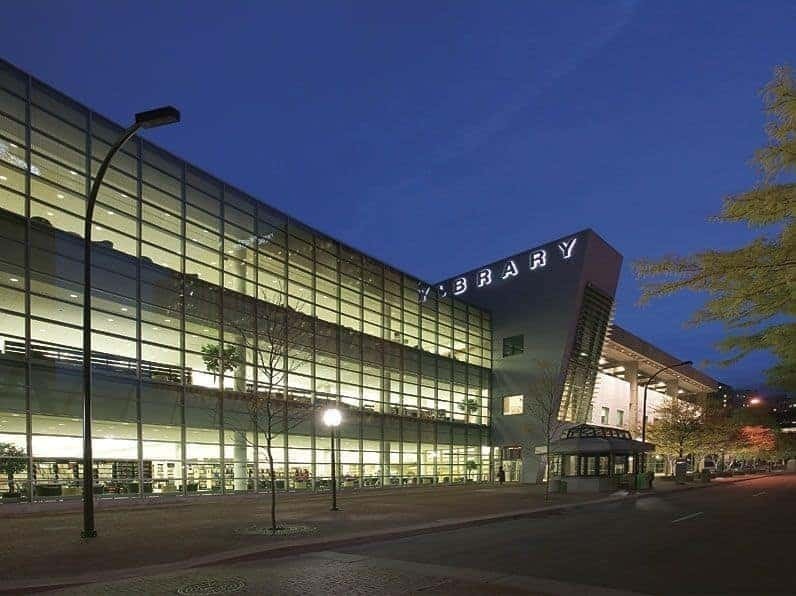
Akron, OH The addition to and renovation of Akron-Summit County’s existing 135,000-square-foot 1970 Main Library Building was validated by an initial phase involving a master plan/feasibility study. The program was driven both by the need to make the collection materials "browse-able"—by moving them out of the existing basement stacks—and the need to expand and modernize seating, public service infrastructure and public programs. Continue BackThe new addition negotiates the twenty-five foot difference in elevation between High and Main Streets. A three-story atrium along High Street brings natural light down to the lowest Main Street level and provides orientation for all patrons. The assemblage of building “objects” along Main Street includes the new library loft addition and the new theater flanking the existing library, maintaining a pedestrian scale along the mall in contrast to the automobile-scaled facade along High street, which is accessible by car.
The building encompasses the most advanced applications of technology and communication systems for administrative management, the processing of library records, and bibliographic and information networks. Special design consideration was given to provide the most flexible, state-of-the-art infrastructure and distribution systems for digital information.
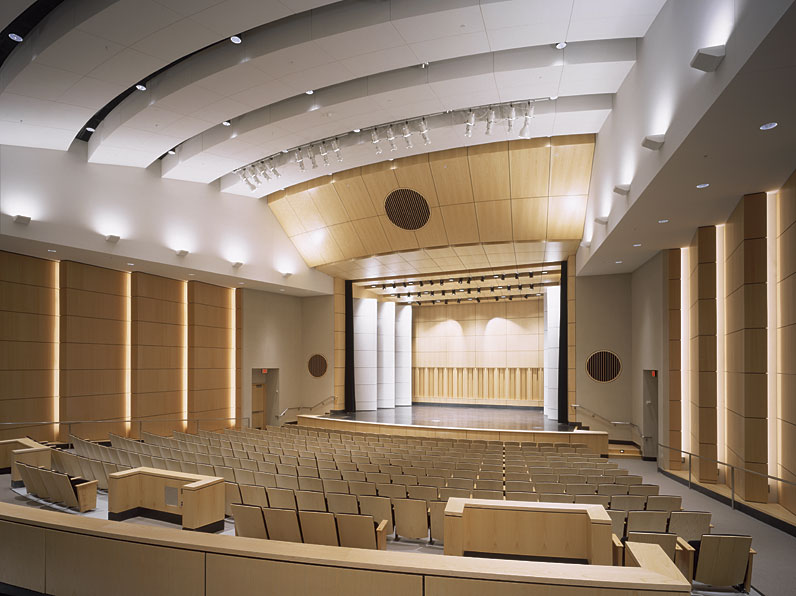
Numerous community spaces are provided, including a 425-seat auditorium, a cafe, a bookstore, public meeting rooms and art exhibition spaces. An interior link to a new parking garage along High Street resolves into a new pedestrian ramp, activating the three-story addition. An outdoor amphitheater and landscaped park complete the complex.
Associate Architect: Richard Fleischman Architects, Inc.
International Design Center
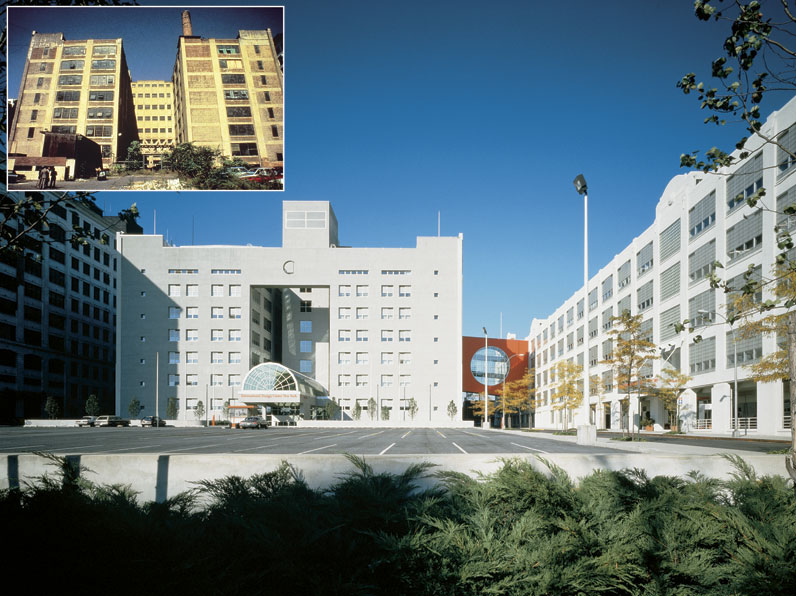
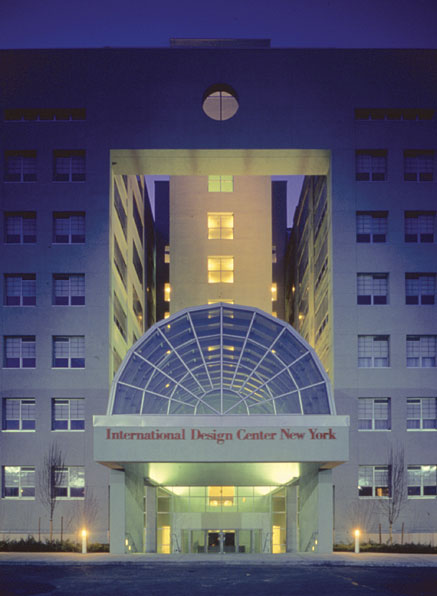
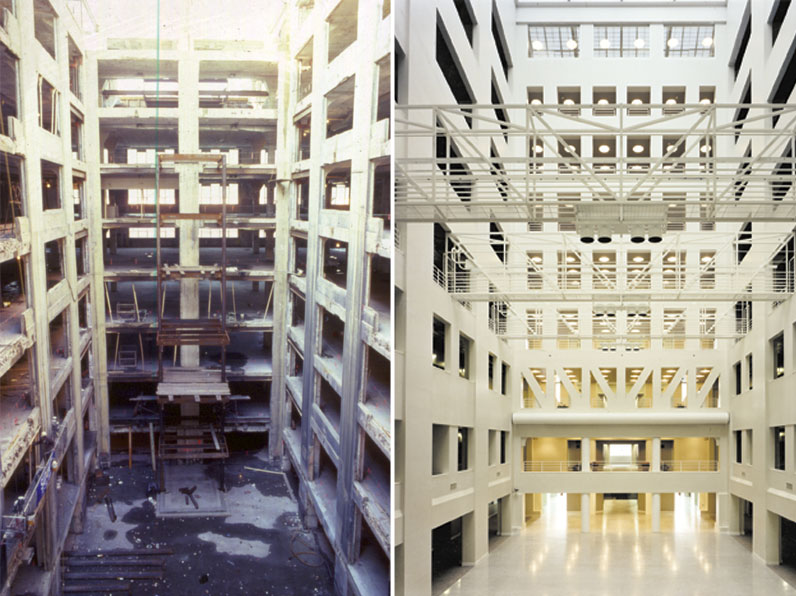
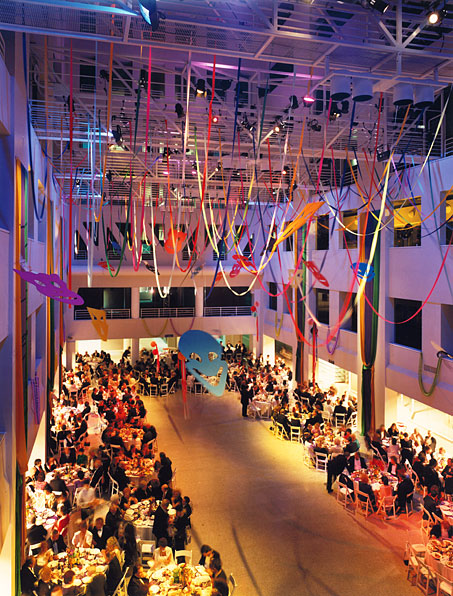
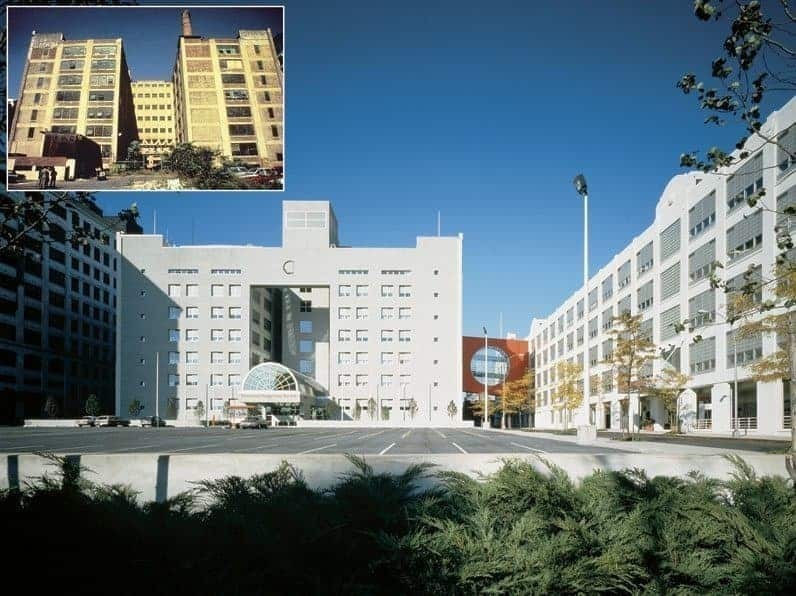
New York, NY The International Design Center was conceived as a centralized complex to house the showrooms of furniture, furnishings, and related manufacturers marketing to New York’s interior designers and decorators. The two-building complex consists of completely renovated, reinforced-concrete loft buildings from World War I, invigorated by full-building-height atriums, pedestrian bridges, and bold graphics. Continue BackFour new steel bridges span the atrium at the fourth-floor level, vertically articulating the space and forming an implied second ceiling. A translucent skylight transforms the courtyard into a public room.
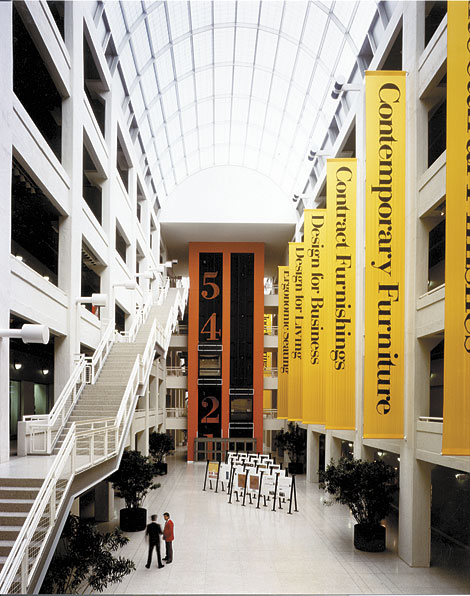
Center I, completed after Center II, is a horizontal five-story building organized along the same principles. The courtyard was enclosed to create a central atrium surrounded by showrooms. A cascading double stair was added to one side of the space, connecting all balcony levels with a central exposed elevator bank. The building is entered from a recessed arcade or from a ramped connecting bridge. Spanning the street with its red metal and oculus fenestration, the eighty-foot bridge is the project’s graphic symbol.
Associate Architect: Stephen Lepp Associates
Allen County Public Library
Addition and Renovation Fort Wayne, IN This two-story, 127,000 square foot addition to and renovation of the existing 240,000 square foot Allen County Public Library in Fort Wayne, Indiana creates a monumental civic building that integrates the best aspects of the existing library and acts as a revitalizing influence in the downtown area. The design identified the basic urban and architectural strategies that met the goals of the library and the community. Continue BackThere are two public entrances to the expanded facility. The existing re-imaged Webster Street entrance maintains the current easy pedestrian access from downtown and incorporates a Café and Library Shop to permit a synergy of uses. The new Ewing Street wrap-around entrance integrates the connection to the new below-grade parking and includes a major glass component that affords attractive views to neighborhood churches and the historic district.
The east and west entrances are interconnected by the great hall, which provides clear visual orientation and access to all library departmental facilities and seamlessly integrates the existing renovated spaces and the new construction. The curved roof of the great hall contains a large north-facing skylight and a shaded south-facing clerestory window, bringing daylight into the center of the building.
The great hall can be separated from the library spaces, so that community functions can extend past library hours if needed, without compromising library security. The central great hall also houses the Circulation Desk, Central Reference Desk, self-check stations, electronic catalog stations, and informational components, as well as stairs and elevators to the Library’s second level, the new Auditorium on a lower level, and the Garage below grade.
Community use facilities are organized along the southern side of the first floor, between the great hall and Washington Blvd. These spaces include flexible Meeting Rooms, Access Fort Wayne Television, Community Computing and Public Computer Training, an Exhibition Gallery, the Café, and the Library Friend’s Store.
Associate Architect: MSKTD & Associates, Inc.
Middlebury College
Middlebury, VT