Princeton University
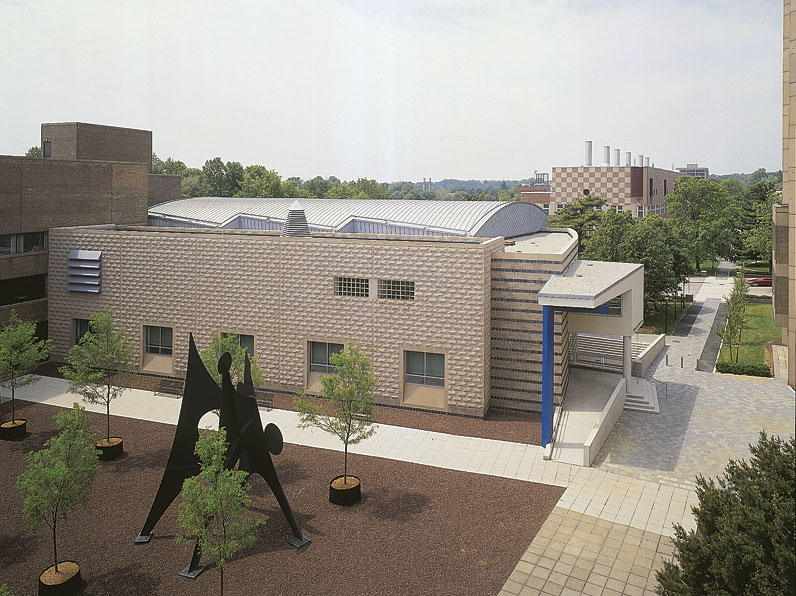
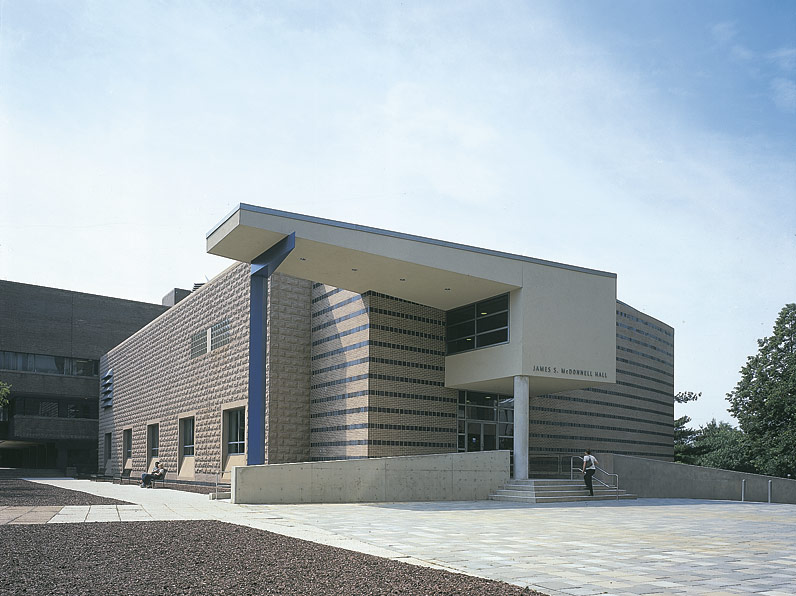
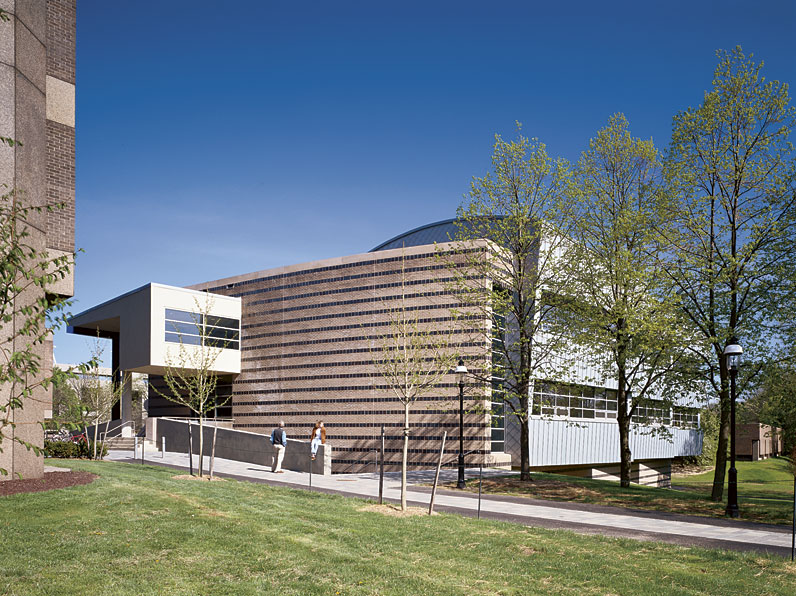
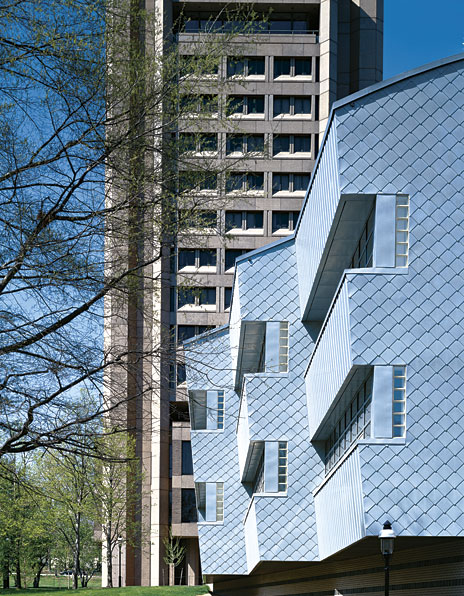
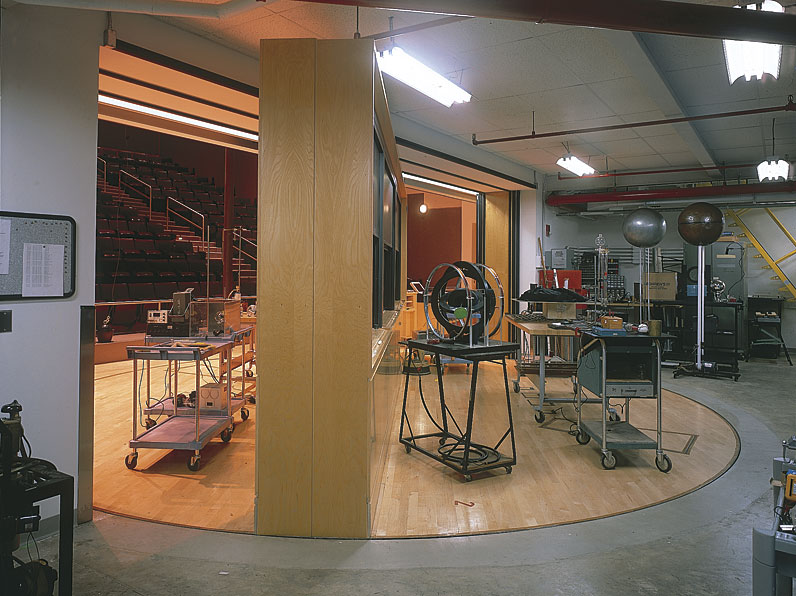
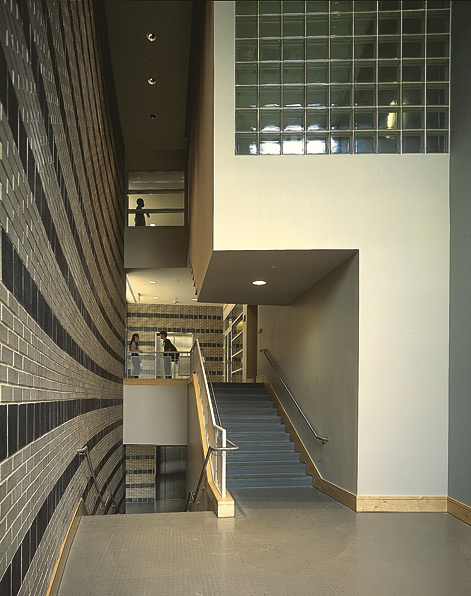
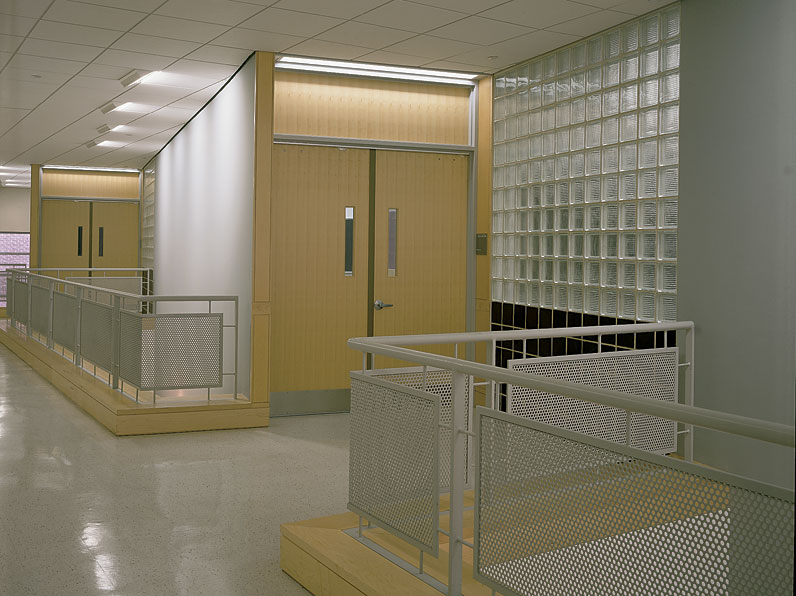
James S. McDonnell Hall of Physics Princeton, NJ Designed as an undergraduate teaching facility, this 42,000 square-foot physics building links the Physics Department’s graduate research facility with the Mathematics Department, creating a courtyard plaza that recalls the traditional quadrangle layout of the older areas of campus. Three major programmatic divisions—lecture halls, classrooms and labs—are articulated as discrete segments by both their massing and materials. Continue BackA canopy marks the entrance to a double-height atrium, which connects the new building to Jadwin Hall and provides access to five classrooms, two labs and a prep room. The barrel-vaulted ceilings of three additional labs allow tall experimental set-ups involving gravity and motion studies. An exterior stair leads down to a second entrance, where the original gallery was refurbished to create lobby space for two new lecture halls. The halls are steeply raked and provided with rear projection facilities, catwalks, and turntable stages, which allow large-scale experiments to be set up in the prep room behind the stage and then rotated into the lecture halls. All three buildings are linked, allowing multiple accesses to the lecture halls.
Architectural Record, October 1998
 Photographer: © Norman McGrath”>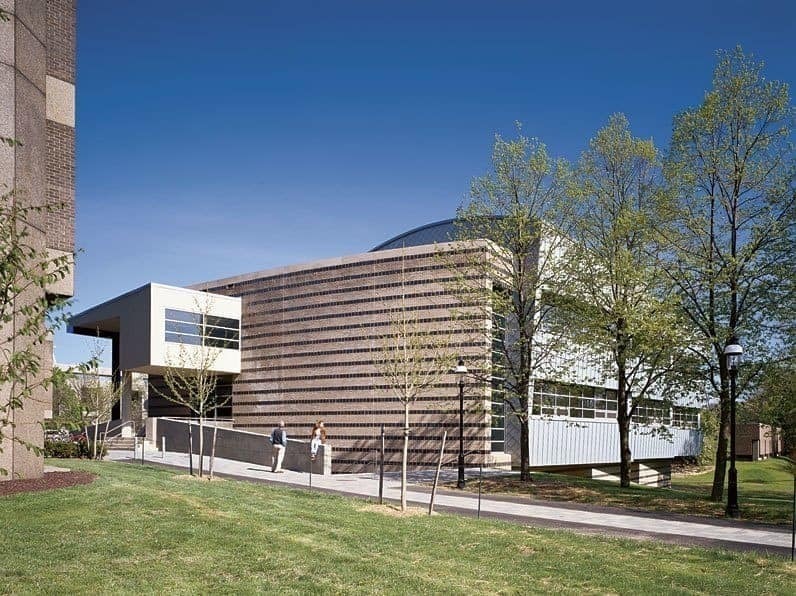
State University of New York at Albany
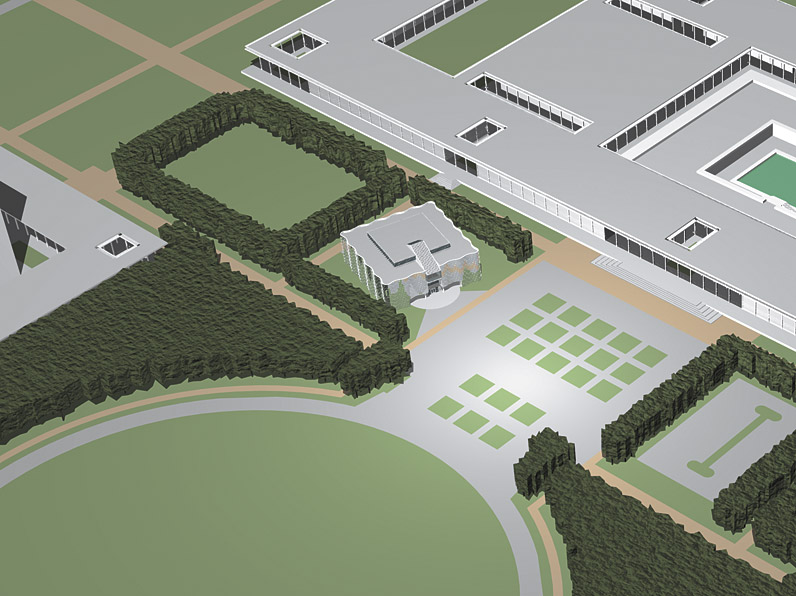
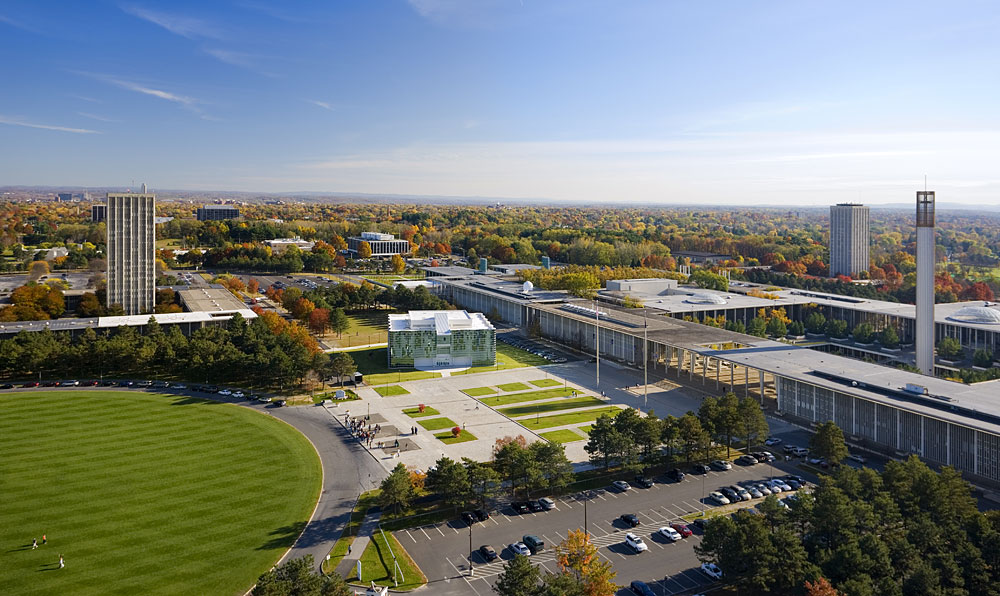
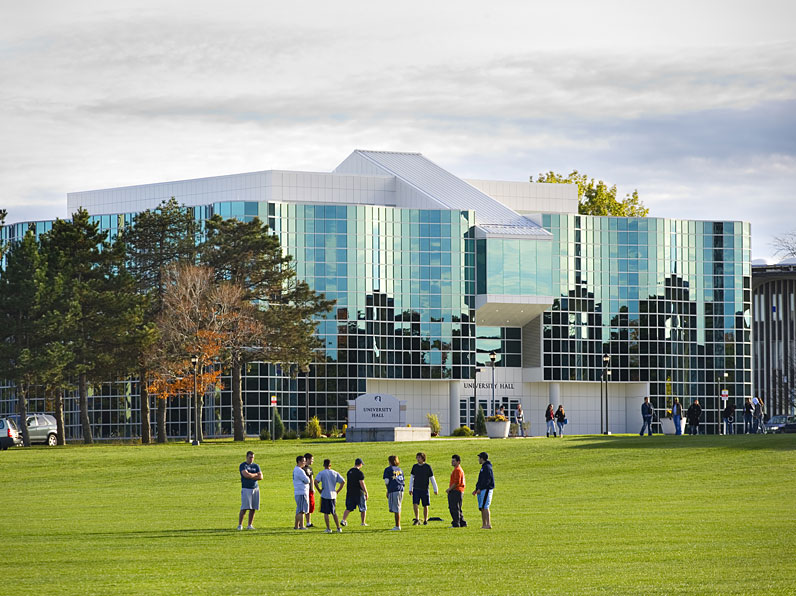
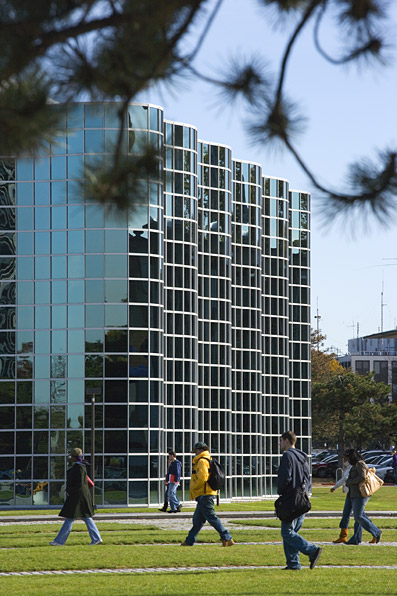
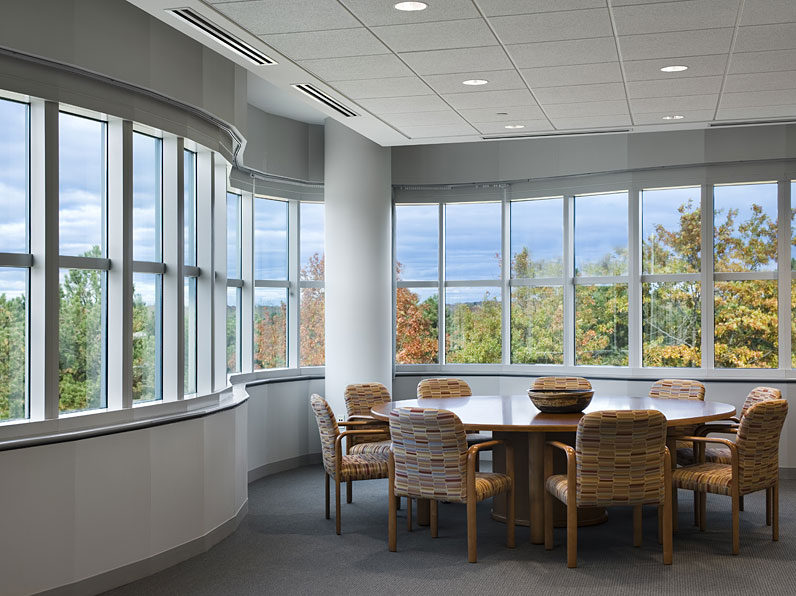
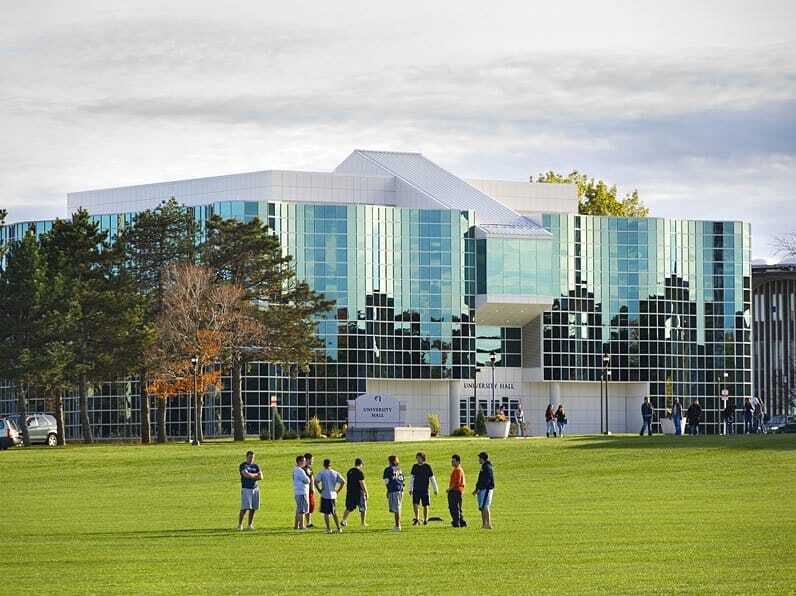
Administration and Admissions Building Albany, NY The new building is a unique campus element, a pavilion placed within a tree-lined outdoor room. It is located off-center, as a counterbalance to the campus' signature carillon. Its square plan is twisted off of the rectangular order of the campus buildings to address the arrival of visitors as they approach along the roadway. It is a discrete sculptural object in the formal, landscaped foreground. Continue BackThe concrete repetitive three dimensional grid of the existing building is opposed by a new strategy of shifting reflections capturing the changing colors of the seasons and sky. Rotating the building off the existing grid amplifies the reflective dynamic of the wall as one approaches the campus. The rotated orientation of the building allows views from existing building spaces and highlights its contrapuntal relationship to the backdrop of the Campus podium.
Welcoming human proportions are then reestablished in the axial, metal clad entry piece. Here occur the expected rhythm of windows and doors, providing clear orientation for entry.
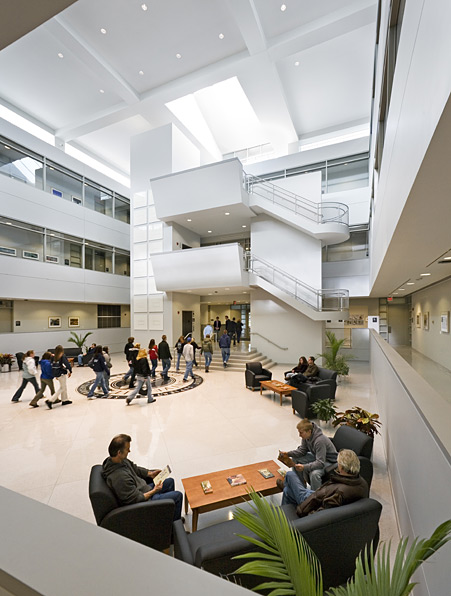
Anchoring the center of the New Entry Building is a full height, cubically proportioned atrium. Interior offices and building circulation are organized around, and illuminated by the atrium and its skylight. The Visitors Center opens directly to the atrium and has a multi-video presentation screen above it’s main doors.
A concentric progression of scales is established from the broad campus landscape, to tree lined quadrant, through the serpentine envelope to its destination in the stabile, grand public atrium space. It will serve a variety of functions: visitor orientation, advancement events, exhibits and press conferences. It will be the campus living room, a benchmark and memorable place of entry to the University at Albany.
State University of New York at Buffalo
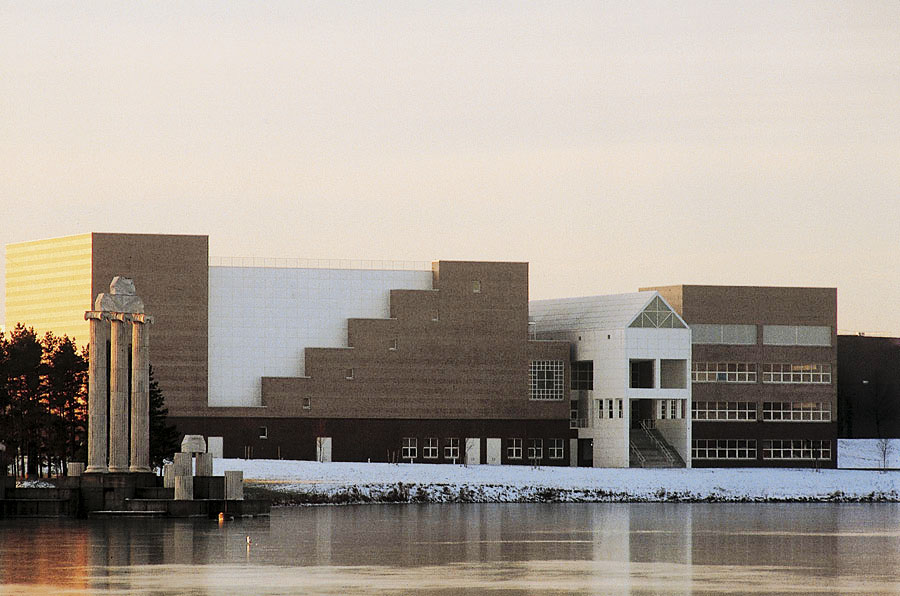
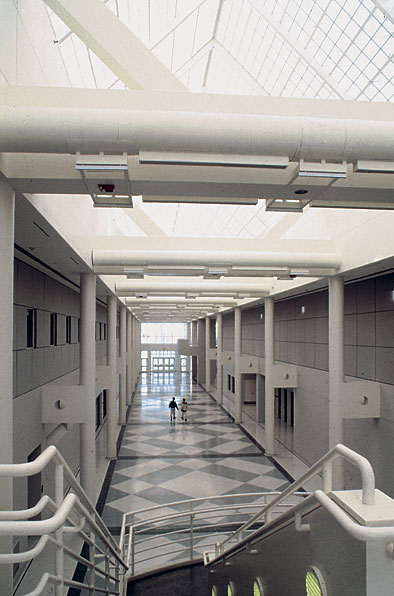
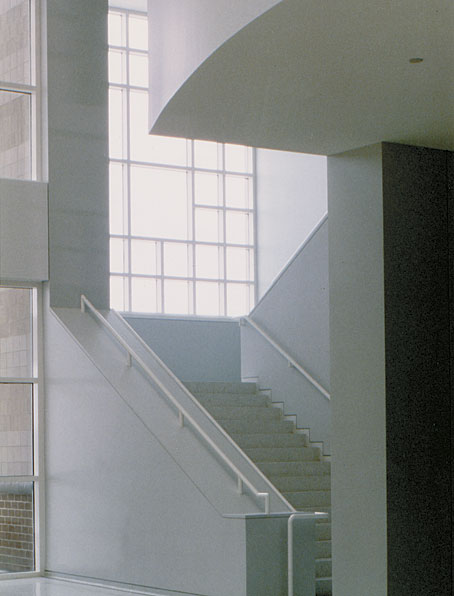
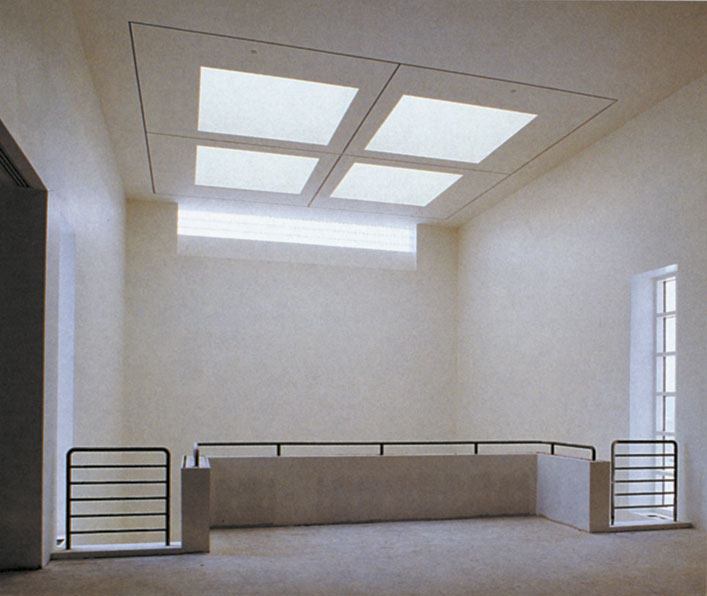
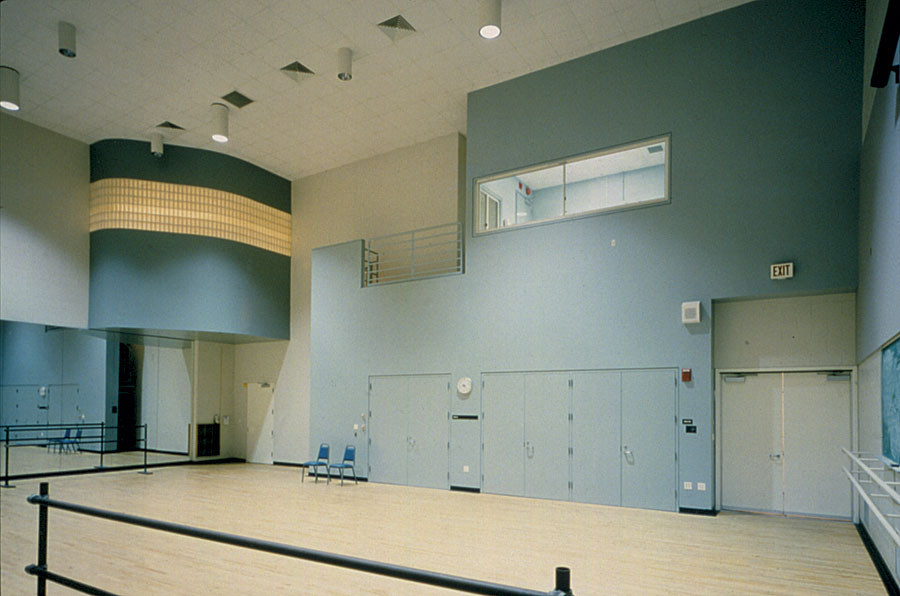
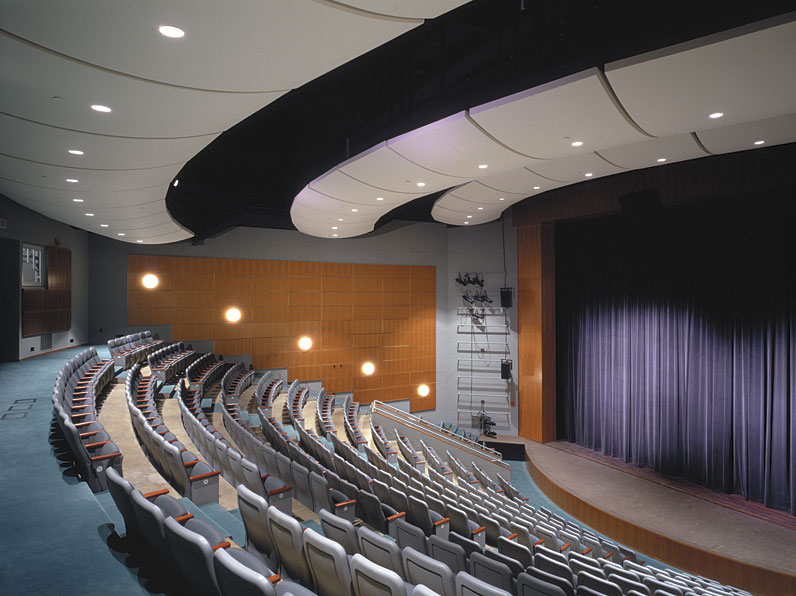
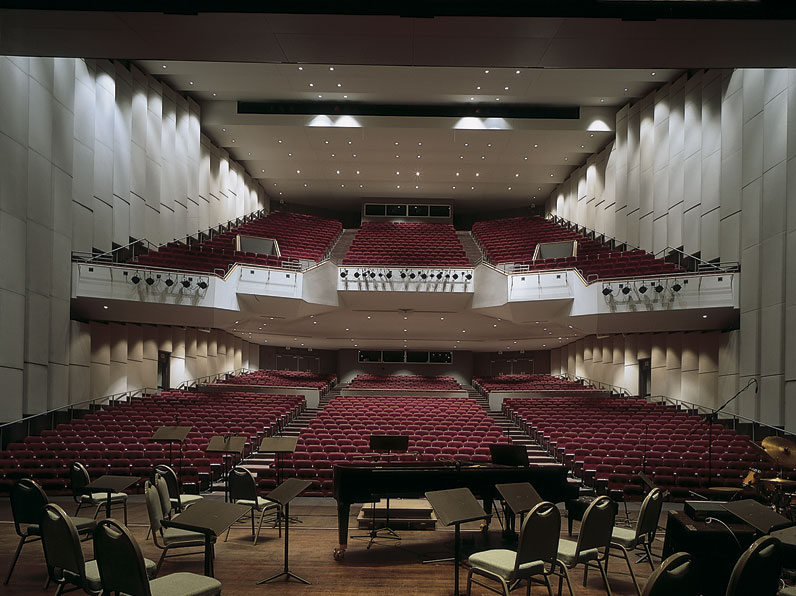
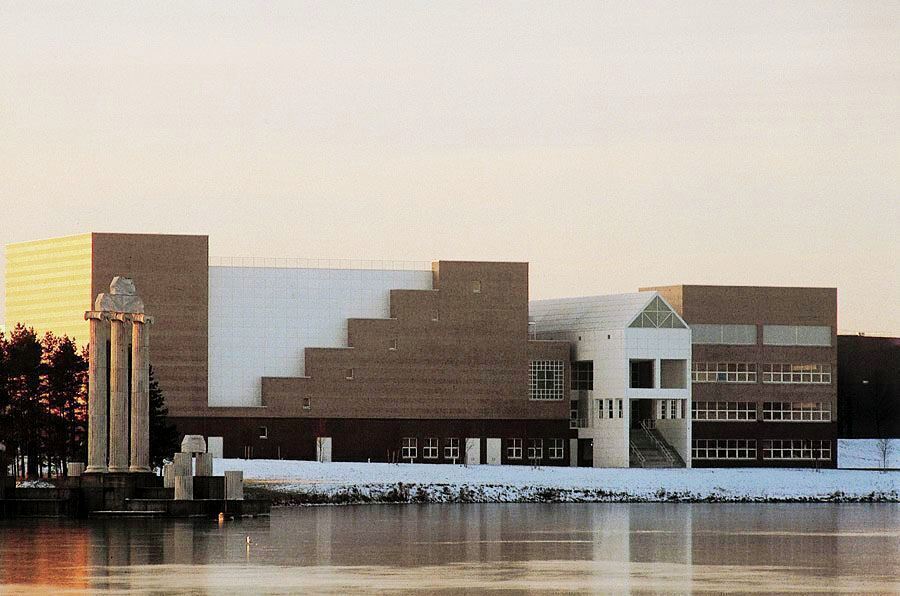
Center for the Arts Amherst, NY The Center for the Arts is situated on the primary open site at the State University of New York at Buffalo. Located at the end of the cross-axis of the campus and overlooking Lake LaSalle, the building redefines the university's Coventry Circle entrance as a major plaza for both athletic and performing arts events. Continue BackThe art studios and performance spaces were designed to provide maximum flexibility for students and faculty. The combination of the two disciplines into single building adds a programmatic and cultural dynamic to the center of the campus, increasing student and public access to the university’s multi-disciplinary activities.
Associate Architect: Scaffidi & Moore Architects
William R. Greiner, President of the University
State University of New York at Oneonta
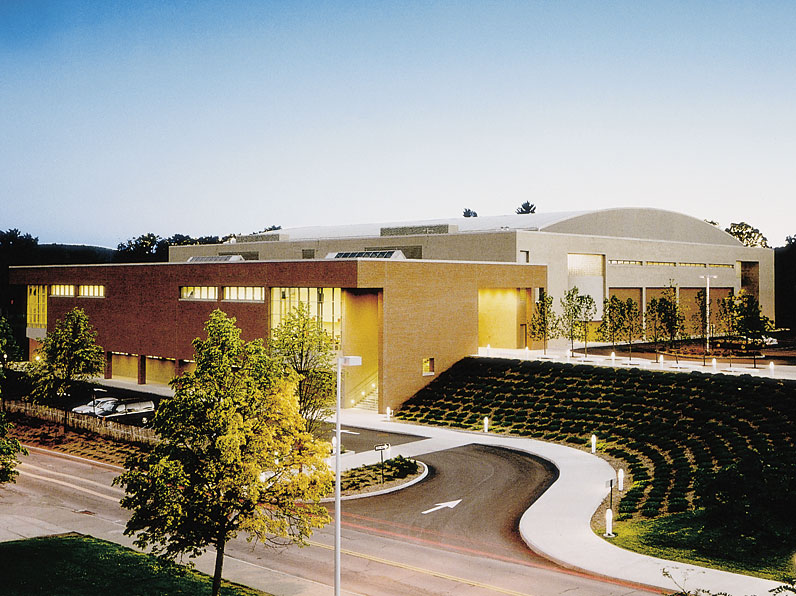
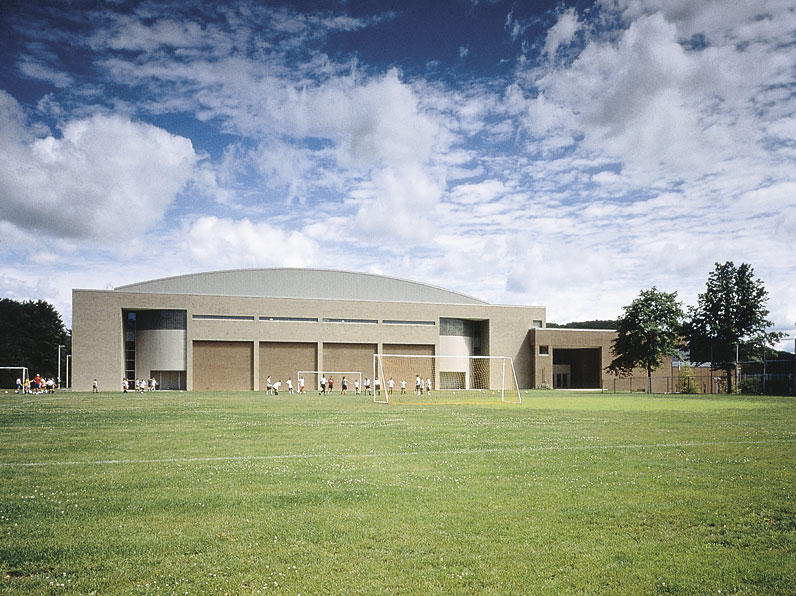
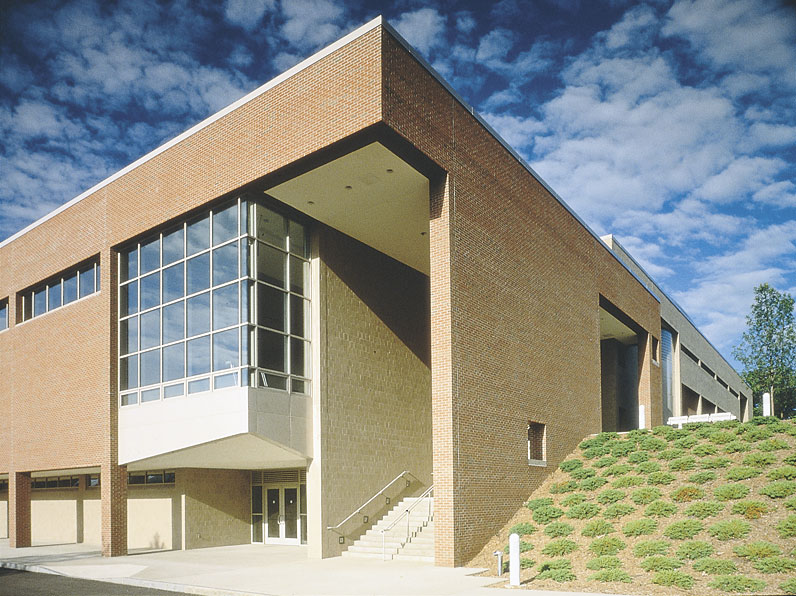
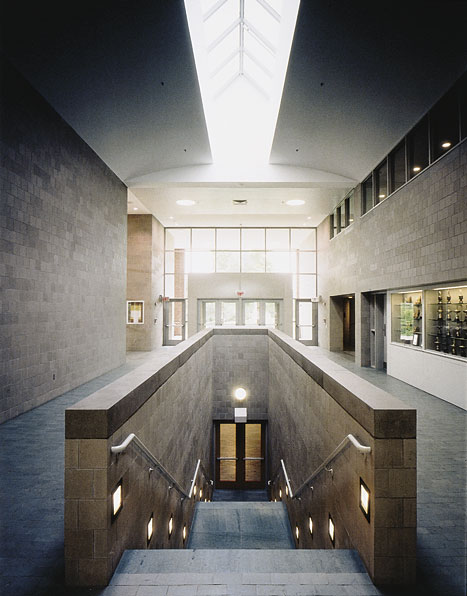
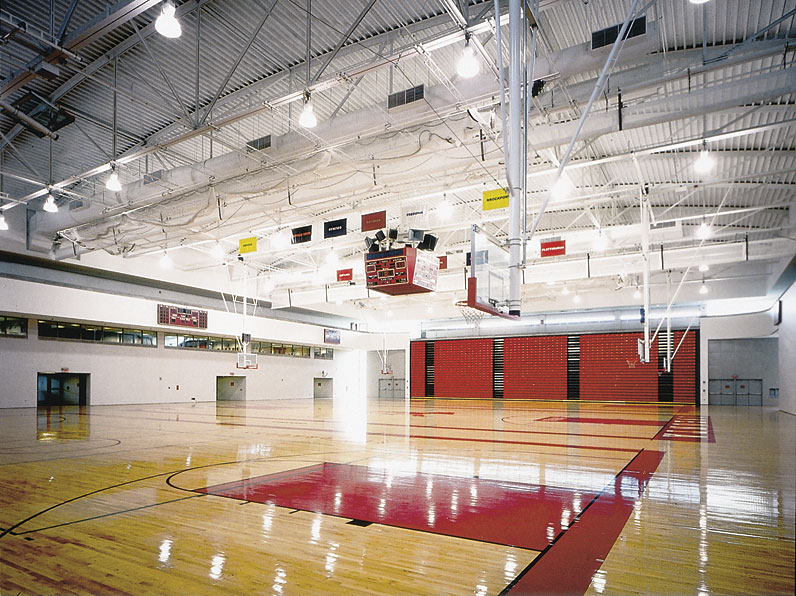
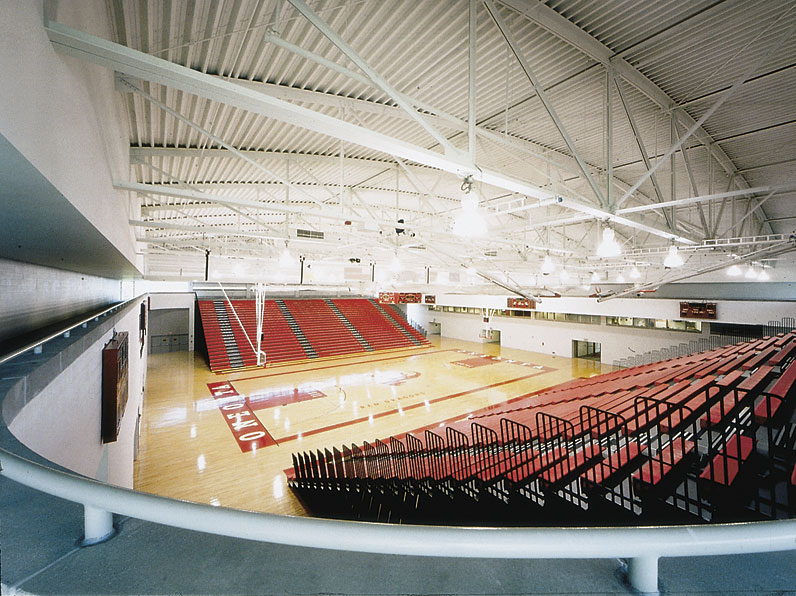
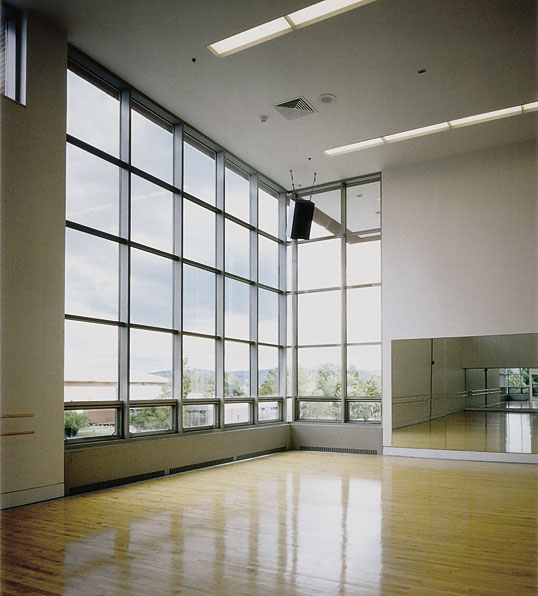
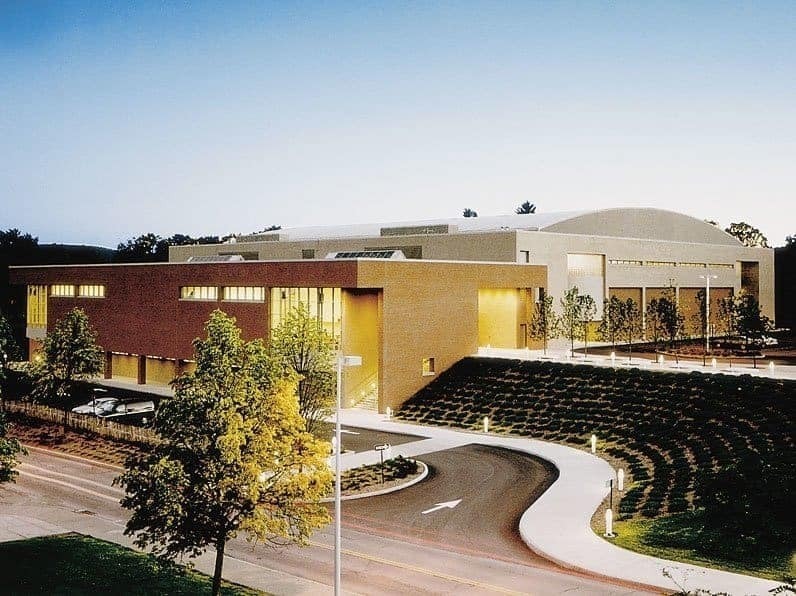
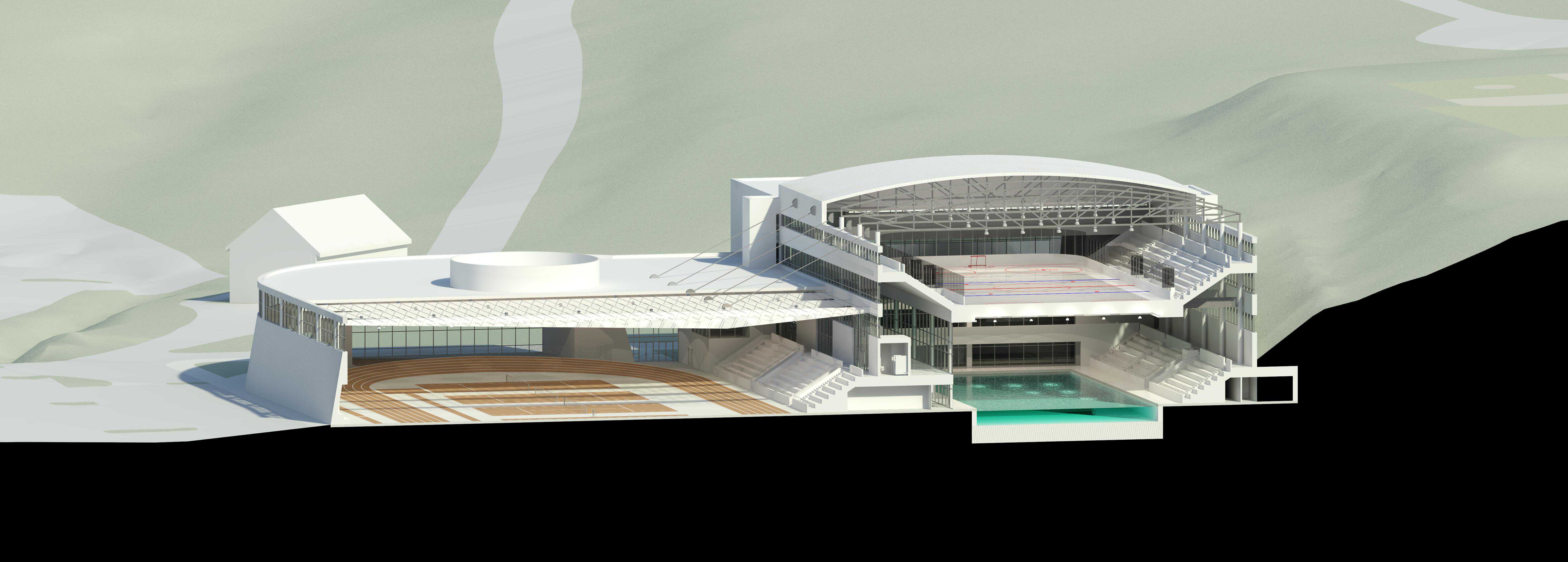
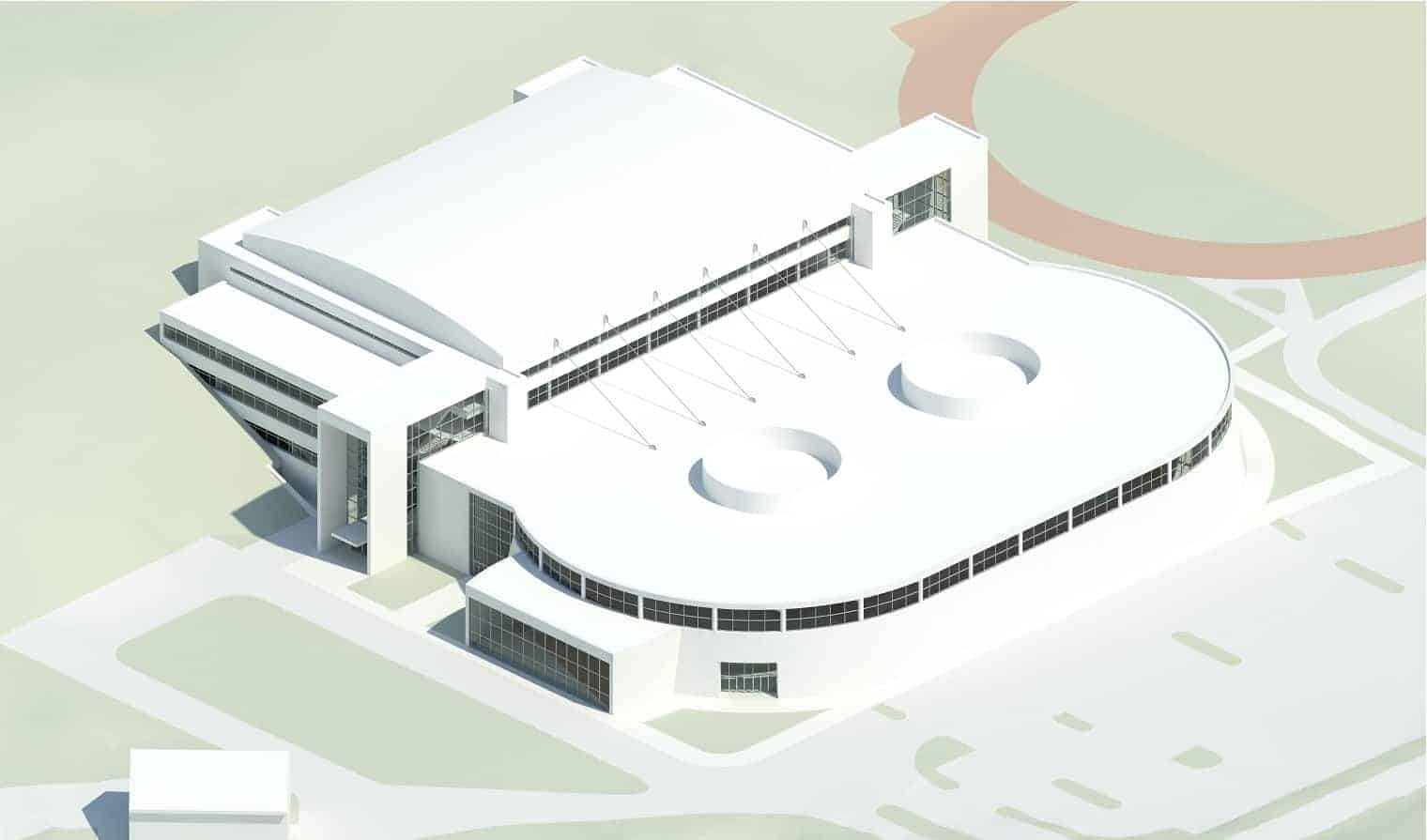
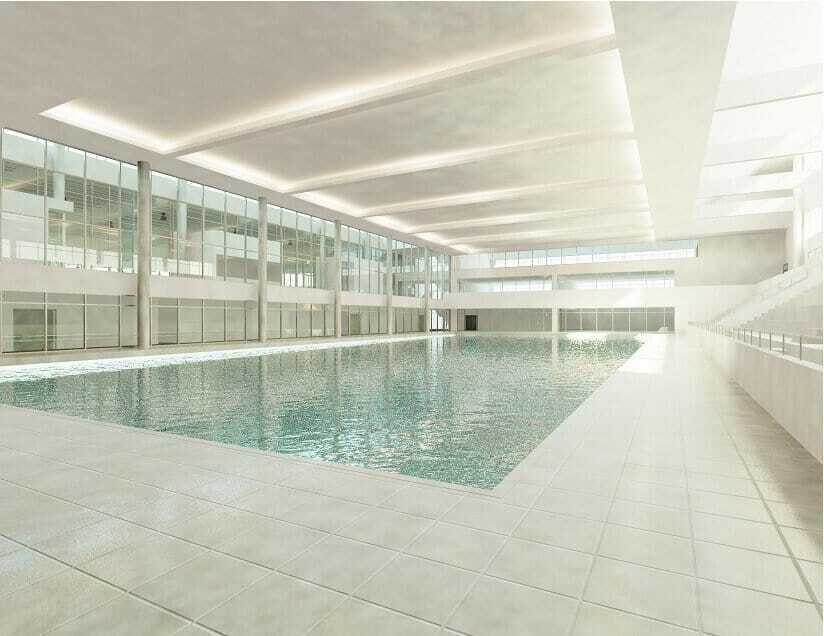
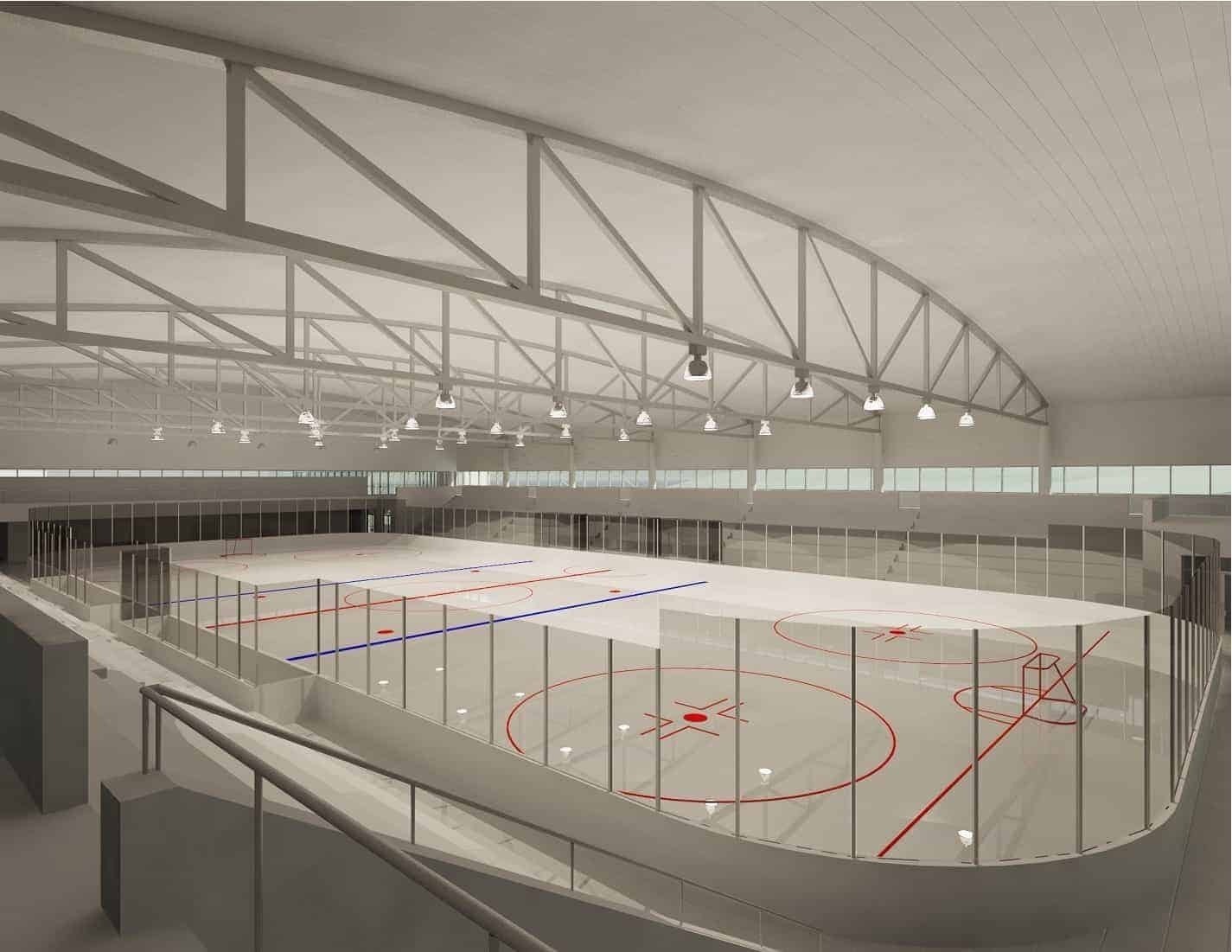
Gymnasium / Fieldhouse Oneonta, NY The facility’s main focus is a basketball arena seating to provide up to 4,500 seats for activities such as concerts, convocations, lectures and other performances. Additional functions include two recreational racquetball courts, a dance studio, a weight training and fitness center, administrative offices, a multipurpose classroom, concession/ ticket office and locker rooms with support spaces. Continue BackThe second level contains the major “public” spaces: main lobby/atrium, arena, dance studio, fitness center and racquetball courts. This level also connects directly at grade with the soccer field to the south and indoor “tennis bubble” to the north. The atrium at this level is two stories high. This third level, with its balcony/corridor open to and overlooking the lobby atrium, also features direct window views into the arena from the offices and classrooms.
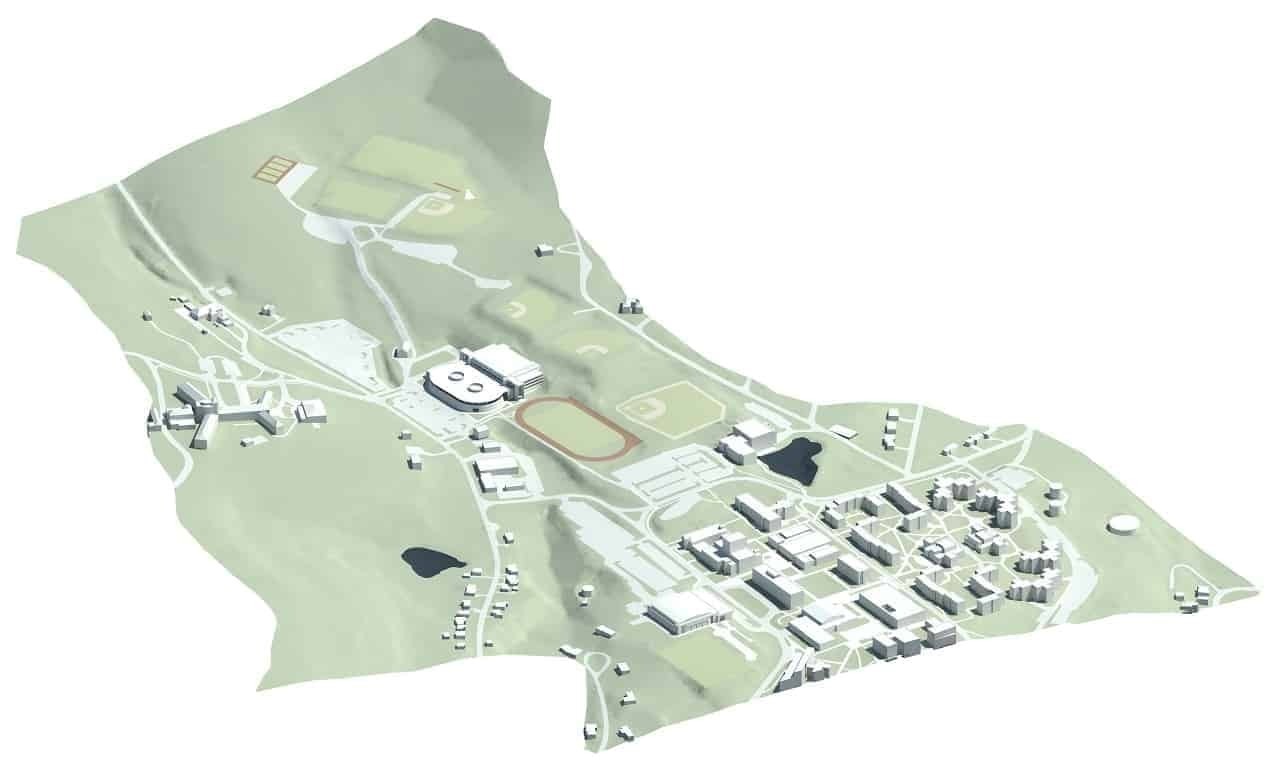
Oneonta New Athletic Facility Master Plan
Oneonta, NY
State University of New York at Purchase
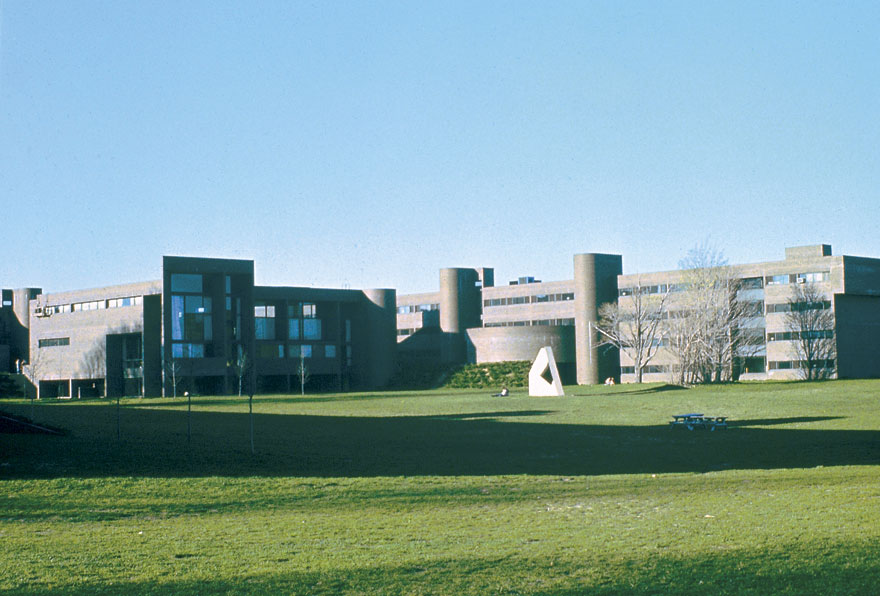
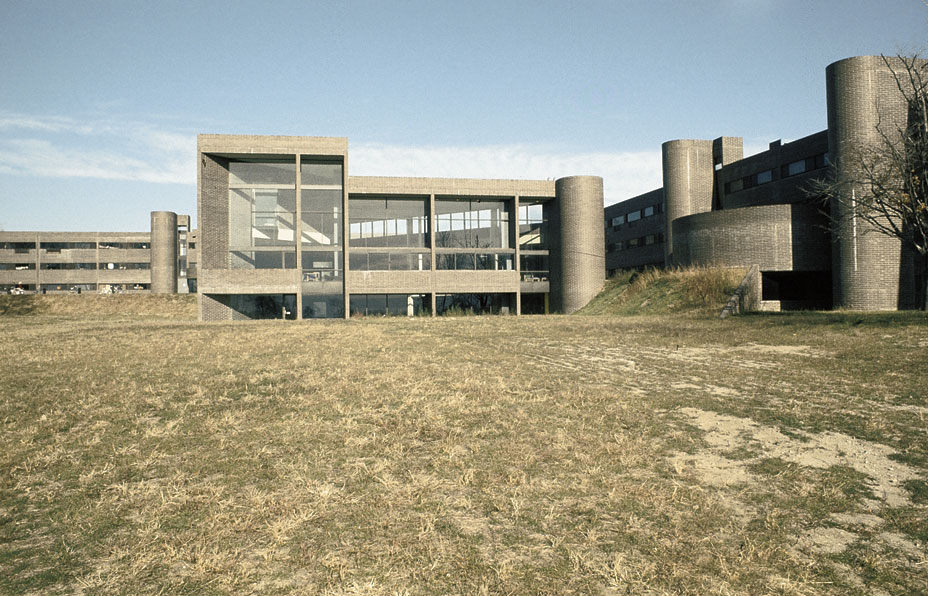
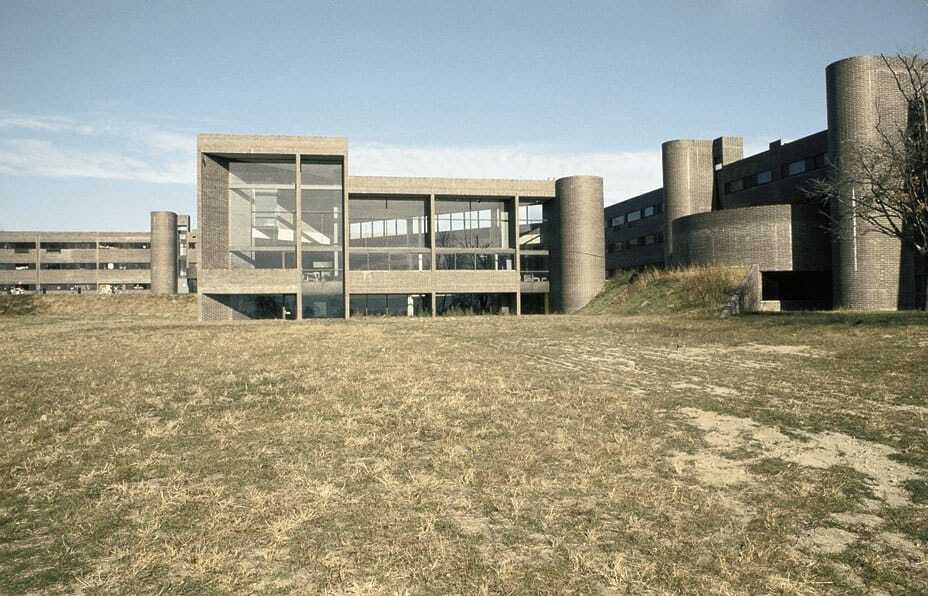
Dormitory, Dining, and Student Union Facility Purchase, NY The problem was to design the first student dormitory for a major new state university. The masterplan and academic buildings were already designed. Continue BackThe residential complex houses 800 students, faculty advisors and a faculty master. The dining facility can provide food service for the residential complex as well as for commuter students. Academic and student activity areas are integrated into both facilities. The U-shaped building complex encloses a major outdoor space which is open-ended to the south, providing a transition between the natural environment of the meadow and the formal discipline of the campus plan.
The two main gateways to the complex are from the commuter student parking lot and from the south end of the academic campus. The entry elevation is a berm, one level above natural grade, which makes it possible for the building to step down a full floor as the grade lowers, and for the horizontal roof height to remain constant while the building changes from three to four stories. The berm also allows for the major existing trees to be retained.
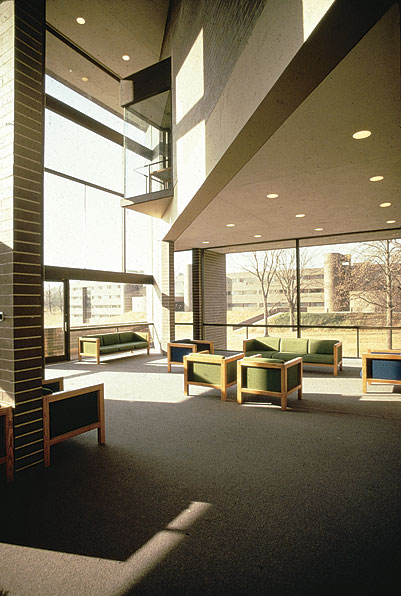
The dormitory organizes student accommodations into eight groups, with four main entrance points off the berm elevation which houses the lobby, a seminar room and a common room. Each floor unit of 20 includes several types of rooms: four, six and eight person suites, corridor doubles and singles and a public floor lounge. Circulation on each level is restricted to the zone between stairs and entry points. A continuous enclosed horizontal corridor is provided at the lower level to facilitate service and to allow indoor circulation throughout the complex during inclement weather.
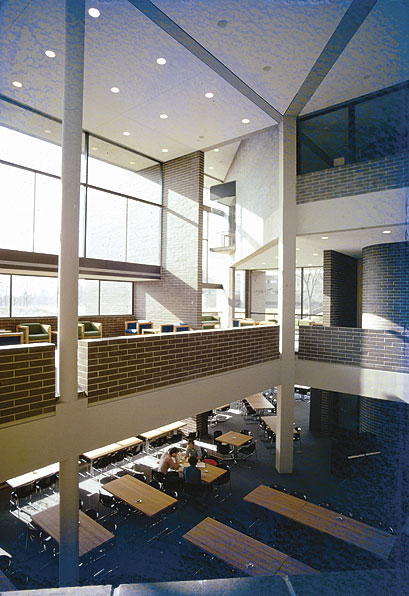
The dining facility is entered from the berm walk and is serviced on the lower level. Student activity spaces occupy the entrance level and second floor and surround the upper portion of the main dining space. Food is served on the lower level, which opens out to the meadow. Dining spaces can accommodate 15, 50, 100 and 200 persons.
State University of New York at Syracuse
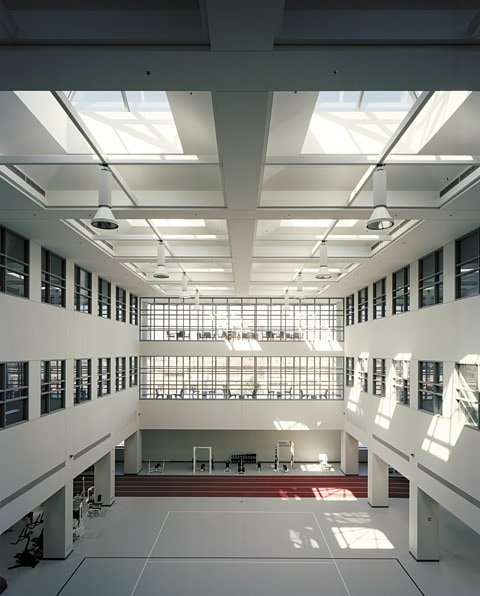
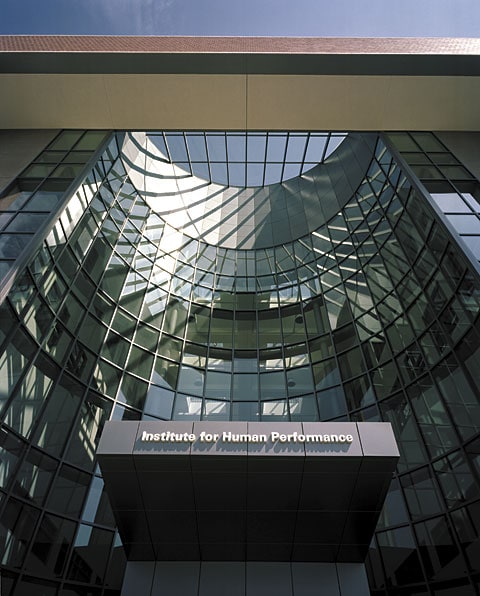
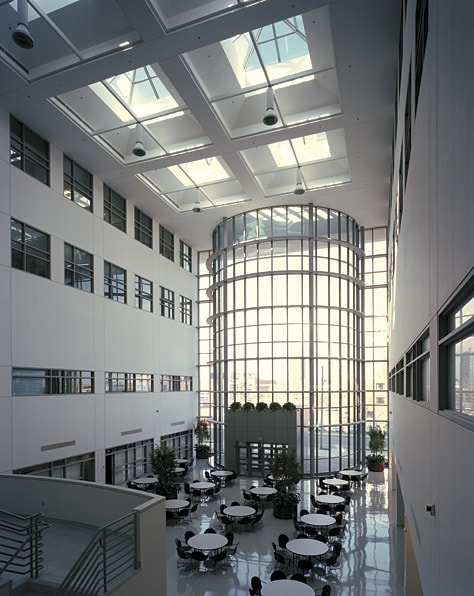
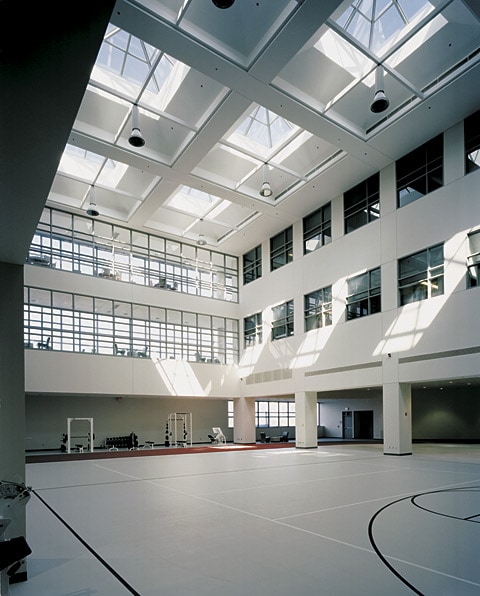
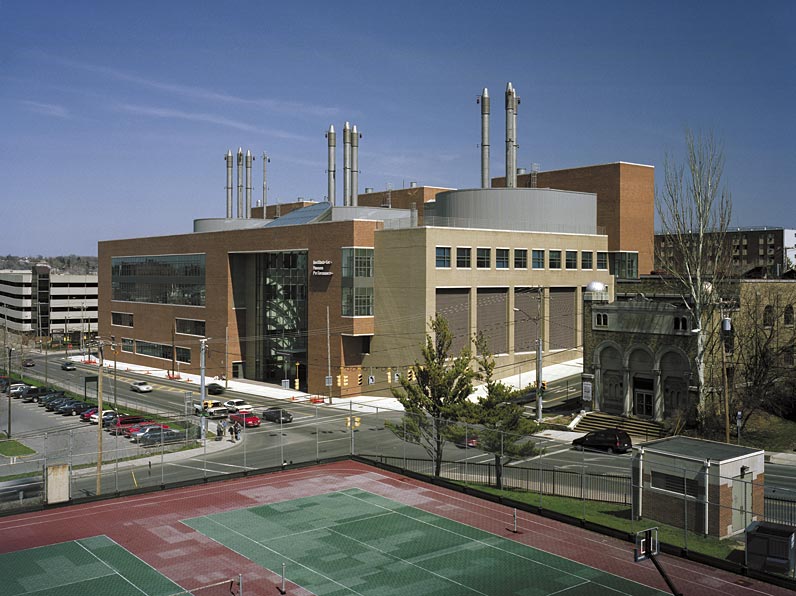
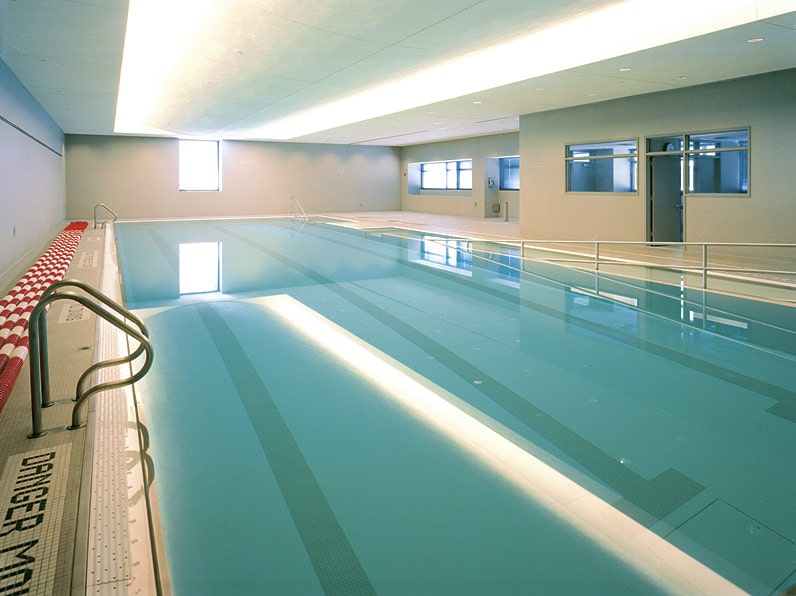
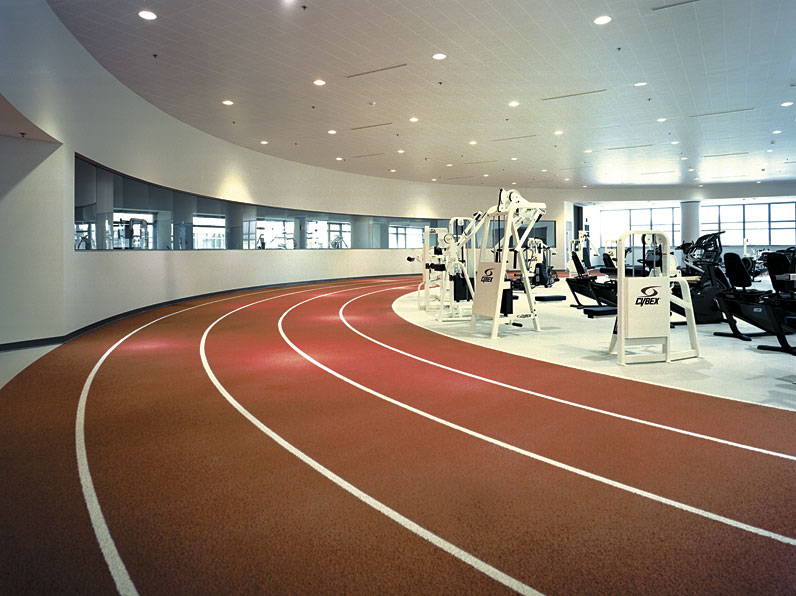
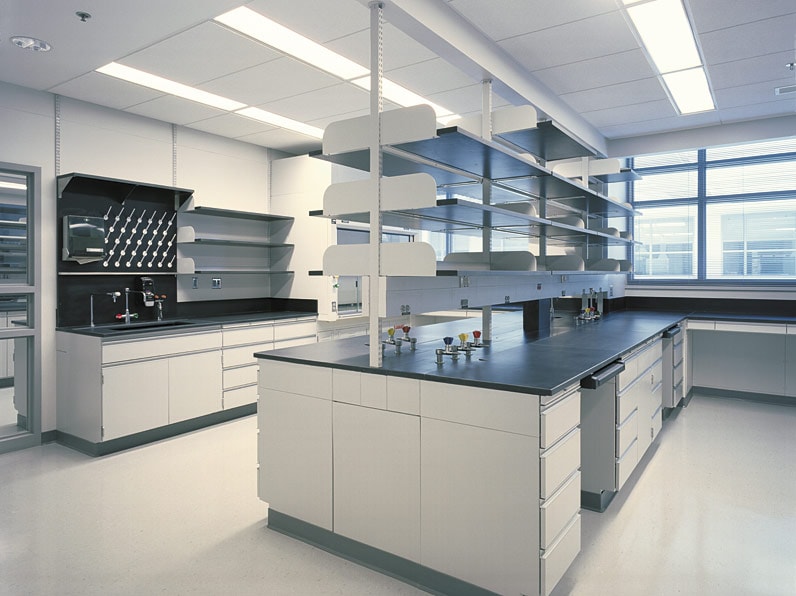
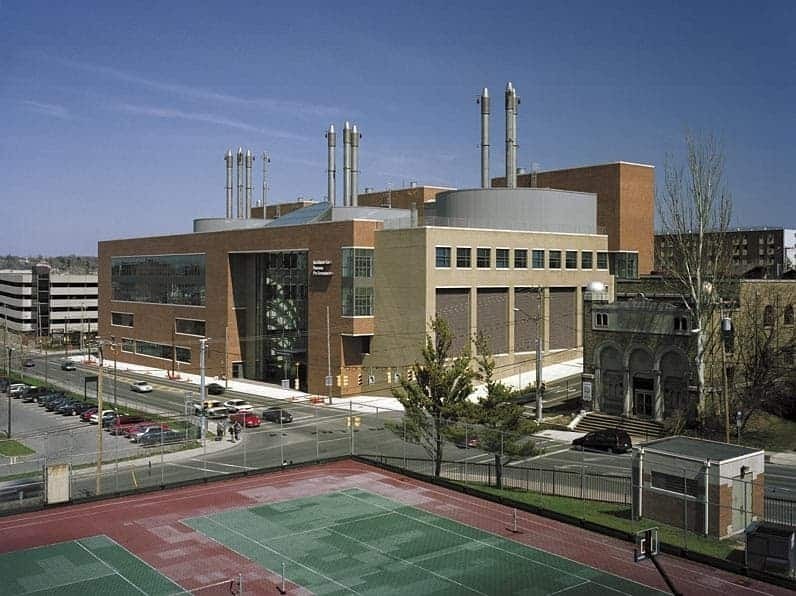
Institute for Human Performance, Rehabilitation and Biomedical Research Syracuse, NY This facility for education research and patient care is a four-story structure accommodating a 19,000 square-foot gymnasium, a 75 foot long medical research swimming pool, a full-service orthopedic treatment center and 100 state of the art flexible lab modules. The building is divided into three parallel laboratory wings joined by two skylighted atriums. Continue BackThe design evolved from precise and extensive technical criteria and provides climate controlled spaces for multiple medical and recreational functions. Public and private domains are expressed and separated through the manipulation of natural light and by solid/void relationships.
David G. Murray, M.D., Distinguished Professor and Chairman, Department of Orthopedic Surgery
The City University of New York
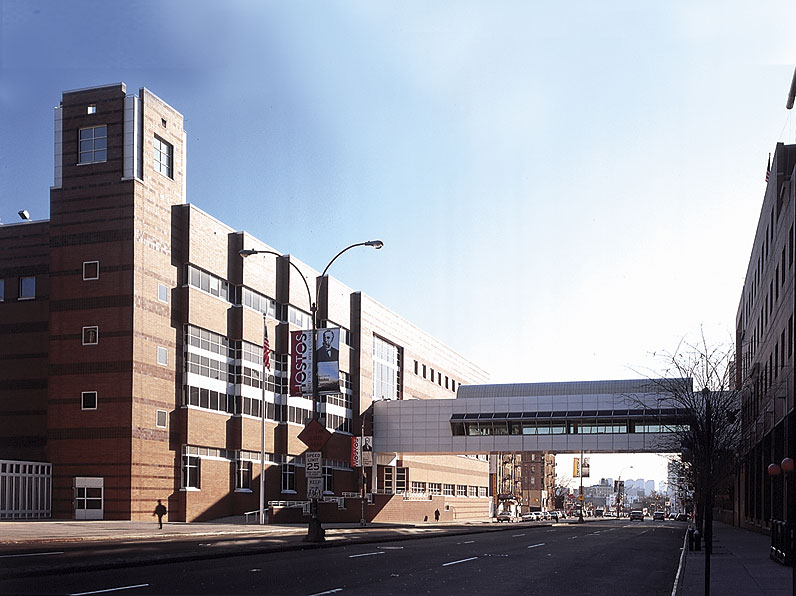
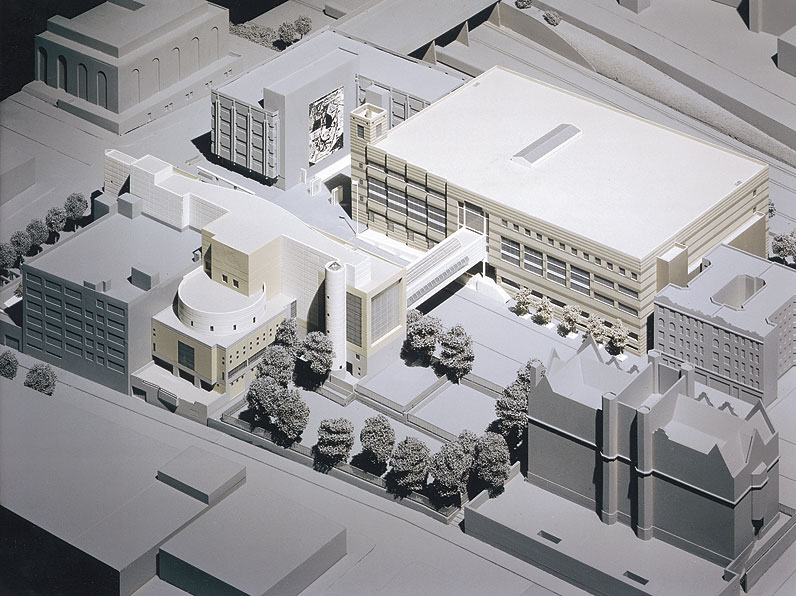
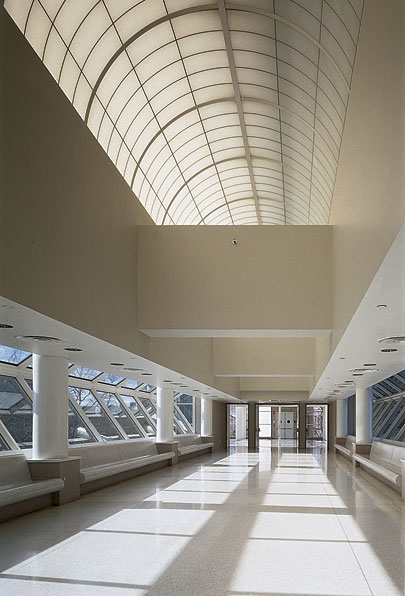
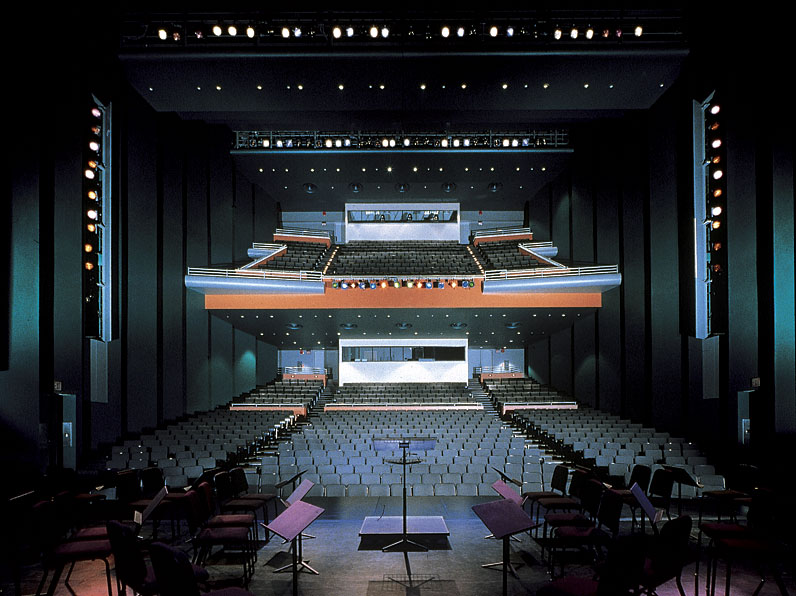
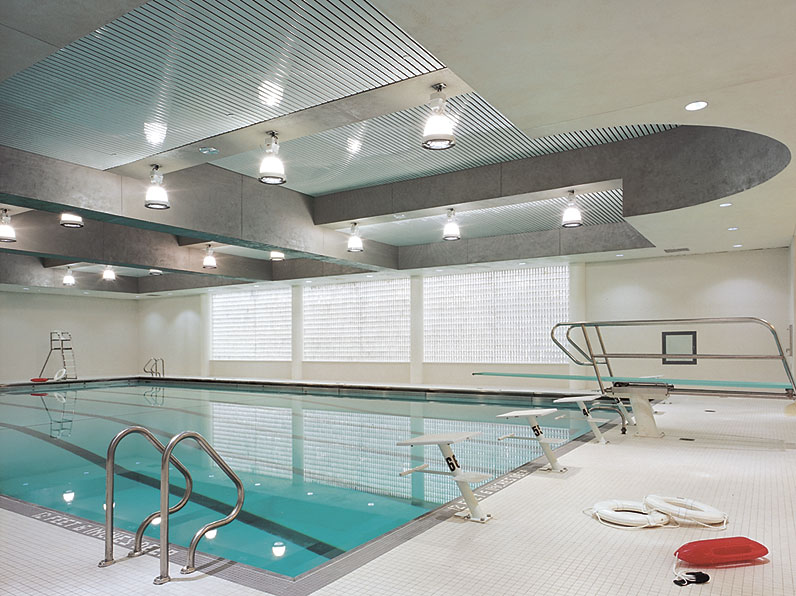
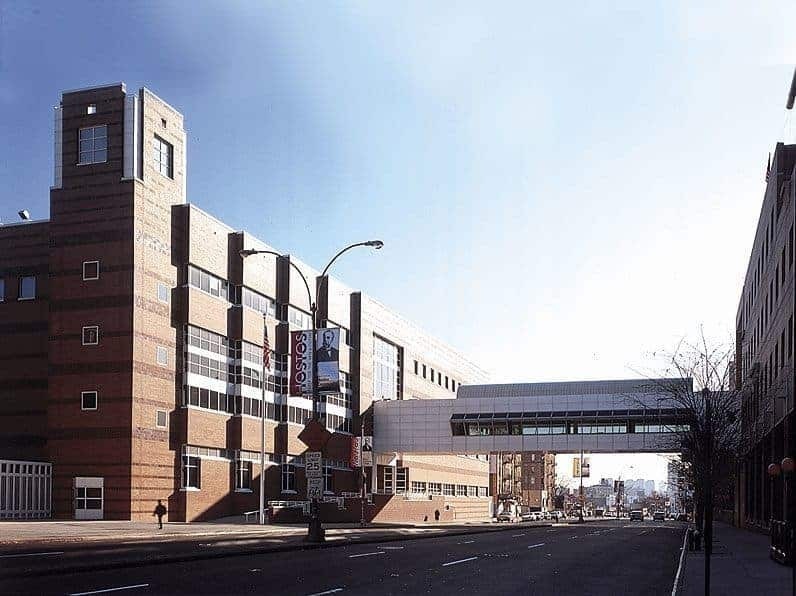
Eugenio Maria de Hostos Community College / East Academic Complex Bronx, NY This multi-purpose building for a community college in the Bronx represents a composite program located in a dense urban context. Continue BackThe Grand Concourse facade reinforces the built edge, establishes a gateway to the college, and together with the original campus structure defines an outdoor courtyard. The new tower and pedestrian bridge linking existing campus buildings serve as visual icons, establishing a sense of place and a new image for the campus and the community.
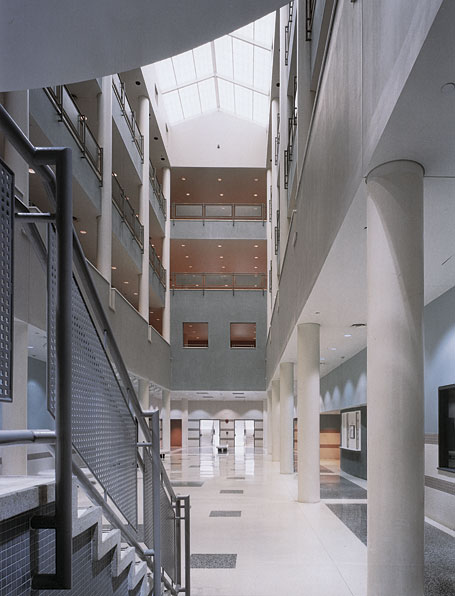
The building contains many departments with diverse and varied functions. As a unifying design strategy it is organized around a five-story skylit atrium. Articulated horizontally with balconies and vertically with stairs, the atrium is the major public space on the campus. It is the primary internal circulation volume of the new building as well as providing lobby space for both repertory and proscenium theaters and access to the bridge.
University of California at San Diego
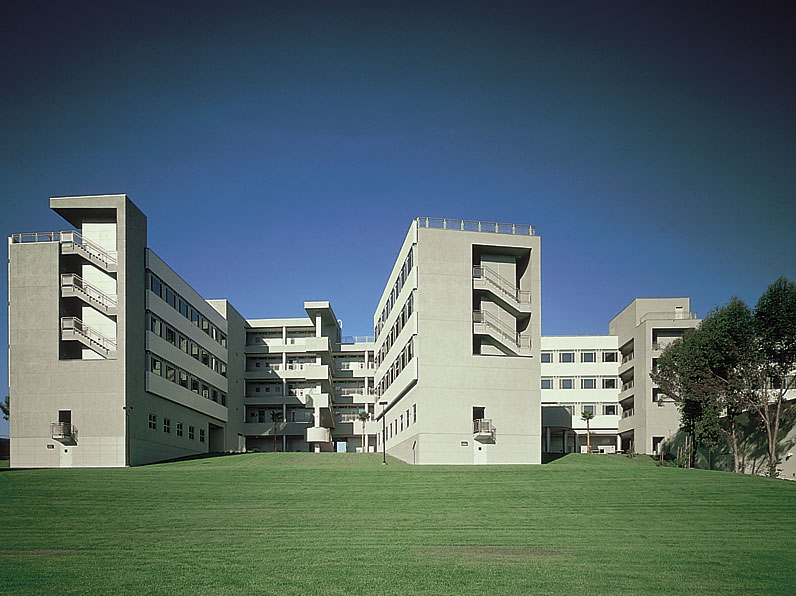
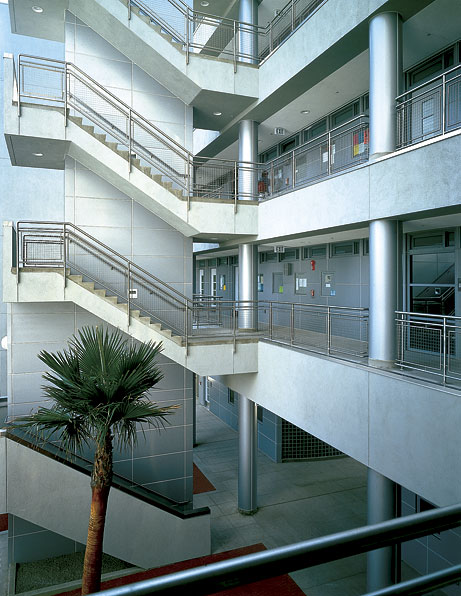
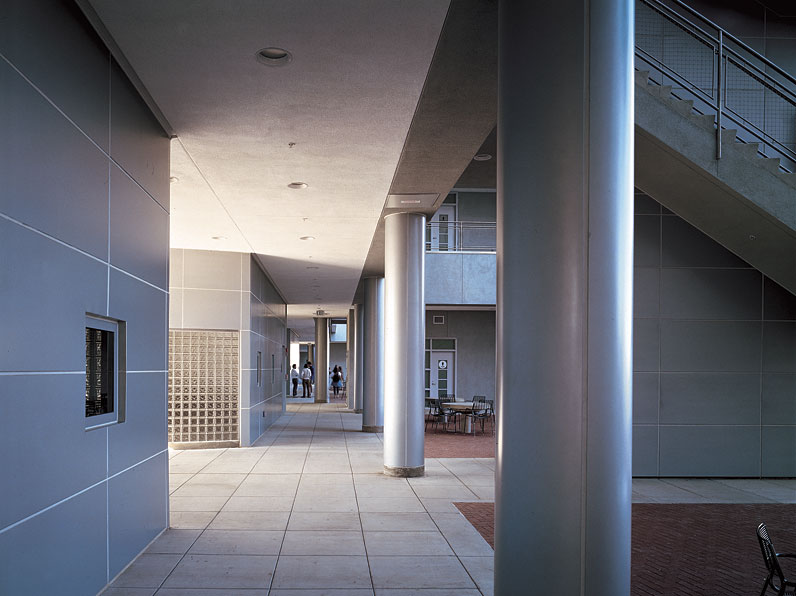
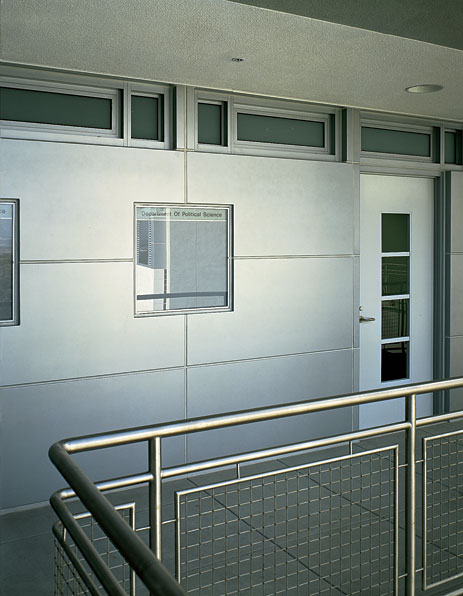
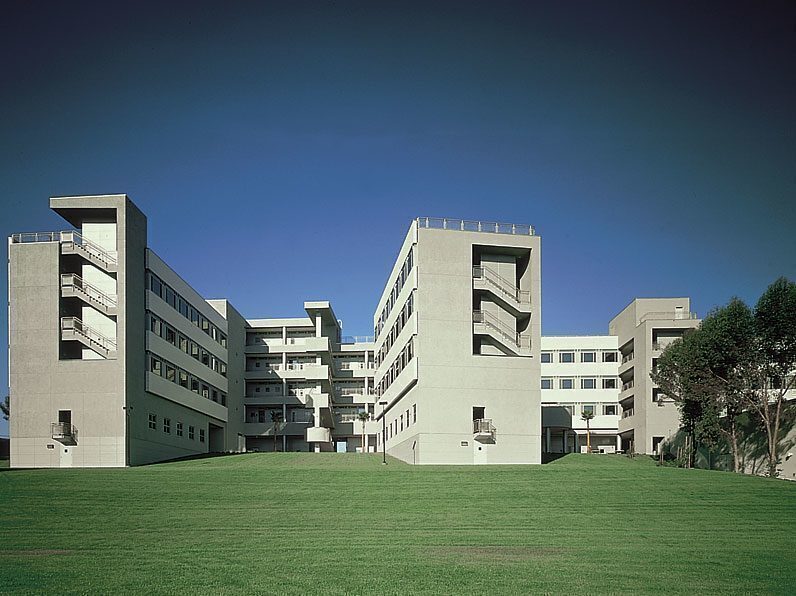
Tangeman University Center La Jolla, CA This 75,000-square-foot facility is located at the top of a ridge, affording panoramic views of the Pacific Ocean to the west and the mountains to the east. It parallels Ridgewalk, the major north-south pedestrian axis of the campus. Conference rooms, laboratories, a media room, and demonstration classroom on the ground floor are adjacent to a series of open courtyards that provide space for informal public gatherings. Continue BackThe exterior is clad in a combination of white and black ceramic tile and light grey stucco, with accent walls and columns in powder-coated aluminum panels. Railings and miscellaneous metal trim are brushed stainless steel.
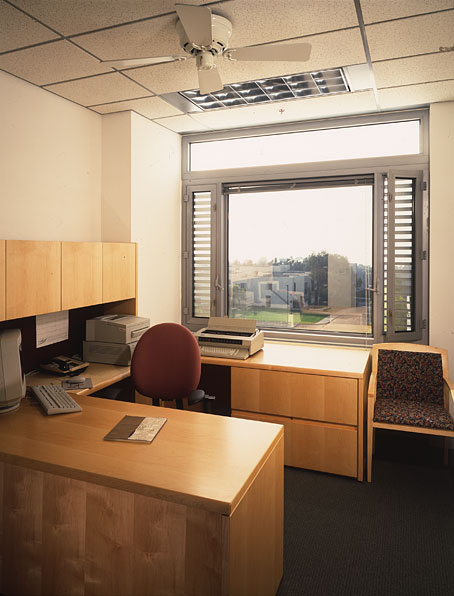
The operable window system combines jalousies with integral louvers, frosted glass clerestories, and reflective glass view windows, forming a composite environmental wall system. Ceiling fans and operable transoms over the doors reinforce cross-ventilation.
Associate Architect: Brown Gimber Rodriguez Park
University of Iowa
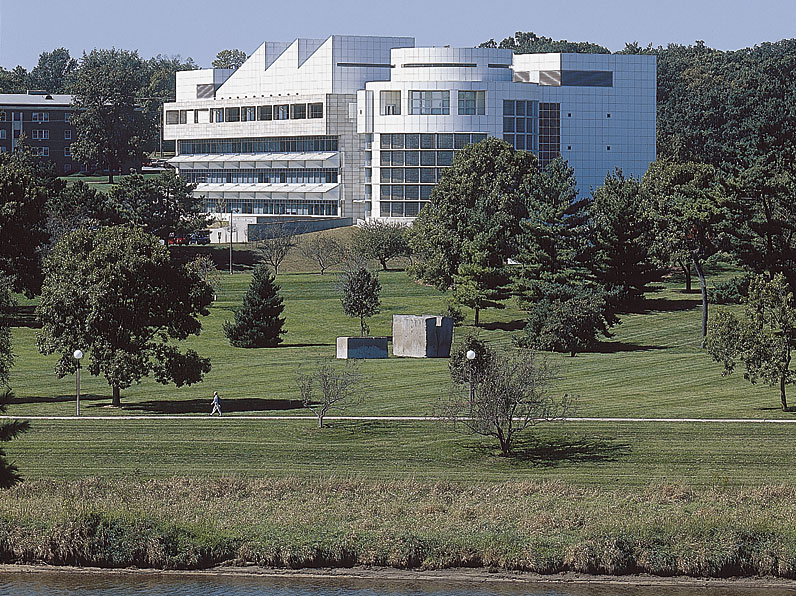
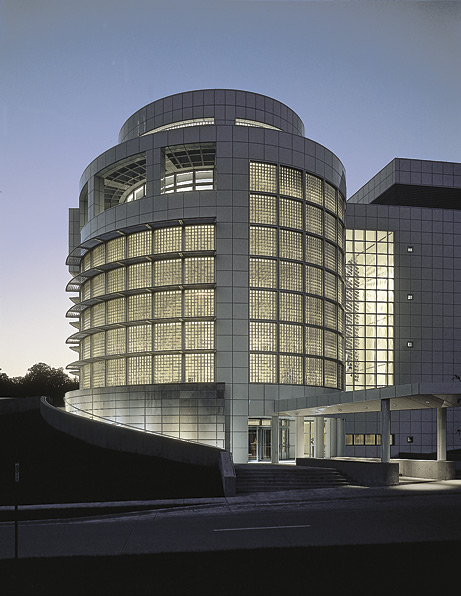
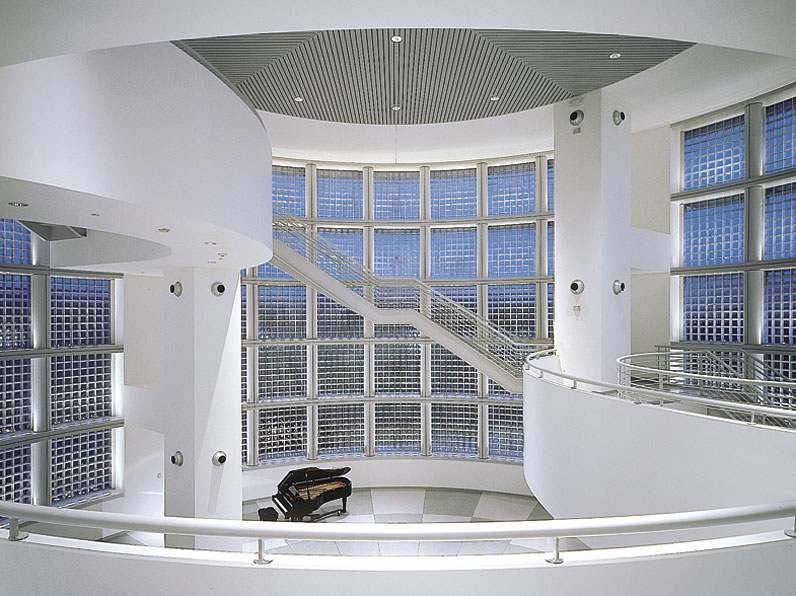
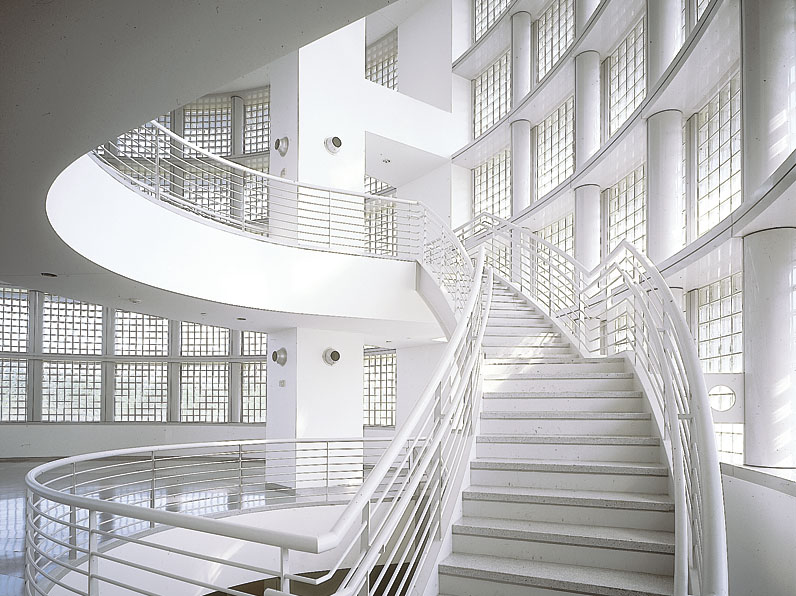
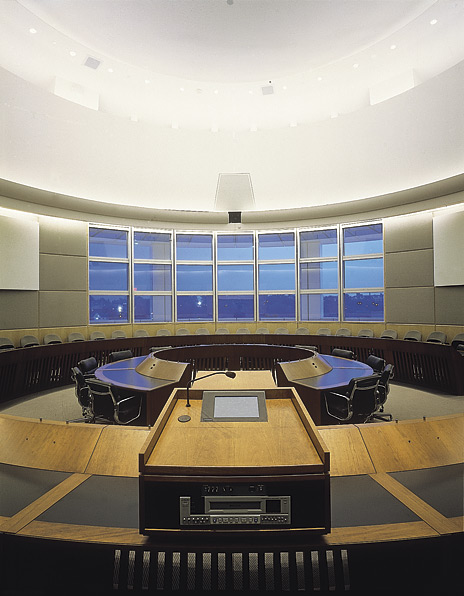
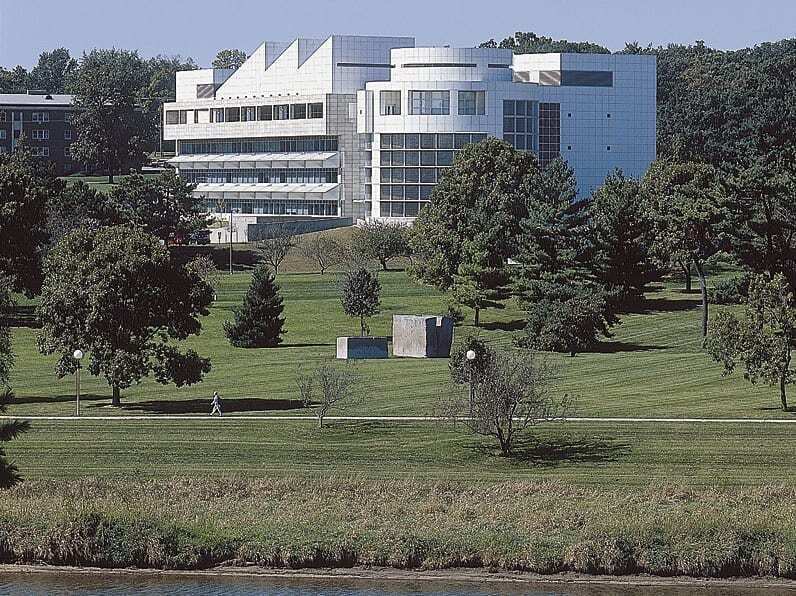
Levitt Center for University Advancement Iowa City, IA The Levitt Center for University Advancement is an asymmetrical assemblage of geometric forms. The building is clad in Indiana limestone and articulates a hierarchical sequence of public gathering spaces and private work areas. The design solution responds to the client’s request that the building’s public assembly spaces be situated on the top floor, with views of the river and surrounding campus. Continue BackA double-height, circular boardroom with a terrace “sits” on the rotunda. This flexible space, capped by an inverted dome, is finished in cherry and features concentric, custom-designed conference tables. Divisible by acoustic panels into three separate spaces, the boardroom can be linked to the adjacent entertainment room, which implements sophisticated audiovisual systems.
The top floor of the building’s bar element contains three major assembly halls, two roof terraces and a staff dining hall. The sculptural forms of these rooms distinguish their public functions from the three floors of administrative offices below and define a “cornice” to the arts campus.
Named for two of the university’s most generous benefactors, the Levitt Center for University Advancement houses the University’s Foundation, Alumni Association, and Division of Alumni Records and Services. It provides a central focus for all of the University’s advancement-related activities: fund raising, alumni communications and outreach, student recruitment, public relations, economic development and legislative liaison.
Associate Architect: Brooks Borg Skiles Architecture Engineering
Darrell D. Wyrick, President Emeritus