SUNY Plattsburgh
Plattsburgh, NY
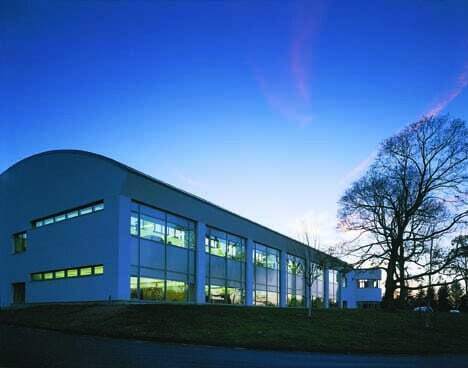
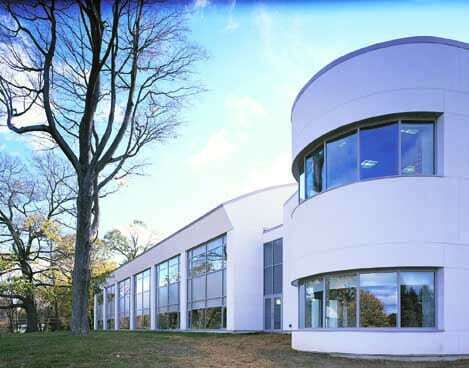
New School of Business and Economics, State University College at Plattsburgh
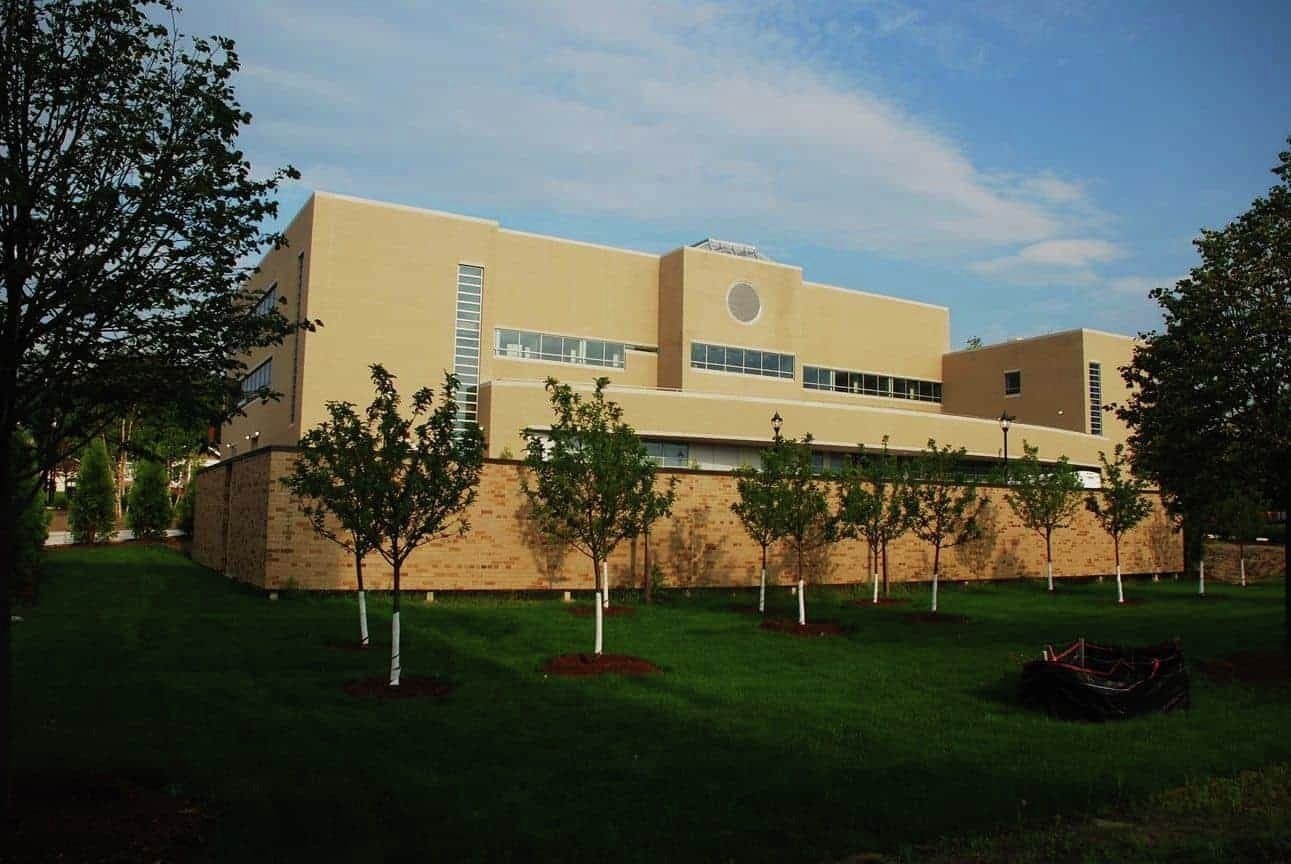
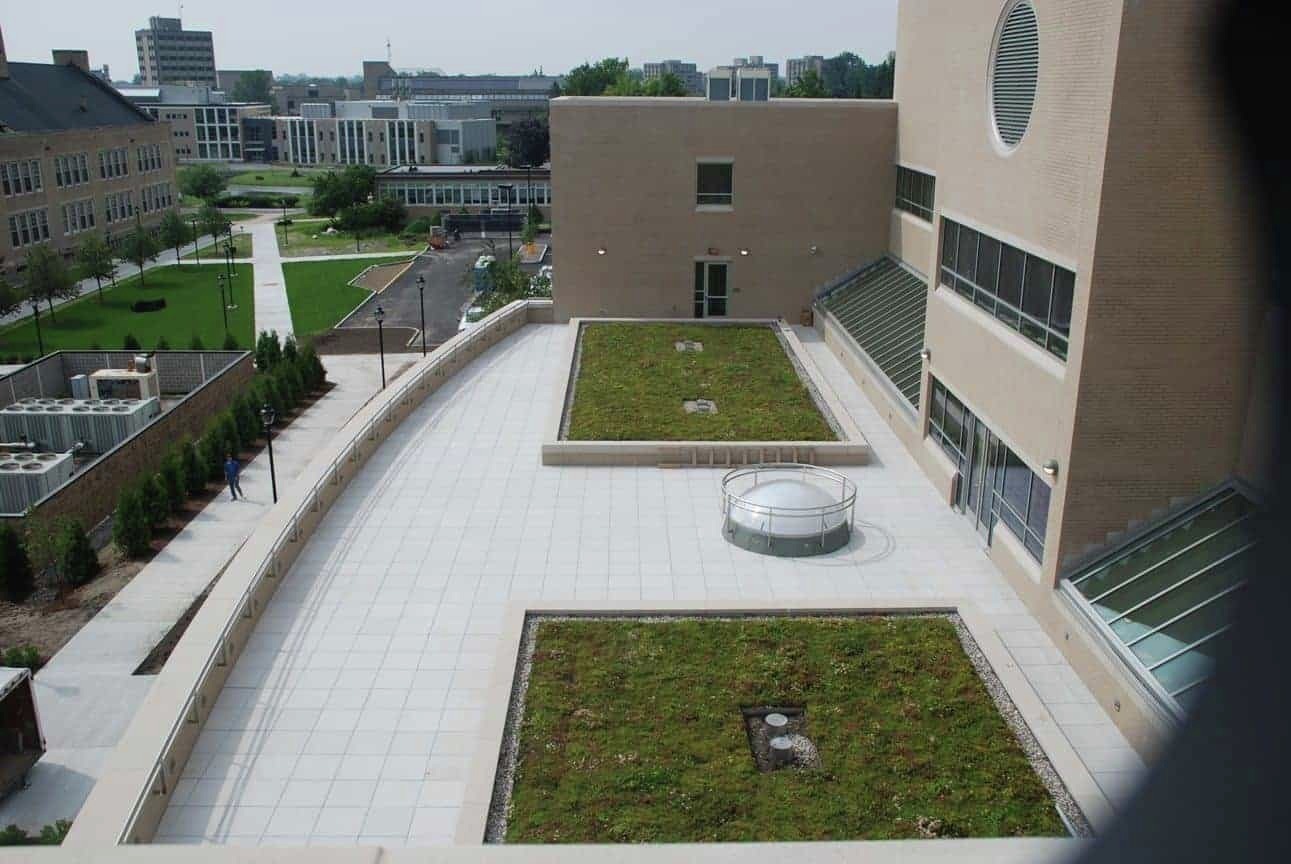
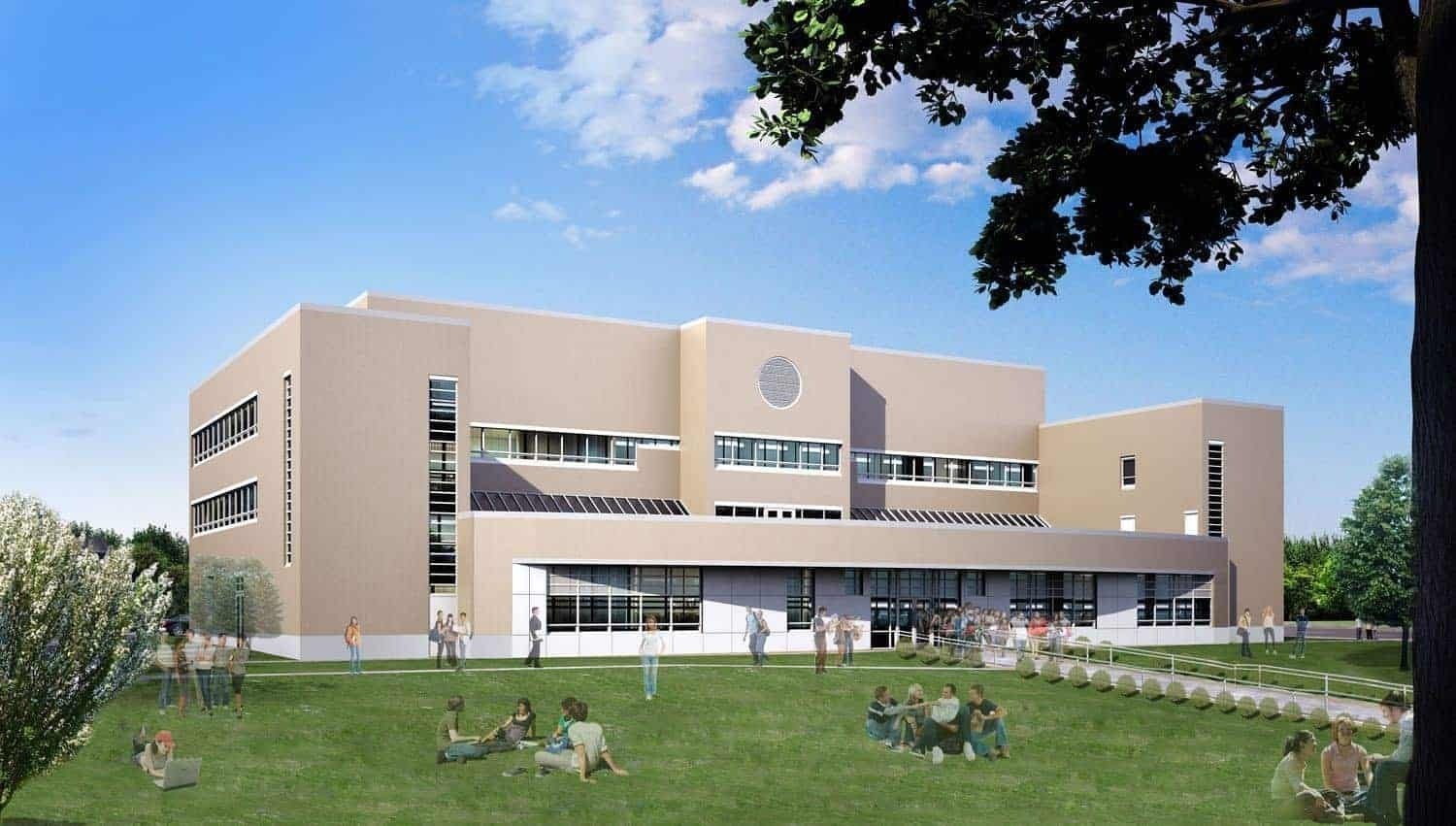
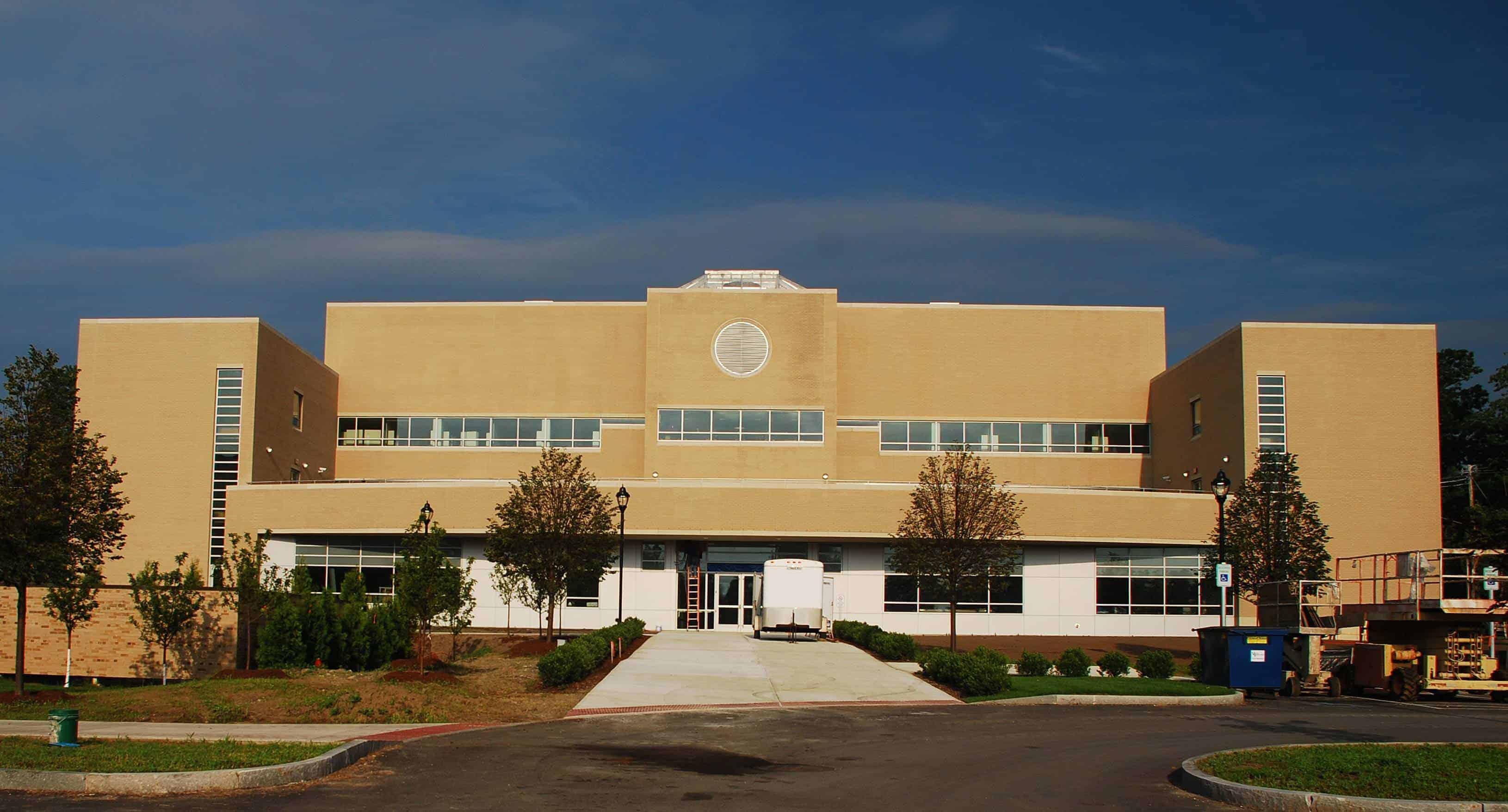
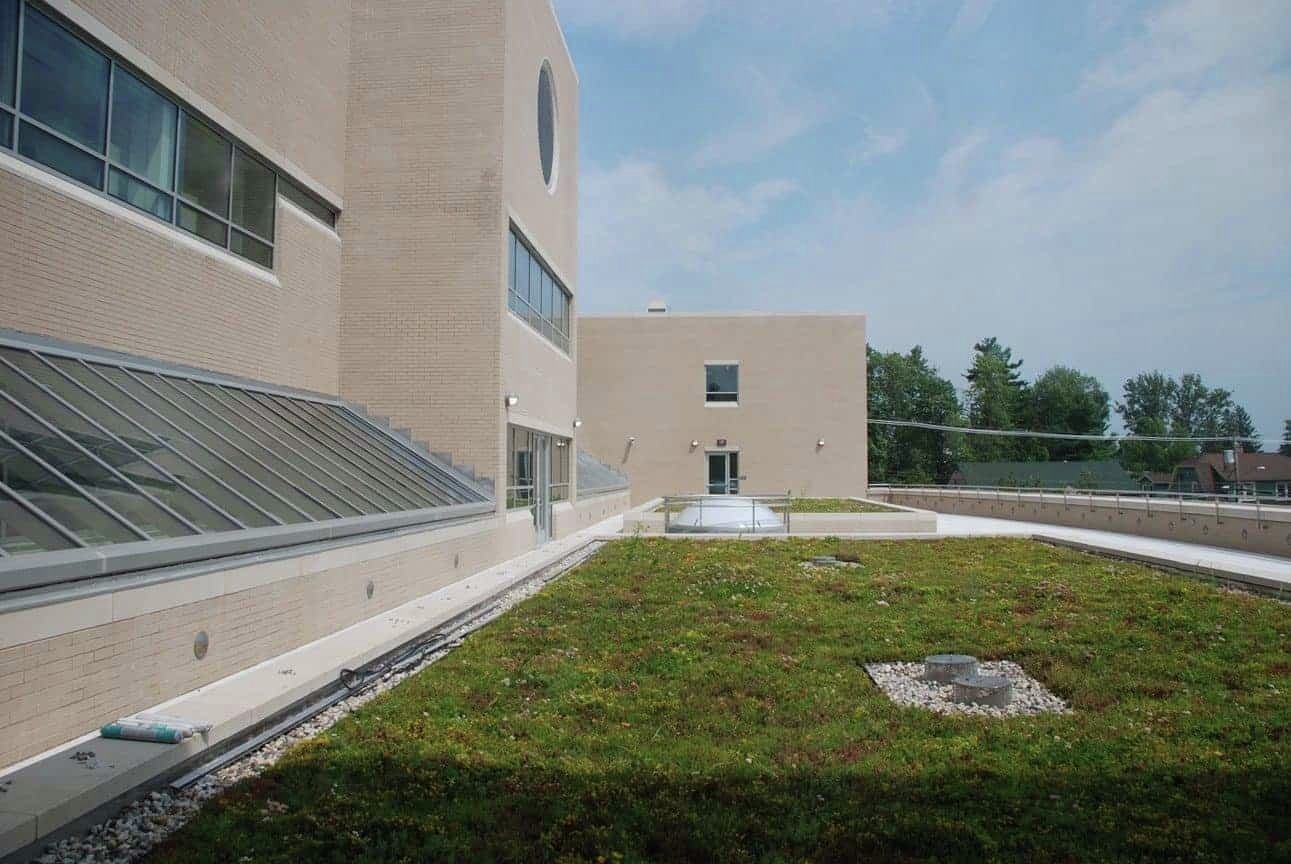
Commissioned by the State University of New York for their Plattsburgh campus, this new three-story, 43,000 square foot academic and faculty building serves as the anchor in the campus’ Master Plan. Located on a site at the north-western edge of the campus, the new SBE/CS building, the first new academic building constructed on the campus in the past 40 years, is prominently sited adjacent the Plattsburgh State’s original building, the historic Hawkins Hall.
Blythedale Children’s Hospital
Valhalla, NY

Bryant University
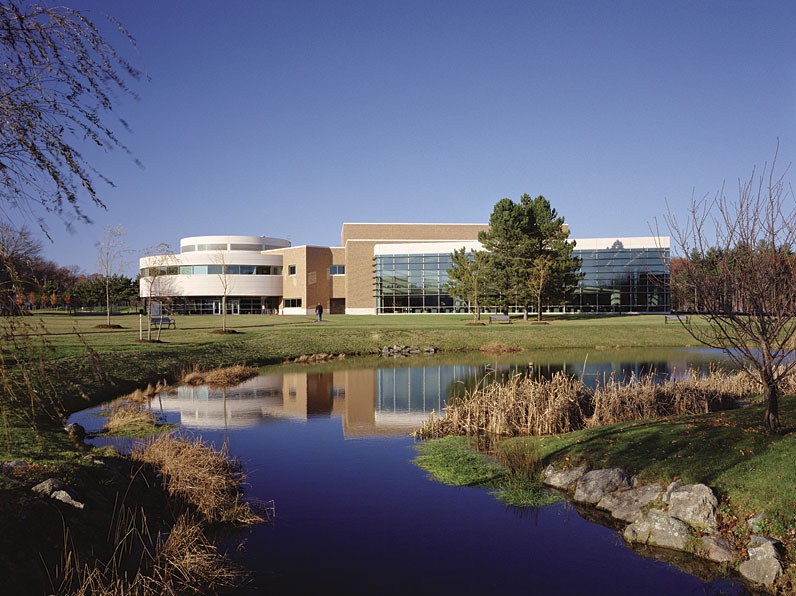
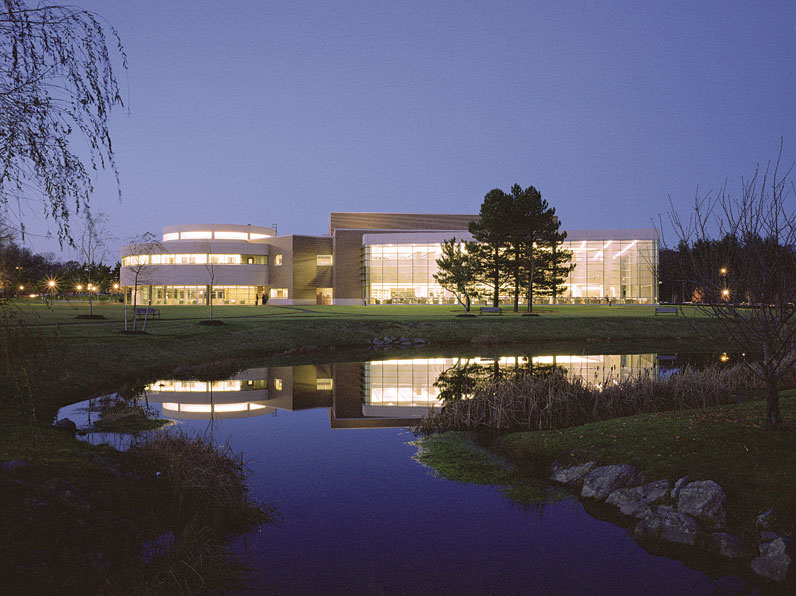
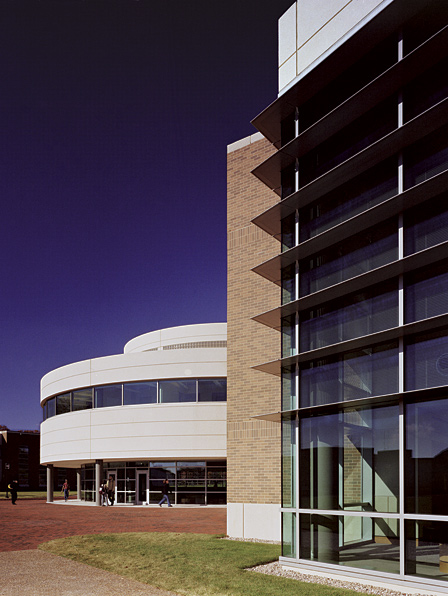
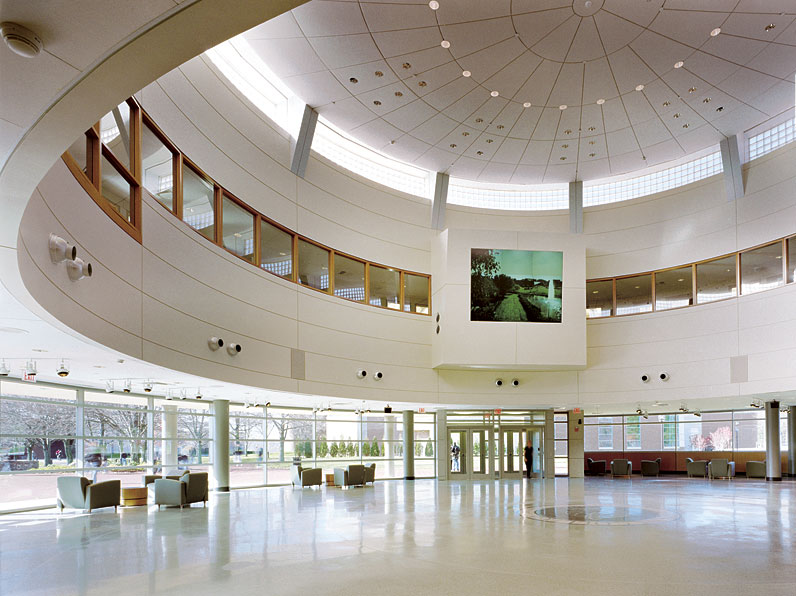
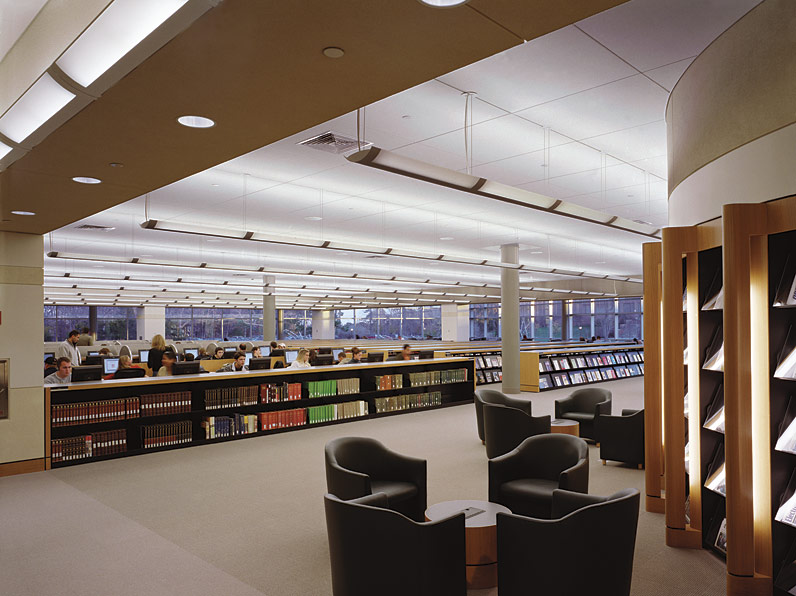
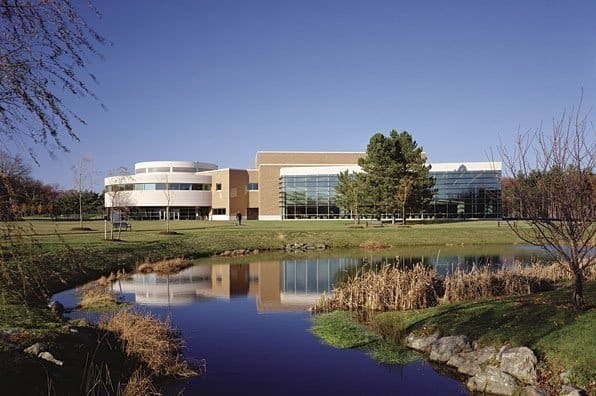
George E. Bello Center for Information and Technology Smithfield, RI At Bryant College, the planning of the new George E. Bello Center for Information and Technology resulted in the creation of a new campus quadrangle displacing vehicular drives and parking. The master plan introduced a formal quadrangle creating a new sense of place and identity for the school. The Bello Center frames the quadrangle and provides a new focal point for campus life. Continue BackThe library, which occupies a major portion of the building, provides for the introduction of state-of-the-art, electronic information services, classrooms and study rooms that formerly had not been available. It will also accommodate the growth of the library’s current collection of 140,000 items including books, bound journals, audio-visual materials and microfilm.
The other portion of the building is devoted to the Grand Hall entry rotunda and other spaces complementary to the library. The two-story entrance serves as a central campus meeting place, special events venue and exhibition center. The Grand Hall and the library both connect to a cybercafé, library classrooms and the Academic Center for Excellence, all of which remain open to students and offer study spaces and electronic access when the library is closed.
Bryant University
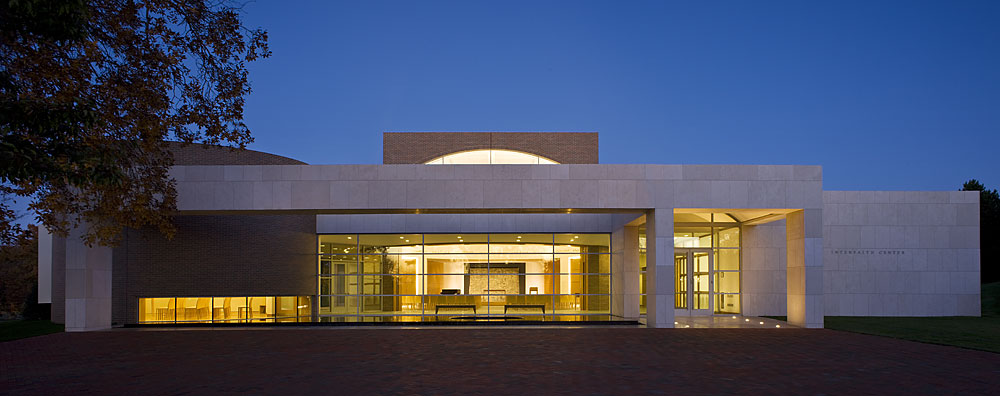
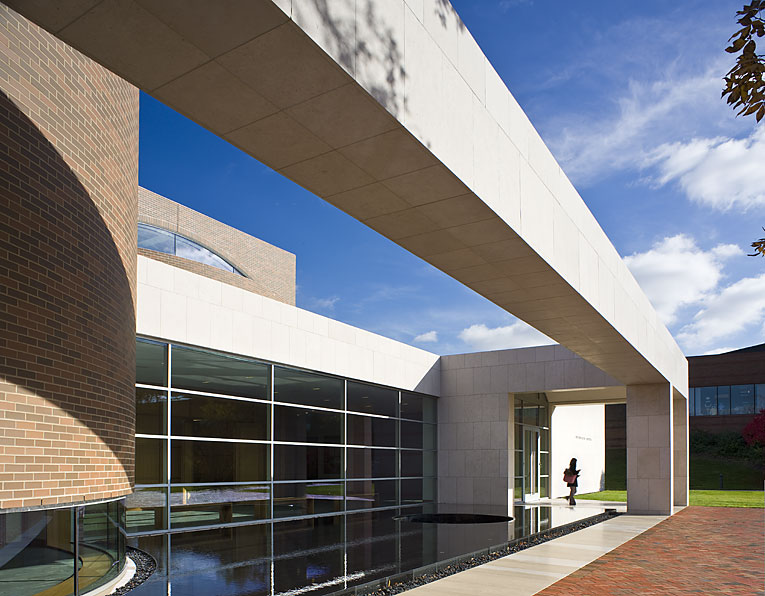
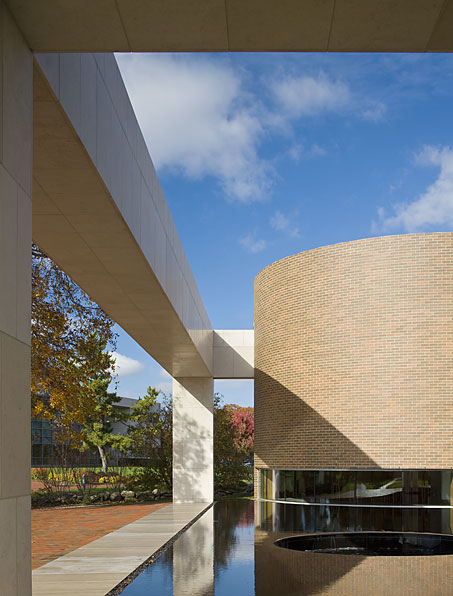
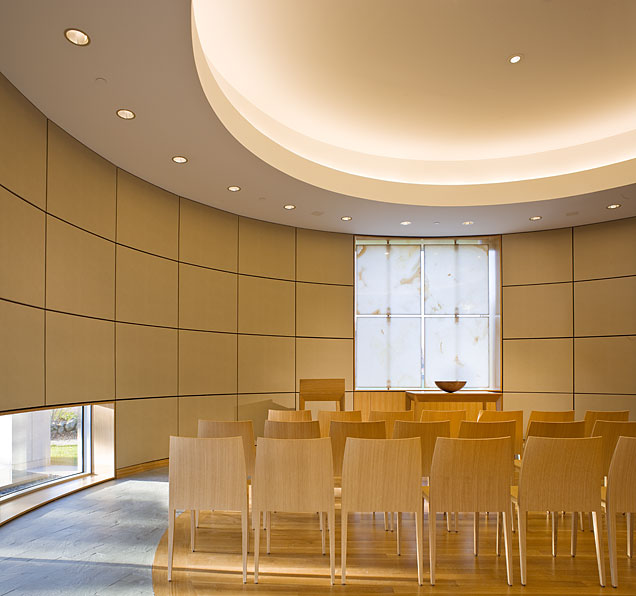
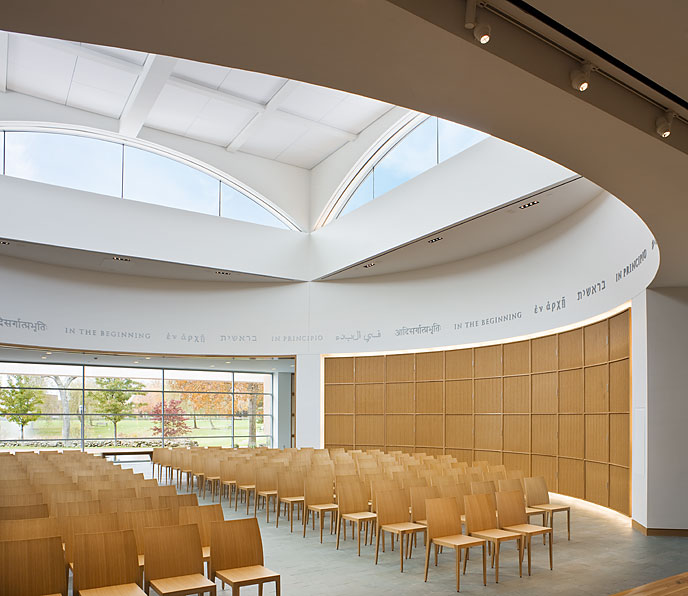
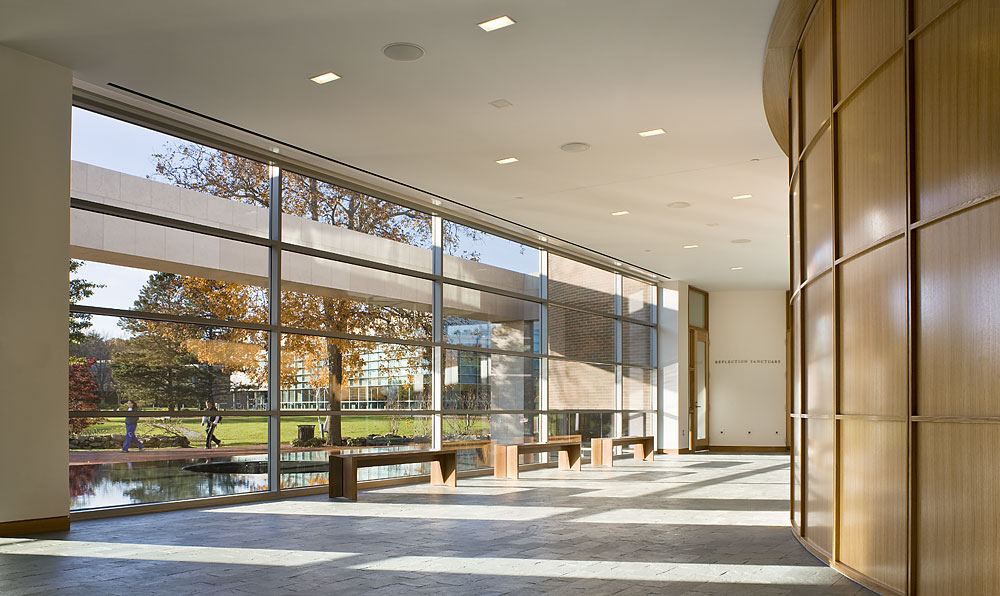
Interfaith Center Smithfield, RI Gwathmey Siegel Kaufman’s latest addition to Bryant University’s campus is an 11,000 sf interfaith center, located on a prominent site, which provides a place of worship, reflection and gathering for the institution and its visitors. Continue BackThe Main Center is 30-feet-tall, its circular form extending above the building’s 16-foot-high roofline. The wood paneled seating space opens onto a rectangular sanctuary with a raised wood platform with a backdrop of a ceiling-to-floor water wall. Its large, curved entry pocket doors open onto the foyer, allowing the center to accommodate larger crowds for special holy day services and other occasions.
Throughout the facility, there is the contrast of curvilinear, rectangular and square forms. A square monitor roof tops the larger rotunda, with curved windows on each of its four sides bringing light into the space. An open porch to one side of the Main Center extends onto a terrace, creating a quiet outdoor campus room.
Buffalo State College
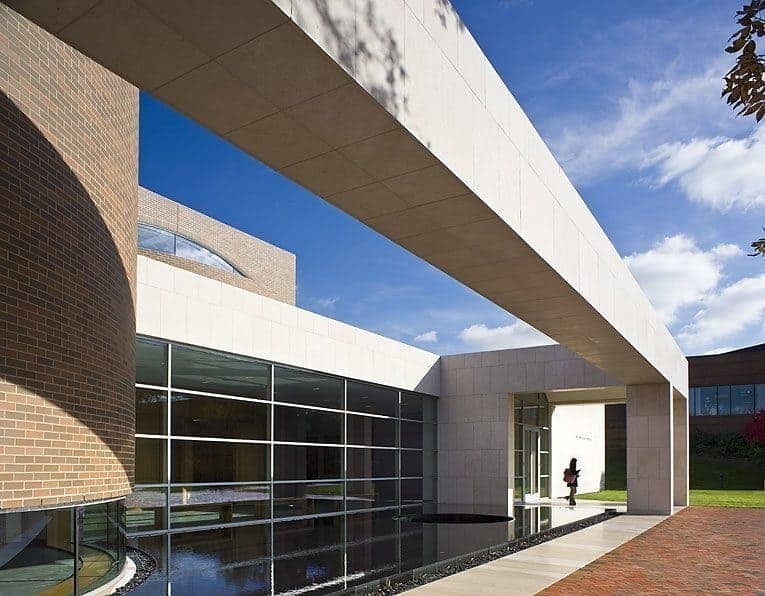
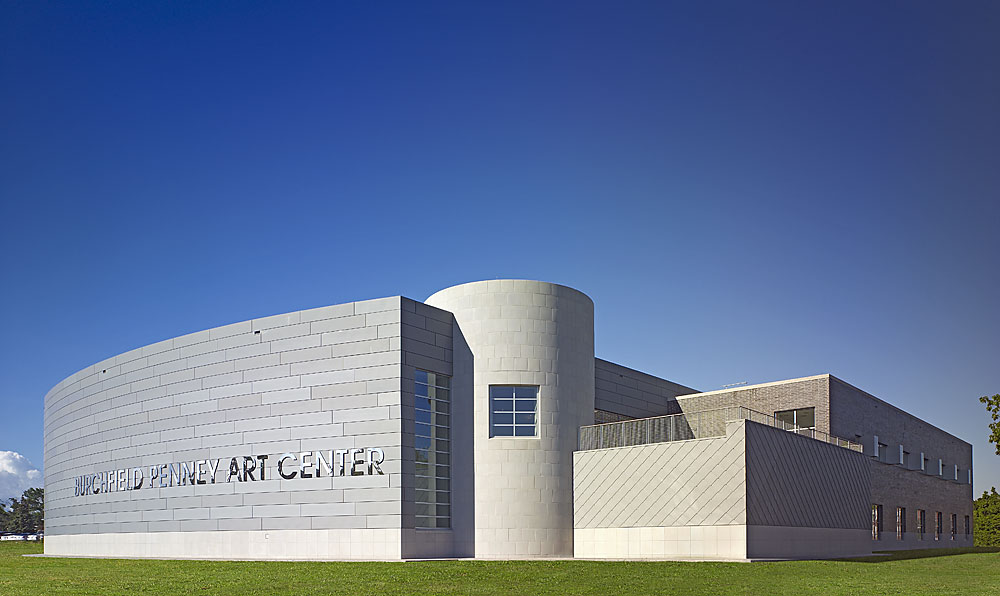
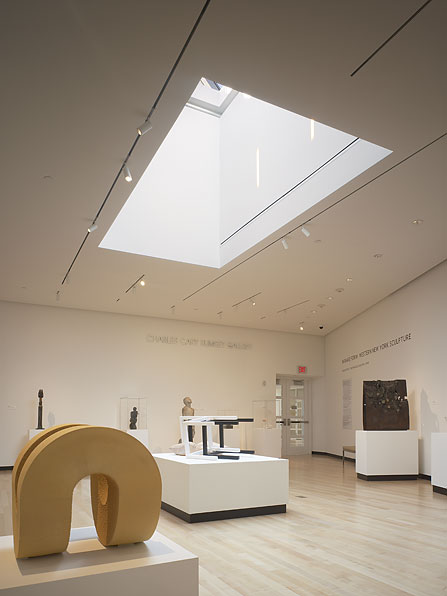
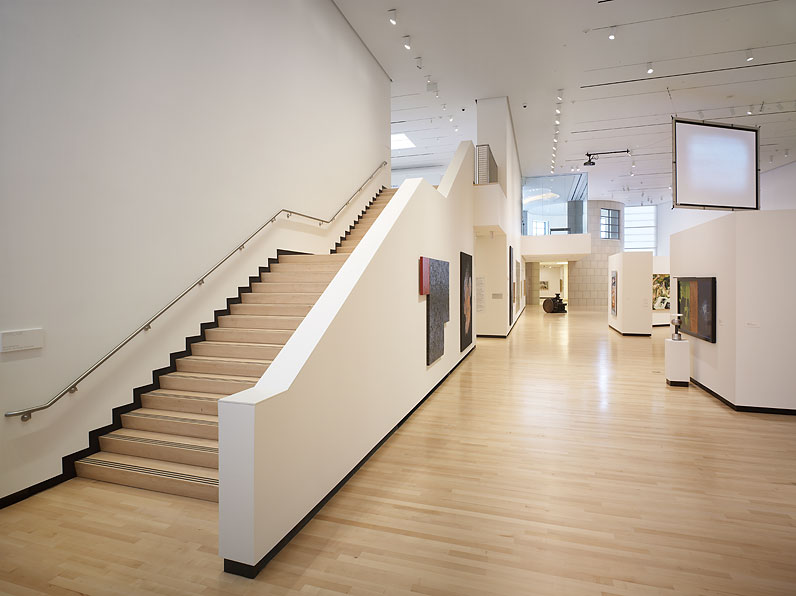
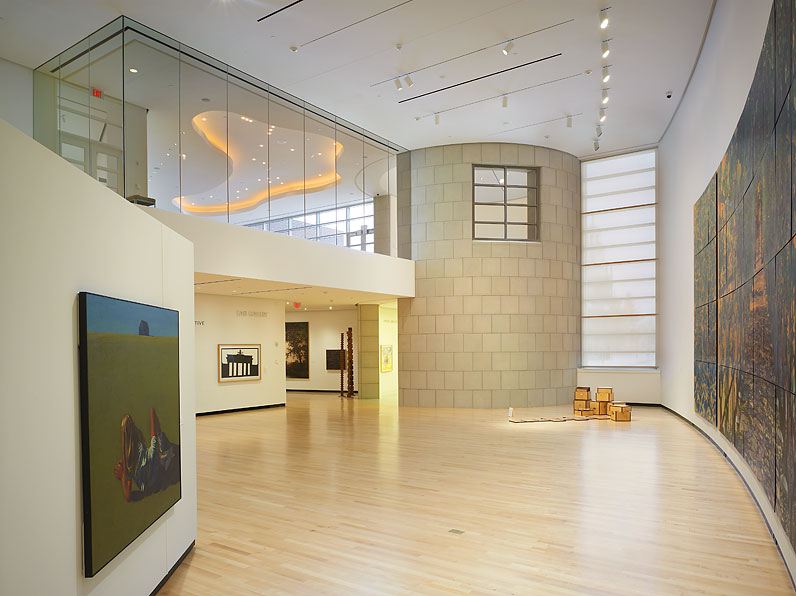
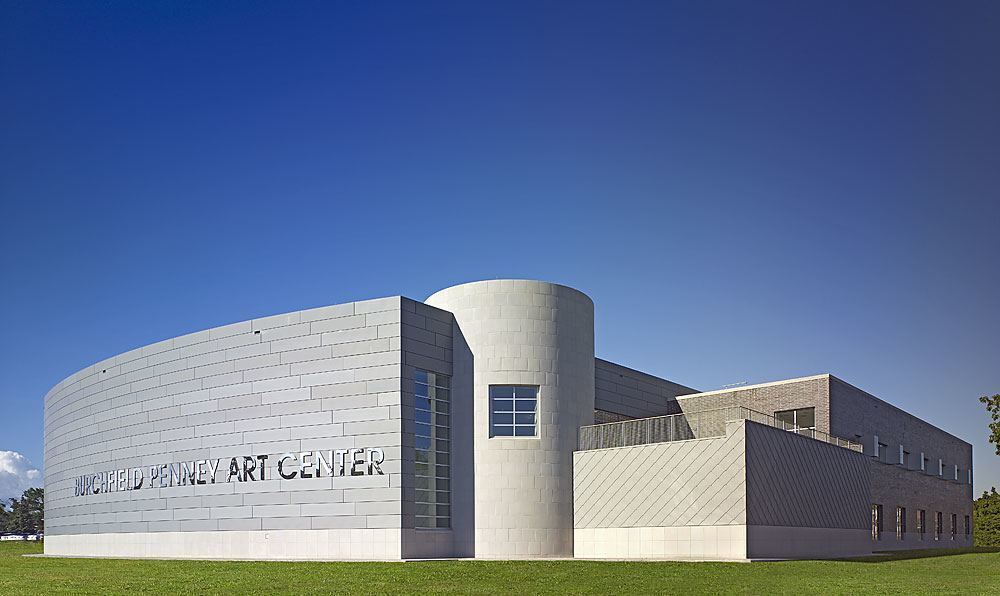
Burchfield-Penney Art Center Buffalo, NY The Burchfield-Penney Art Center completes an architectural ensemble that traces history from the classic, Georgian, and Miesian Modern to the present. It adjoins the Buffalo State Hospital designed by Henry Hobson Richardson with landscape by Frederick Law Olmsted, the neoclassical Albright-Knox Art Gallery with an expansion by Gordon Bunshaft of Skidmore Owings & Merrill, and historic buildings of the Buffalo State College campus. Continue BackConceived as a contrapointal, abstract, ambiguously scaled, “sculptural object” on Elmwood Avenue (one of the city’s main thoroughfares), the composition rotates around a cast stone rotunda, to a modulated brick rectilinear volume, establishing a collage assemblage that interpretively relates to a multifaceted context.
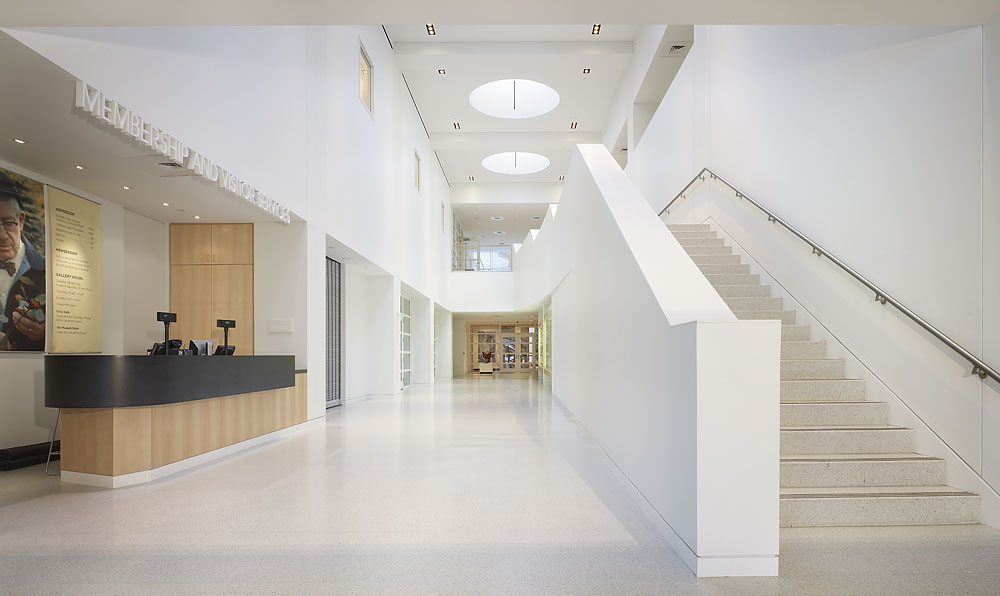
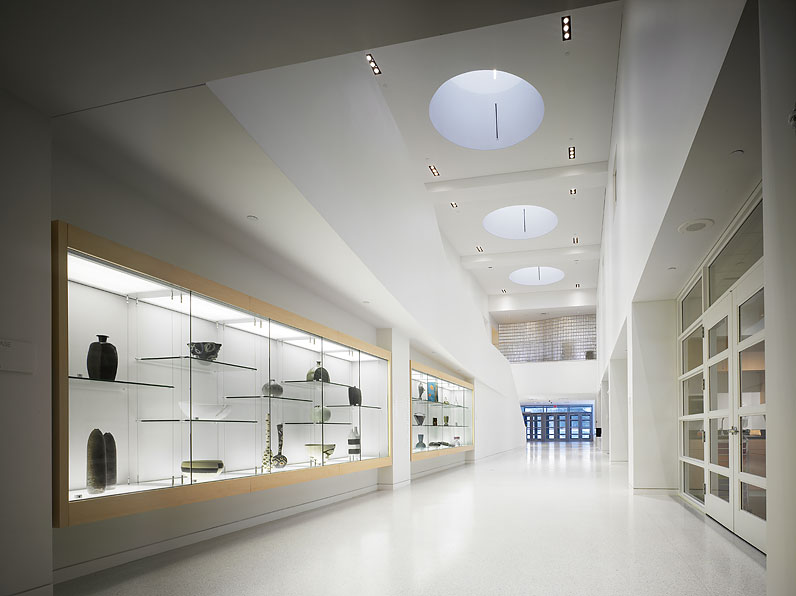
The spatial sequence is intended to be dynamic, varied and unexpected, yet clearly referential to the exterior forms. The programmatic combination of exhibition and teaching spaces affords both an experiential richness and multi-use, that engenders vitality, as well as an inspirational sensibility that visionary architecture embodies.
Housing a museum dedicated to the art of Western New York, the 84,000 square foot two-story structure is a highly functional organization of related program components, clearly divided into public and private realms. Spaces include the dramatic 147-foot long double height main gallery, a variety of other flexible gallery spaces, an auditorium, classrooms, museum store, café, public reception room, administration, boardroom, roof terrace and support functions.
The building is clad in zinc panels, magnesium brick and cast stone, accentuating the formal articulation of the volumetric elements. The selected materiality is intended as both a counterpoint as well as a reference to the existing and nearby campus buildings as contextual precedents.
The first art museum in New York State to be LEED certified, and among the first several art museums in the nation to achieve certification, it has officially received LEED Silver certification from the U.S. Green Building Council. It meets rigorous standards in the areas of site sustainability, water use and efficiency, reduced use of energy and atmospheric impact, use of materials and resources, improved indoor air quality and innovation in design.
Cleveland State University
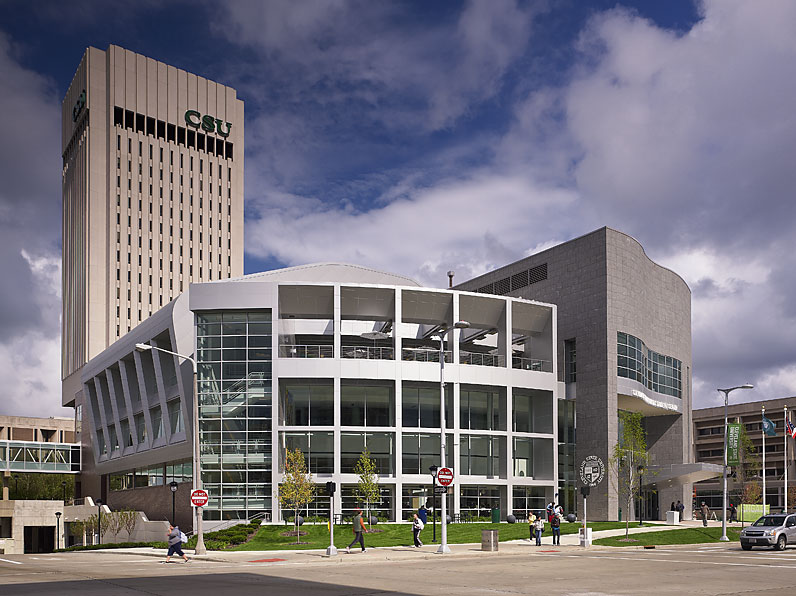
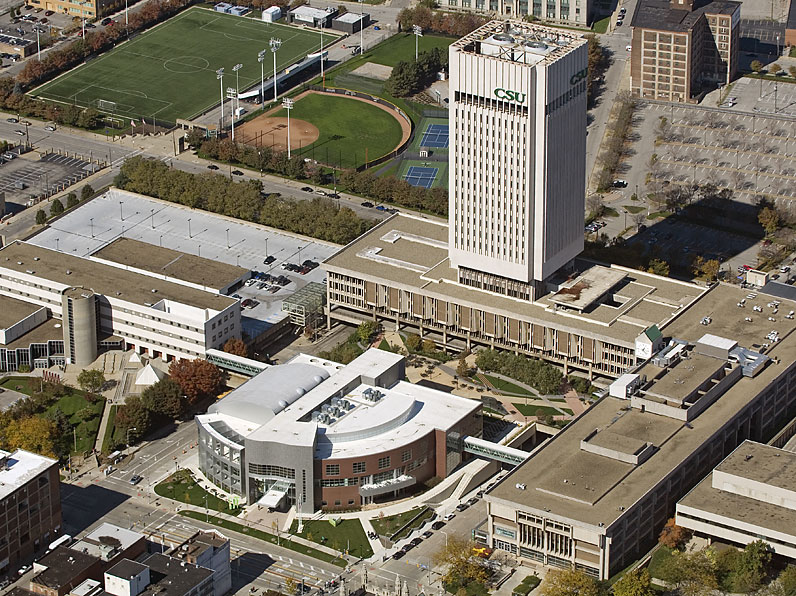
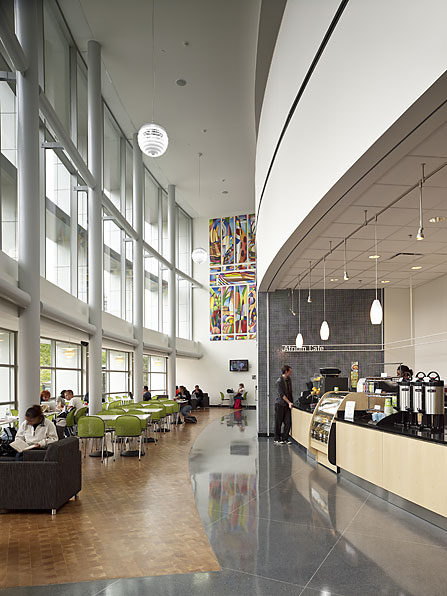
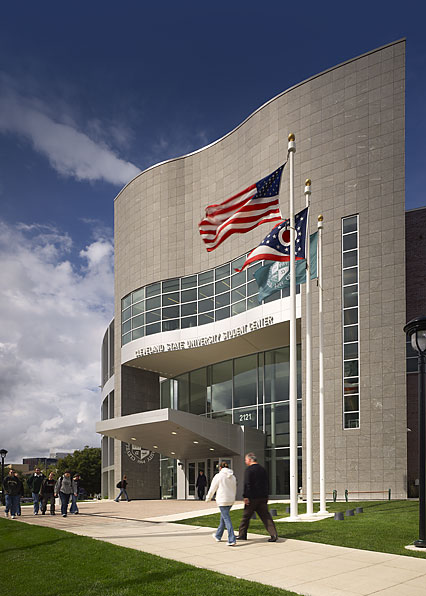
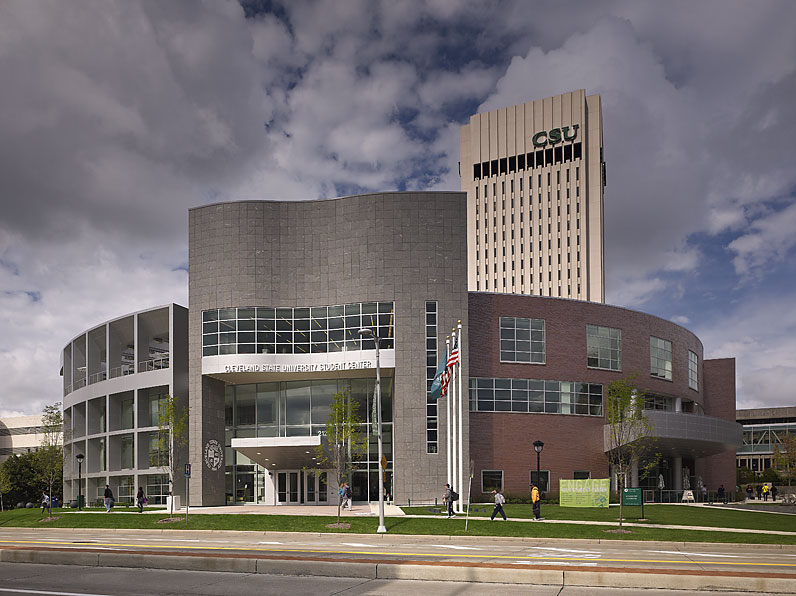
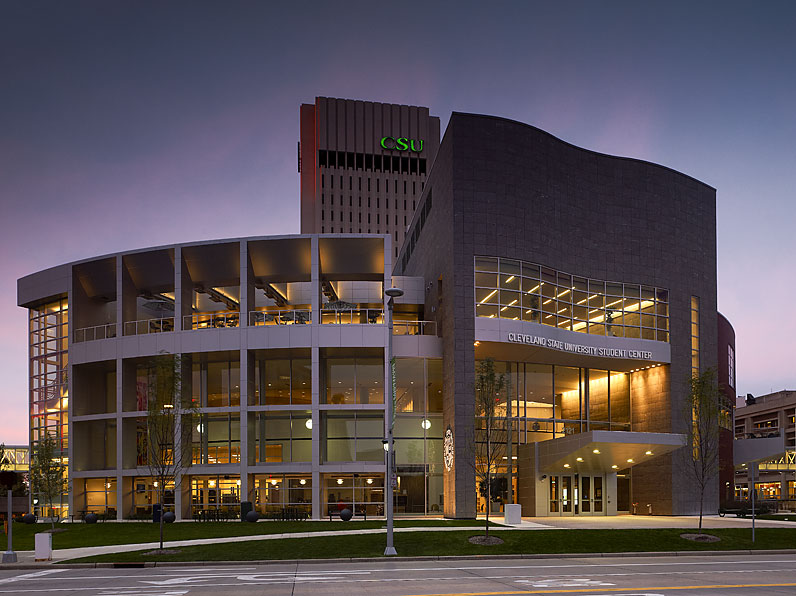
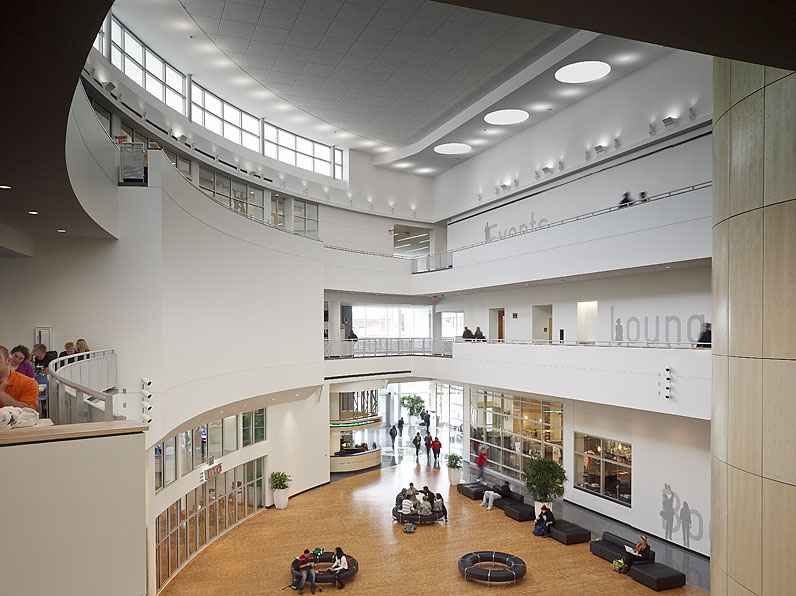
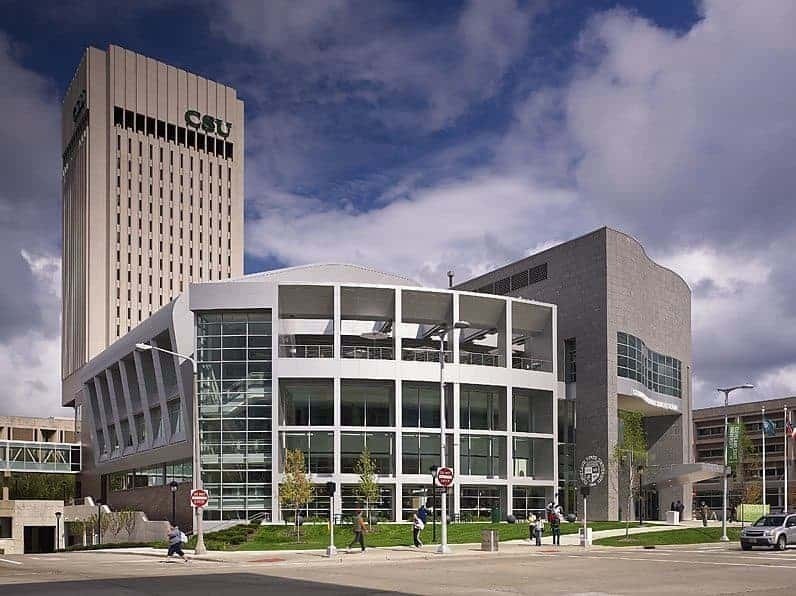
Student Center Cleveland, OH The new, 138,000 sf student center at Cleveland State University (CSU) will enhance its campus image and create an open connection with the city while offering a wide range of services to students and faculty. Fronting on the main thoroughfare to downtown Cleveland, the center will become the campus’ public gateway and begin the second phase of CSU’s master plan to integrate the campus with the bustling avenue. Continue BackThe Gwathmey Siegel Kaufman design locates these spaces – bookstore, dining, lounge, computer access, offices for student activities and conference meeting spaces – on three stories around a central atrium. The Euclid Avenue main entry leads directly into this skylit circulation and activity space which will also connect with campus pedestrian bridges, the main plaza and below grade parking.
The building’s three levels are organized as follows. Level one provides street level access to the atrium floor, bookstore, pub, and cyber lounge as well as to ramp circulation that leads to a redesigned outdoor plaza.
The second level contains the primary dining and food court areas as well as a convenience store and student senate office suite. It also provides direct access to the campus-wide interior walkway system.
On the third level are located a conference center, prefunction spaces, and the student life administration and office suite that includes interconnected lounge and conference rooms. There is also an outdoor terrace fronting Euclid Avenue.
The opening of the building in 2010 will coincide with the completion of the Greater Cleveland Regional Transit Authority’s Euclid Corridor Transportation Project. That project, which is being coordinated into the center’s entry plaza, reconstructs the Euclid Avenue right-of-way through the CSU campus. It calls for upgrading the sidewalks, lighting, and landscaping and enriching the connection between downtown and the university.
Associate Architect: Braun & Steidl
Cornell University
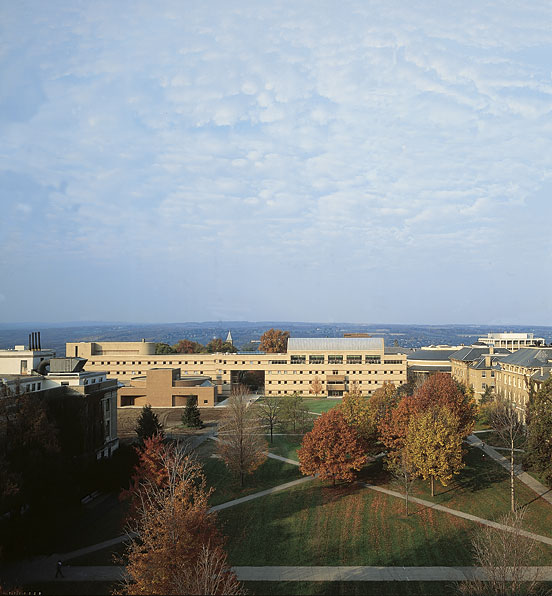
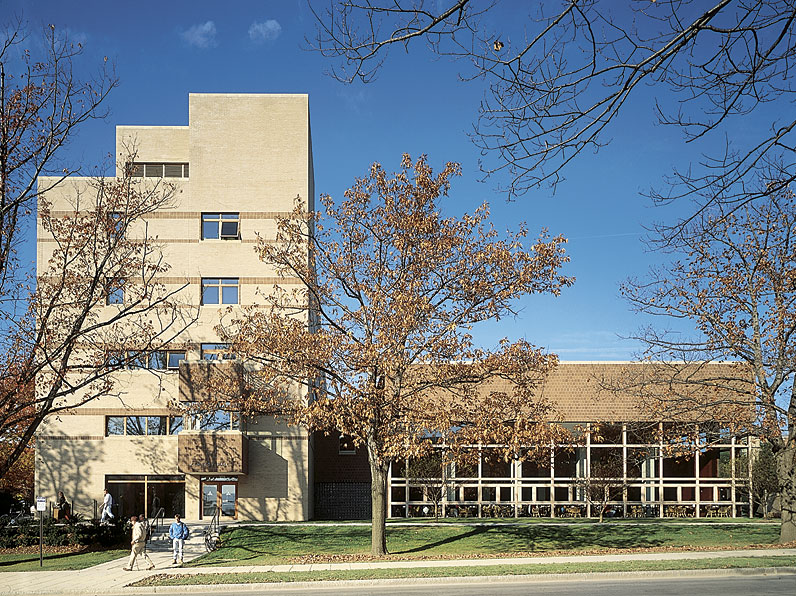
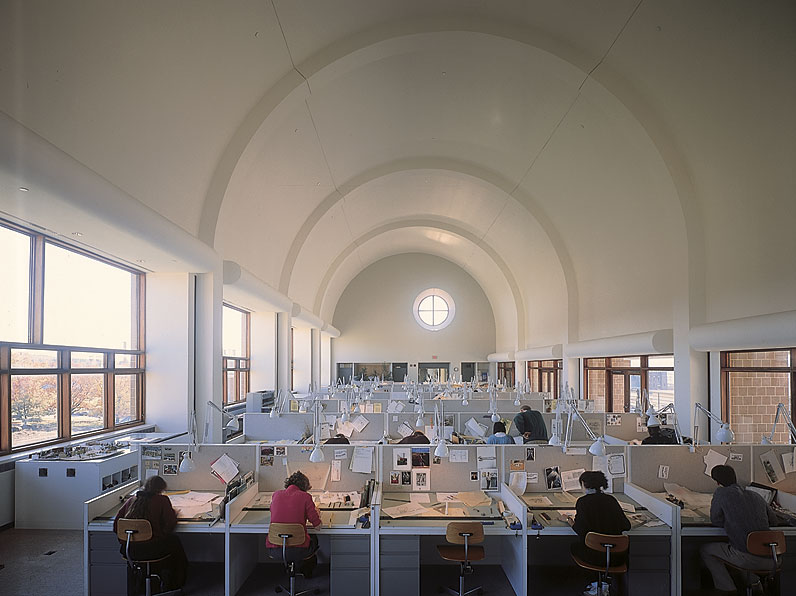
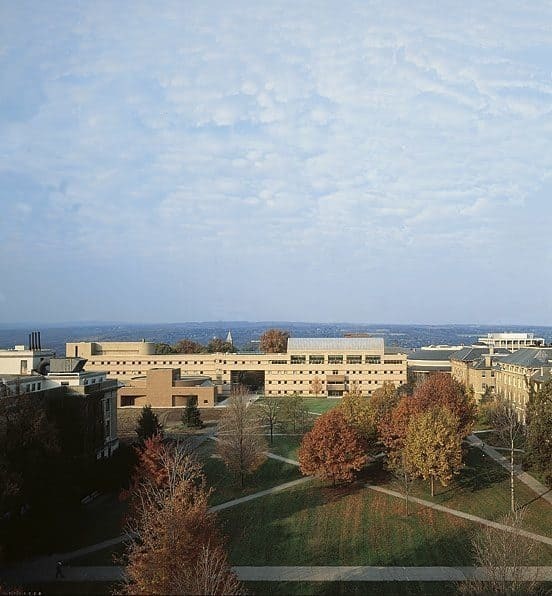
College of Agriculture and Life Sciences Ithaca, NY The new building responds to the existing Agriculture Quad by reinforcing the adjacent four-story buildings both in terms of scale and materials as well as by completing the exterior space, rendering it as an “outdoor room.” The building straddles the dividing line where Cornell’s state campus meets its endowed campus. It redefines Bailey Plaza as an urban space and the quadrangle as an enclosed outdoor room. Continue BackA connecting bridge provides access to the Landscape department from the Academic building and frames a three-story gate to the quadrangle that recalls similar college gates on the campus. A primary pedestrian pathway from the quadrangle to the campus, the gate forms one of the main entrances to the Academic building; the other is at the corner of Tower Road and Garden Avenue.
The archway divides the building into two wings: Roberts Hall, an administration building that encloses the quad, and Kennedy Hall, a classroom and faculty office building whose south end faces a major intersection.
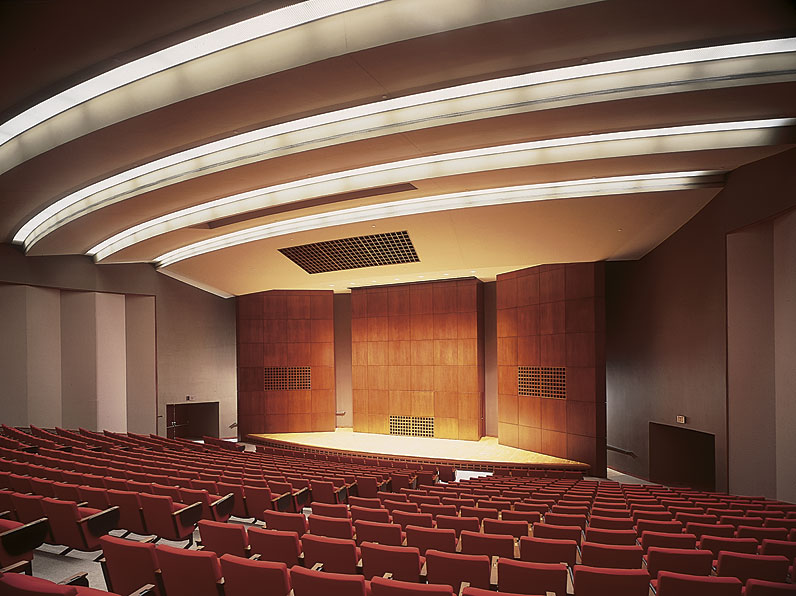
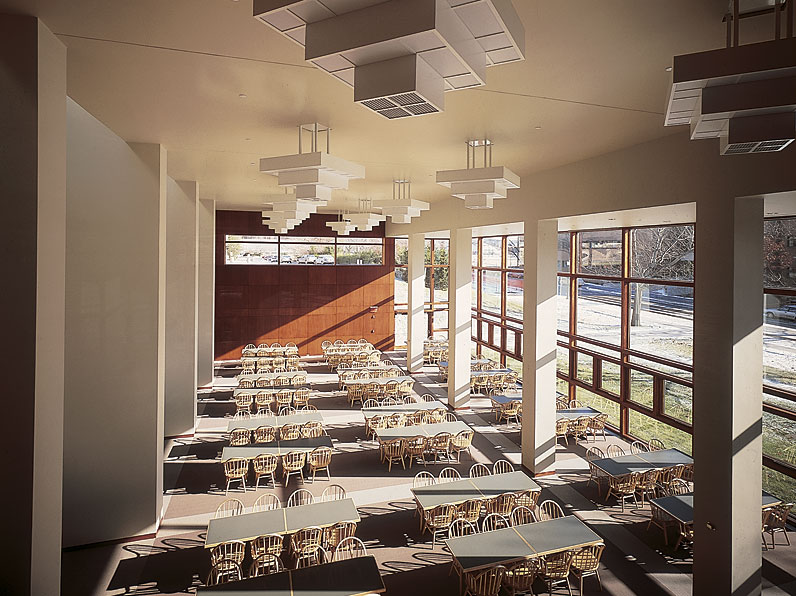
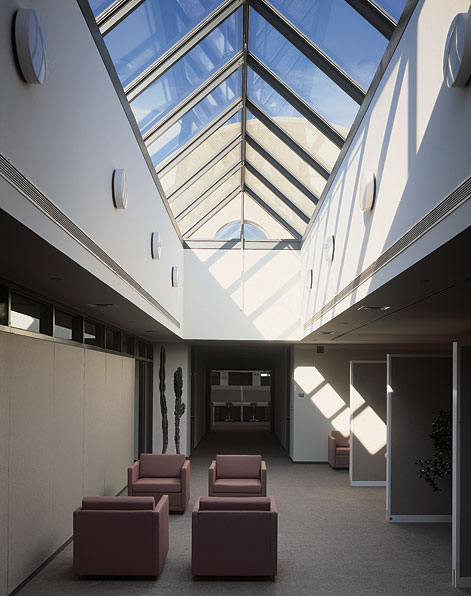
A two-story galleria with a balcony mezzanine is the primary interior circulation space of Kennedy Hall, connecting the two entrances and providing access to classrooms, a 600-seat lecture auditorium, and a 400-seat dining facility. The third and fourth floors house faculty offices and teaching-support space.
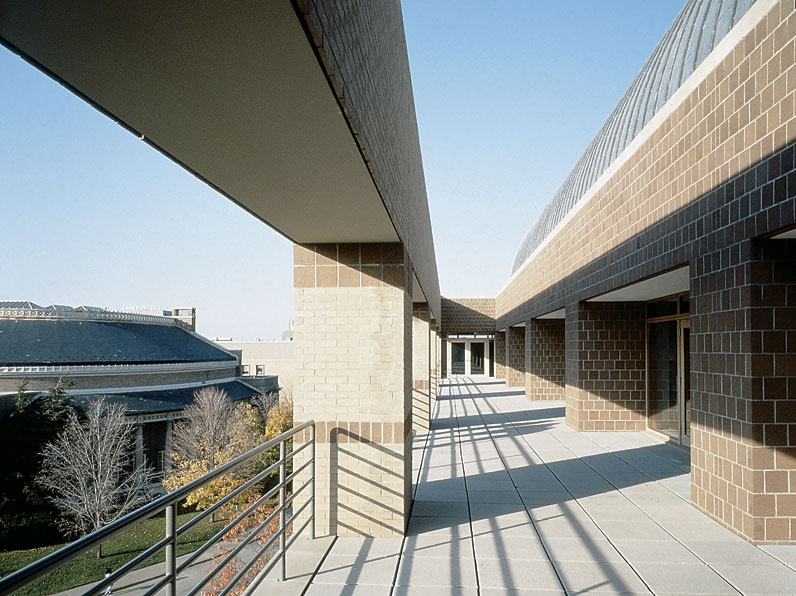
On the exterior, modular brick in three shades of earth tones recalls the texture of adjacent campus buildings. The windows are teak, with cast-stone sills and copings, and the barrel-vaulted roof in standing-seam lead-coated copper.
The four-story building addresses the pertinent issues of a major college structure—context, material, scale, and image—in a manner that supports both a new program and the traditions of the school.
Elwin W. Stevens, State University Construction Fund
“If Cornell’s latest additions underscore anything about campus-making, it is the architects’ strong belief that traditional campuses can be expanded—and strengthened spatially—with original yet compatible Moden buildings that look forward, not back.”
Architecture, January 1991
Jayne Merkel, The Cincinnati Enquirer, February 17, 1988
Cornell University
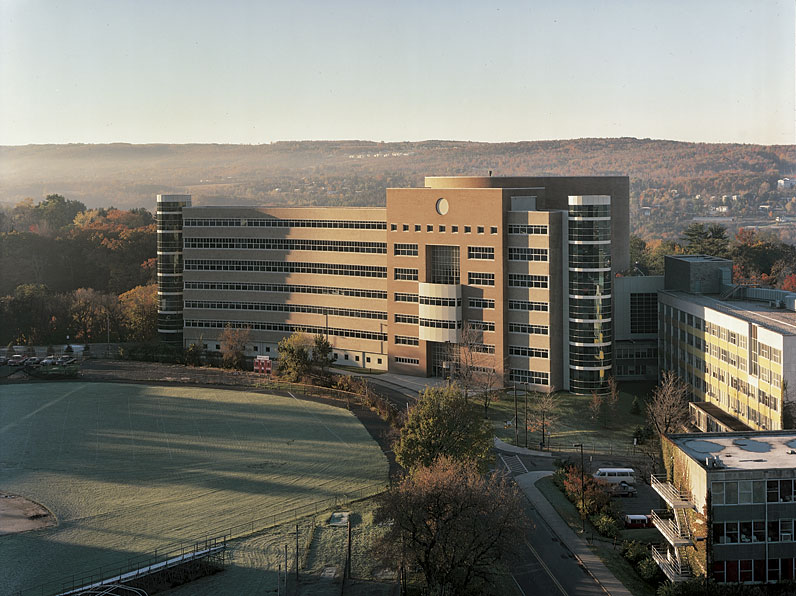
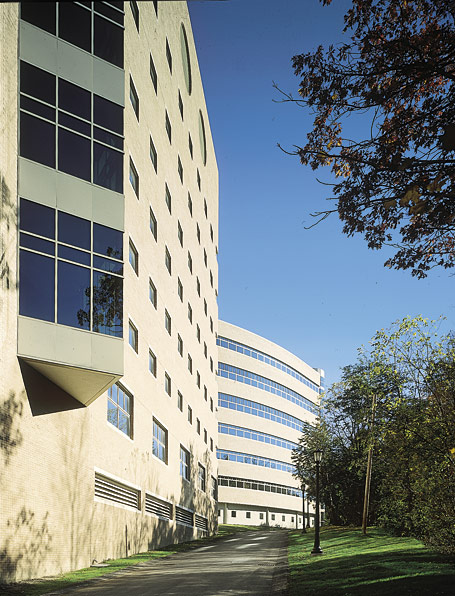
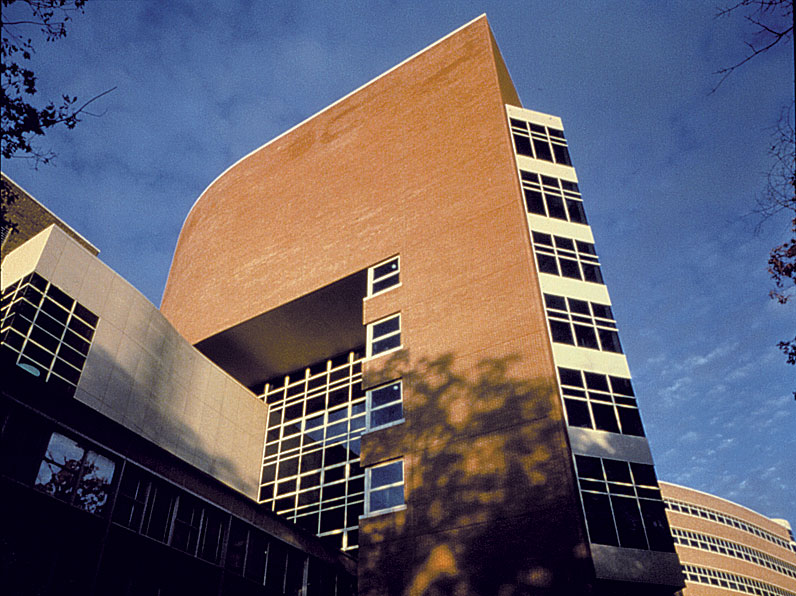
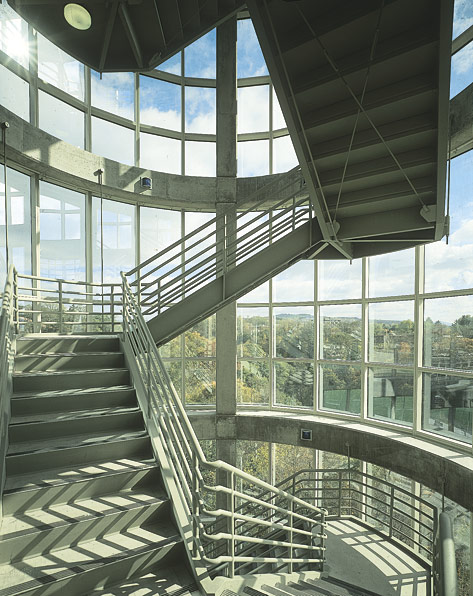
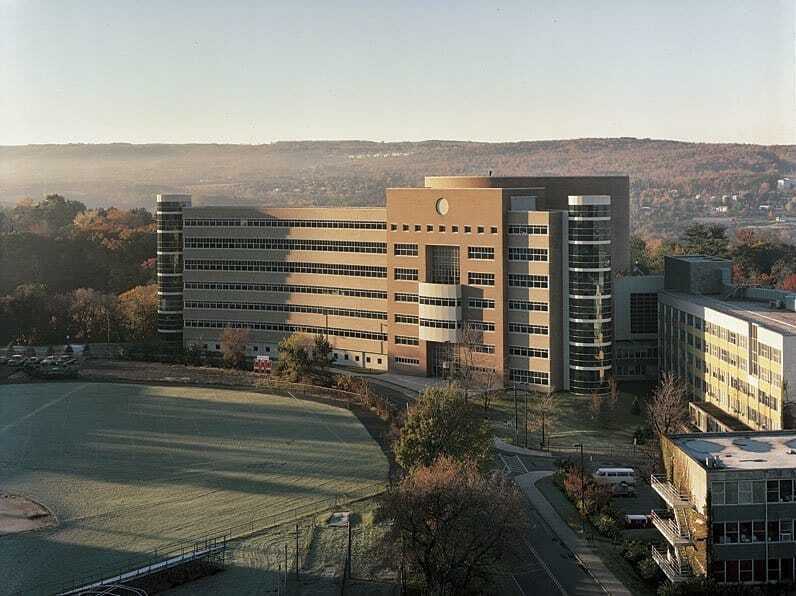
Computer Science Theory Center Ithaca, NY The 211,000-square-foot seven-story building is organized into two formal building elements: an elongated office wing and a large cylindrical research facility containing high-tech computer rooms and column free laboratories. Located at the intersection of these two forms are the entrance and service core, including meeting rooms and a reception area for the supercomputing department. Continue Back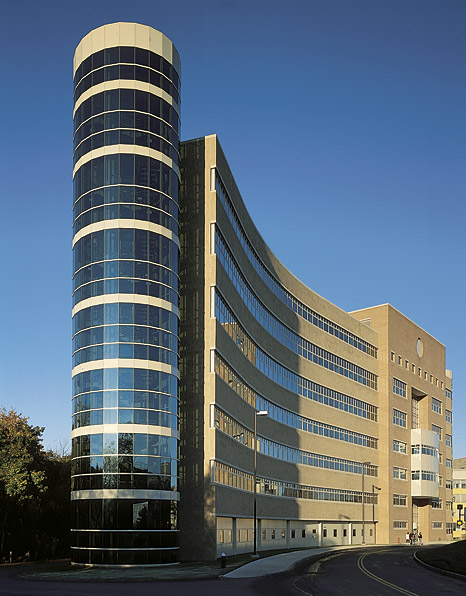
Cornell University
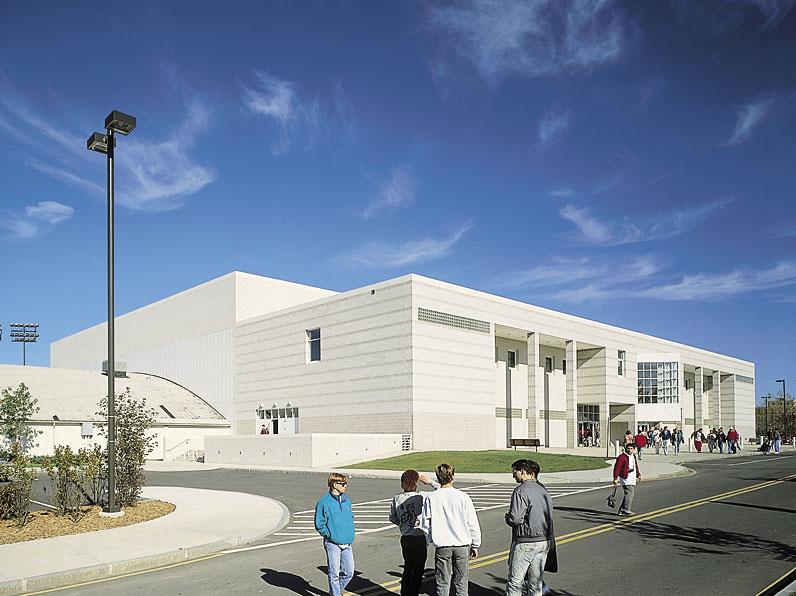
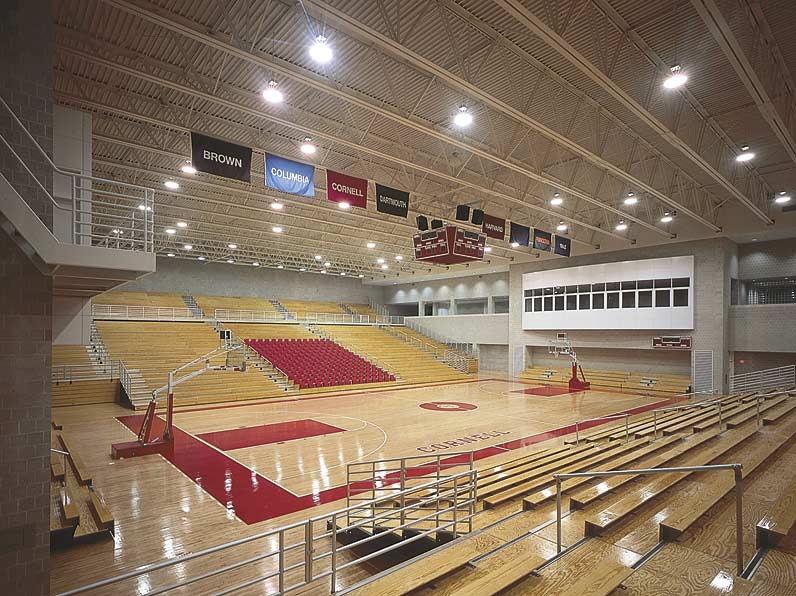
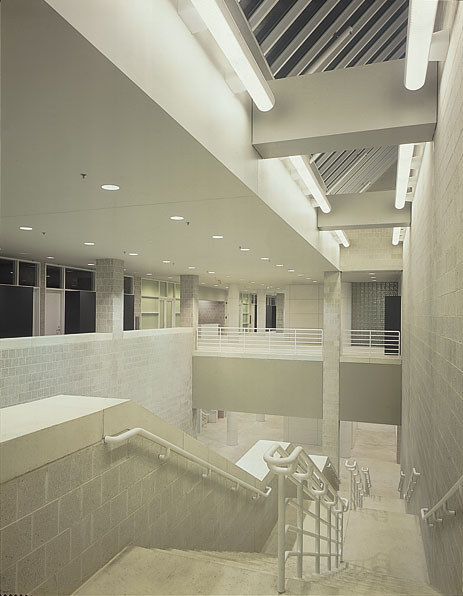
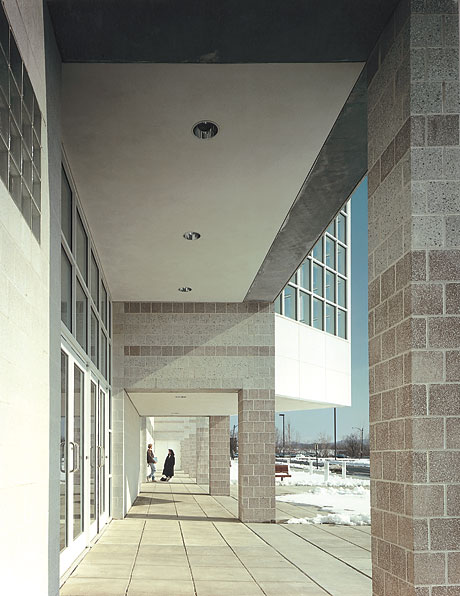
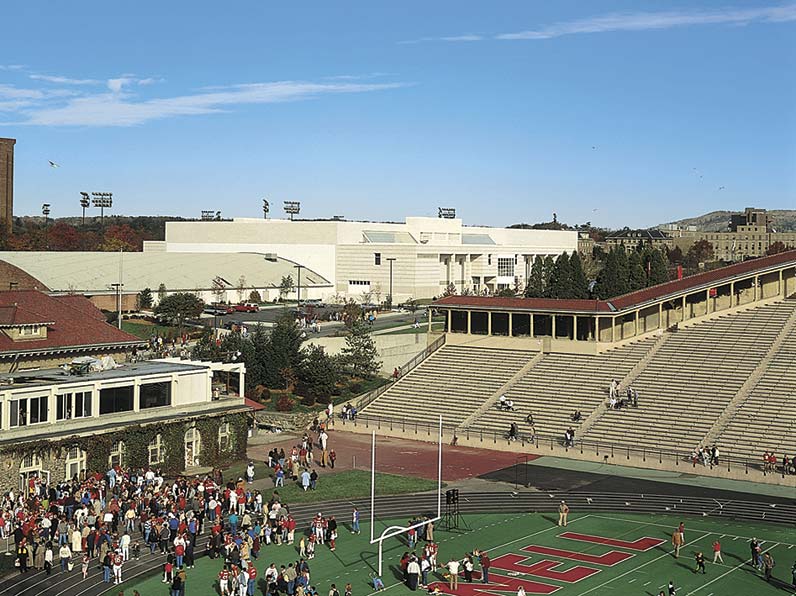
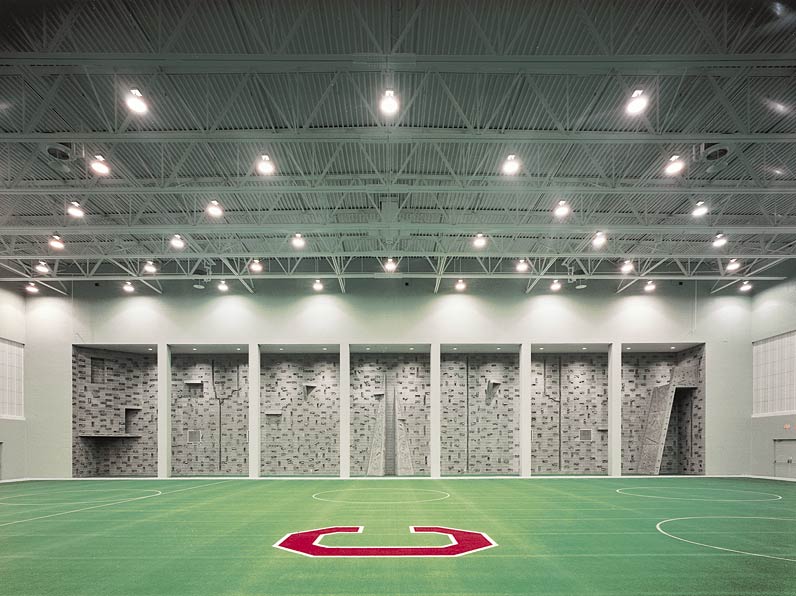
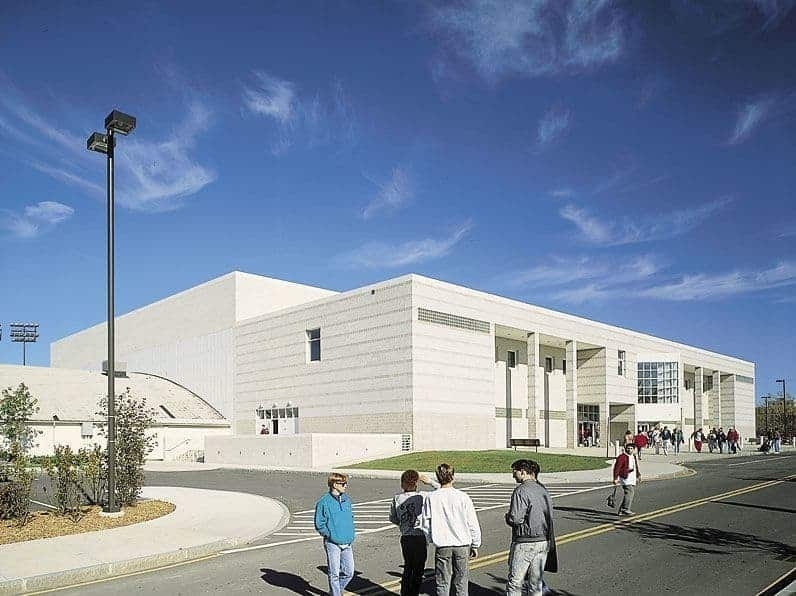
Basketball Arena and Fieldhouse Ithaca, NY The building forms the southern edge of Cornell’s varsity practice fields. It comprises two major volumes: a basketball arena with three regulation NCAA courts and roll-out seating for 5,000 spectators, and the field house-cage. Whereas most of Cornell’s athletic buildings are fieldstone with limestone trim, this building is constructed of ground face concrete block, white porcelain panels, and pre-cast concrete. Continue BackThe lobby is the organizational fulcrum of the building, linking the office-service areas with the main athletic spaces and providing an interconnecting public entrance to the hockey rink. Unlike the traditional campus model, this architecture clearly articulates the interior volumes that define the spatial and organizational hierarchy.
Dartmouth College
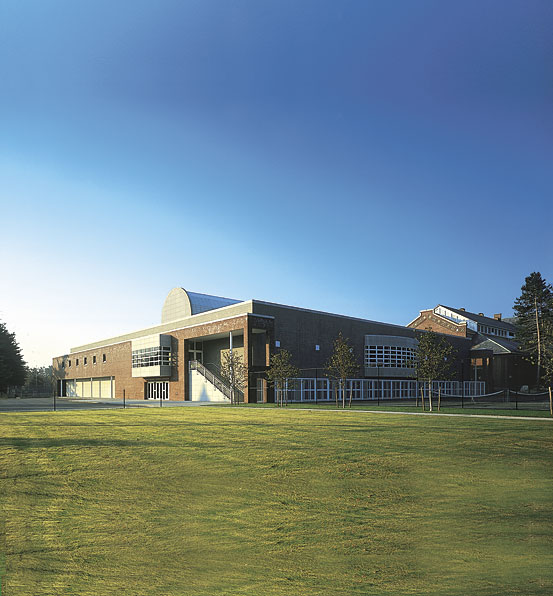
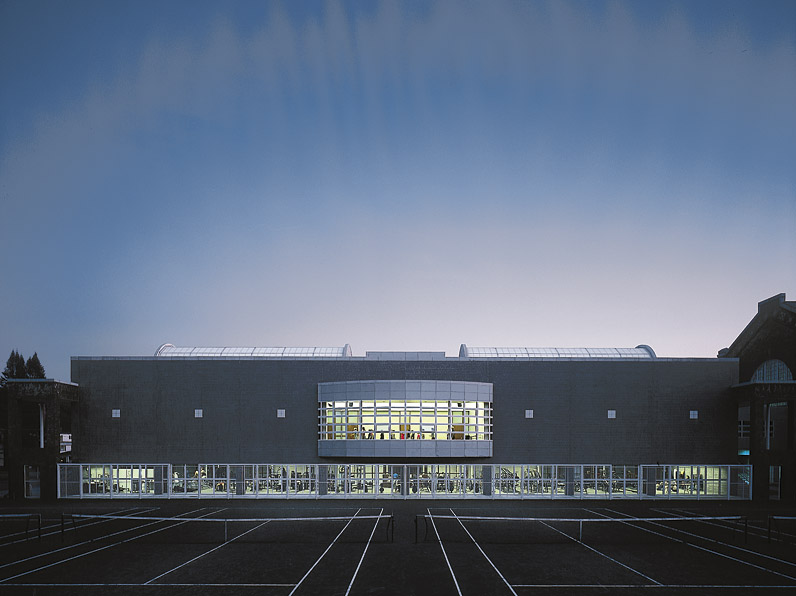
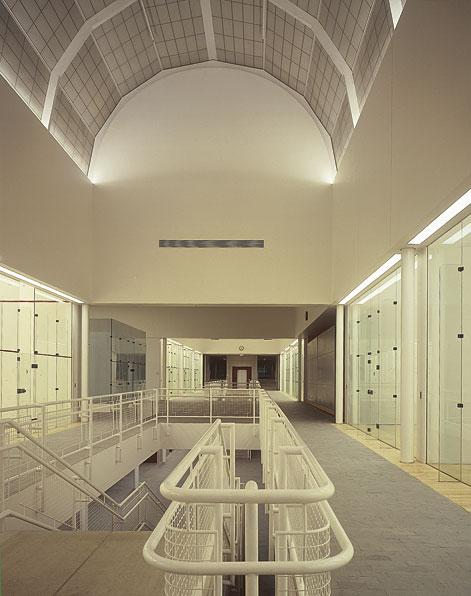
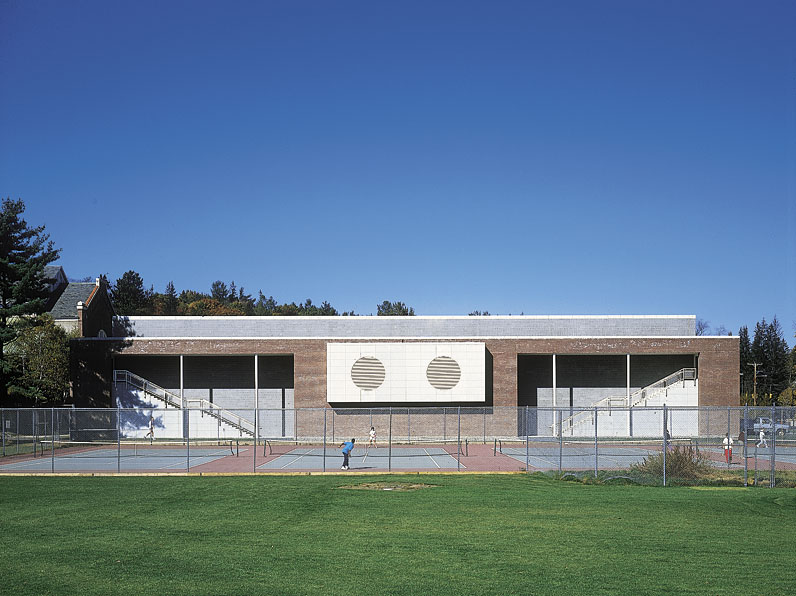
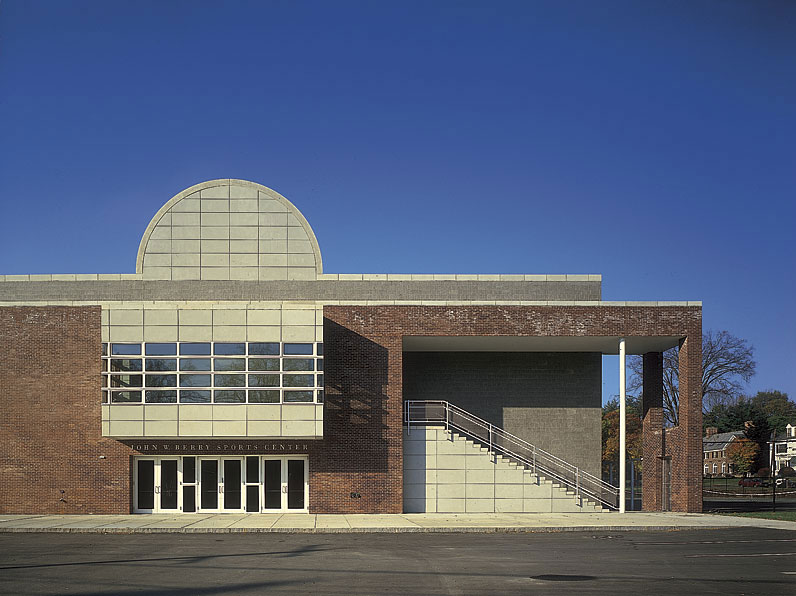
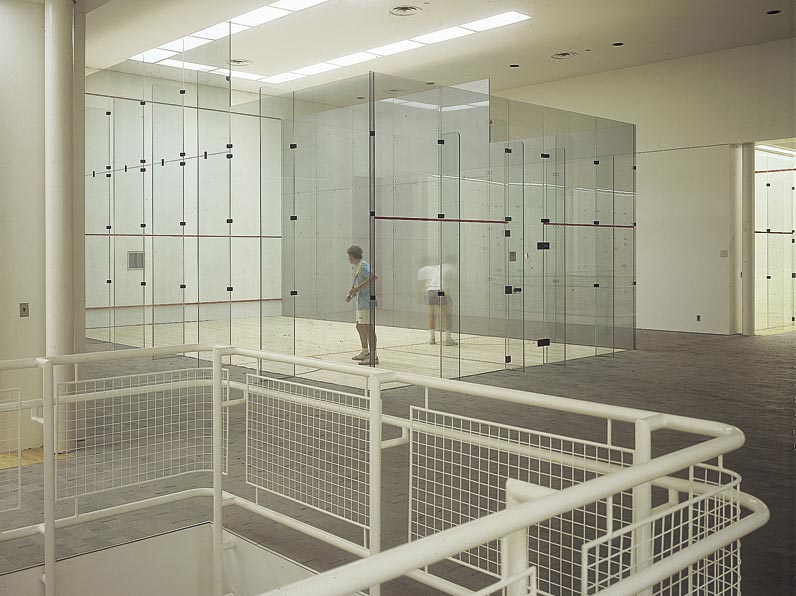
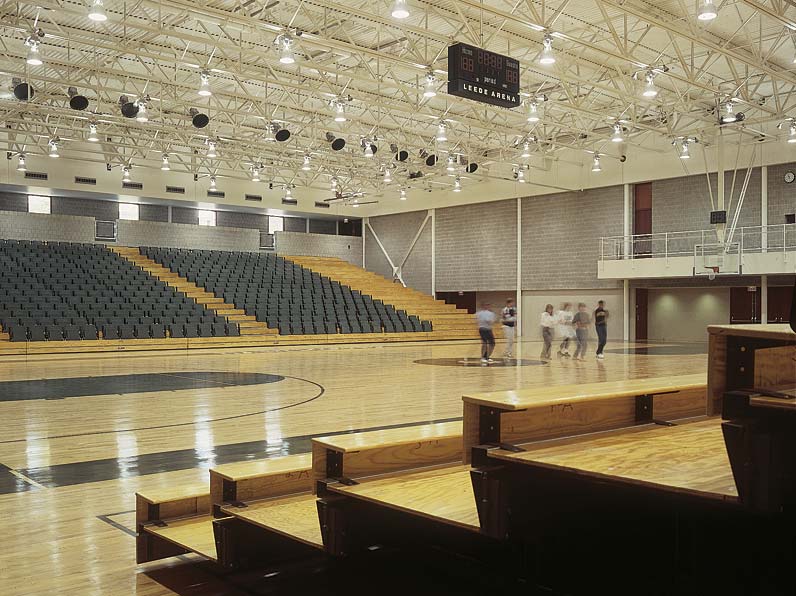
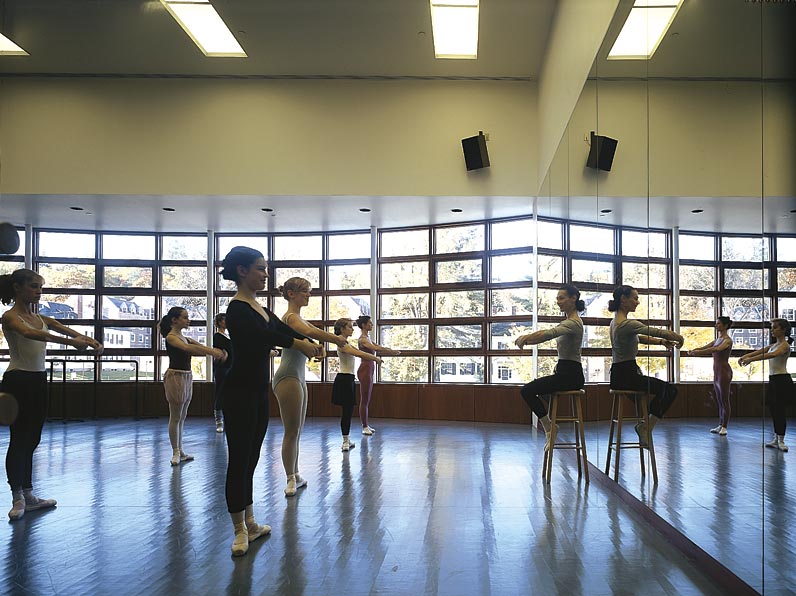
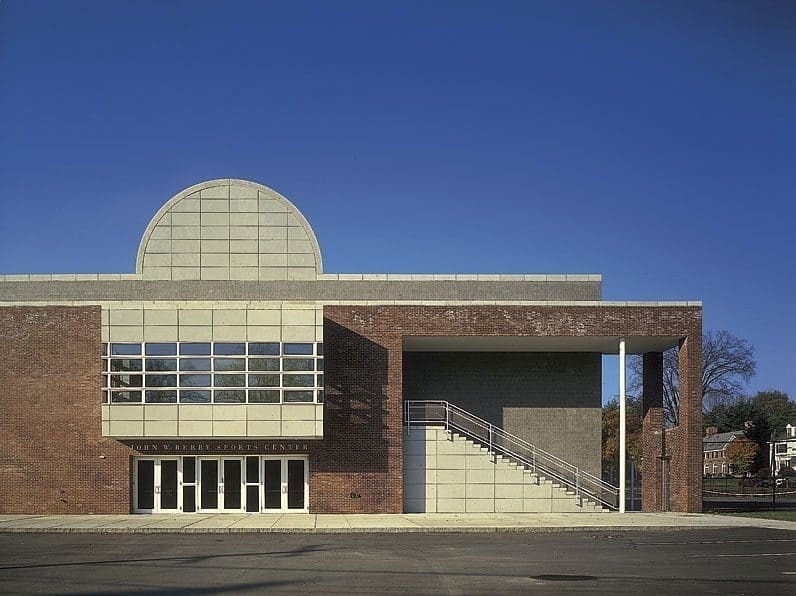
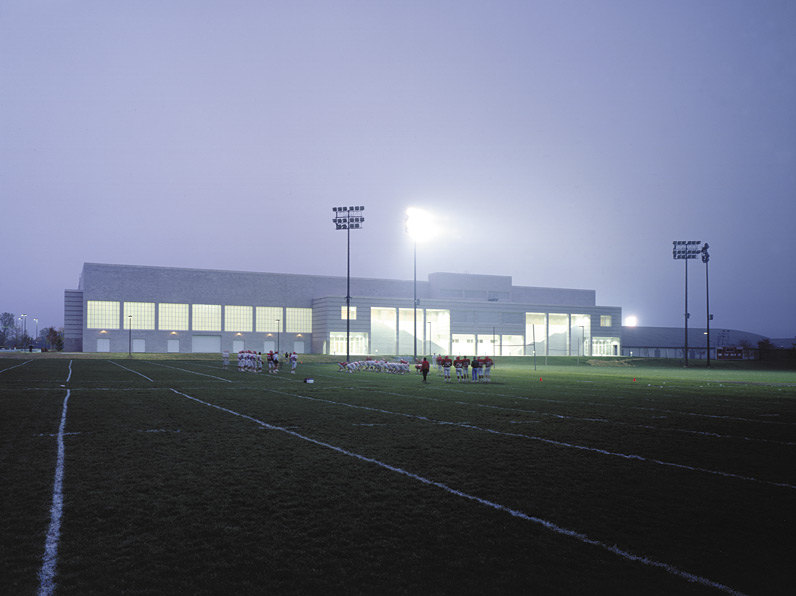
John W. Berry Sports Center Hanover, NH The John W. Berry Sports Center, the new athletic facilities building at Dartmouth College, is located within a traditional brick and stone Ivy League Campus, adjacent to athletic fields, tennis courts and residential streets. It is linked to the historic Alumni Gymnasium, which was also renovated. The renovation included the pool, gymnasium, running tracks, crew rowing tanks, lockers and staff offices. Continue BackThe second floor, reached by two stairs and a bridge from the renovated Alumni Gymnasium, houses seven competition squash courts, six racquetball courts, a dance studio and bleacher balconies for spectators. The facilities are accessed from a barrel-vaulted, skylighted gallery, culminating in a bay window overlooking the entry.
Horizontal and vertical circulation elements wrap around the three sides of the basketball arena, allowing natural light into the fitness center and dance studio. The choice of exterior materials addresses contextual constraints and articulates internal volumes as well as the layered organization of the plan.