The City University of New York
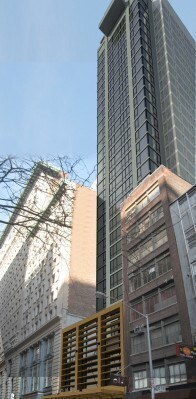
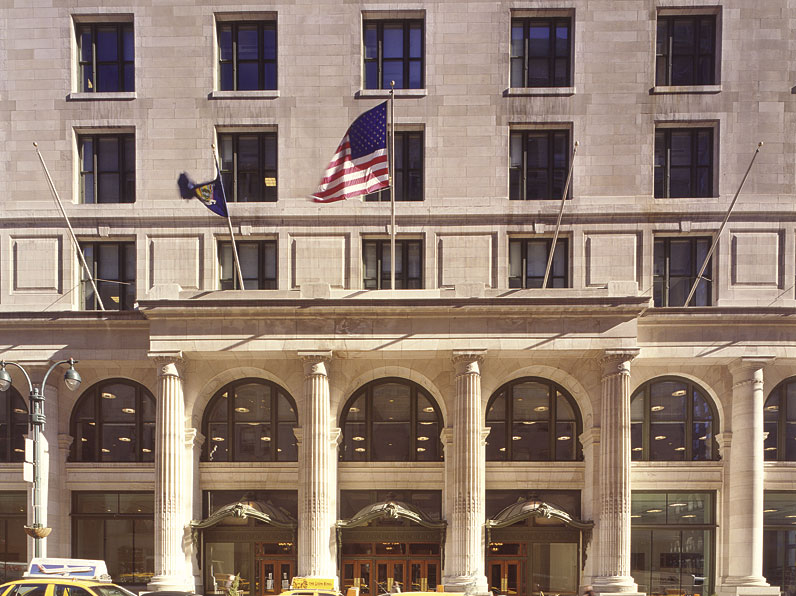
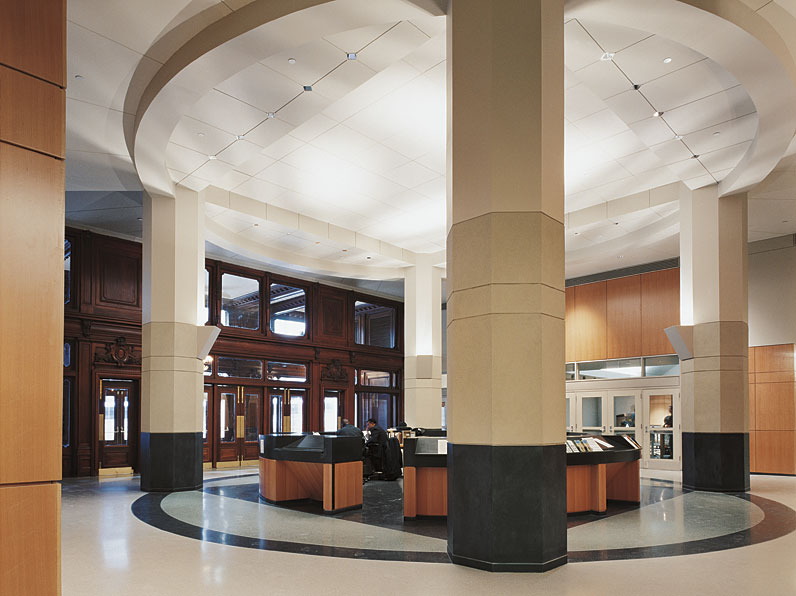
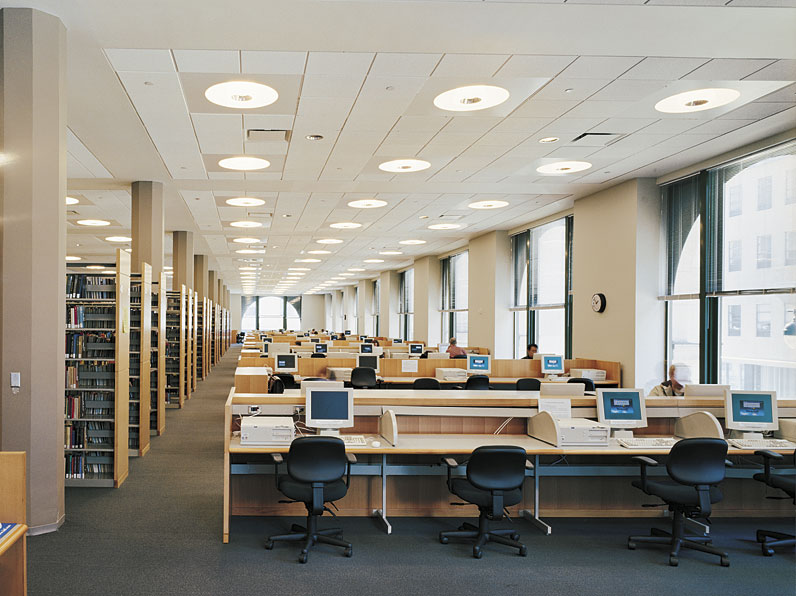
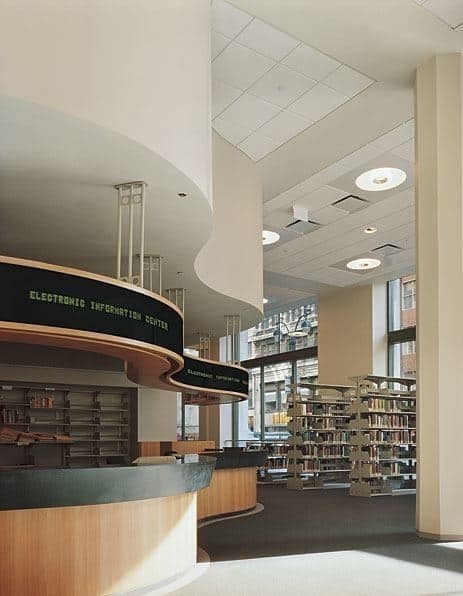
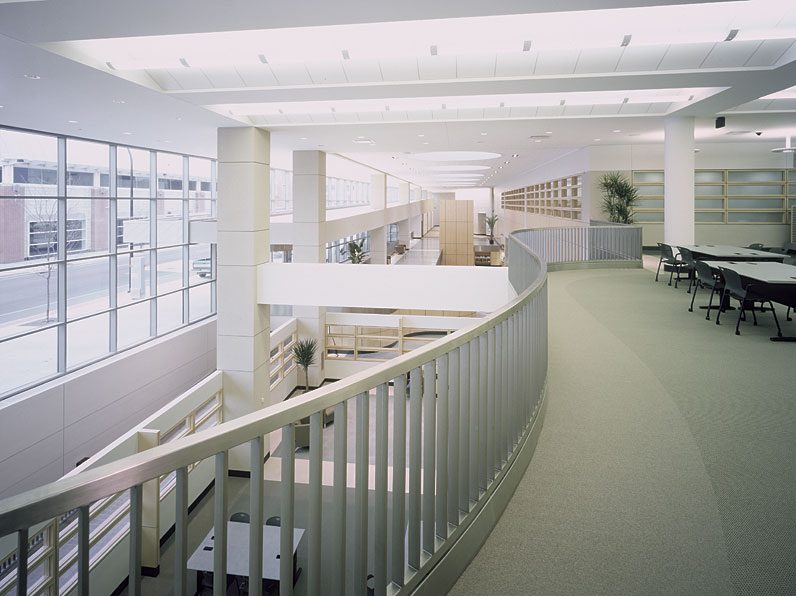
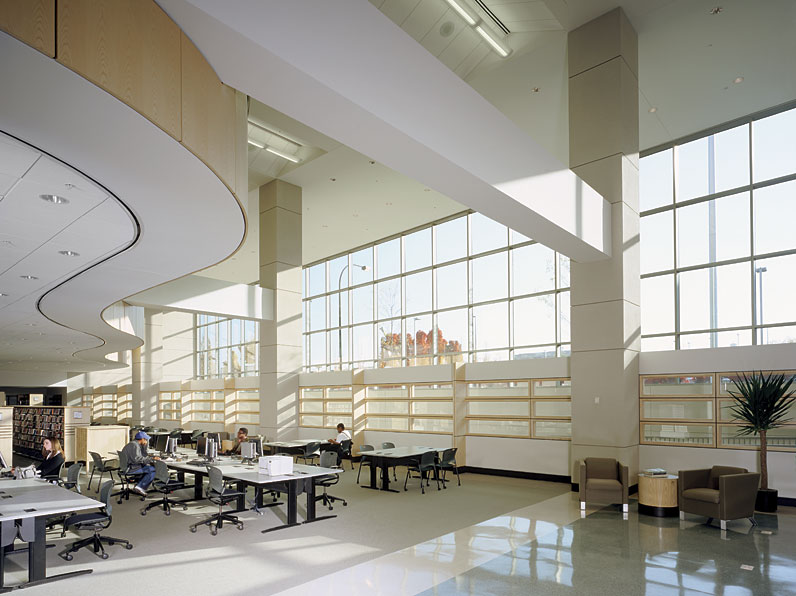
The Graduate Center, Mina S. Rees Library New York, NY The new Graduate Center is a vertical complex organized on twelve levels of the former B. Altman's Department Store in midtown Manhattan. The challenges of the 580,000-square-foot renovation included not only the updating of a nearly 100-year-old building, but the design of a wide variety of educational and cultural facilities including the new library, which is at the intellectual heart of the campus. Continue BackThe library also offers group study areas, miscellaneous special collection rooms, dissertation archives and a media library complete with music listening stations. In its previous quarters, the library was in the basement. Now library users have the luxury of sitting next to 12-foot-high windows that look out onto Fifth Avenue, Madison Avenue, and 35th Street.
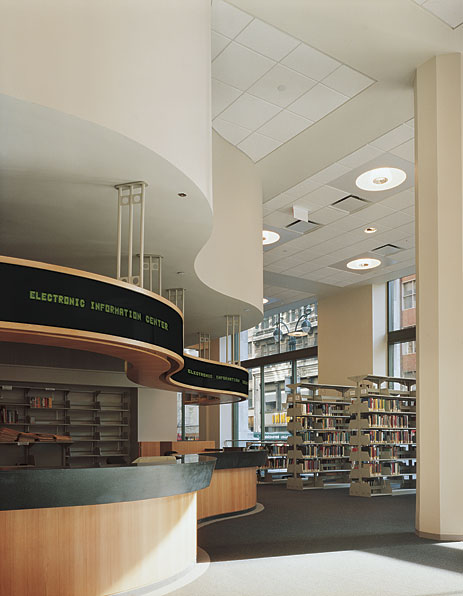
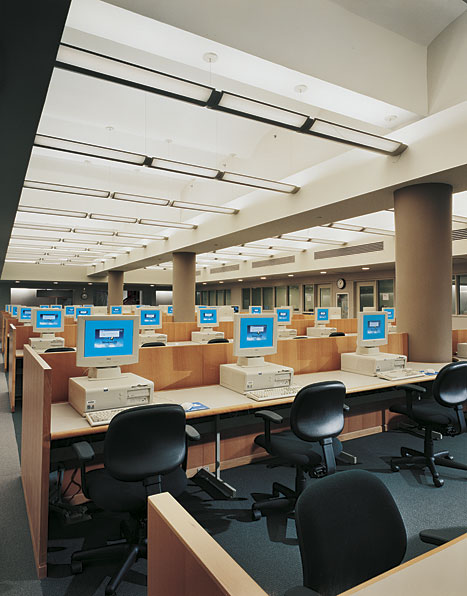
The facility’s high-tech capabilities are announced at the library reference desks with LED signage strips running along the edge of the desk canopies. Flexibility is key throughout the facility, typified by the workstations’ adjustable perforated dividers, which provide lateral flexibility, create a discrete territory and are handicapped accessible. Cabling in the walls and floor are easily accessible for upgrades. Sight lines extend down the length of the library, allowing easy supervision by library staff.
One special part of the library design was the reclaiming of select historic interior elements. The most visible result was the restoration and replication of one of the original stairs and elevators as the main circulation between the library’s three floors.
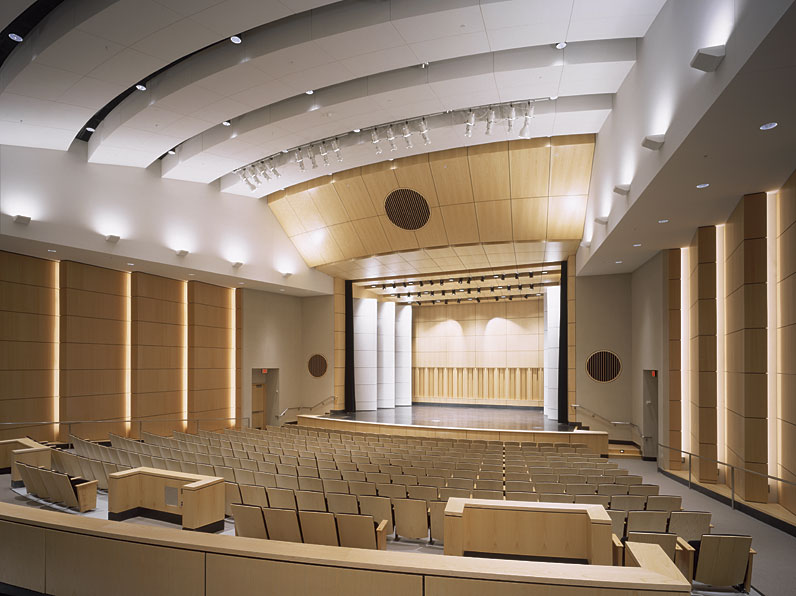
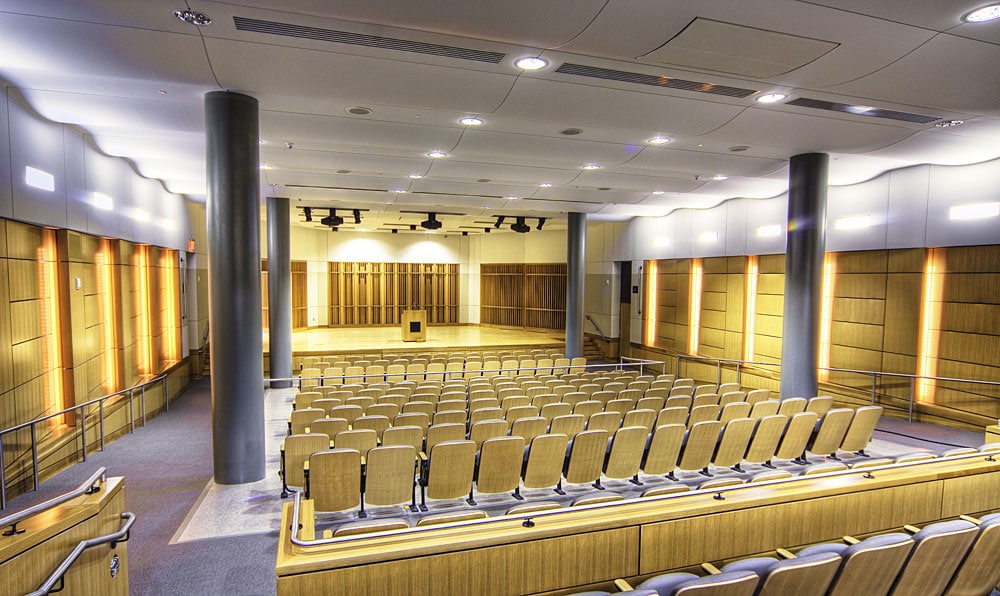
Opposite the entrance to the library is the cultural complex that includes three theaters, an art gallery, a bookstore, a coffee bar, and television production facilities. Academic and research areas, located on the middle five floors, include classrooms, lecture halls, computer labs, faculty and student offices and study areas. The top floors house administrative offices, a skylit conference room and a conference center, organized around the central dining commons.
Bryant University
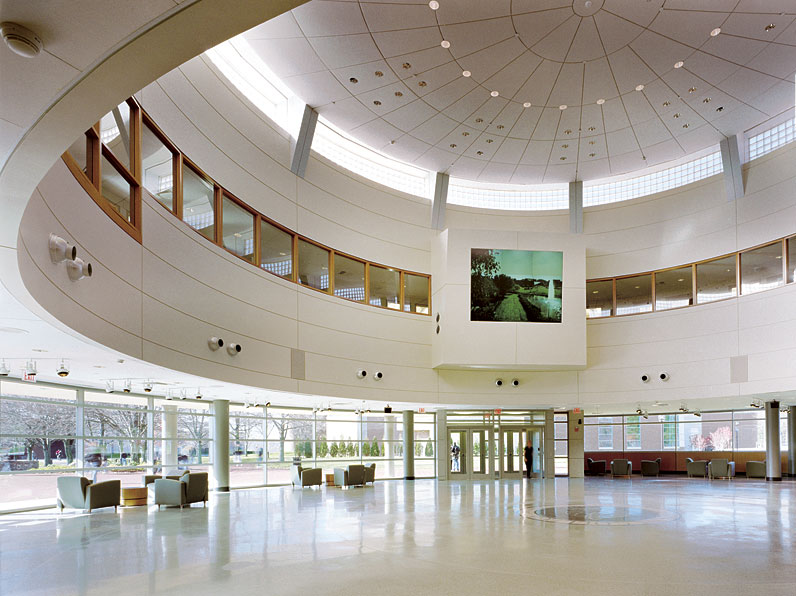
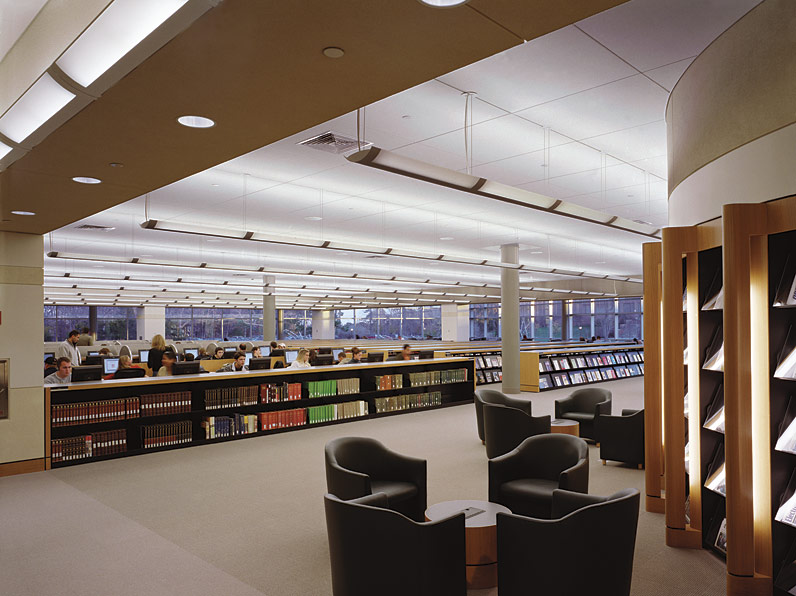
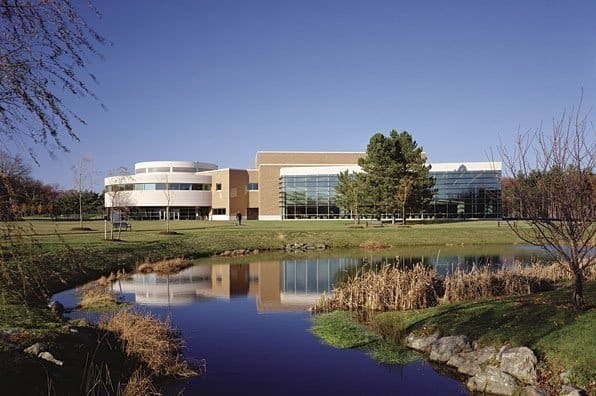
George E. Bello Center for Information and Technology Smithfield, RI At Bryant College, the planning of the new George E. Bello Center for Information and Technology resulted in the creation of a new campus quadrangle displacing vehicular drives and parking. The master plan introduced a formal quadrangle creating a new sense of place and identity for the school. The Bello Center frames the quadrangle and provides a new focal point for campus life. Continue BackThe library, which occupies a major portion of the building, provides for the introduction of state-of-the-art, electronic information services, classrooms and study rooms that formerly had not been available. It will also accommodate the growth of the library’s current collection of 140,000 items including books, bound journals, audio-visual materials and microfilm.
The other portion of the building is devoted to the Grand Hall entry rotunda and other spaces complementary to the library. The two-story entrance serves as a central campus meeting place, special events venue and exhibition center. The Grand Hall and the library both connect to a cybercafé, library classrooms and the Academic Center for Excellence, all of which remain open to students and offer study spaces and electronic access when the library is closed.
Ferris State University
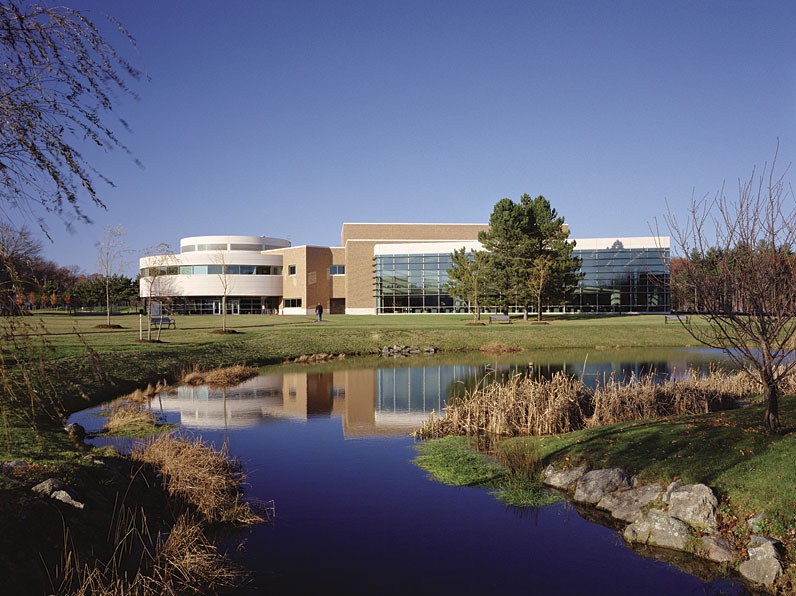
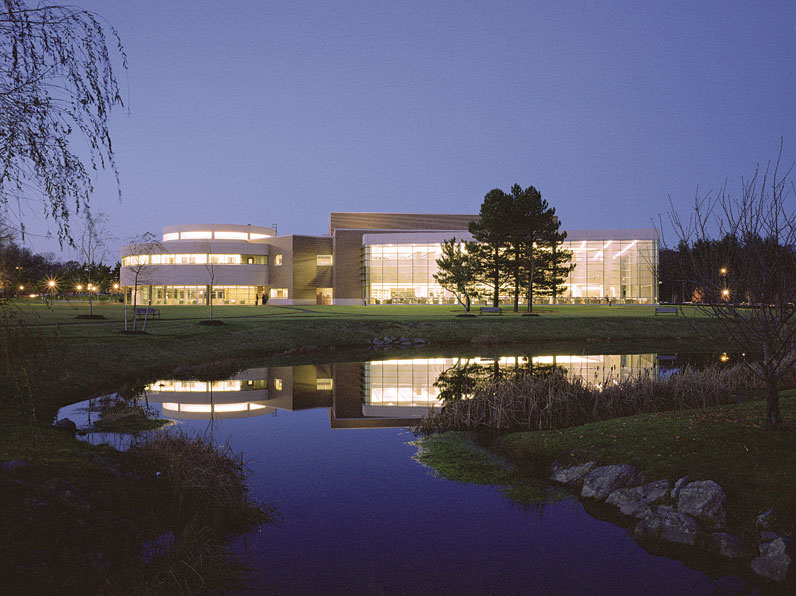
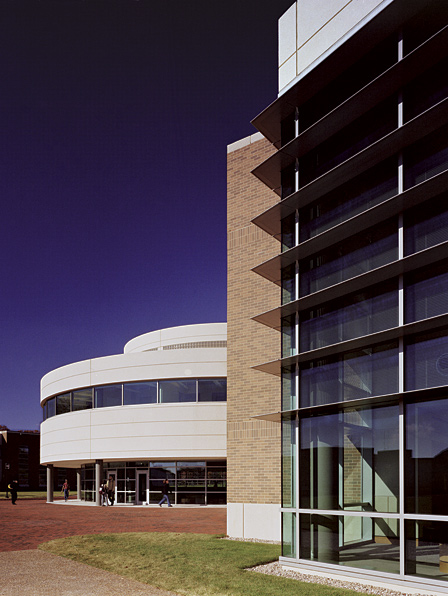
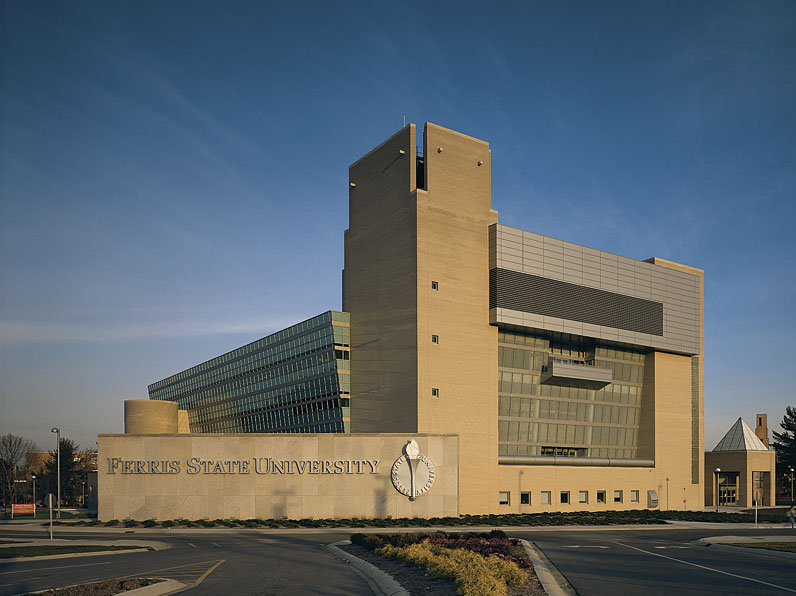
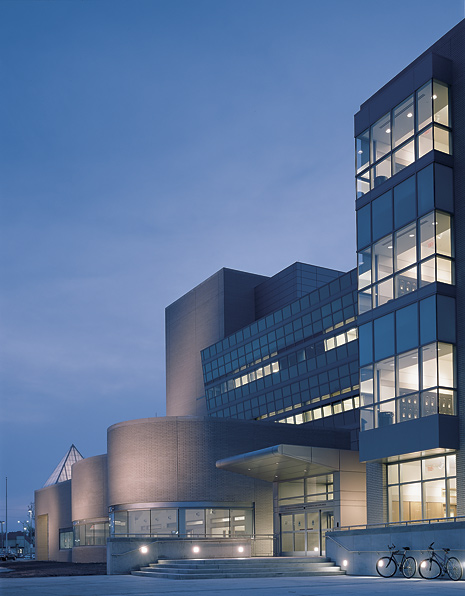
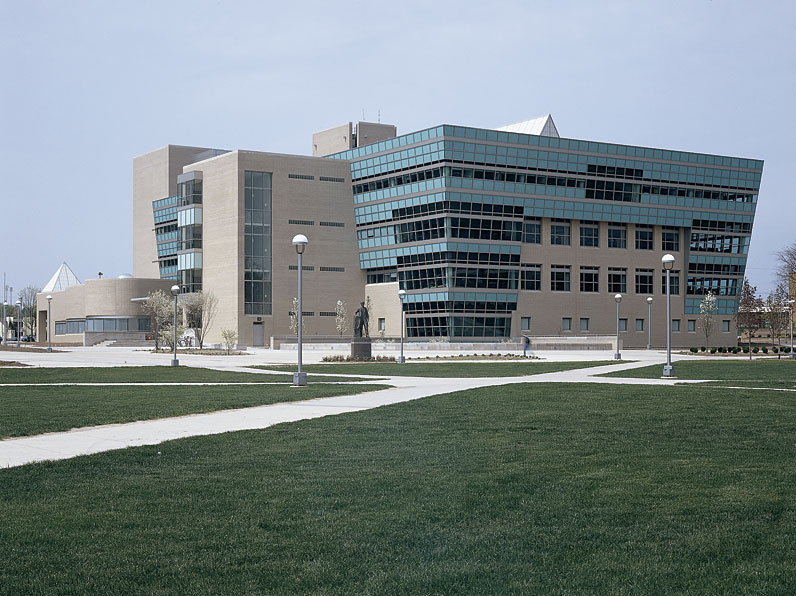
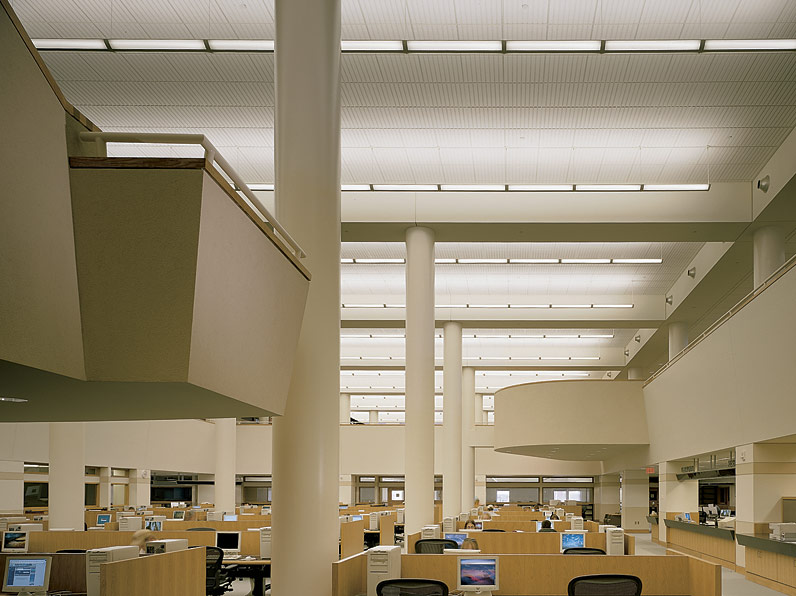
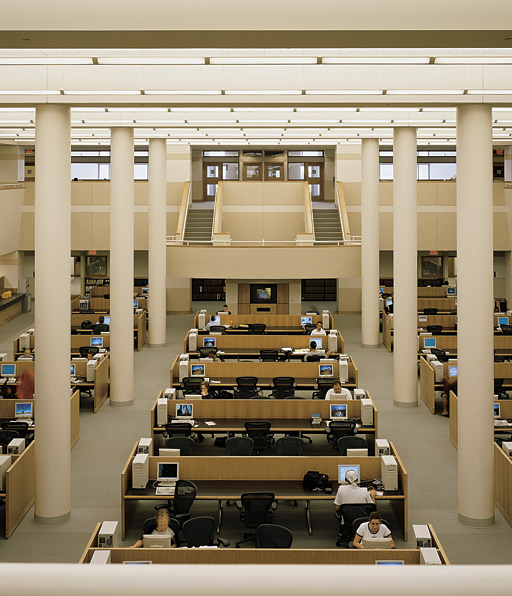
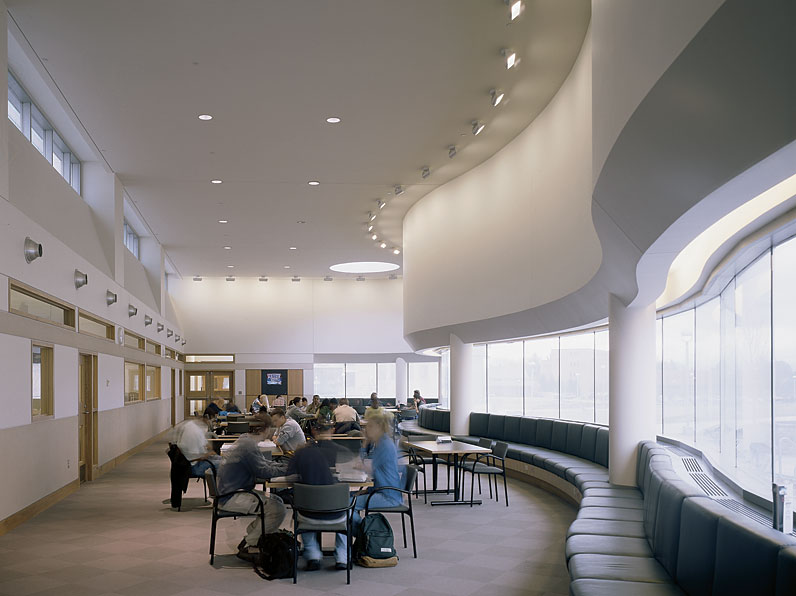
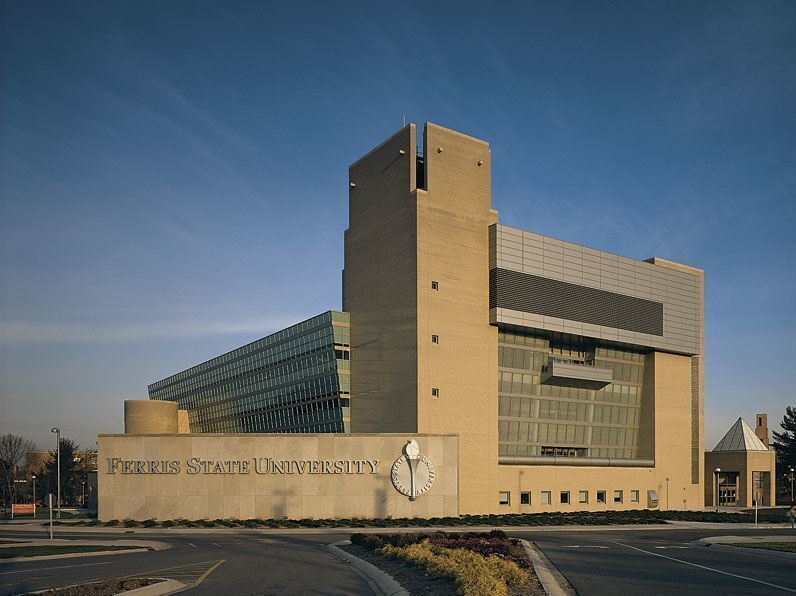
FSU Library for Information, Technology and Education (FLITE) Big Rapids, MI FLITE is a 175,000-square-foot, high-tech facility that combines a print library and digital information library with a technological learning center. As the central focus of the campus, it acts as a social and intellectual commons, a cultural space for Ferris State University and the larger community. The building provides an architectural and symbolic presence to a campus of undistinguished post war buildings. Continue BackThe programmed 440,000-volume print collection of monographs, periodicals and documents are housed in standard open shelving and compact shelving. This area are interspersed with computer facilities and electronically equipped study, teaching and meeting rooms, allowing electronic access from homes, laboratories, residence halls and offices. Electronic flexibility is a major design requirement.
FLITE’s function extends beyond its services. The siting of the new facility became the impetus for a complete reconsideration of campus circulation systems, the organization of public arrival and the spatial relationships among the University’s component parts. Also part of this rethinking was the conversion of the centrally located parking lot to a campus green as part of the new “heart” of the university.
Associate Architect: Neumann Smith & Associates
Dr. Richard Cochran, Dean of the Library
Harvard University
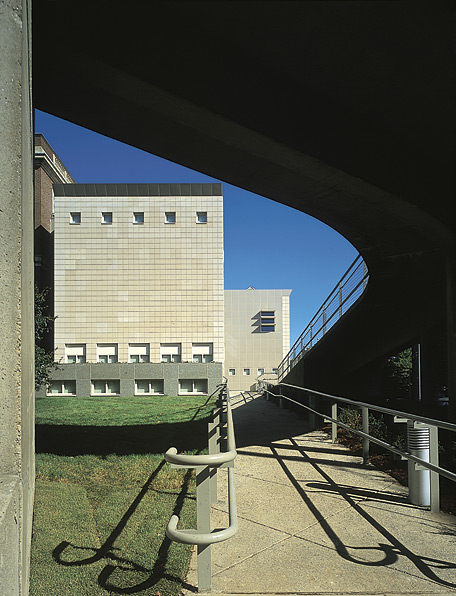
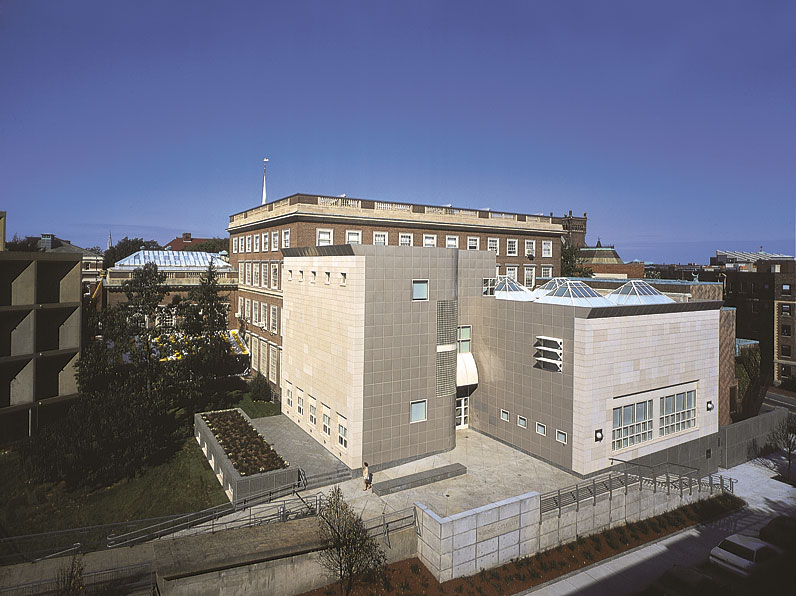
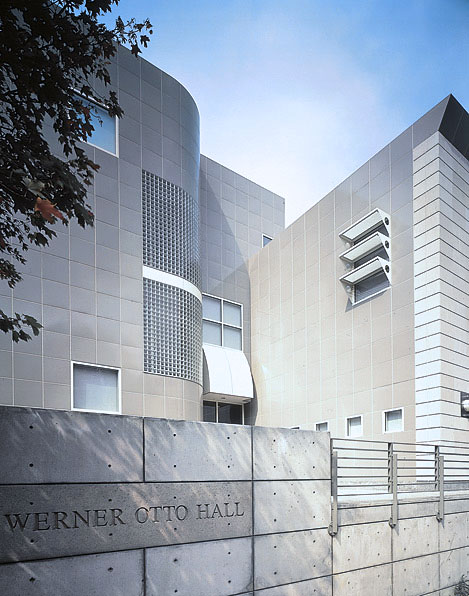
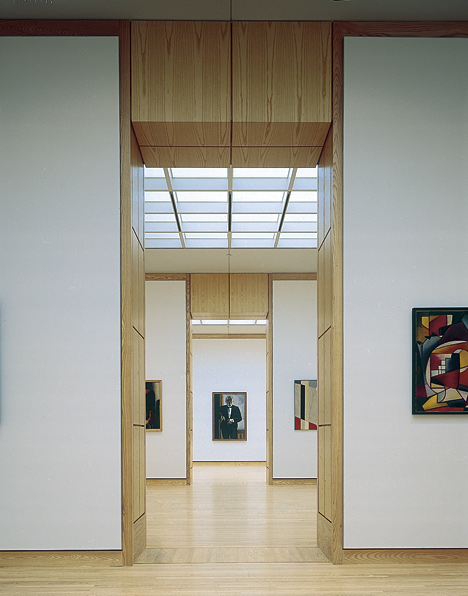
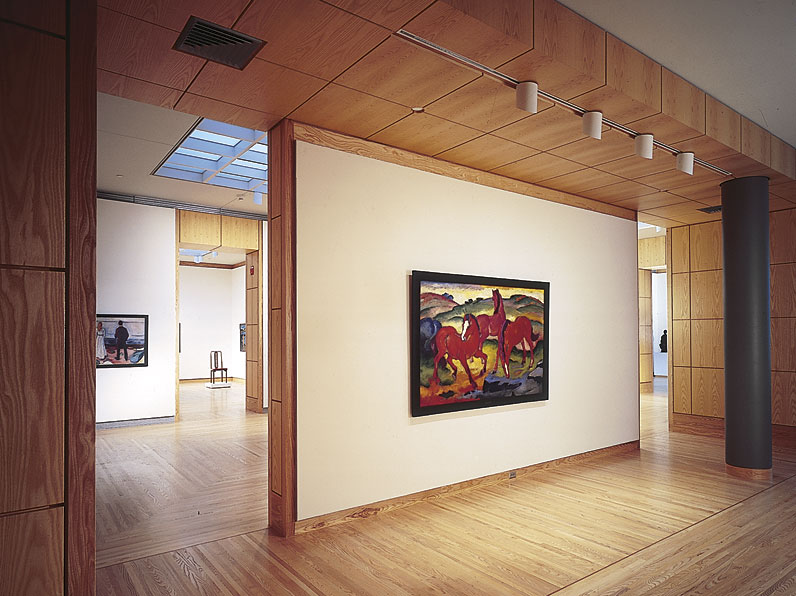
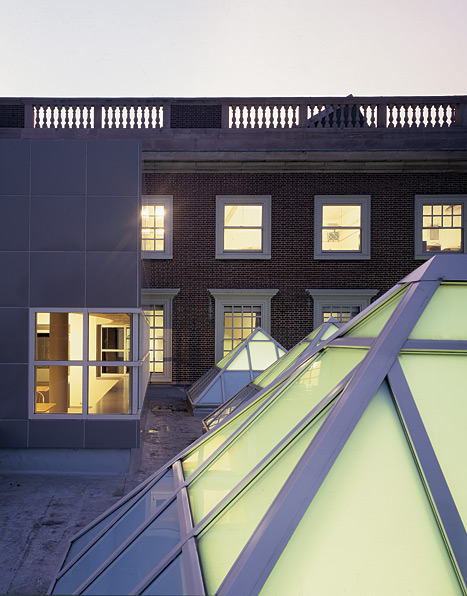
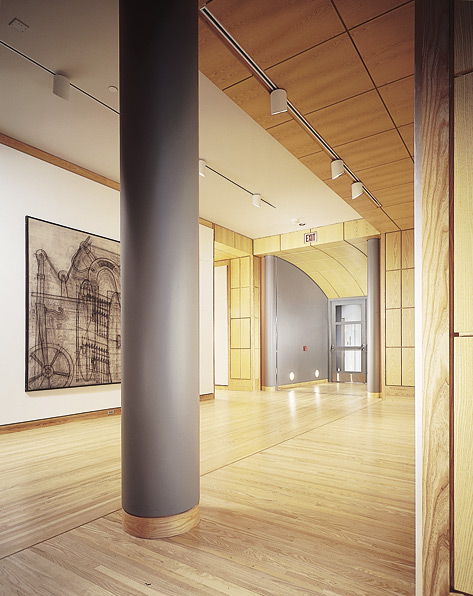
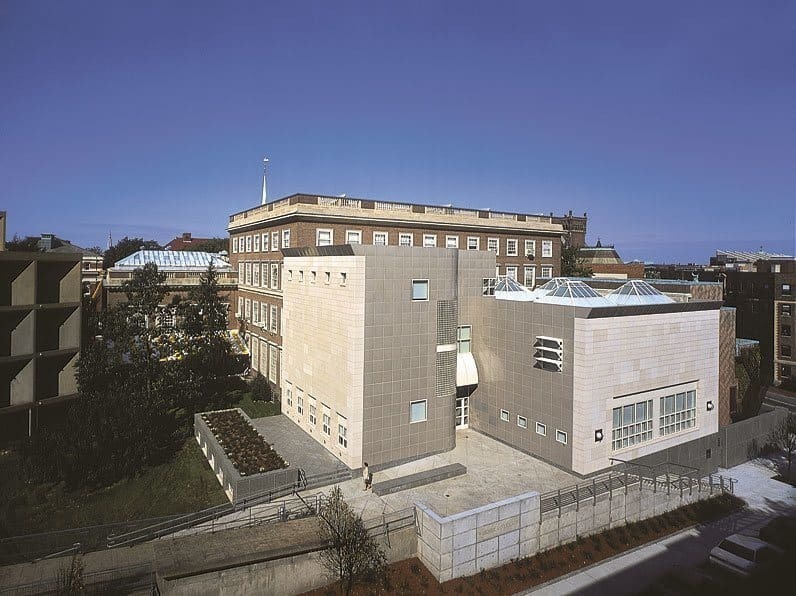
Werner Otto Hall / Busch-Reisinger Museum and Fine Arts Library Cambridge, MA This 15,000-square-foot addition houses the permanent exhibition galleries of the Busch-Reisinger Museum and its collection of German twentieth century paintings and decorative arts, as well as portions of the Fogg Museum's Fine Arts Library. The program includes a library reading room, the permanent collection galleries, staff offices for the library, a temporary exhibition gallery, and an archival study area. Continue BackThe building establishes a primary two-story facade facing the street and integrates a new exterior stair, plaza and ramp at the library entry. Behind it, the building rises to three stories, complementing the Carpenter Center as a distinct yet related object perceived from all angles.
The fine-arts library has a separate entrance from the gallery, thus resolving a security problem when the library and museum hours are different. With its high ceilings, tall windows, and visible reference stacks, the reading room conveys the stature associated with such spaces.
Existing streetscape and scale relationships had to be addressed, and constraints imposed by building above an existing underground library structure with limited load-bearing capacity had to be accommodated.
The solution also resolves Le Corbusier’s compelling site circulation idea. The Carpenter Center ramp, which was intended to provide a public mid-block walkway from Quincy Street to Prescott Street through the building, ended in the Fogg’s rear yard without a connection to the sidewalk. The design extends the ramp onto a new plaza from which one can either enter the library or descend a new exterior stair to the street.
James Cuno, Director
“Modestly sculpted, Harvard’s newly housed [Werner Otto Hall] offers an appropriate counterpoint to the abstraction of Le Corbusier’s Carpenter Center and the dry revivalism of the Fogg Museum. Gwathmey Siegel Kaufman has designed a distinctive identity for the addition with restraint and rigor. […] Like its neighbors and the art within its galleries, Werner Otto Hall speaks of its time with strong convictions.”
Architecture Magazine, November 1991
“The addition to the Fogg Museum is a most excellent project”
Laurie Beckelman, Chair, New York Landmarks Preservation Commission
Middlebury College
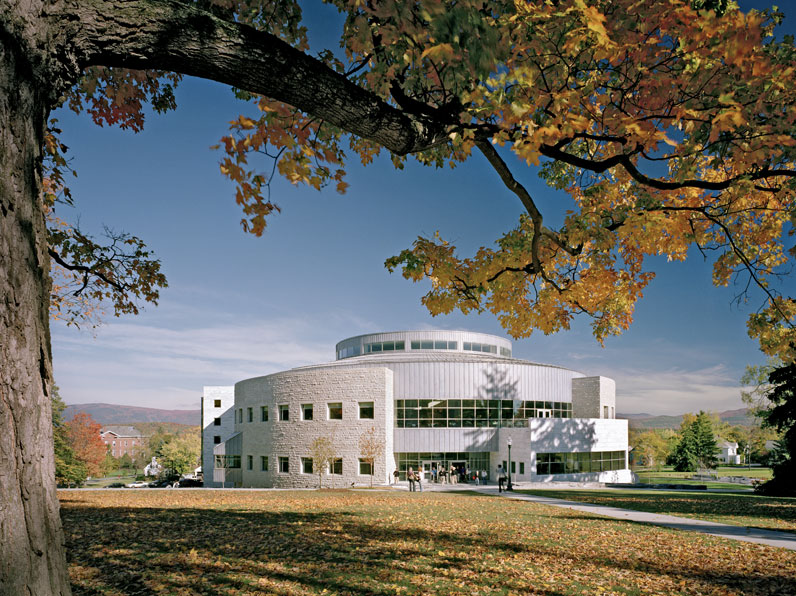
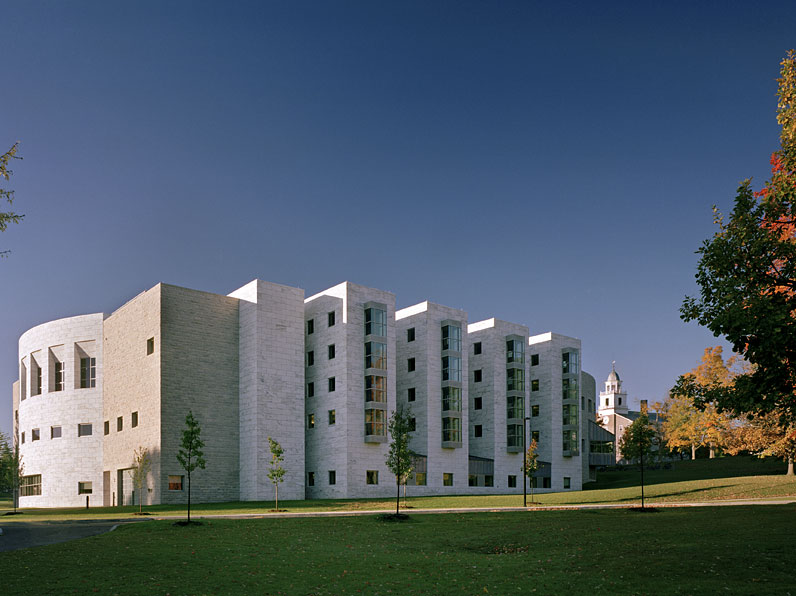
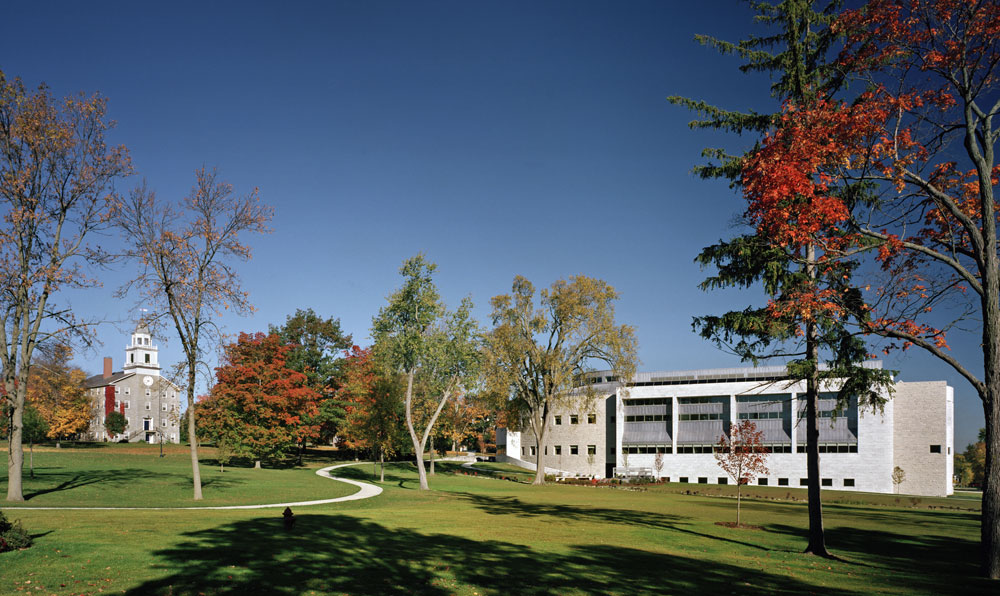
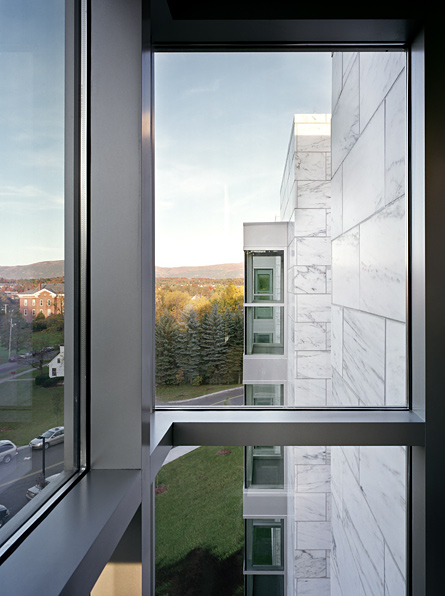
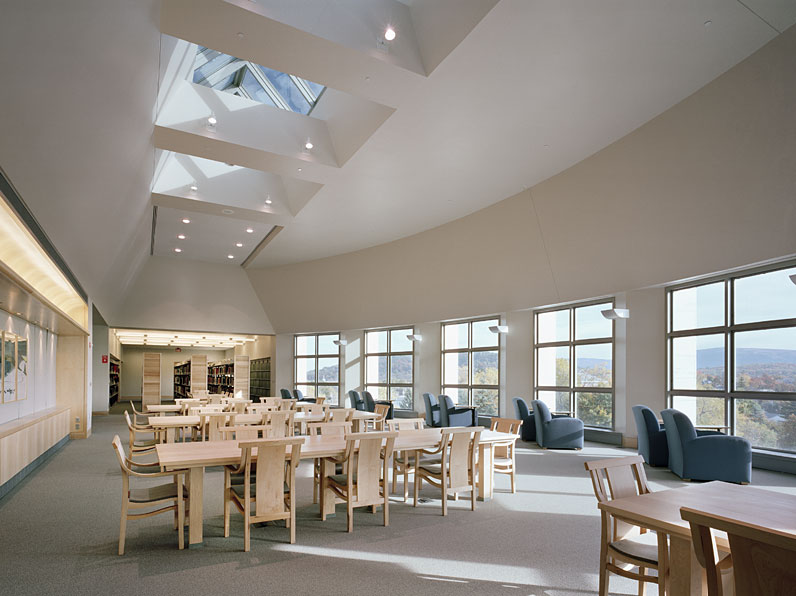
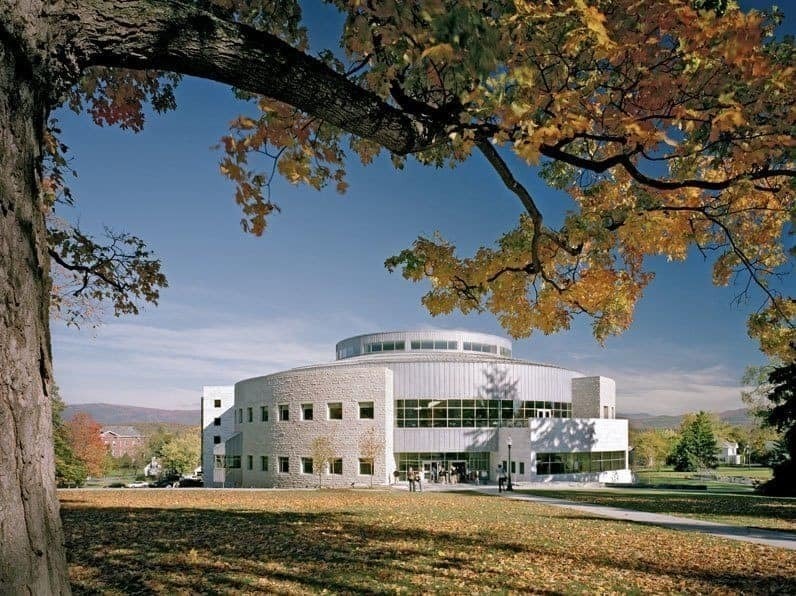
Middlebury College Library Middlebury, VT The new Middlebury College Library, conceived as the first step to fulfilling the College’s master plan, is a state-of-the-art research and learning facility, combining a traditional print collection with the latest communications technology. Located on the eastern edge of the Front Quad, the facility also establishes a new campus center and enhances the existing relationship between both the College and the Town. Continue BackThe library is architecturally consistent with the other buildings on the historic front quadrangle in both its materials—limestone, granite and marble—and its scale. The project reconfigures a composition of existing roadways, buildings and prominent public spaces, establishing a new campus center that fits into existing view corridors and pedestrian circulation routes.
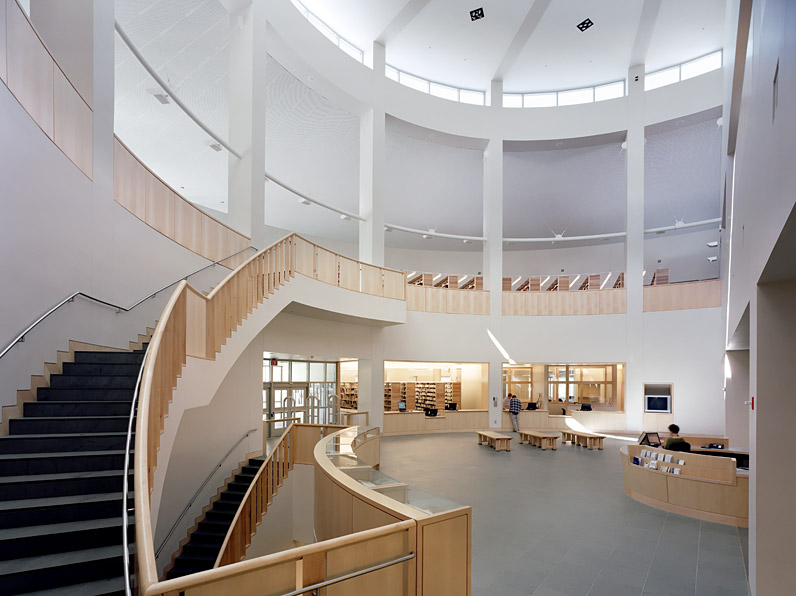
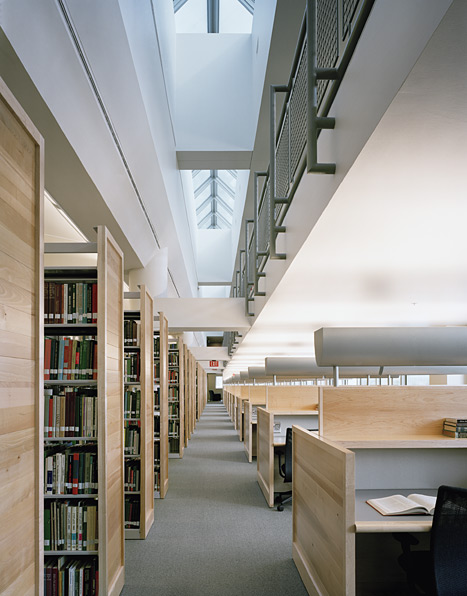
Library interiors provide efficient and flexible space that will serve the College’s needs well into the next century. This includes increased seating to accommodate planned growth in the student body. Because of the importance of interactive and collaborative learning in the residential liberal arts environment, most seating is in group study and meeting rooms.
In keeping with Middlebury College’s overall concern for contextual and environmentally sensitive design, the project is designed to meet a high rating for the LEED (Leadership in Energy and Environmental Design) standard for environmental efficiency.
Westover School
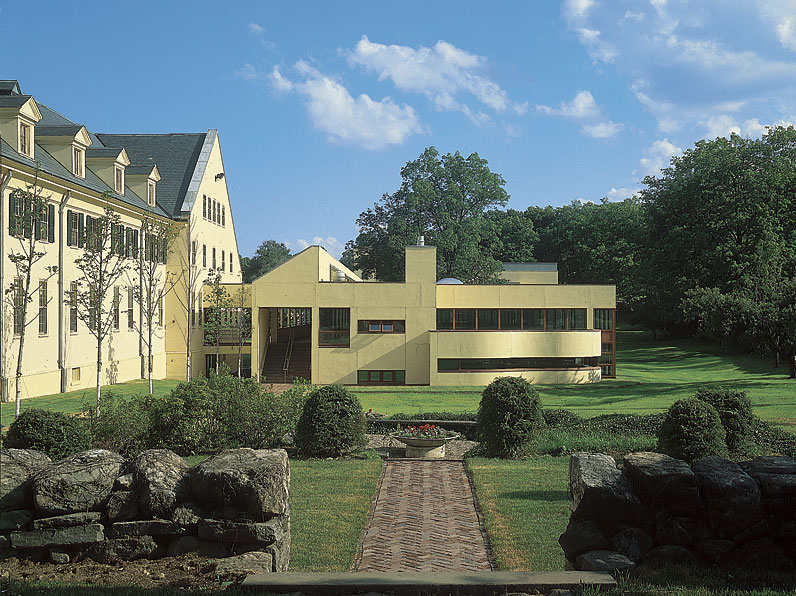
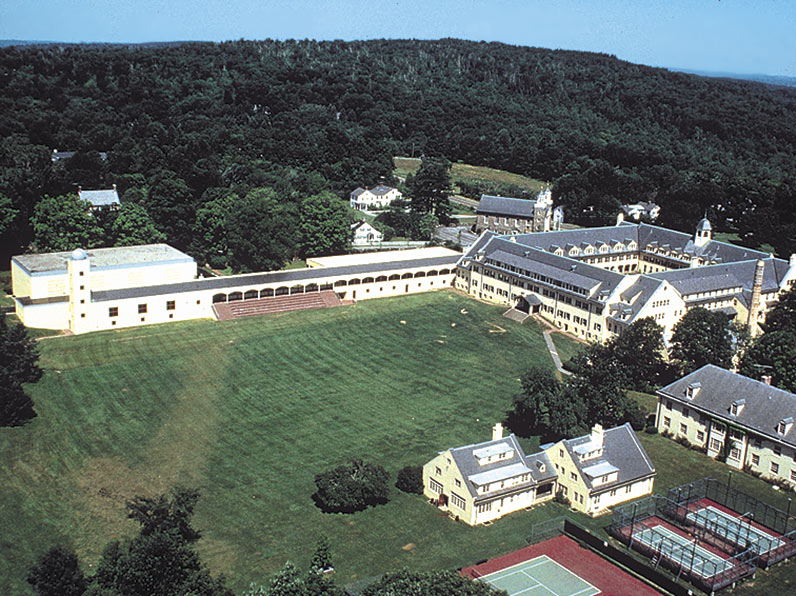
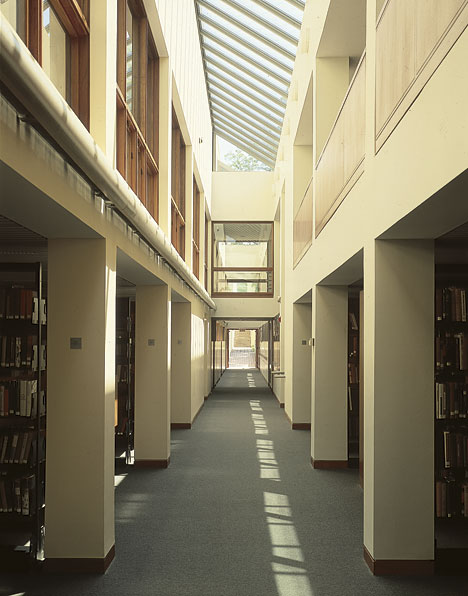
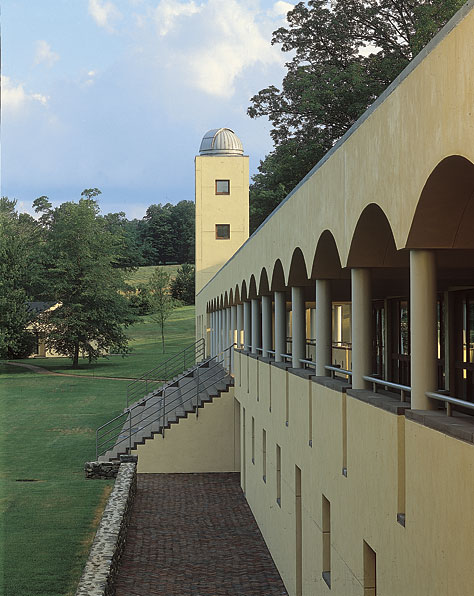
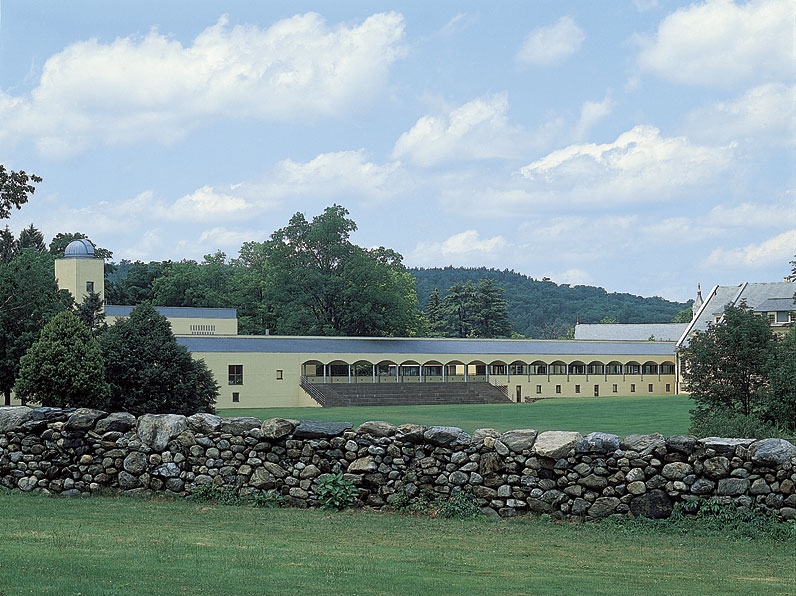
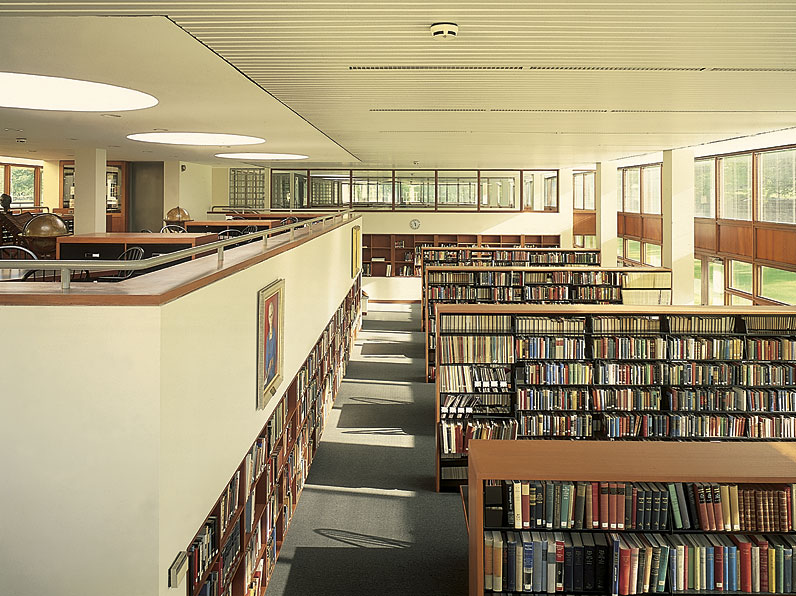
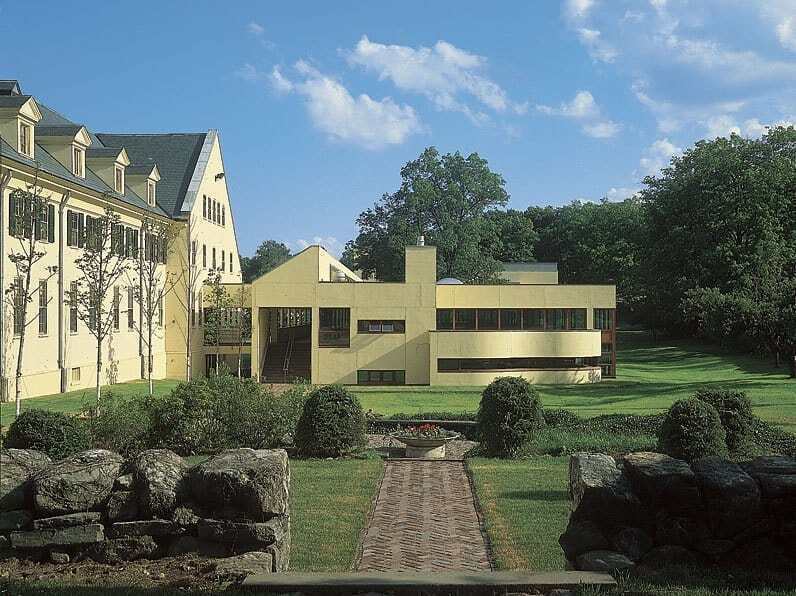
Library and Science Building Middlebury, CT Westover School is a private boarding school for women on a 150-acre rural campus. The campus is dominated by the Main Building, designed in 1907 by Theodate Pope Riddle. Beyond the Main Building, and to the south, lies the Field, a large lawn and playing field used for athletics and graduation ceremonies. The Library and Science Building includes a 40,000-volume academic library with a rare book collection. Continue BackThe building is organized along an elevated arcade that extends and is connected to those of the Main Building and overlooks the Field. The new facilities are reached through entrances off the arcade. Primary spaces—the science laboratories and the library reading room—are sited a half level below the arcade, at the grade of and overlooking a smaller landscaped area to the west. Ancillary spaces—stacks, study carrels, faculty offices, preparation rooms and computer center—are arranged beneath the arcade. These two levels are separated by a two-story skylit gallery, bridged by entrances from the arcade. The composition of building elements with a new façade that incorporates a renovated activity center is punctuated by the observatory housing the school’s 8” telescope.
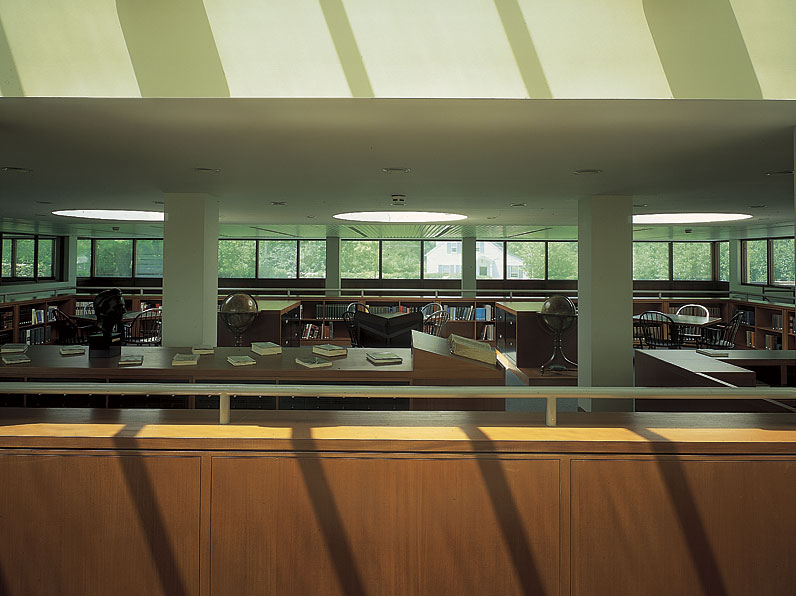
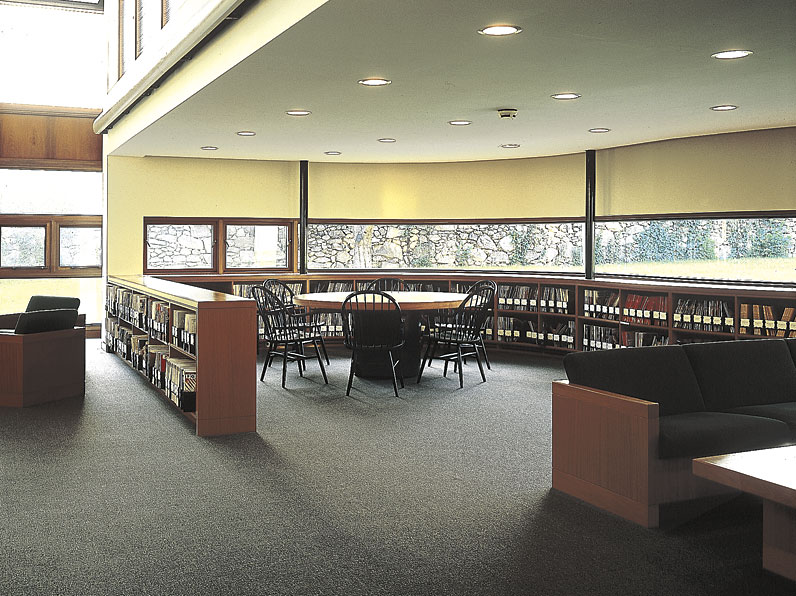
The library’s main desk and reference area offer views over the main reading room, one level below, to the west, and out to a garden edged by a stone wall. This upper level of the library is illuminated by three circular skylights. At the north end of the two-story reading room is a one story periodicals area defined by a sinuous wall. The cabinets and curtain walls in the science labs are finished in mahogany, giving them the feel of an old college lab: glass, metal, dark wood.
Westover’s pedagogical philosophy is to allow its students access to the materials of education: lab spaces, the library, and the activities center are kept open for students to use. There are no locked doors.
Architecturally, the library and science building reiterates this notion of openness with views between spaces and no barriers between the building’s library and science wing. While capturing views of gardens and playing fields, the building also provides students and faculty relief from the cloister.
Architecture Magazine, May 1988
Akron-Summit County Public Library
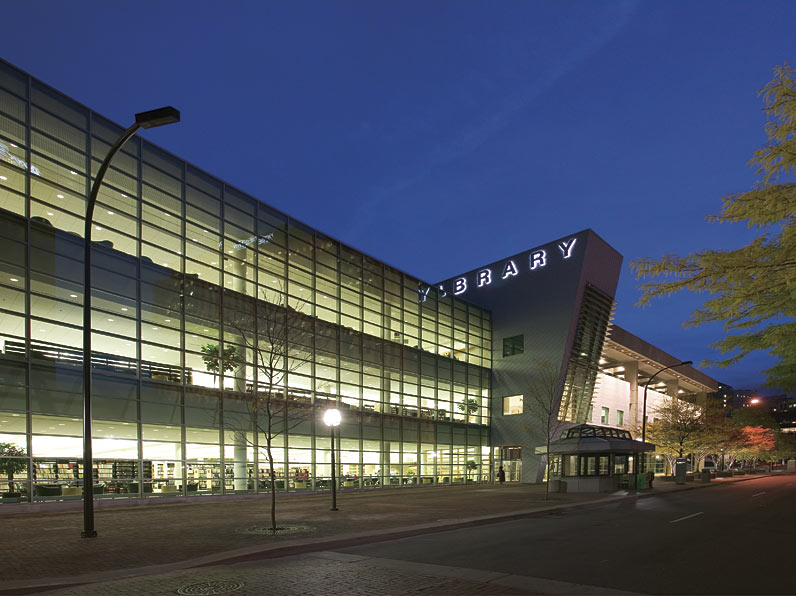
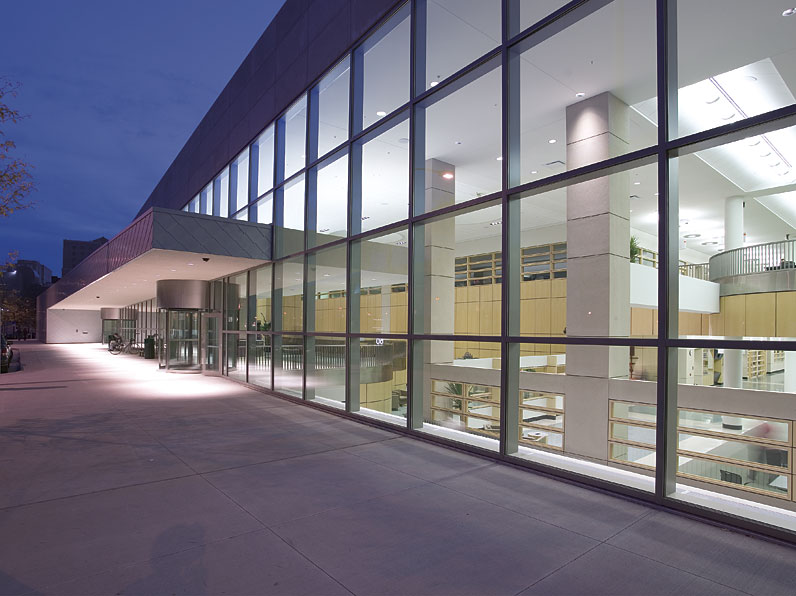
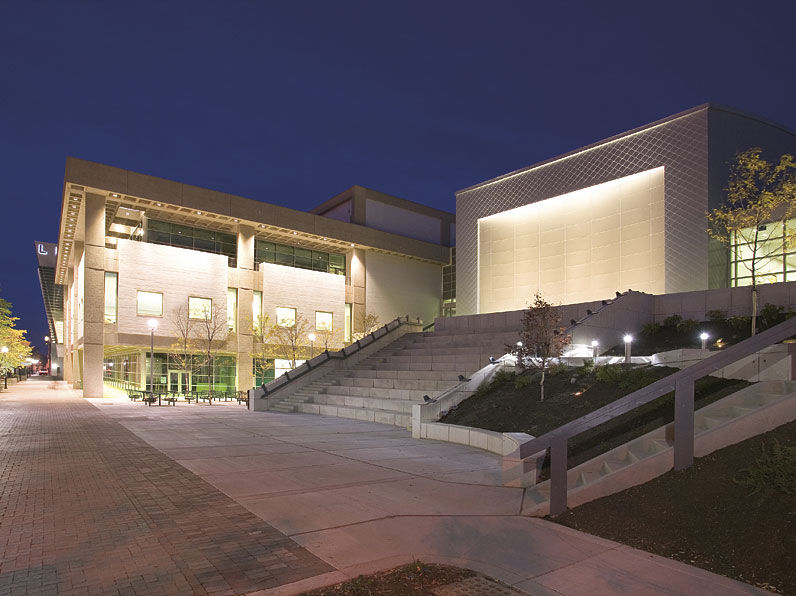
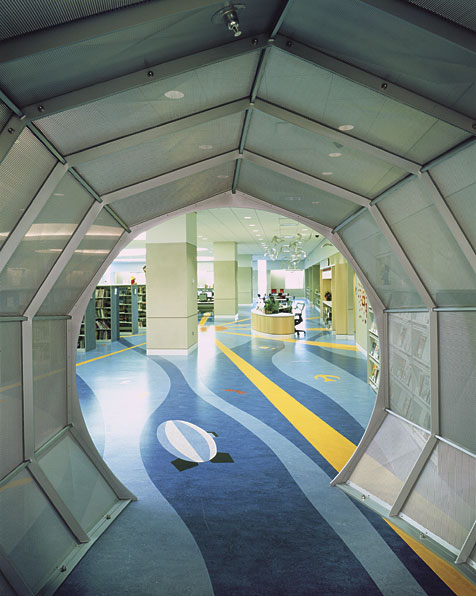
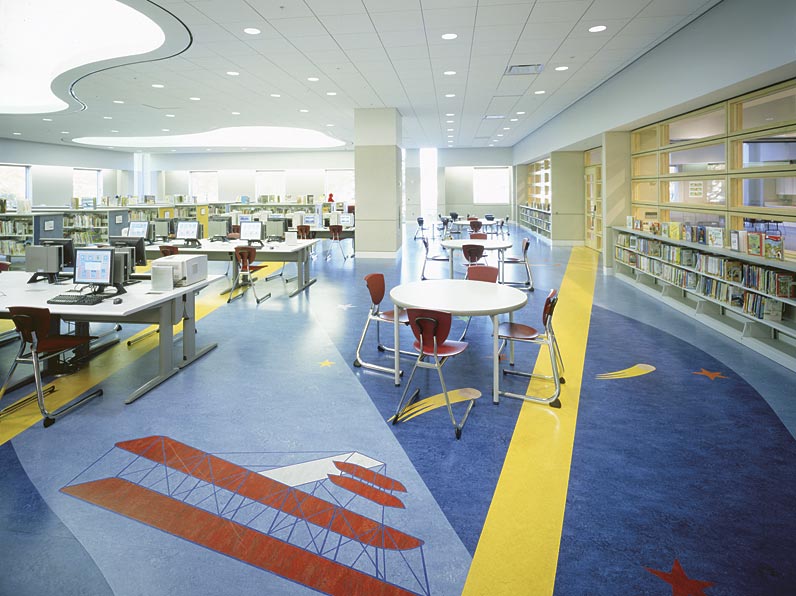
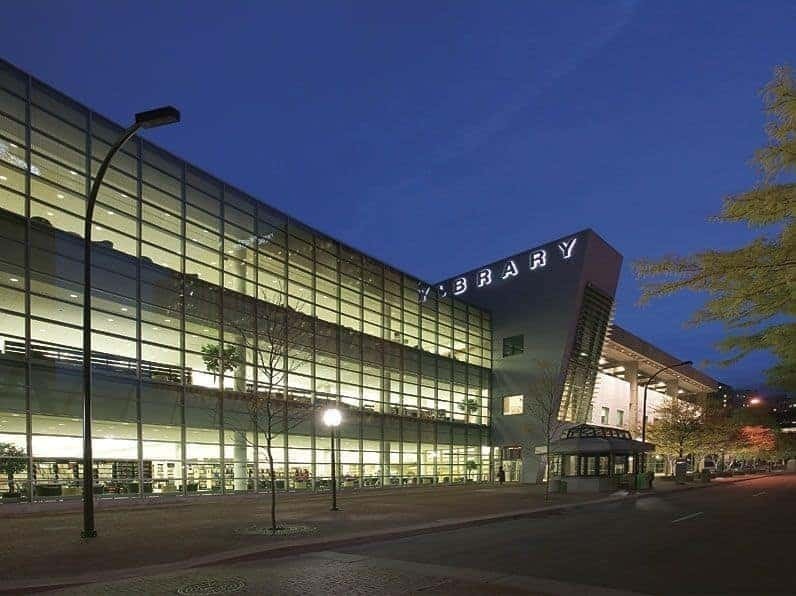
Akron, OH The addition to and renovation of Akron-Summit County’s existing 135,000-square-foot 1970 Main Library Building was validated by an initial phase involving a master plan/feasibility study. The program was driven both by the need to make the collection materials "browse-able"—by moving them out of the existing basement stacks—and the need to expand and modernize seating, public service infrastructure and public programs. Continue BackThe new addition negotiates the twenty-five foot difference in elevation between High and Main Streets. A three-story atrium along High Street brings natural light down to the lowest Main Street level and provides orientation for all patrons. The assemblage of building “objects” along Main Street includes the new library loft addition and the new theater flanking the existing library, maintaining a pedestrian scale along the mall in contrast to the automobile-scaled facade along High street, which is accessible by car.
The building encompasses the most advanced applications of technology and communication systems for administrative management, the processing of library records, and bibliographic and information networks. Special design consideration was given to provide the most flexible, state-of-the-art infrastructure and distribution systems for digital information.
Numerous community spaces are provided, including a 425-seat auditorium, a cafe, a bookstore, public meeting rooms and art exhibition spaces. An interior link to a new parking garage along High Street resolves into a new pedestrian ramp, activating the three-story addition. An outdoor amphitheater and landscaped park complete the complex.
Associate Architect: Richard Fleischman Architects, Inc.
Allen County Public Library
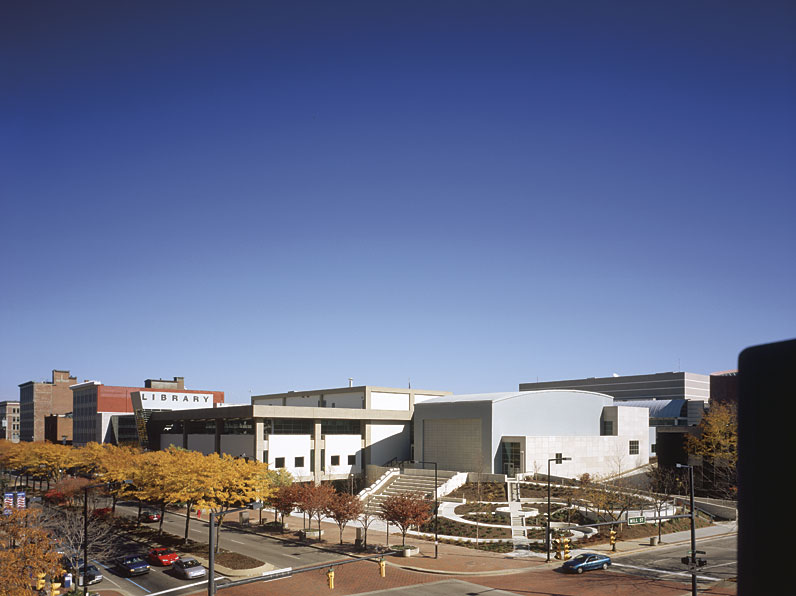
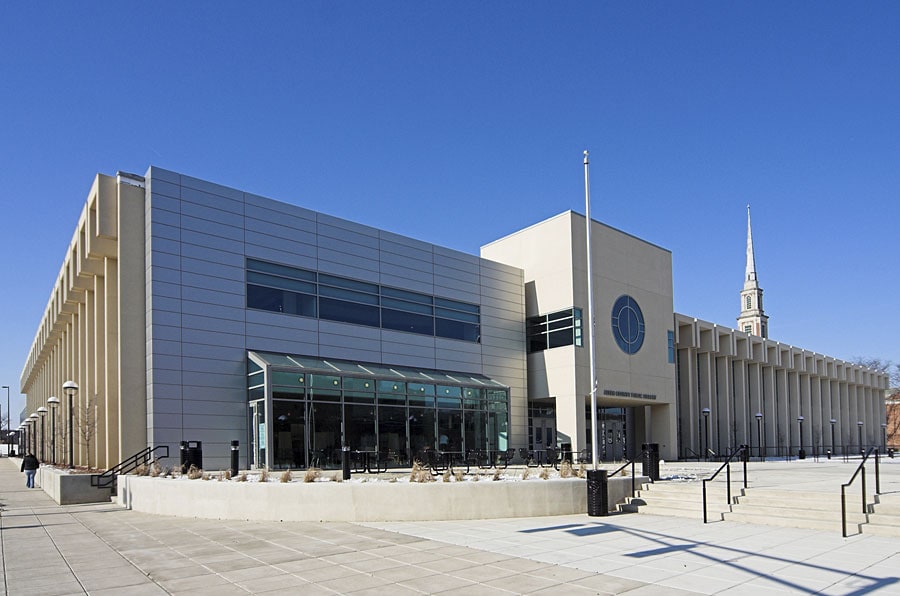
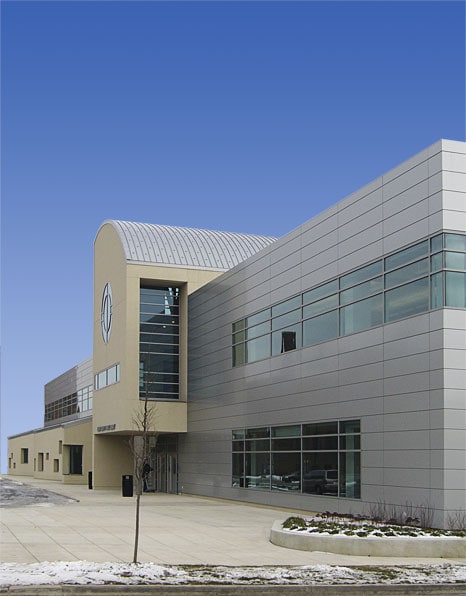
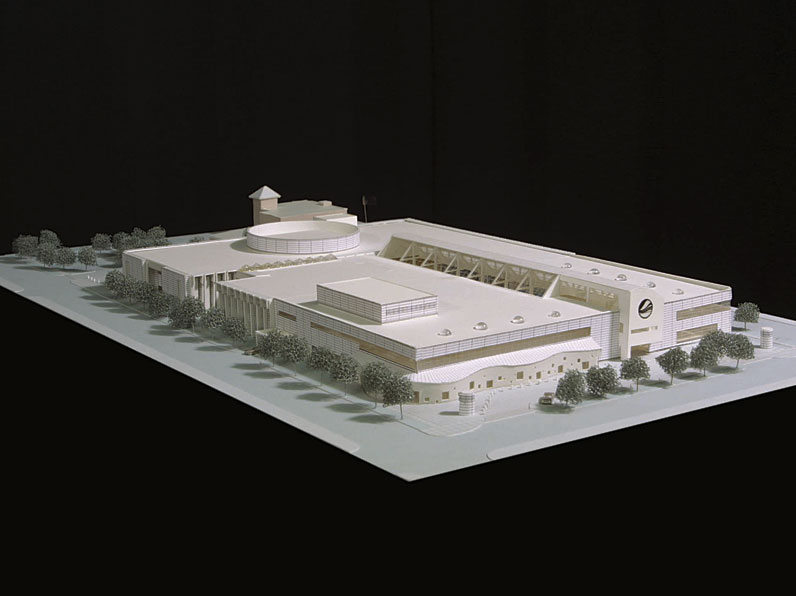
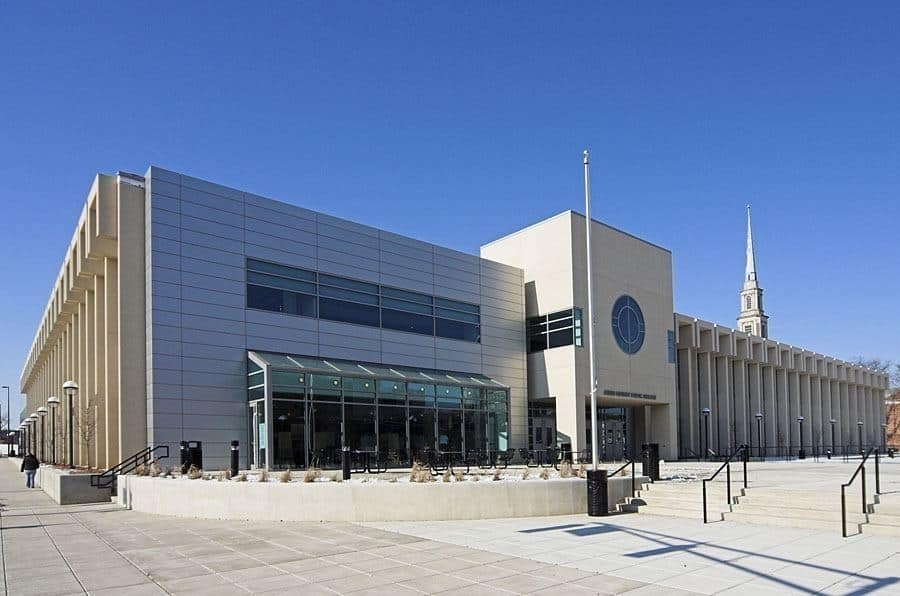
Addition and Renovation Fort Wayne, IN This two-story, 127,000 square foot addition to and renovation of the existing 240,000 square foot Allen County Public Library in Fort Wayne, Indiana creates a monumental civic building that integrates the best aspects of the existing library and acts as a revitalizing influence in the downtown area. The design identified the basic urban and architectural strategies that met the goals of the library and the community. Continue BackThere are two public entrances to the expanded facility. The existing re-imaged Webster Street entrance maintains the current easy pedestrian access from downtown and incorporates a Café and Library Shop to permit a synergy of uses. The new Ewing Street wrap-around entrance integrates the connection to the new below-grade parking and includes a major glass component that affords attractive views to neighborhood churches and the historic district.
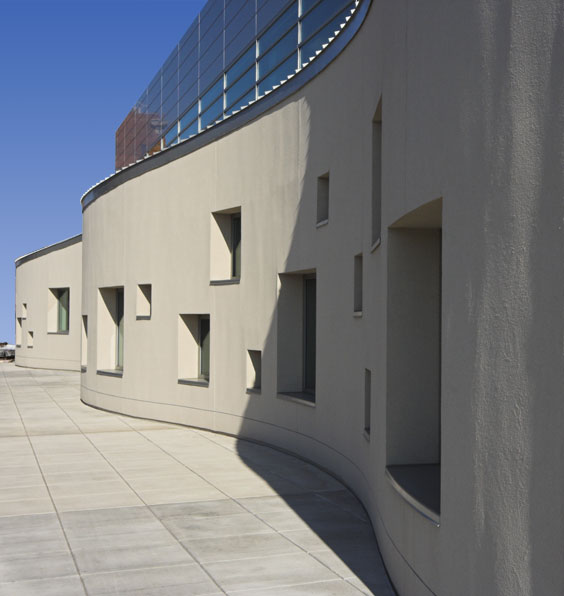
The east and west entrances are interconnected by the great hall, which provides clear visual orientation and access to all library departmental facilities and seamlessly integrates the existing renovated spaces and the new construction. The curved roof of the great hall contains a large north-facing skylight and a shaded south-facing clerestory window, bringing daylight into the center of the building.
The great hall can be separated from the library spaces, so that community functions can extend past library hours if needed, without compromising library security. The central great hall also houses the Circulation Desk, Central Reference Desk, self-check stations, electronic catalog stations, and informational components, as well as stairs and elevators to the Library’s second level, the new Auditorium on a lower level, and the Garage below grade.
Community use facilities are organized along the southern side of the first floor, between the great hall and Washington Blvd. These spaces include flexible Meeting Rooms, Access Fort Wayne Television, Community Computing and Public Computer Training, an Exhibition Gallery, the Café, and the Library Friend’s Store.
Associate Architect: MSKTD & Associates, Inc.
New York Public Library
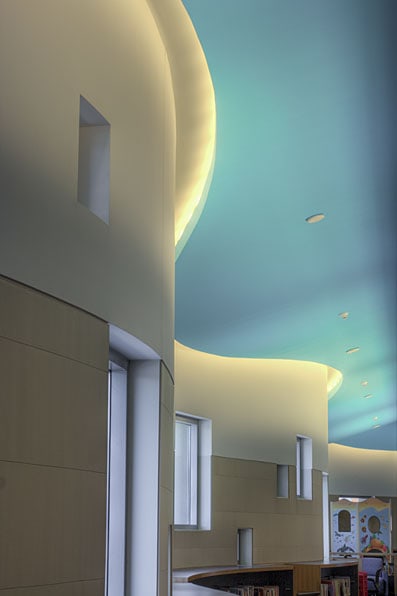
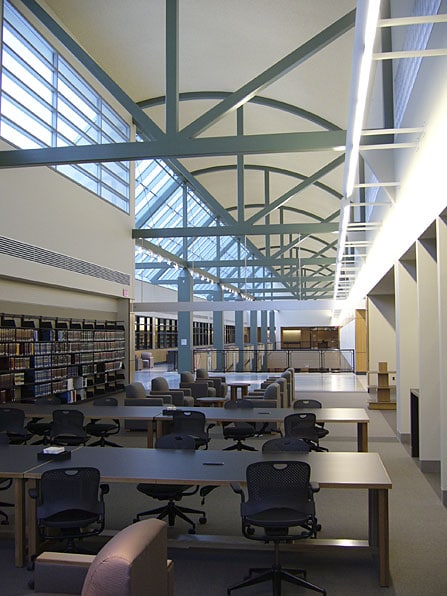
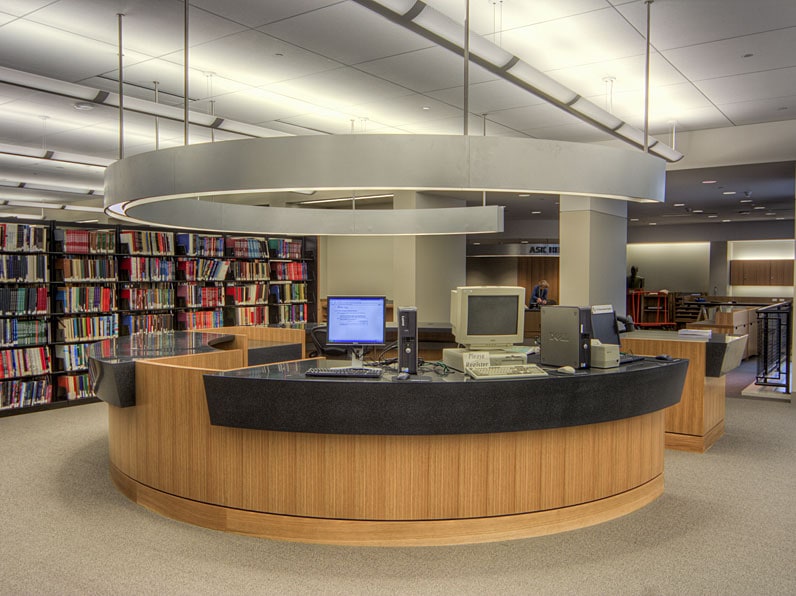
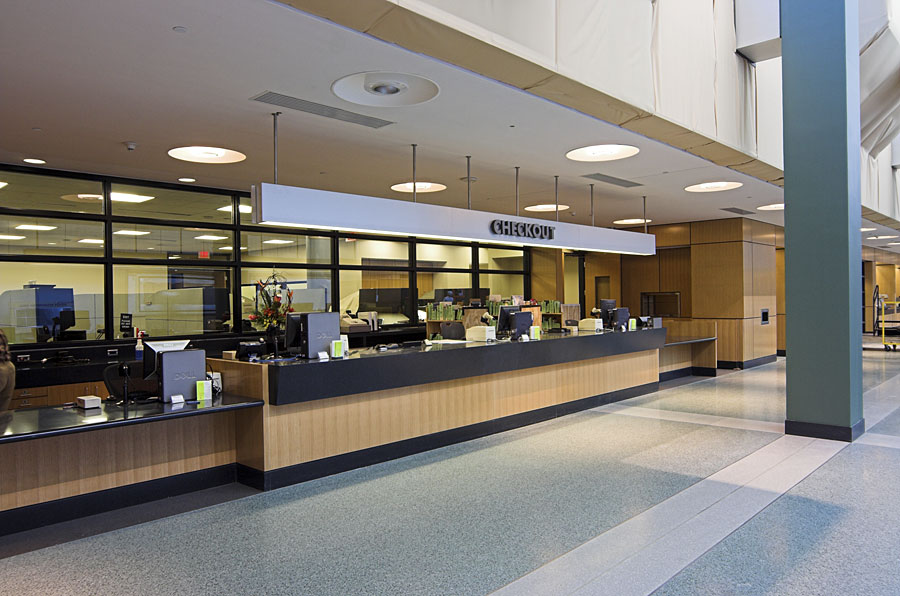
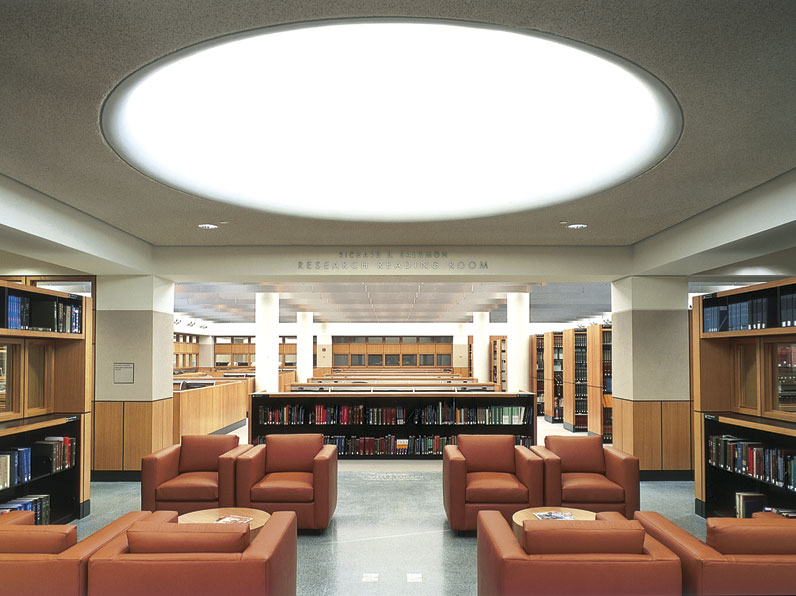
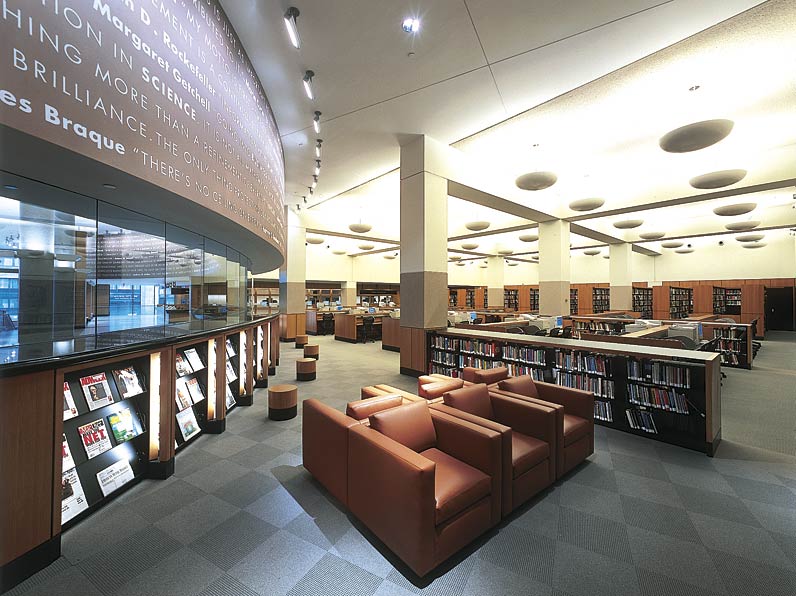
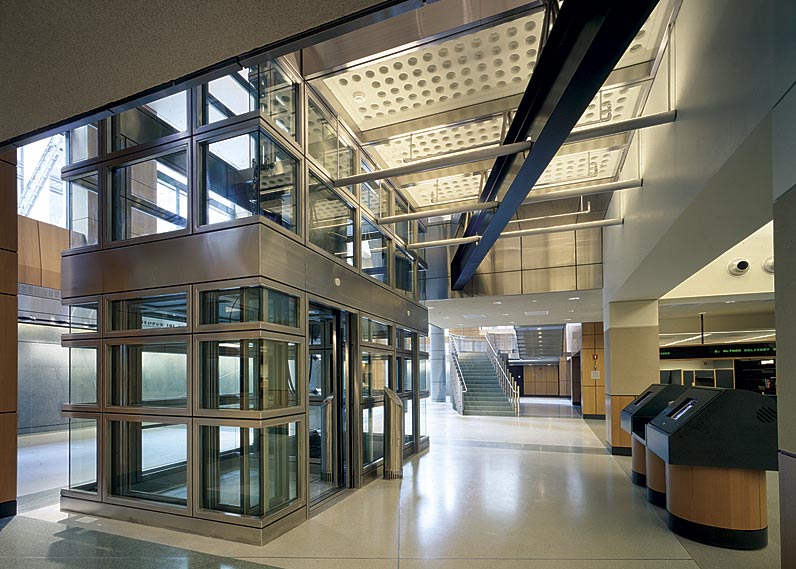
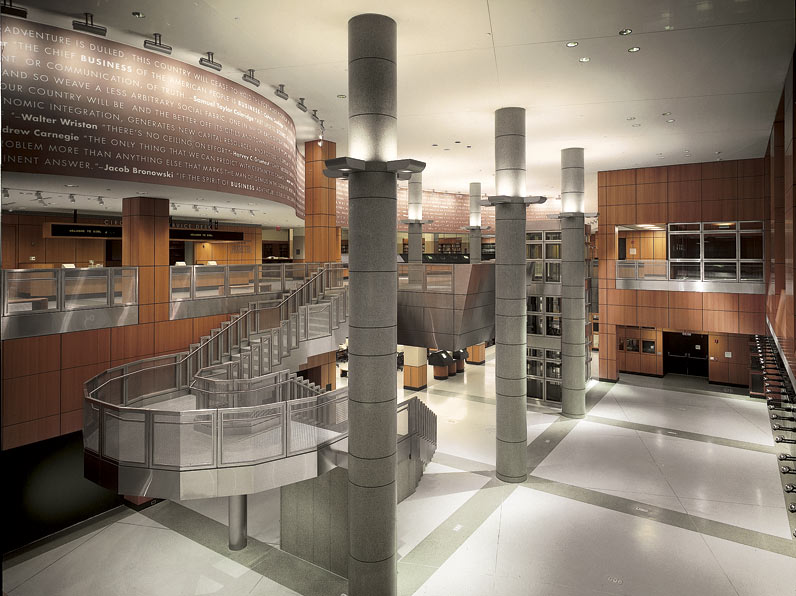
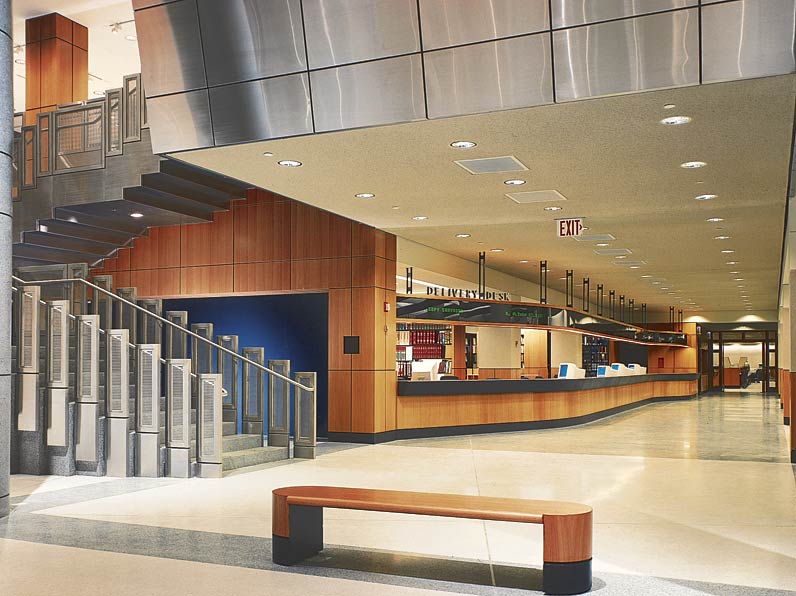
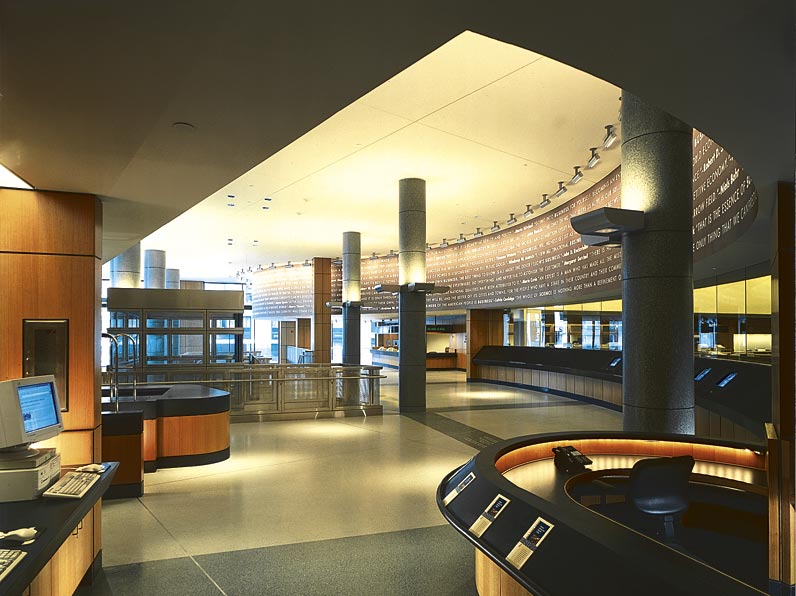
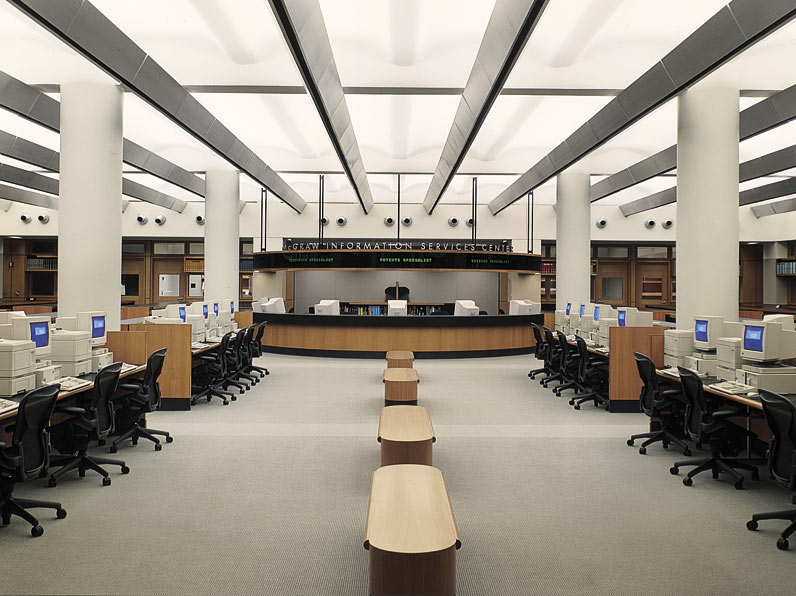
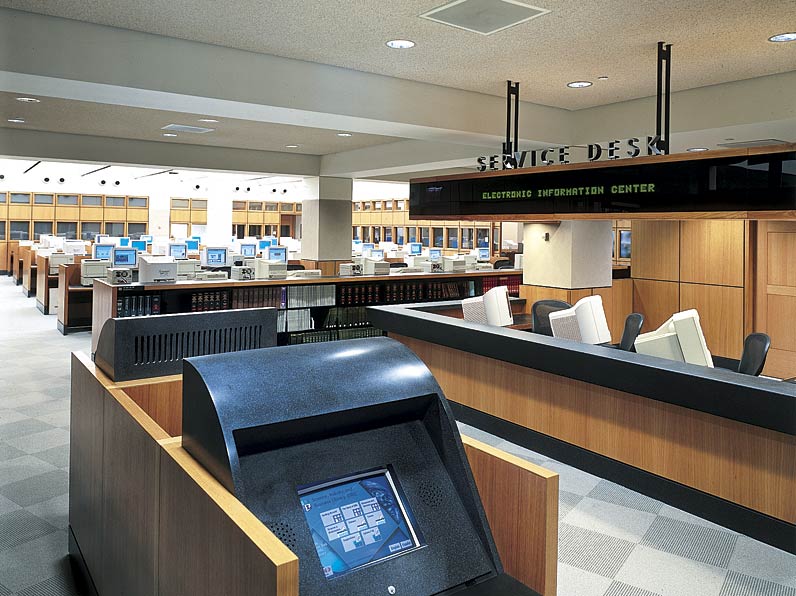
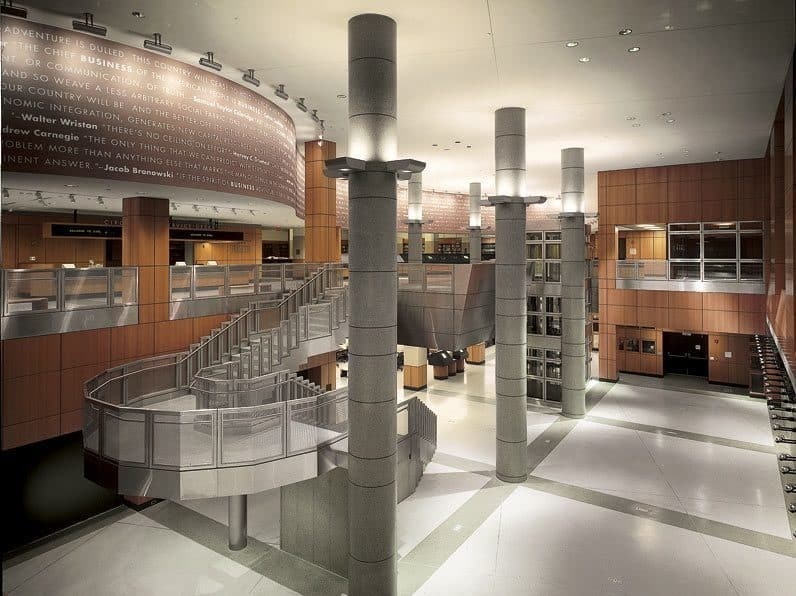
The Science, Industry, and Business Library (SIBL) New York, NY This state-of-the-art library is housed on five levels of a landmarked building, the former B. Altman Department Store. SIBL is a full-service circulating library with storage for a collection of 1.5 million volumes, an open shelf reference collection, periodical shelving and a full catalog area. SIBL is a classic solution to a problem of preservation and adaptive re-use. Continue Back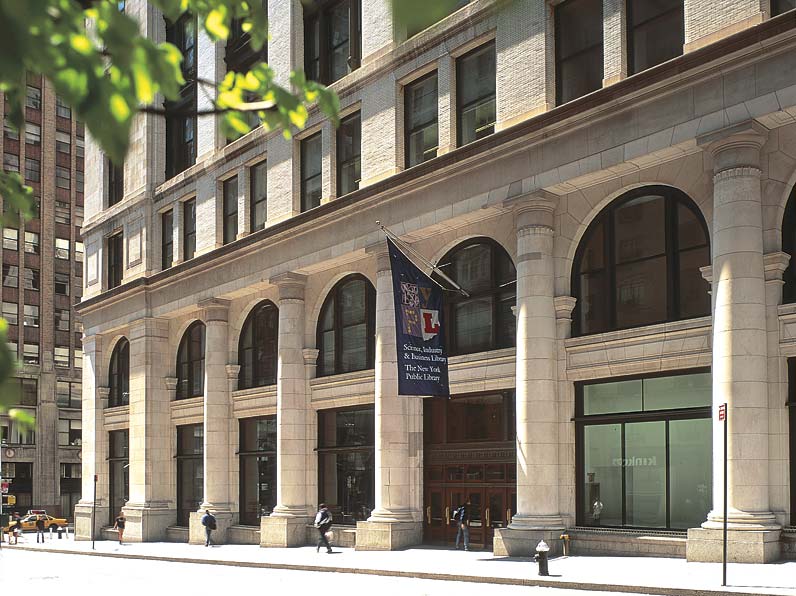
Salt Lake City Public Library
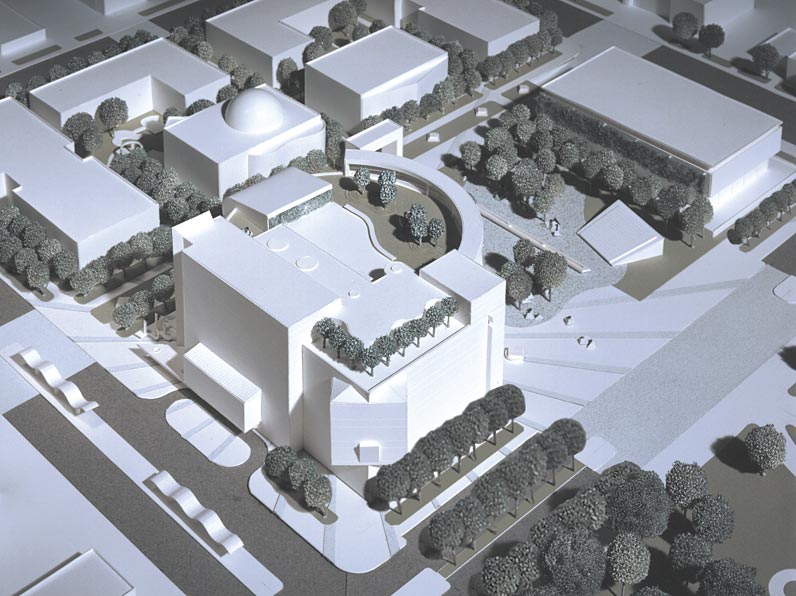
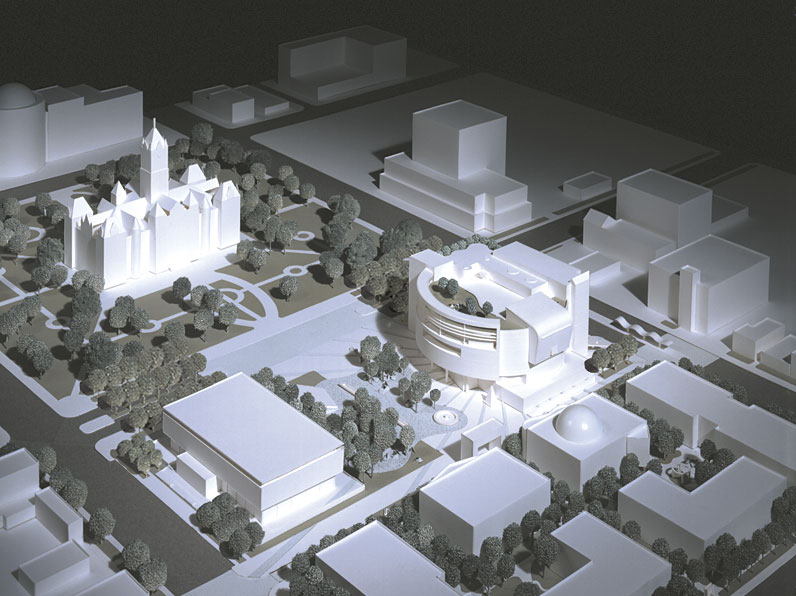
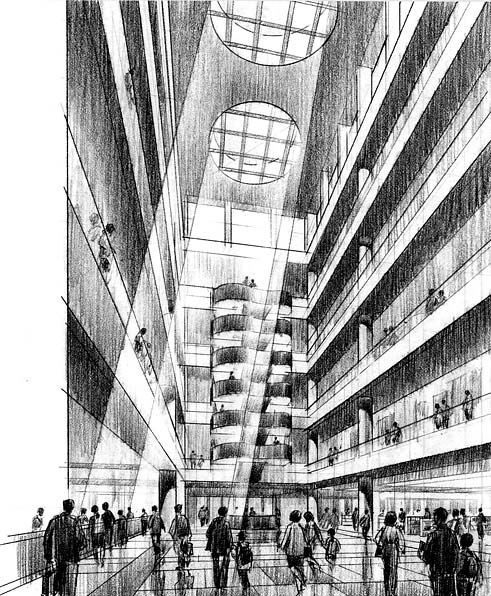
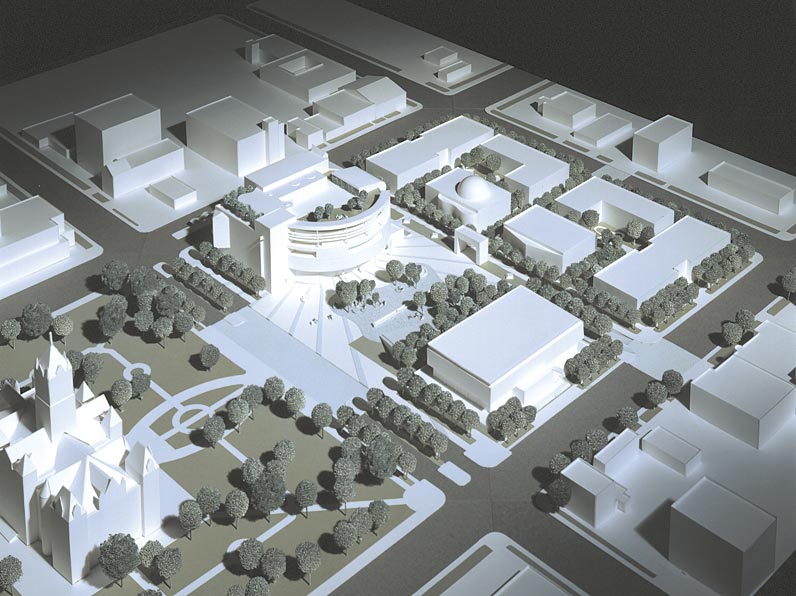
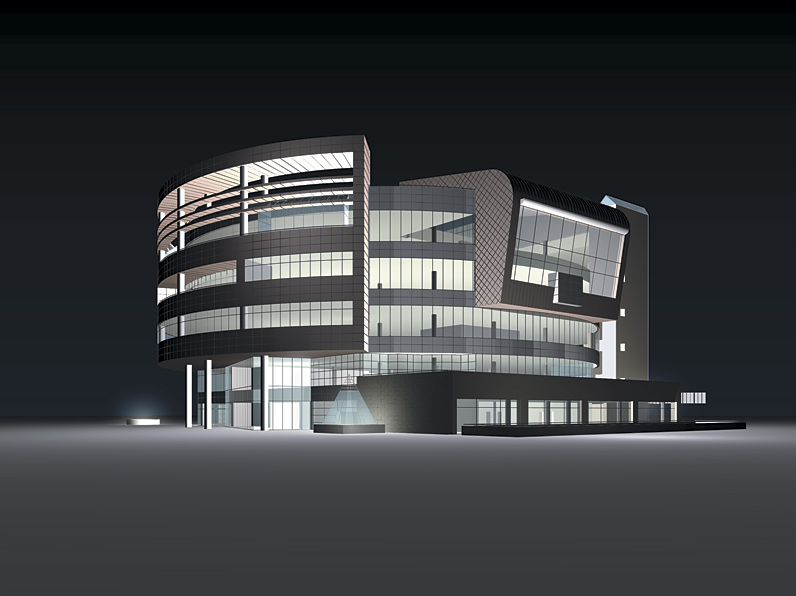
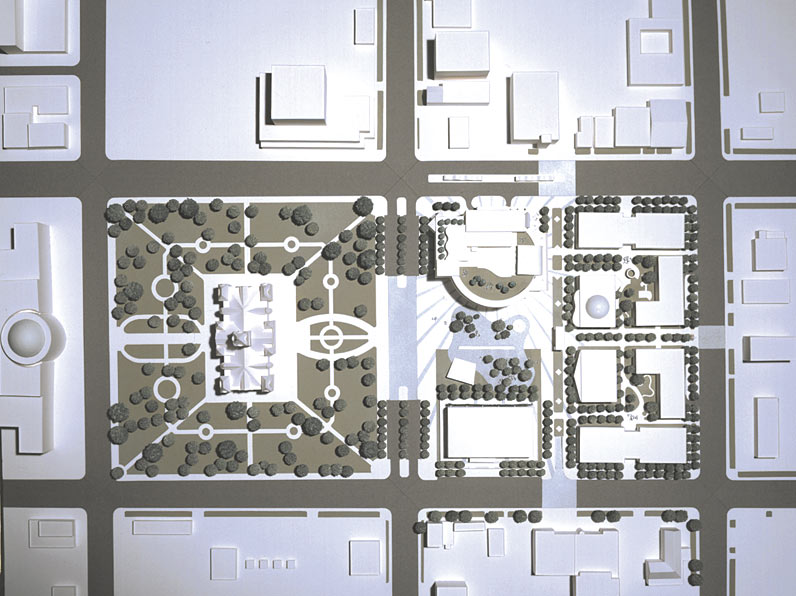
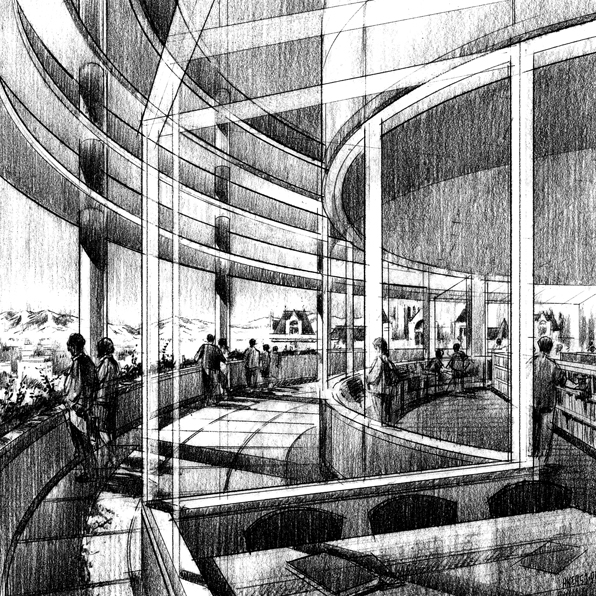
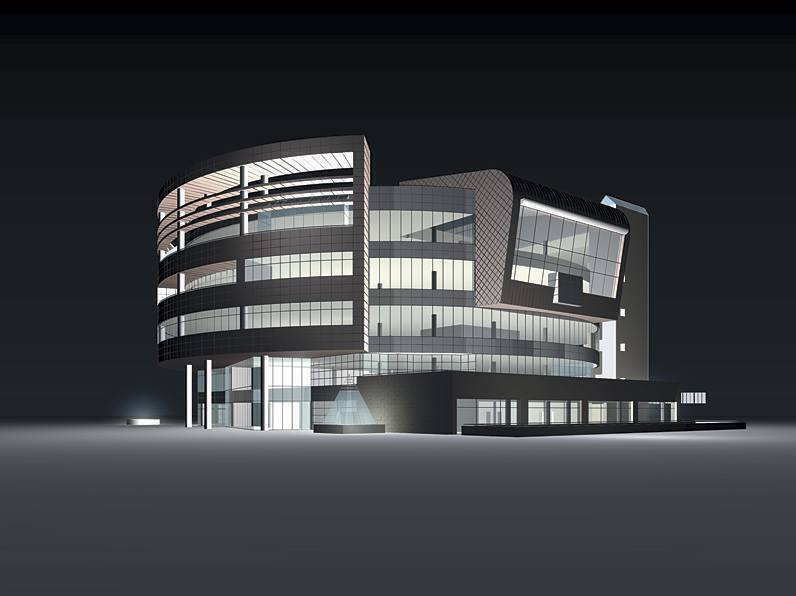
Main Library and Civic Plaza Competition Salt Lake City, UT The Salt Lake Public Library Building and Civic Plaza, one of three finalists in a national design competition, reconciles existing urban precedents, the site context, the block Master Plan and the specific library program. The new library building frames the new Civic Plaza with the existing library buildings as a positive extension and reflection of the City County Building and Park. Continue BackThe main entrance to the library, off the public arcade, reveals a six-story, clerestory/skylit atrium with balconies. It establishes both the public vertical circulation and primary orientation space in the building. The atrium, which is the horizontal and vertical fulcrum of the building, anchors, defines zones, and articulates the programmatic organization and hierarchy.
On the ground floor facing the entry is the Information Desk. To the north are the Circulation Desk and Staff Workspace; to the south is the Browsing Library with internal secure access to the Copy Center, Café and Library Store, as well as to the Young Adult component. To the east are the Electronic Information Center and the Audio/Visual Collection.
The lower level contains the auditorium, meeting rooms and book sales space as well as the loading dock, operations and maintenance spaces. The second floor houses the Children’s Library and nearby outdoor play terrace, story/meeting room and crafts room. Also located there are the language and literacy center, computer services and the technology center. Newspapers and magazines are on the third floor. The fourth floor houses the fiction collection, the non-fiction collection, as well as the Administration Offices and Boardroom.
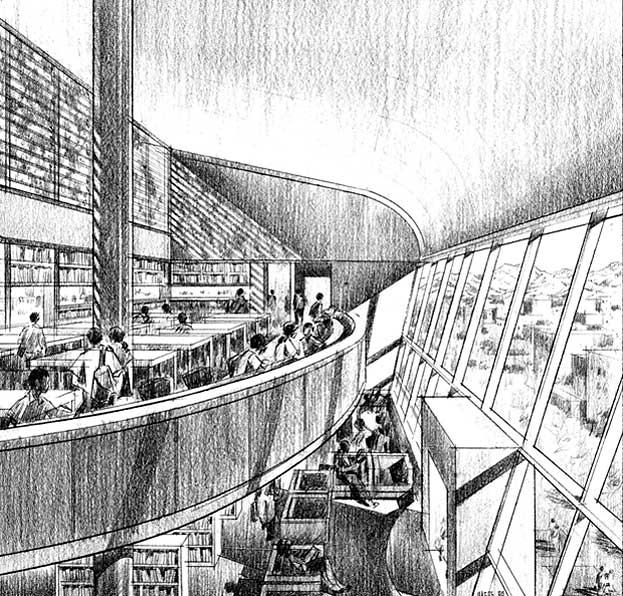
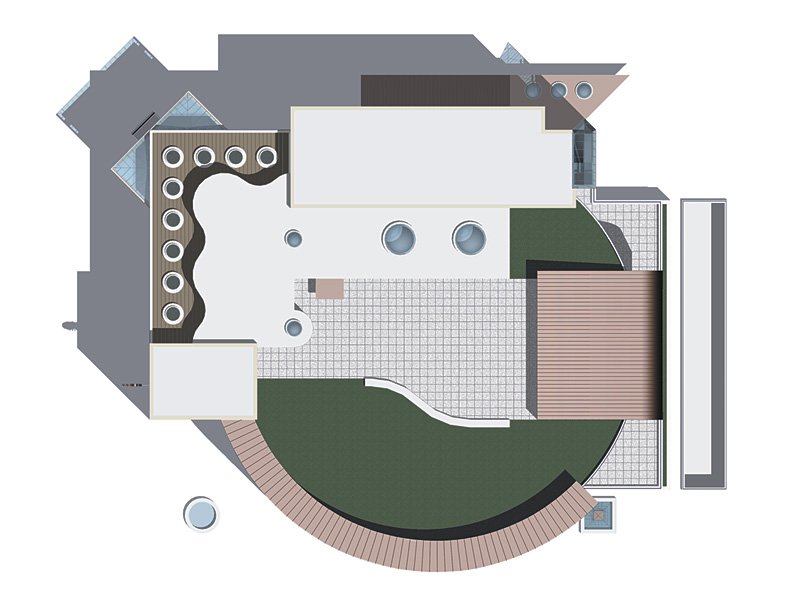
The fifth floor houses the Reader’s Hall, a two-story, clerestory-lit space that affords panoramic views of the mountains. The remaining components include Local History, Special Collections, The Center for the Book and the Art Gallery. The penthouse/roof level houses the central staff facilities all with access to a private landscaped roof terrace. The remainder of the roof is a public terrace and roof garden.